



The week after Christmas isn't a slow week. It's a redemption week. Gift card recipients tend to use the card within about a month of receiving it, and National Use Your Gift Card Day on January 17 exists because retailers noticed how much of that spending clusters right there. Separately, 53.4% of US consumers said they planned a New Year's resolution for 2025, up 4.9 points from the year before, and UK shoppers put £8.4 billion online in January 2025 alone, with exercise equipment and health products as the standout categories.
That's three different shoppers landing on your store in the same two-week window: someone spending a gift card that isn't quite enough to cover what they actually want, someone shopping a resolution category for the first time this year, and someone standing at your returns page deciding whether to get a refund or find something else. A single-SKU product page treats all three the same way a discount code does: generically. A January bundle, priced and framed for the specific reason that shopper showed up, gets more out of traffic you're already getting for free.
This guide covers bundle ideas for each of those shopper types, which Pumper offer type fits each one, how to price a bundle so it captures gift-card top-up spending instead of just matching the card balance, and how to turn your returns page into a bundle opportunity instead of a pure refund funnel.
Key Takeaways
- January traffic splits into distinct shopper types: gift card redeemers, resolution shoppers, returners and exchangers, and self-treaters using gift money. Each wants a different bundle, not the same discount.
- Gift card recipients who redeem tend to spend more than the card's face value. One industry estimate puts that figure at 61% of redeemers (Broadleaf Commerce / GrabOn, 2025). A bundle priced just above common gift-card denominations captures that top-up spending.
- Resolution categories (fitness, wellness, nutrition, organization) see a real January spike. UK online health and wellness spending reached £8.4 billion in January 2025, up 2.9% year over year (Adobe Analytics, 2025).
- Dry January participation estimates for 2025 range from 22% to 33% of US adults depending on the survey (Morning Consult and Drive Research, 2025), wide enough that any specific number should be treated as directional, not settled.
- January is nicknamed "Returnuary." NRF and Happy Returns estimated 2025's full-year return rate at 15.8% of sales, with January carrying a disproportionate share of that volume (NRF and Happy Returns, 2025).
- Bundle Themes, Mix & Match, and Buy X Get Y all give you a fast way to launch a January-specific set without redesigning your whole catalog.
Why January Shoppers Need a Different Offer Than December Shoppers
A December gift buyer is solving for someone else's taste under a delivery deadline. A January shopper is solving for something else entirely, and the differences change what a good offer looks like.
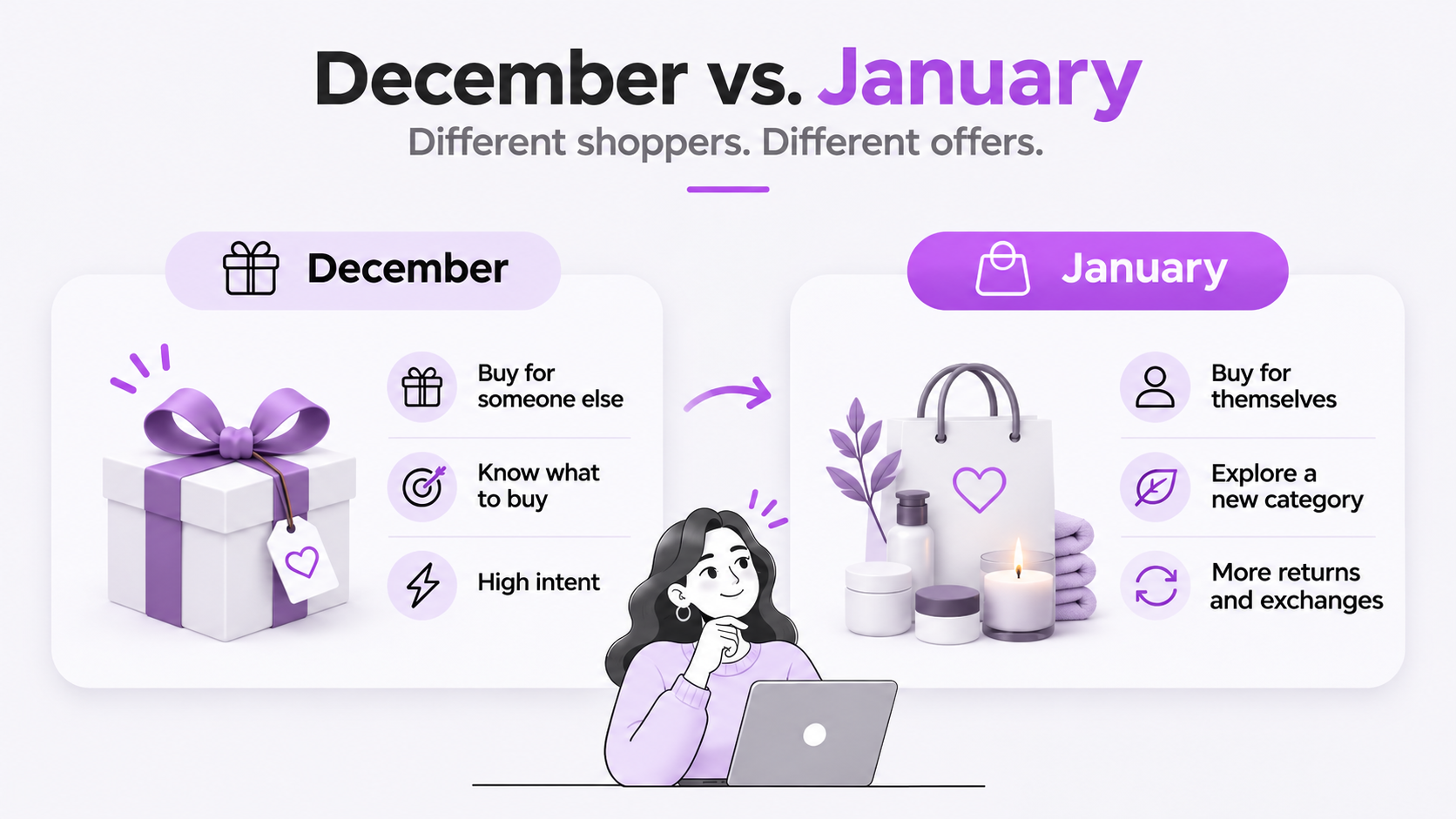
- Gift card redeemers are already qualified traffic. Someone holding one of your gift cards (or a competitor's) has already decided to shop your category. The question isn't whether to convert them. It's whether to let them check out at exactly the card's balance or give them a reason to add to it.
- Resolution shoppers are trying a category for the first time this cycle. A first-time buyer in fitness, skincare, or organization doesn't know which single product to pick, which is exactly the uncertainty a curated starter set solves.
- Returners are standing at a decision point, not leaving. A shopper on your returns or exchange page hasn't abandoned you. They're deciding between a refund and something else, and a well-placed offer can turn that moment into a bigger order instead of a lost one.
- Self-treaters are spending gift money on themselves. Deloitte's 2025 Holiday Retail Survey found 46% of Gen Z and 41% of millennial shoppers planned to buy something for themselves during the holiday period, a behavior that carries into January as gift cards and cash gifts get spent (Deloitte, 2025).
See how tiered pricing captures gift-card top-up spendPumper's tiered pricing use case covers how to price a bundle above a common gift-card balance.
|
Bundle Ideas for Gift Card Redeemers
The gift card redeemer's whole decision is whether to spend exactly the balance or go a little over. Your job is to make going over feel like a better deal, not an upsell.
The "Top It Off" Bundle
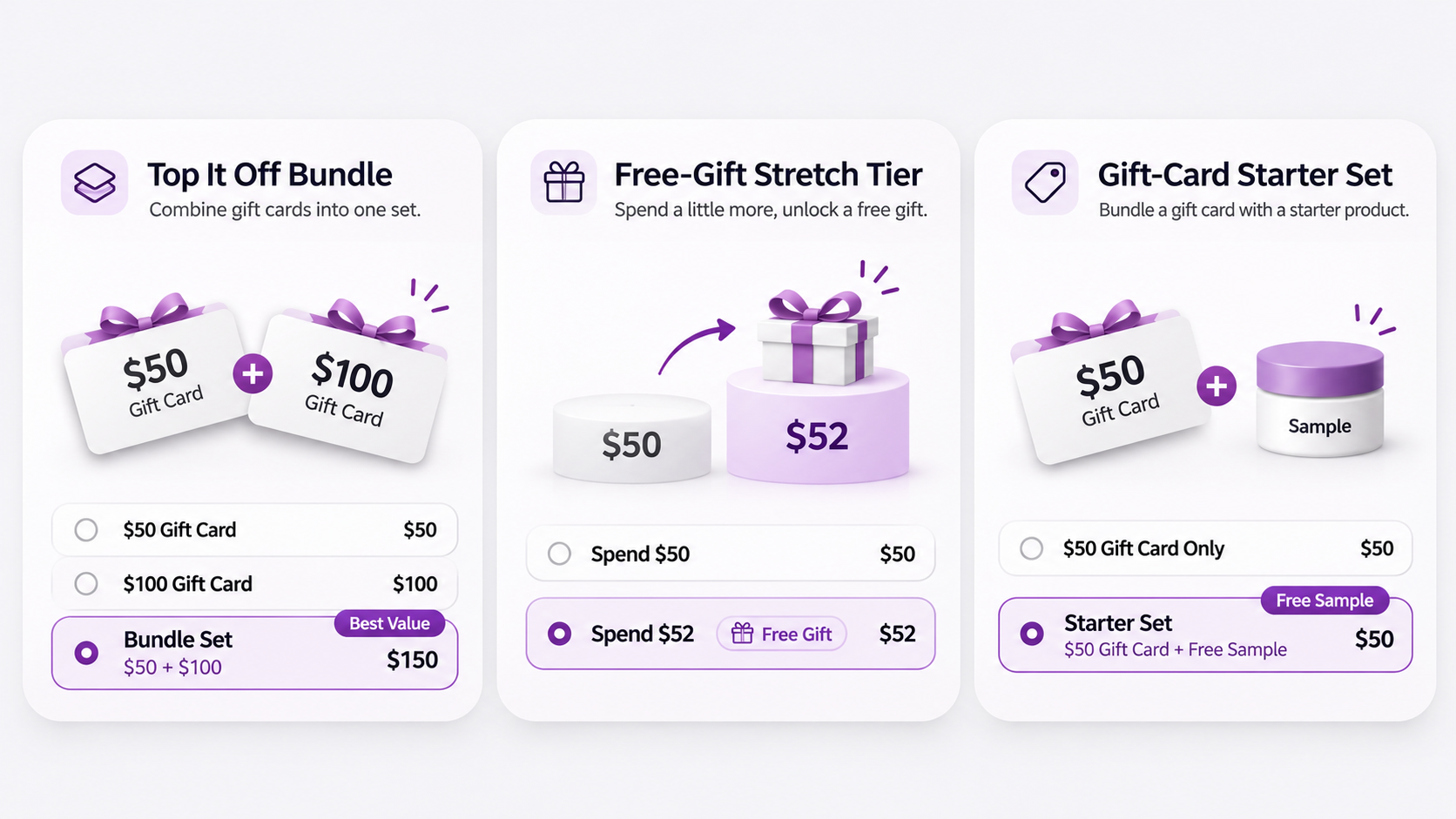
Price a bundle just above a common gift-card denomination ($50, $100), so a $50 card covers most of it, and the remaining $8 to $15 feels small next to the set's total value. Use Pumper's Product Bundles offer type to combine two or three products into one named set at a specific price, so the shopper sees one clean number instead of adding items and watching the math creep past their balance one line at a time.
The Free-Gift Stretch Tier
Set a no-discount tier at a quantity whose total is just above a common gift card amount, and add a free gift to that tier. For example, if a product sells for $26, a 2-item tier comes to $52. A shopper spending $52 against a $50 card doesn’t feel like they overspent if the extra $2 unlocked a $12 gift. This works because it reframes “going over budget” as “unlocking a bonus,” which is an easier mental trade for a shopper who came in planning to spend exactly the card’s value.
The Gift-Card Starter Set
If you sell gift cards yourself, bundle a card with a small starter product using Buy X Get Y: buy a $50 gift card, get a sample-size product free. This moves a card recipient from a generic "spend it on anything" mindset to "I already have the first piece of something," which tends to pull them toward a bigger set rather than a single replacement item.
Bundle Ideas for Resolution Shoppers
Resolution categories spike every January, but a resolution shopper rarely knows which single product solves their goal. A curated starter kit removes that guesswork.
Fitness and Wellness Starter Kits
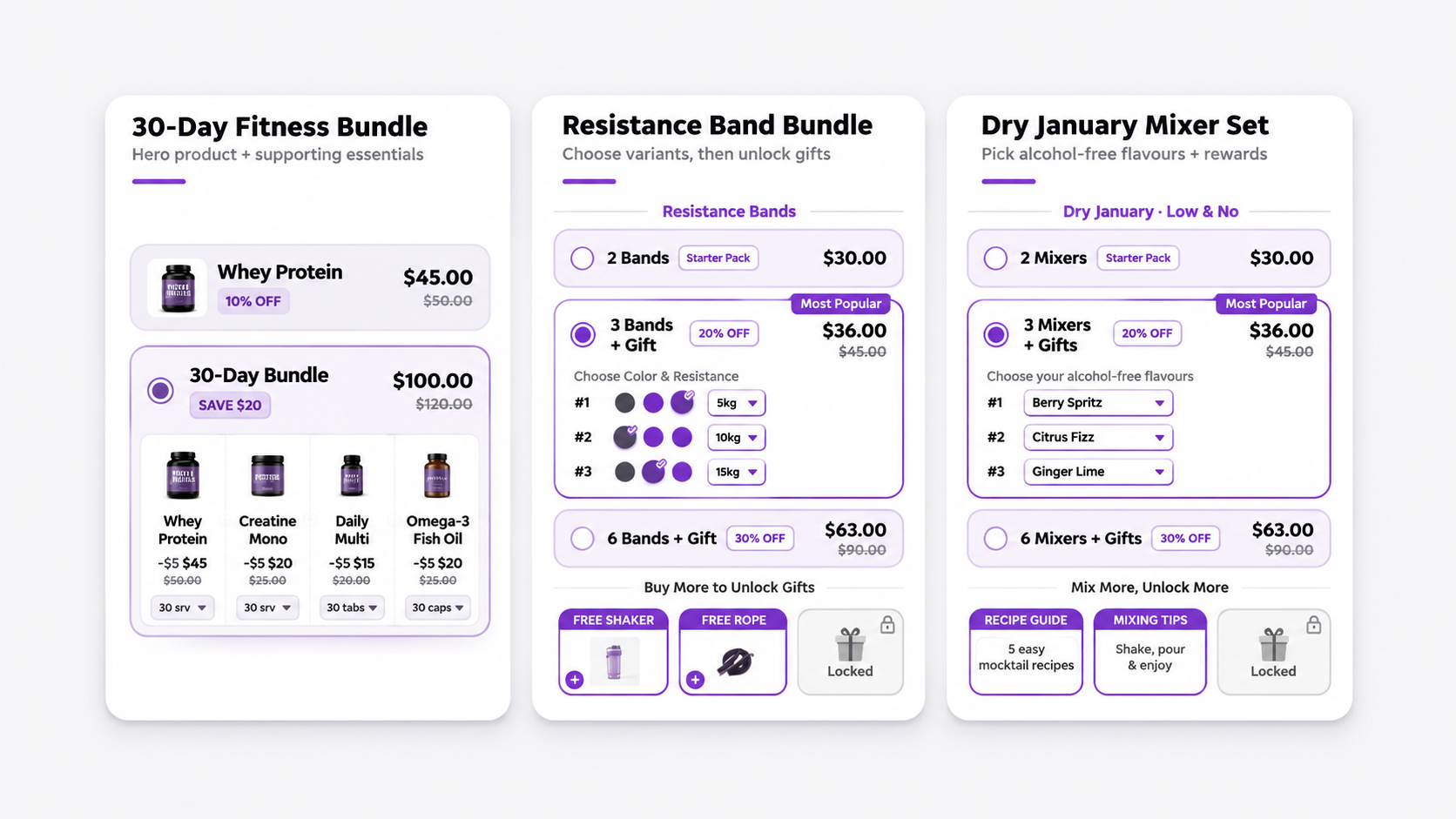
Combine a hero product with two or three supporting items into a named kit: a "30-Day Reset Kit," a "Home Workout Starter Set." Use Product Bundles for a fixed combination, or Mix & Match if your catalog has enough variety (flavors, sizes, scents) that a shopper benefits from picking their own three or four items from a defined pool.
The "Dry January" or Low-and-No Set
If you sell beverages, supplements, or self-care products, a low-and-no-alcohol or wellness-swap bundle fits a real, if inconsistently measured, January behavior. Estimates for 2025 Dry January participation range from 22% (Morning Consult) to 33% (Drive Research), and even the lower end represents a meaningful slice of January shoppers. Frame the bundle around the swap itself (a mocktail kit, a wellness-evening set) rather than the word "diet," which tends to undersell a set that's really about trying something new for a month.
Organization and Productivity Bundles
January is also when organization products move: planners, storage systems, desk setups. A Quantity Breaks tier ladder works well here because organization shoppers often buy multiples of the same item (several of the same storage bin, several planner refills), and a visible "buy 3, save more" tier rewards exactly that behavior without you building a separate bundle for it.
Launch a resolution-season bundle fastBundle Themes gives you a ready-made design to populate and publish before January traffic peaks.
|
Turn Returns and Exchanges Into a Bundle Opportunity
January is nicknamed "Returnuary" for a reason. NRF and Happy Returns forecast a 15.8% full-year return rate for 2025, down from 16.9% in 2024, and expect 17% of holiday sales specifically to come back (NRF and Happy Returns, 2025). Online returns run even higher, at a forecast 19.3% of e-commerce sales (NRF and Happy Returns, 2025), and most of that holiday-gift volume lands in the weeks right after Christmas, so a meaningful share of your January traffic is actively trying to exchange something, not just browsing.
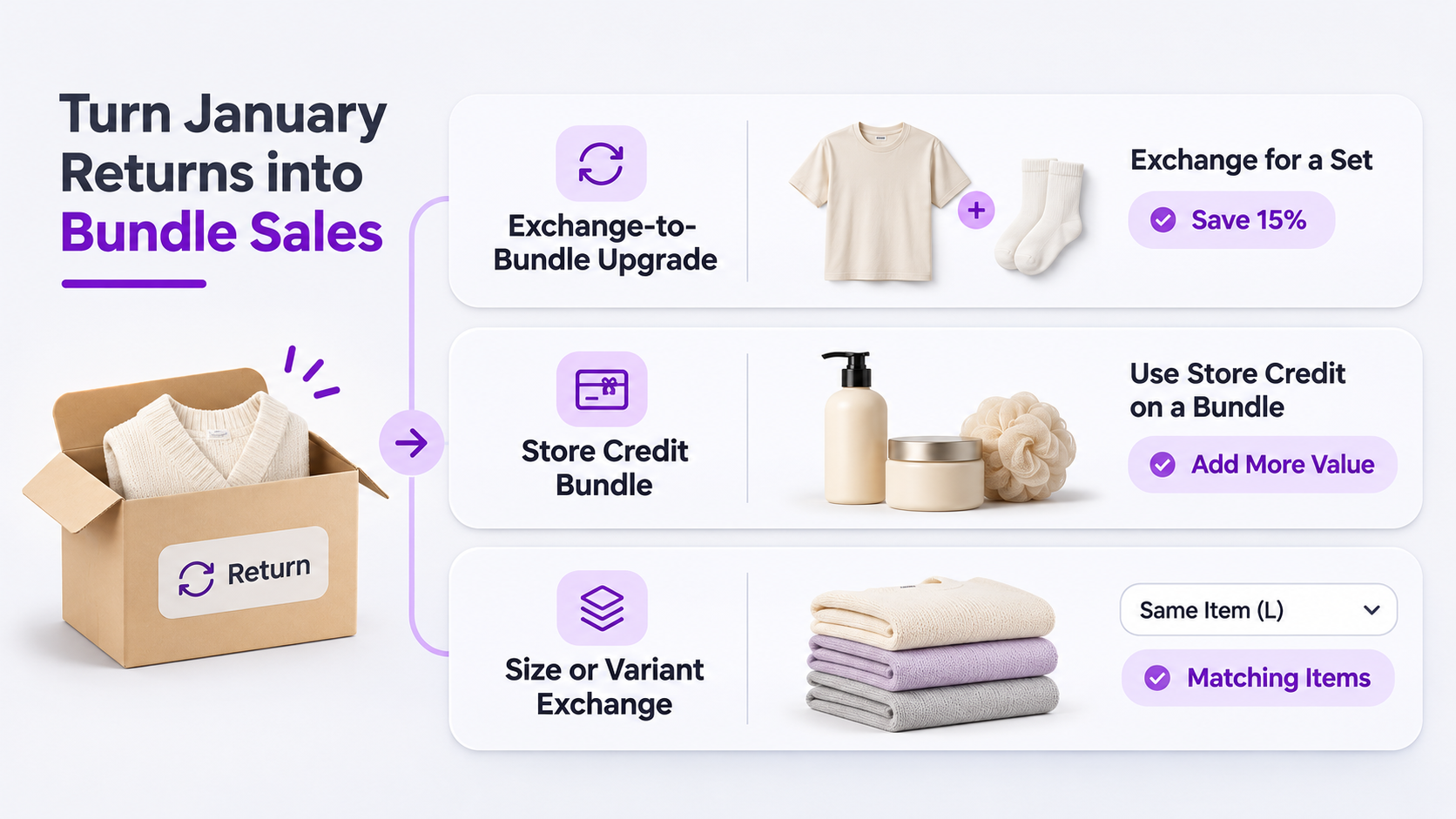
None of this requires discounting your way out of a return. It requires putting a relevant offer in front of a shopper who's already decided to stay engaged with your store instead of walking away with a refund.
Turn exchange traffic into a bigger orderPumper's cross-sell use case covers offering a related bundle at the exact moment a shopper is already deciding what to do next.
|
Bundle Ideas for Self-Treaters
Not every January shopper is buying for a goal or spending someone else's money reluctantly. Some are spending gift money on themselves, and a bundle built for self-treating reads differently than one built around a resolution.
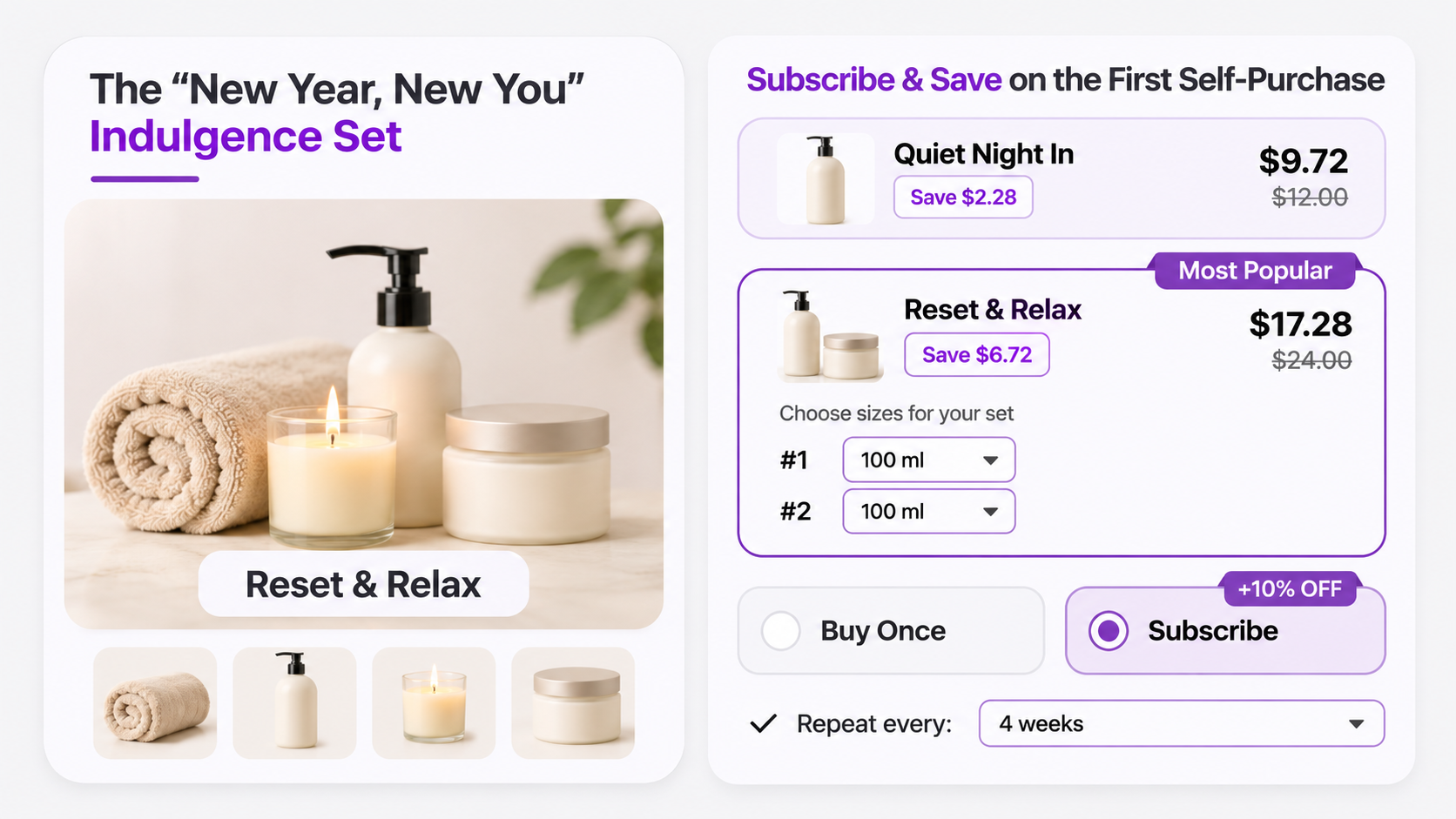
The "New Year, New You" Indulgence Set
Pair a few higher-margin, higher-enjoyment products into a set that's explicitly framed as a treat, not a fix: a "Quiet Night In" set, a "Reset and Relax" box. This is a good fit for Product Bundles with a compare-at price, so the value is visible without leaning on resolution language that doesn't fit every self-treater's mood.
Subscribe & Save on the First Self-Purchase
A January self-purchase is often someone's first order with you, driven by gift money rather than a prior relationship with your brand. Add Subscribe & Save as an option on the bundle (needs a Shopify subscription app such as Appstle or Seal) so a one-time treat has an easy path to becoming a repeat order, rather than relying on a second January to bring the same shopper back.
Price January Bundles to Capture Top-Up Spending, Not Just Match It
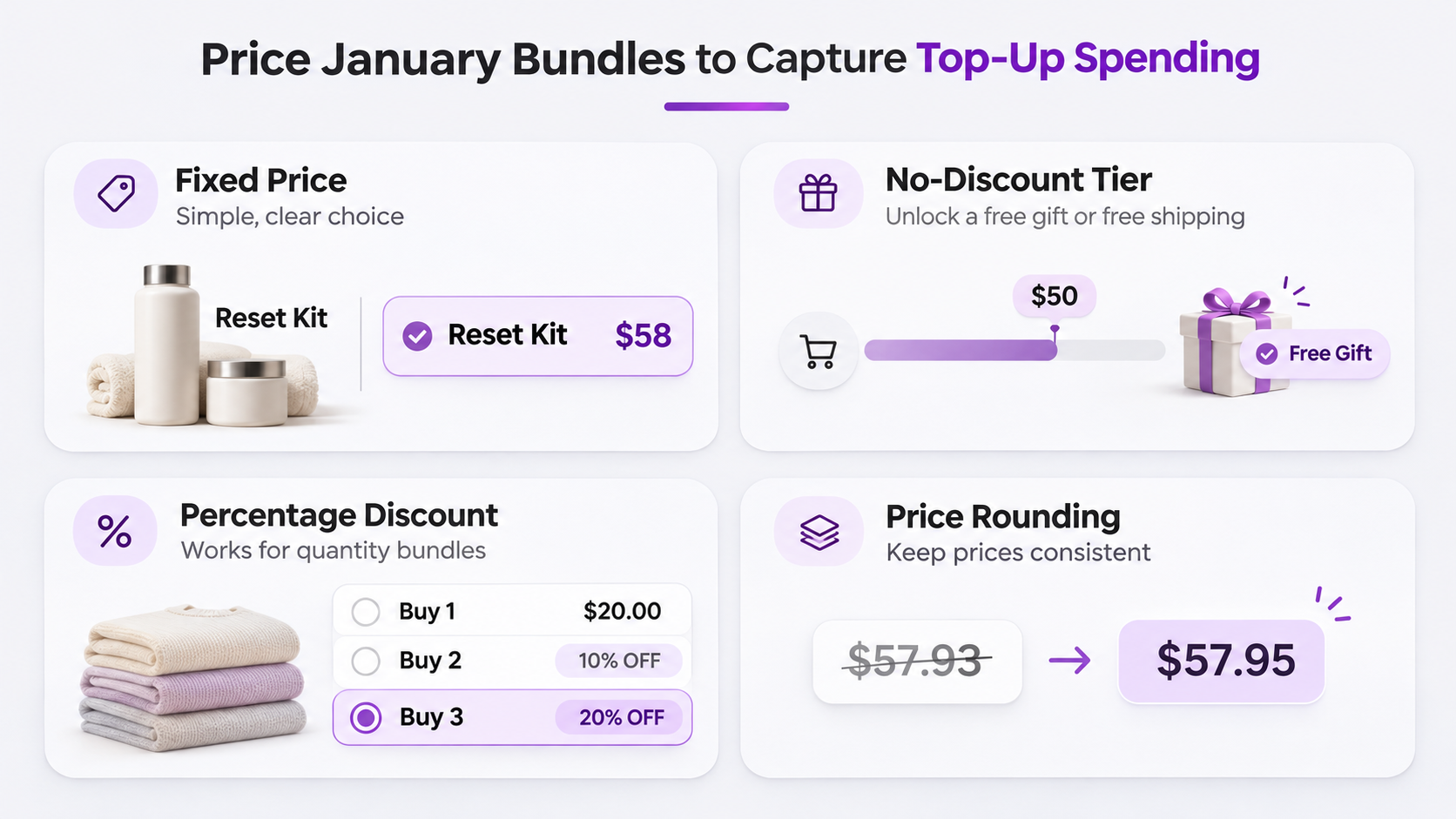
The gift-card and store-credit tactics above only work if the pricing is deliberate. Pumper's discount types give more control than a flat percentage off:
- Specific price (fixed price) removes the mental math a gift-card shopper is already doing against their balance. "The Reset Kit, $58" is easier to decide on than three line items that might add up to $58 or might not.
- No-discount tier lets you offer a tier with no price cut at all, used purely to unlock a free gift or free shipping once a shopper crosses a spend threshold you've set just above a common card balance or credit amount.
- Percentage discount still works for straightforward quantity-based January sets, like the organization quantity-break ladder, where unit economics vary enough that a fixed price would under- or overprice some combinations.
- Price rounding to .99 or .95 endings keeps new January bundle prices consistent with the rest of your store without manual adjustment.
Price every January bundle against your actual landed cost, the same discipline that matters for any seasonal bundle. Pumper's guide to increasing average order value on Shopify walks through that margin math if you're setting prices across more than one bundle this cycle.
Merchandising January Bundles
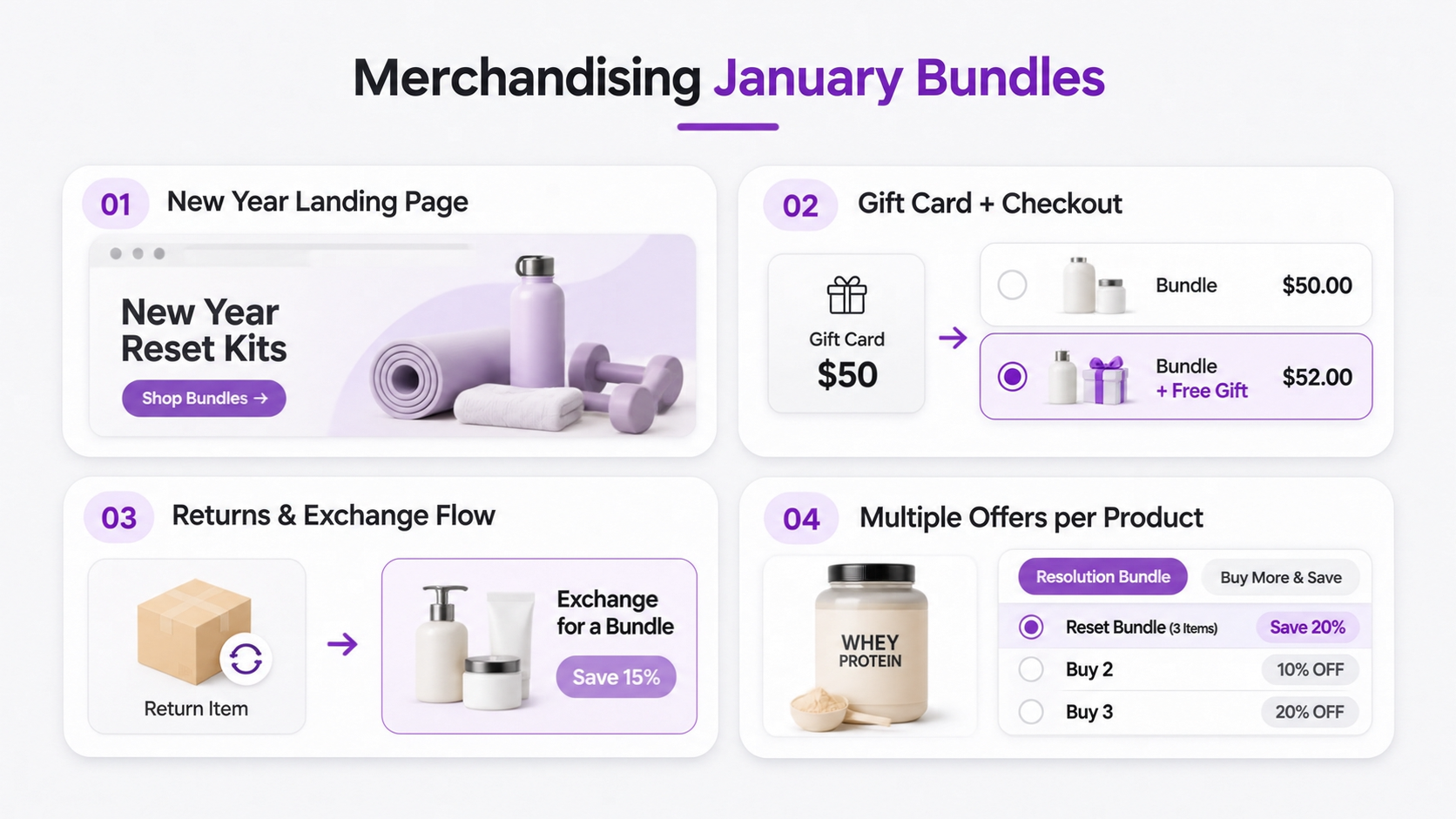
Where you place a January bundle matters as much as its contents, and the right placement depends on which shopper type you're targeting.
- A dedicated "New Year" landing page works for resolution and self-treat bundles, since those shoppers are often browsing with intent rather than arriving at a specific product page.
- Gift card redemption on product pages are the right place for a "top it off" bundle, since that's the exact moment a shopper is deciding how to spend the balance.
Multiple offers per product let a single hero product carry both a resolution-framed bundle and a quantity-break ladder at once, so a first-time buyer and a repeat bulk buyer each see the offer built for them.
Common Mistakes With January Bundles
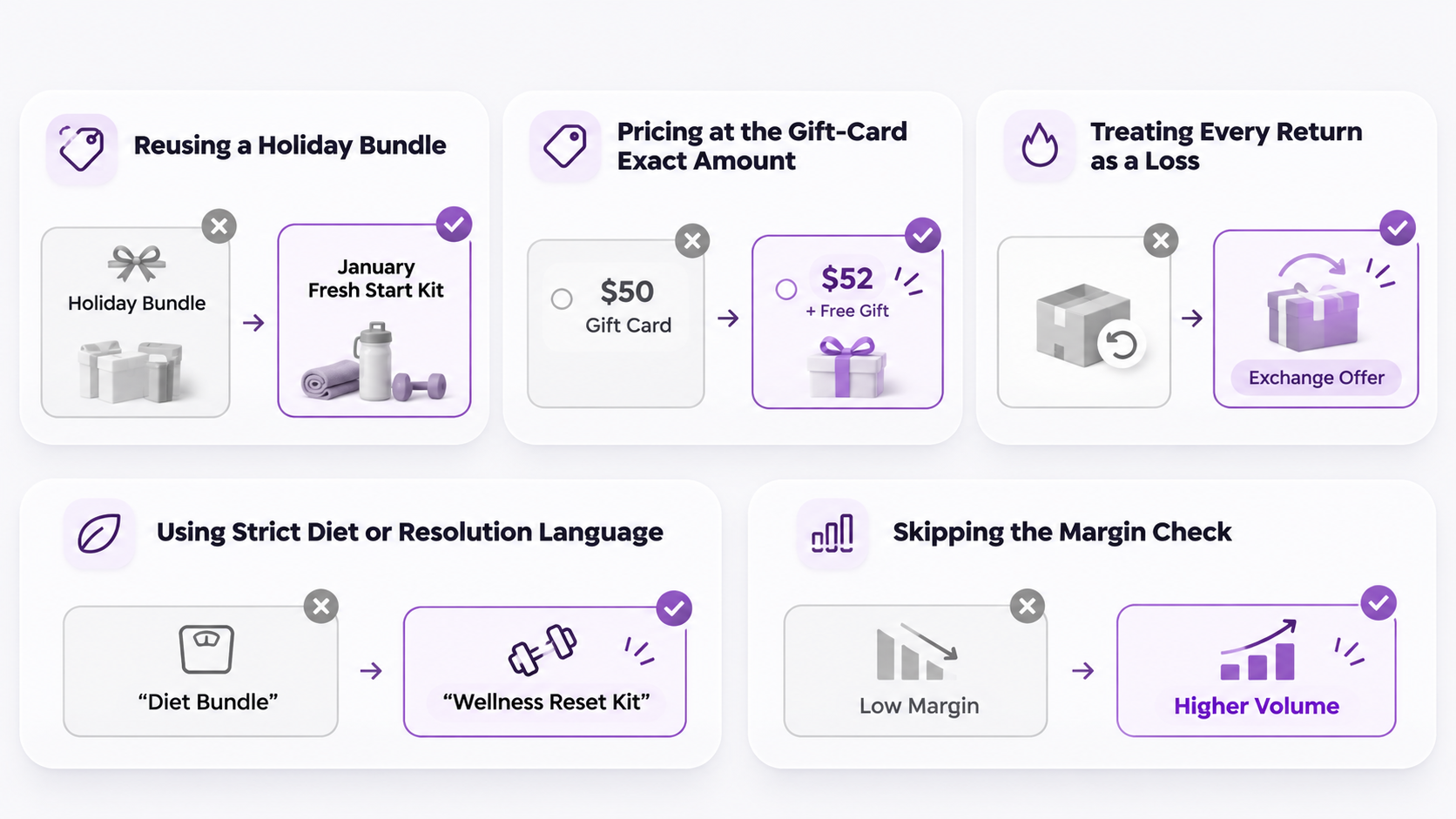
- Reusing a holiday bundle with the ribbon graphic removed. A set built for gifting doesn't automatically read as a resolution or self-treat purchase. Rename it and reframe the copy around the January reason someone's buying, not the leftover holiday merchandising.
- Pricing a bundle exactly at a common gift-card balance. That gives the shopper no reason to spend a cent more than the card covers. Price just above it instead.
- Treating every return as a lost sale. A shopper exchanging an item is still engaged with your store. An offer at that moment converts differently than a generic "sorry to see you go" message.
- Leaning too hard on diet or resolution language. Survey estimates for participation in specific resolutions like Dry January vary by a wide margin (22% to 33% in 2025 alone), so a bundle framed narrowly around one specific resolution can miss shoppers who'd otherwise convert on a broader "reset" framing.
Skipping the margin check because January feels like a slow month. A bundle that moves volume at a loss isn't a win just because overall traffic is lighter than December.
Final Verdict
January traffic isn't one shopper. It's at least four: someone spending a gift card, someone trying a resolution category for the first time, someone standing at your returns page, and someone quietly treating themselves with gift money. A bundle built for the specific reason each one showed up outperforms a generic "New Year Sale" banner, because it matches the offer to the actual decision in front of the shopper instead of asking them to find their own reason to buy more. Pumper runs all five offer types behind these bundle ideas, from a fixed-price gift-card top-off set to a quantity-break ladder for organization multiples, from one Shopify app with a free plan to start on.
Get your January bundles live before the gift cards hitBuild gift-card top-off sets, resolution starter kits, and exchange-to-bundle offers from one dashboard, then track which ones actually lift AOV. Start on the free plan.
|
FAQs
What's the best type of bundle to run for gift card redeemers?
A fixed-price Product Bundle or a no-discount free-gift tier, each priced just above a common gift-card denomination like $50 or $100. Both give the shopper a clear reason to spend a little more than the card's balance instead of checking out at exactly that amount.
How is a New Year bundle different from a holiday gift bundle?
A holiday gift bundle is priced and framed around giving to someone else under a delivery deadline. A New Year bundle is priced around the shopper's own reason for buying in January: a gift card to spend, a resolution to start, a return to turn into something else, or gift money to spend on themselves. The underlying offer mechanics can overlap, but the framing, pricing anchor, and placement are different.
Should I run resolution-themed bundles if I don't sell fitness or wellness products?
Yes, if you reframe the resolution angle to fit your catalog. Organization, productivity, and even indulgence-focused self-treat bundles all tap into the same January mindset without requiring a health or fitness product line.
Is it worth building a specific offer for returns and exchanges?
It's worth considering if your return volume is meaningful. NRF and Happy Returns forecast a 15.8% full-year return rate for 2025, with online returns running even higher at 19.3%, and January carries a disproportionate share of that as holiday gifts come back. An exchange-to-bundle offer converts some of that volume into a bigger order instead of a straight refund.
How long should January bundles stay live?
Gift card redemption and resolution interest both taper through the month, so plan for roughly a four- to six-week window from late December through early February, then retire or reframe the set rather than letting it run stale into spring.