


Shopify Promotion Strategies
Built for Stationery & Office Supplies Brands
A fountain pen ink that bleeds through the notebook it was bundled with ruins the first page a customer writes, and a refill that does not fit the pen sold beside it becomes a return the customer blames on the store. These sixteen strategies grow AOV around ink and paper chemistry, refill standards, and the way schools and offices buy in lists and headcounts.
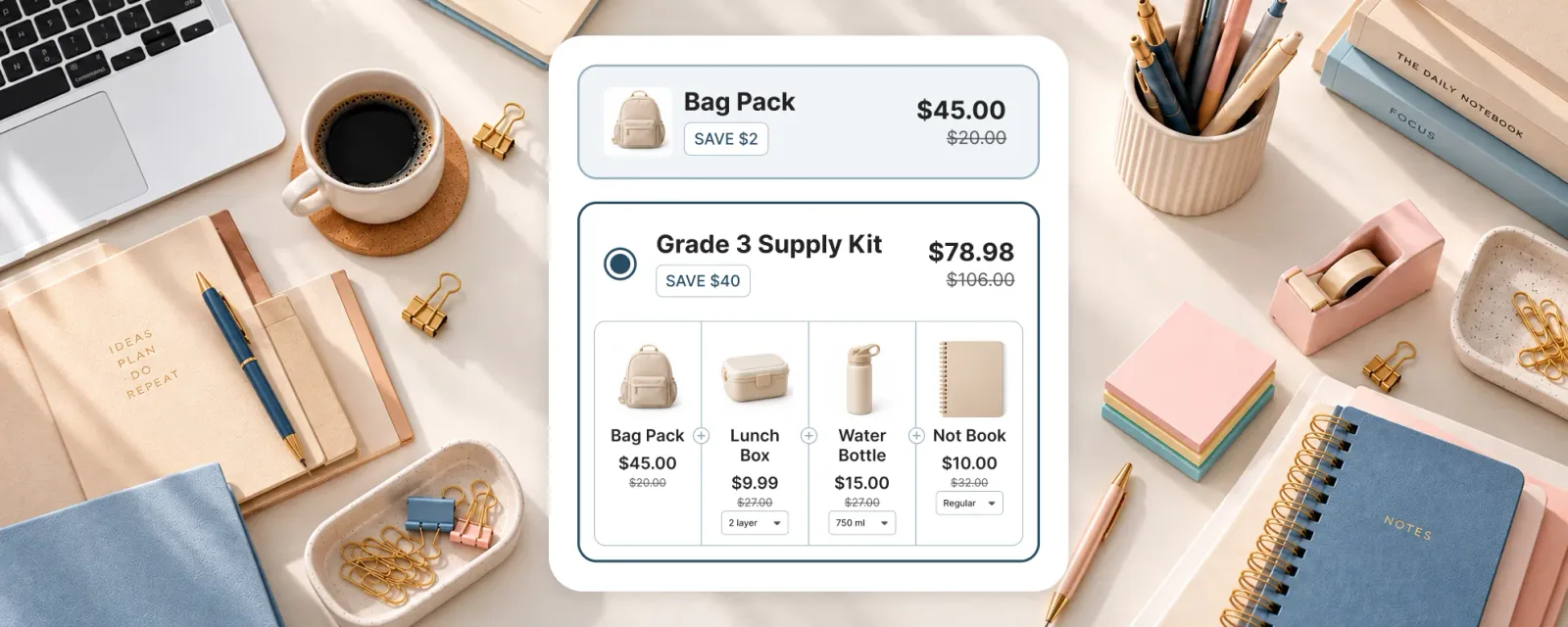
Why stationery promotions behave differently
Much of this category is a commodity. A shopper can compare the price of a ream of paper or a pack of gel pens across a dozen brands in a minute, so a discount on a single item rarely holds attention for long. Bundles work here because they are a cross-sell: they add the complementary items a task needs instead of pushing a pricier version of the same item, and a complete kit is harder to compare line by line than one product.
Compatibility in this category is physical and exact. Ink behaves differently on different paper weights, a refill fits only the pen body built for its standard, and a binder insert has to match the hole pattern of the binder it goes into. A pairing that looks sensible on the product page can fail the first time the customer uses it.
Buying logic is also list-driven. Parents arrive holding a school supply list, and offices buy by headcount and budget cycle. Dated products such as planners lose value as the year passes, which makes timing part of the promotion itself.
The strategies below start with the compatibility and list logic that most bundling advice ignores, then add the seasonal, loyalty and discovery layers. Each one names the Pumper Bundles offer type that runs it without a developer.
School-list bundles by grade
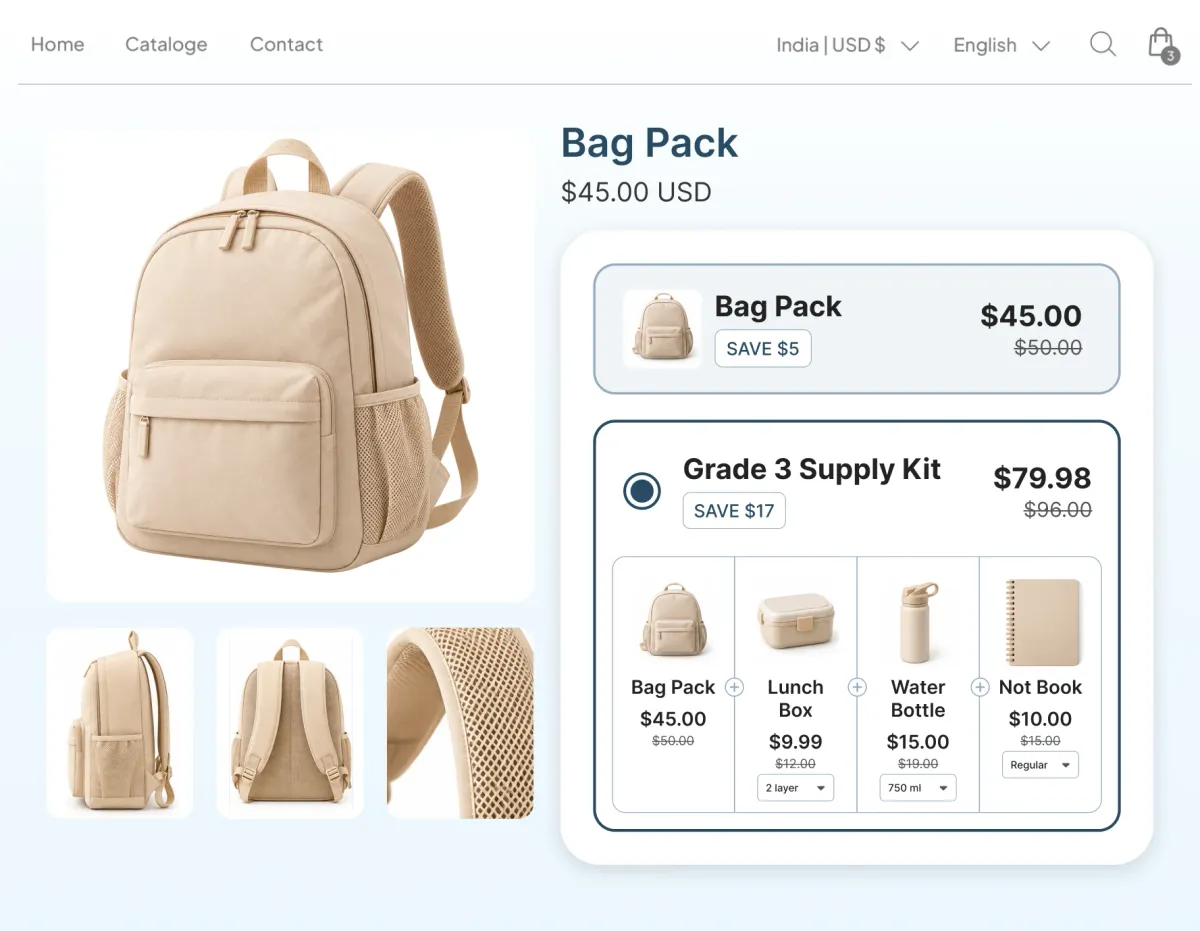
Sell the list the parent is already holding
Publish one bundle per grade band that mirrors the supply list schools send home. A parent arrives with a printed list and wants to tick it off in one sitting, so a bundle that matches the list removes the hunt for each item and the worry that something was missed.
Schools differ, so build a base list for each grade and let parents swap in the few items their school asks for that others do not.

Ink-and-paper compatibility bundling
The strategy no other stationery promotion guide covers
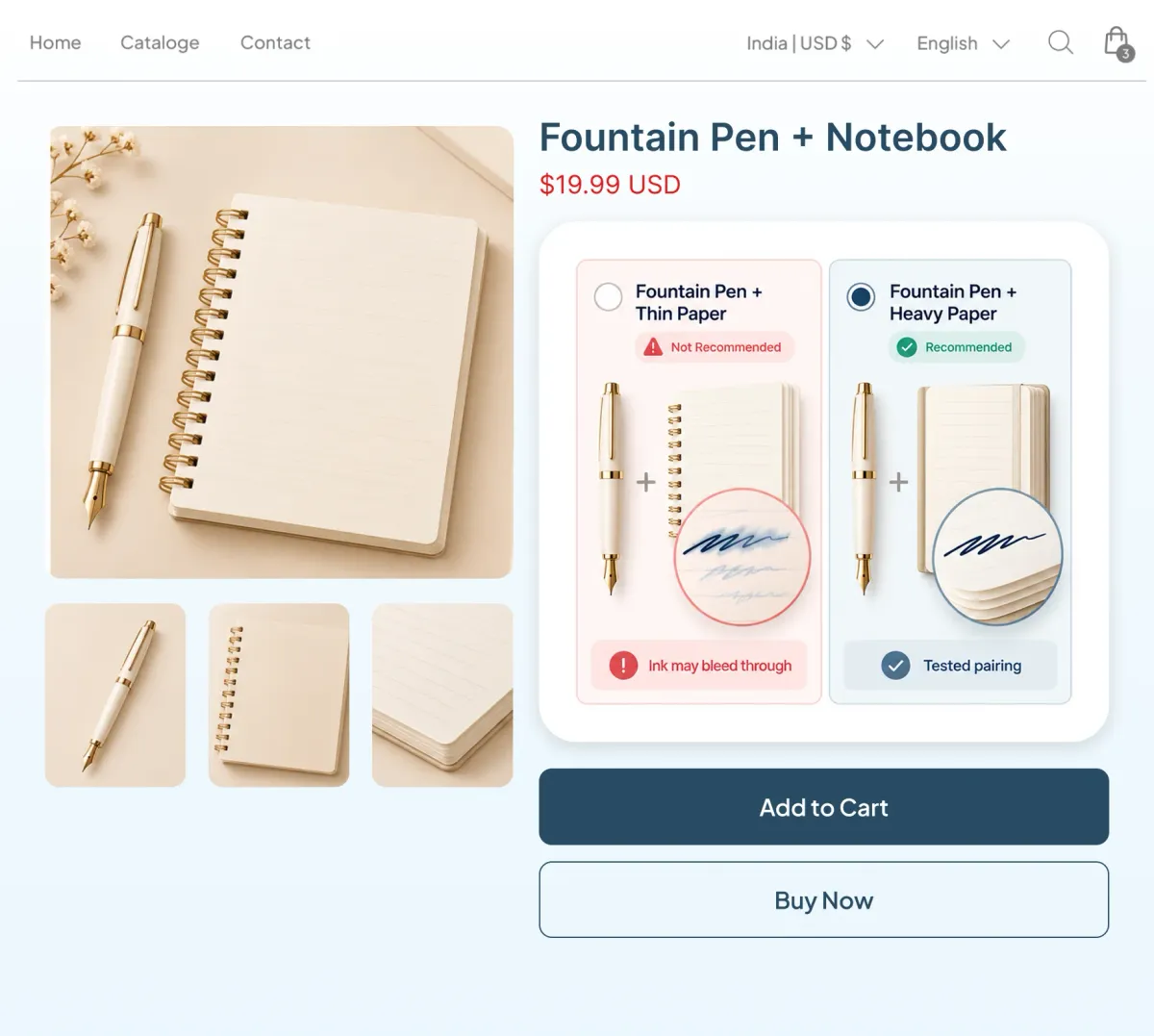
Generic bundling advice treats a notebook and a pen as interchangeable companions. In practice, paper weight and coating decide whether ink sits cleanly on the page or spreads into the fibers, shows through to the back, or smears before it dries. Fountain pen inks, alcohol markers and heavy gel inks are the usual offenders on light, uncoated paper.
A bundle that pairs the wrong ink with the wrong paper does more than disappoint. It spoils the first page a customer writes, and that first page is the moment that decides whether they reorder.
Most guides optimize for basket size and never connect the bundle to the physical behavior of ink on paper, which is the single most common source of disappointment in this category.
Refill and cartridge standard matching
A refill is only a bargain if it fits the pen
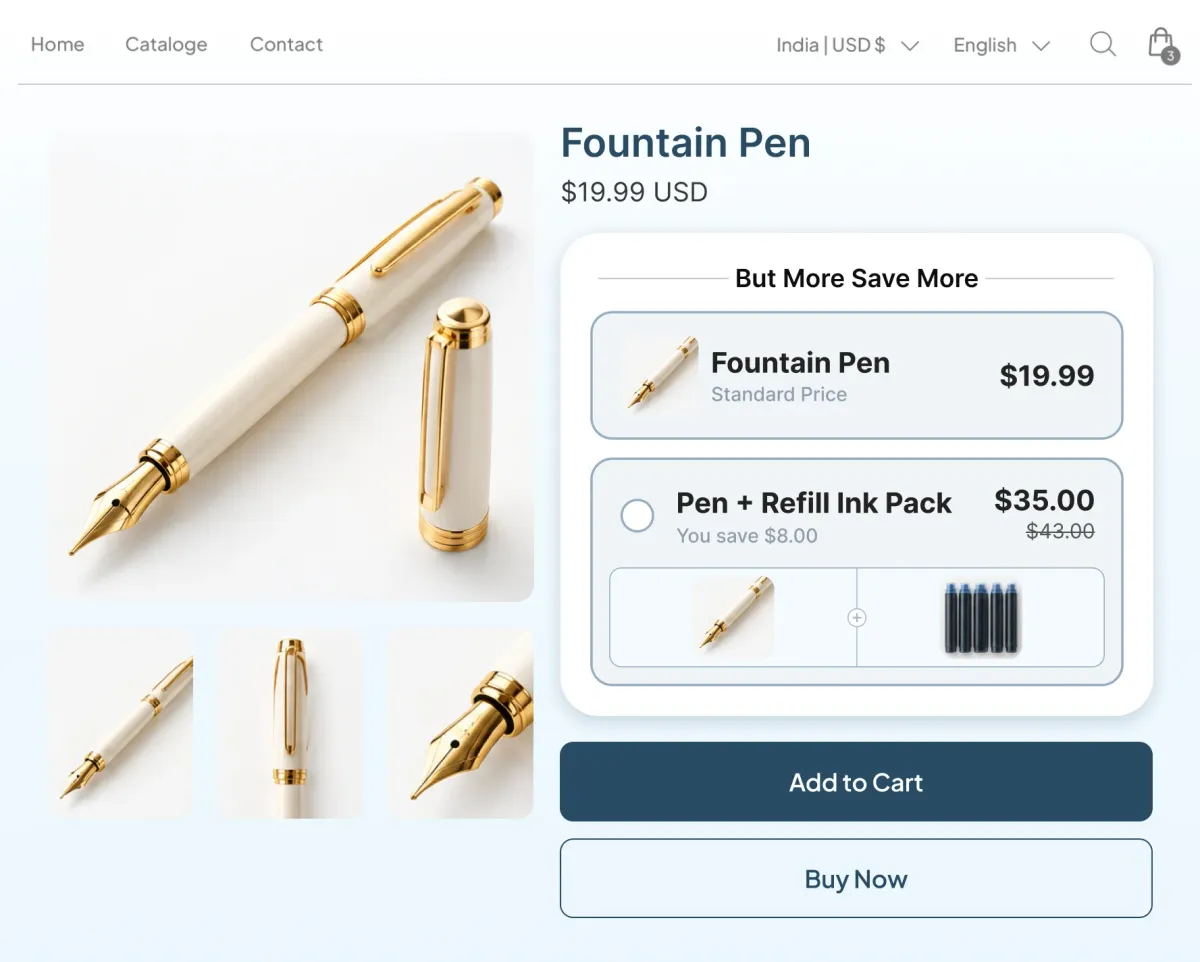
Pens accept refills by standard, and several standards look nearly identical in a photo. Some brands use their own proprietary cartridge systems, while others follow international standard formats, and fountain pens split further between cartridges and converters. Printer ink and toner follow the same logic by printer model.
Bundling a pen with the refill pack it takes turns a one-time purchase into a repeat one, because the customer already has the right refill in hand when the first one runs dry.
Binder, ring and page-format matching
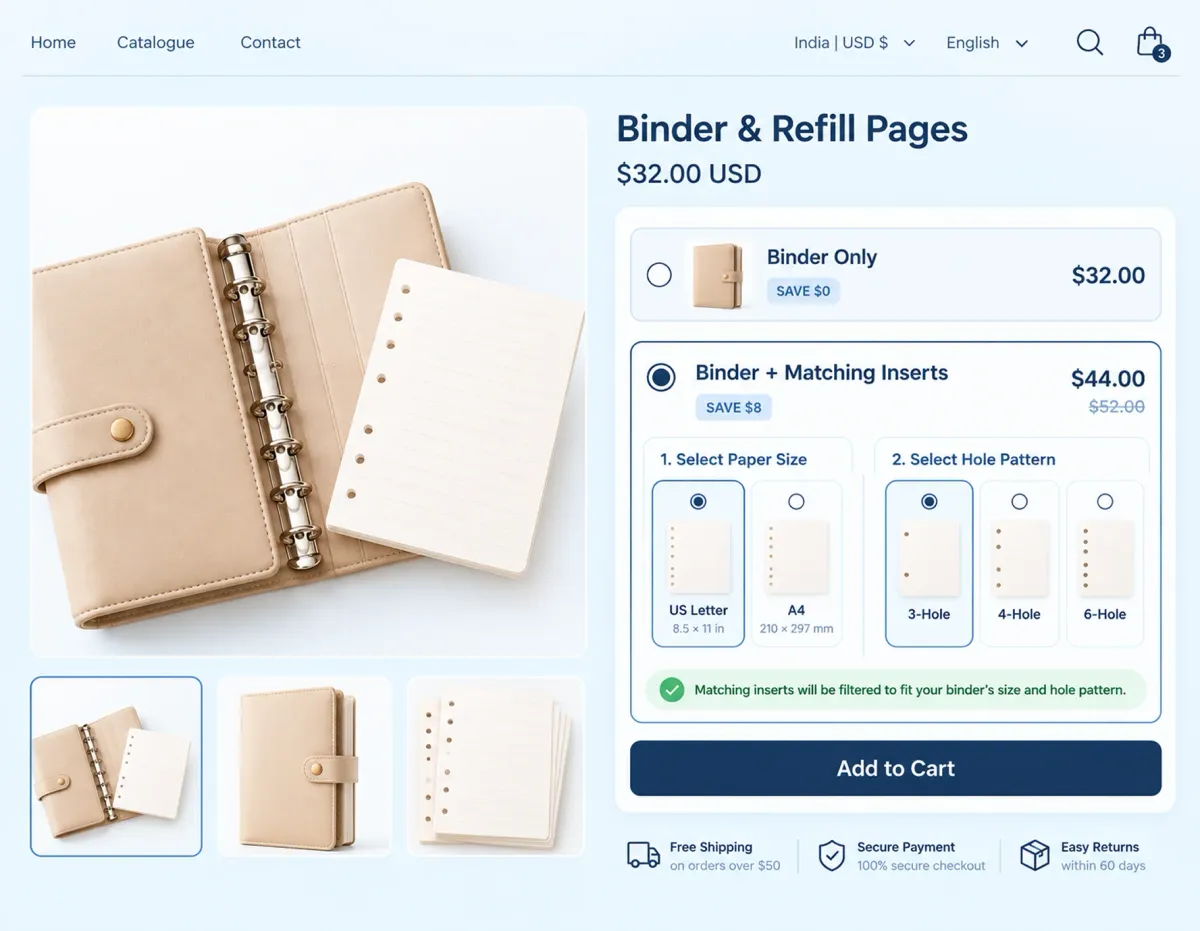
Paper size and hole pattern change by region and by system
Page formats differ by market, with US Letter in North America and A4 in most other places, and the hole patterns on binders and planners vary on top of that. Three holes are common with US Letter, while A4 binders use two or four, and many planners use their own ring layouts entirely.
An insert pack bundled with the wrong binder cannot be used at all. Filtering bundle options by the format the shopper selects first prevents that mismatch.
Open-stock build-your-own sets
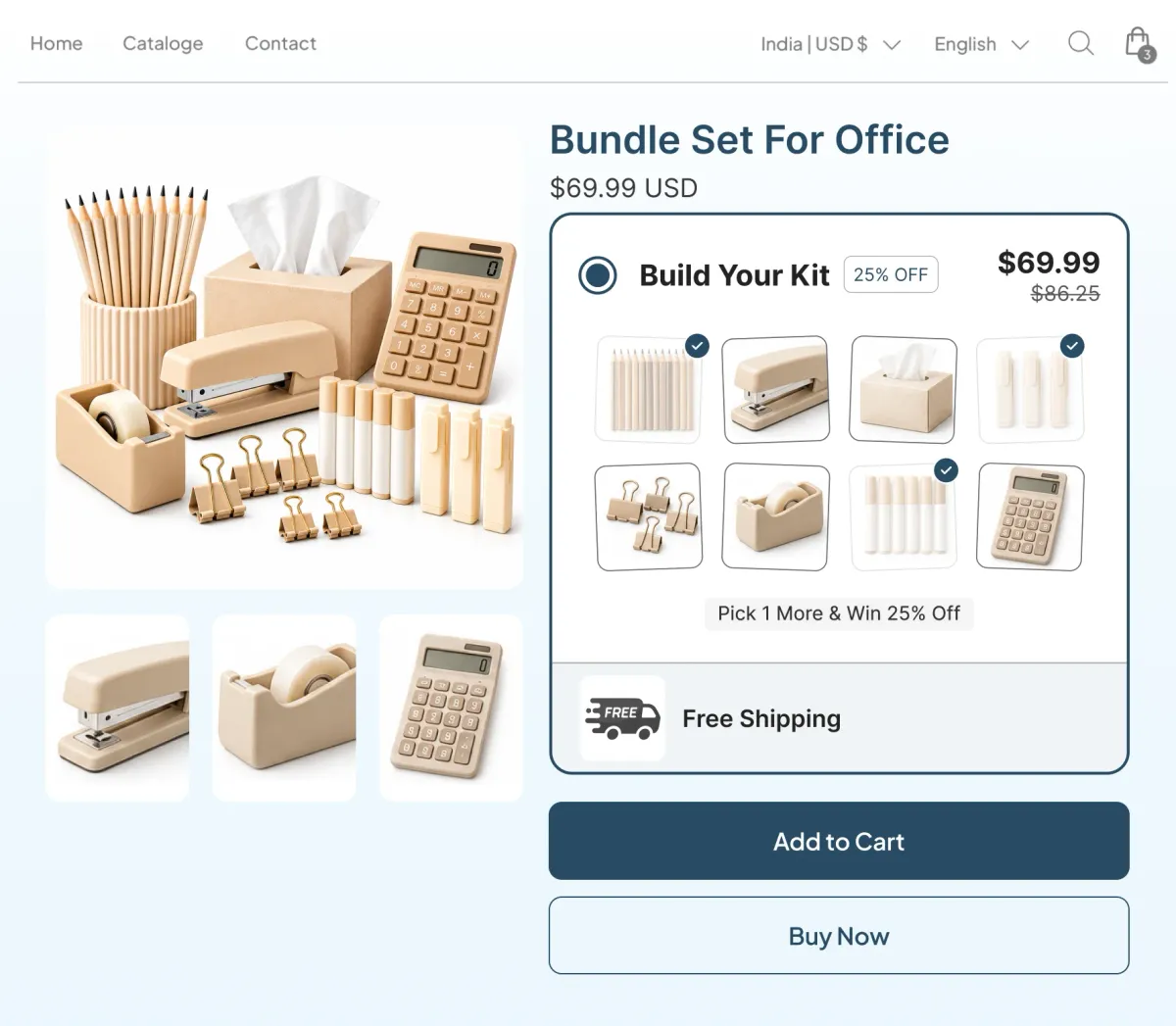
Many stationery lines sell by the single color, not only by the boxed set
Colored pencils, markers, pens and inks are often available as open stock, which means a customer can buy one color at a time. Most buyers still want a set, but they want their own set: the eight colors they actually use rather than twenty-four they do not.
Letting shoppers pick any number of items from the open-stock range at a set price keeps the basket growing without forcing a fixed assortment on them.
Per-headcount office quantity breaks
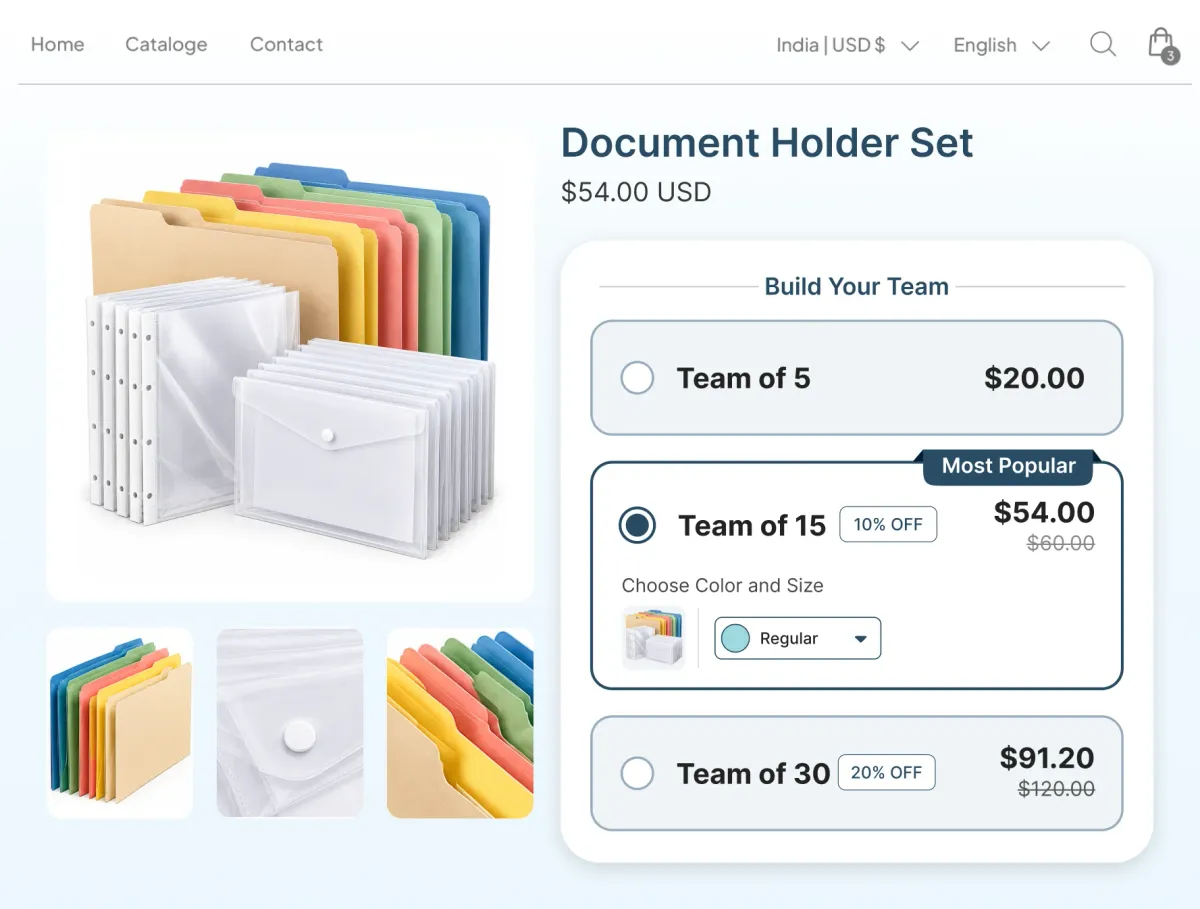
Offices think in people, not in packs
An office manager rarely asks how many boxes of pens to buy. They ask how many people the order has to cover. Labeling quantity break tiers by team size ("Team of 5," "Team of 15," "Team of 30") lets them pick the tier that matches their headcount without doing the arithmetic themselves.
Office restock subscriptions by headcount
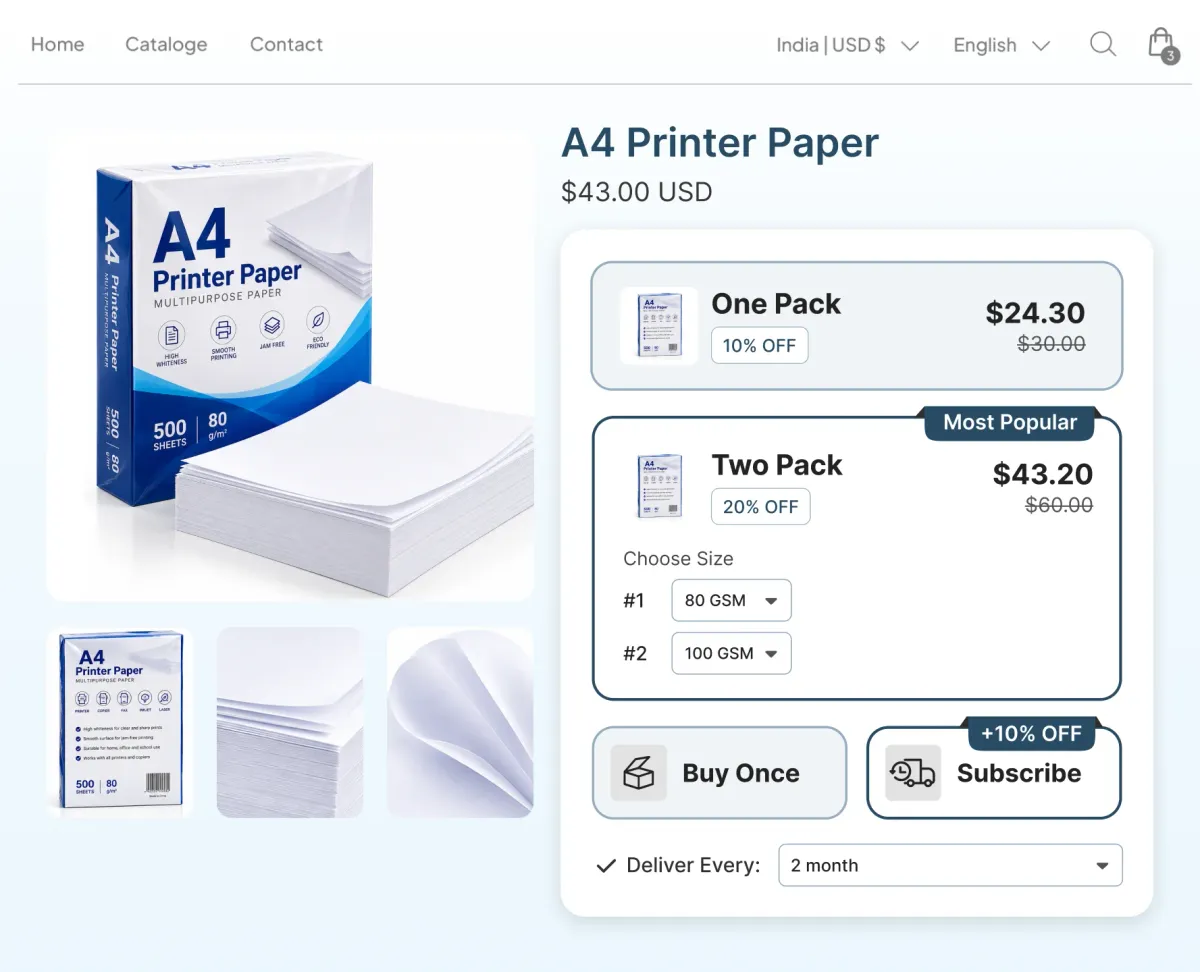
Supplies run out on a schedule that scales with the team
Paper, toner and pens deplete at a rate set by how many people use them, which makes a recurring order a natural fit. Offering several cadences, monthly for a busy team and quarterly for a small one, keeps the subscription matched to real consumption, so customers do not cancel from over-supply.
Custom print bundles with proof approval
Branded stationery is a bulk order with a design step attached
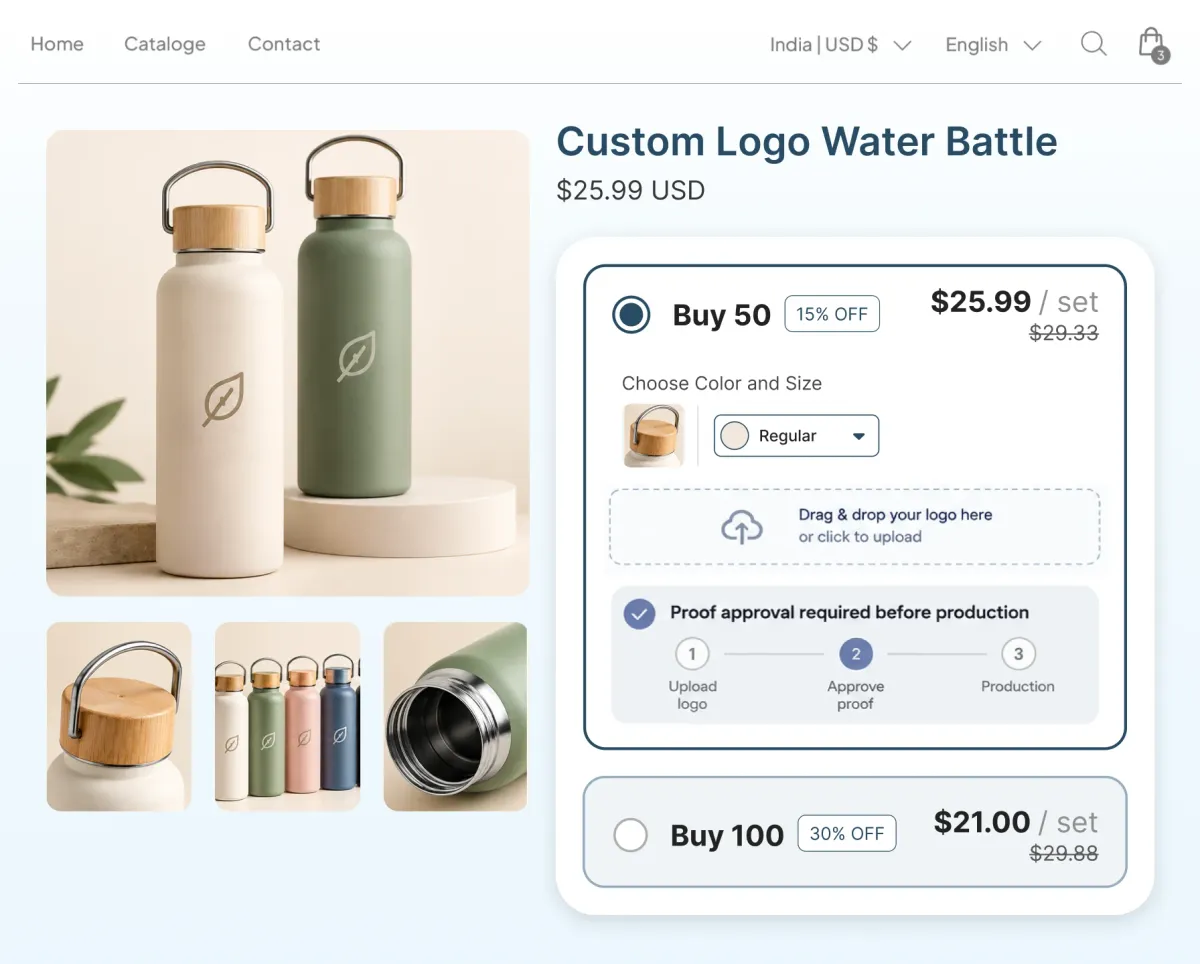
Logo notebooks, branded pens and printed stationery sets are bought by businesses for staff, clients and events. They come with a minimum order quantity and a design that must be approved before printing, because a misprinted batch cannot be resold.
Bundle the notebook, pen and sleeve as one branded set, and require a proof approval before the order moves to production.
Planner-cycle launch bundles
Two planning years run in parallel: the calendar year and the school year
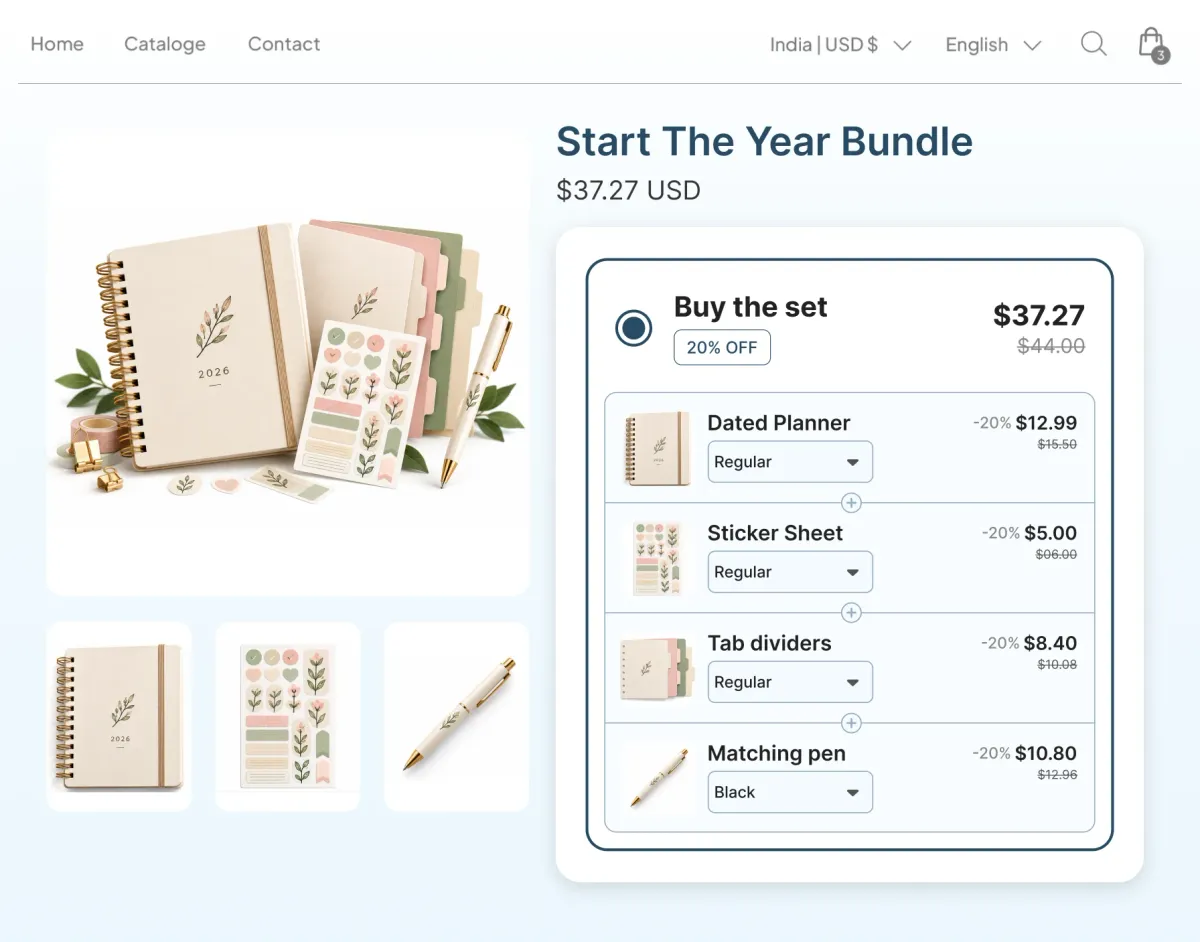
Planners sell around two separate cycles. Calendar-year planners peak in the last months of the year, while academic planners peak in summer ahead of the school year. Bundling the planner with the accessories that go with it, such as stickers, dividers and a matching pen, at the start of each window captures the shopper while the new year is still full of intention.
Dated-planner mid-year bundle-down
A dated product loses value every week of the year
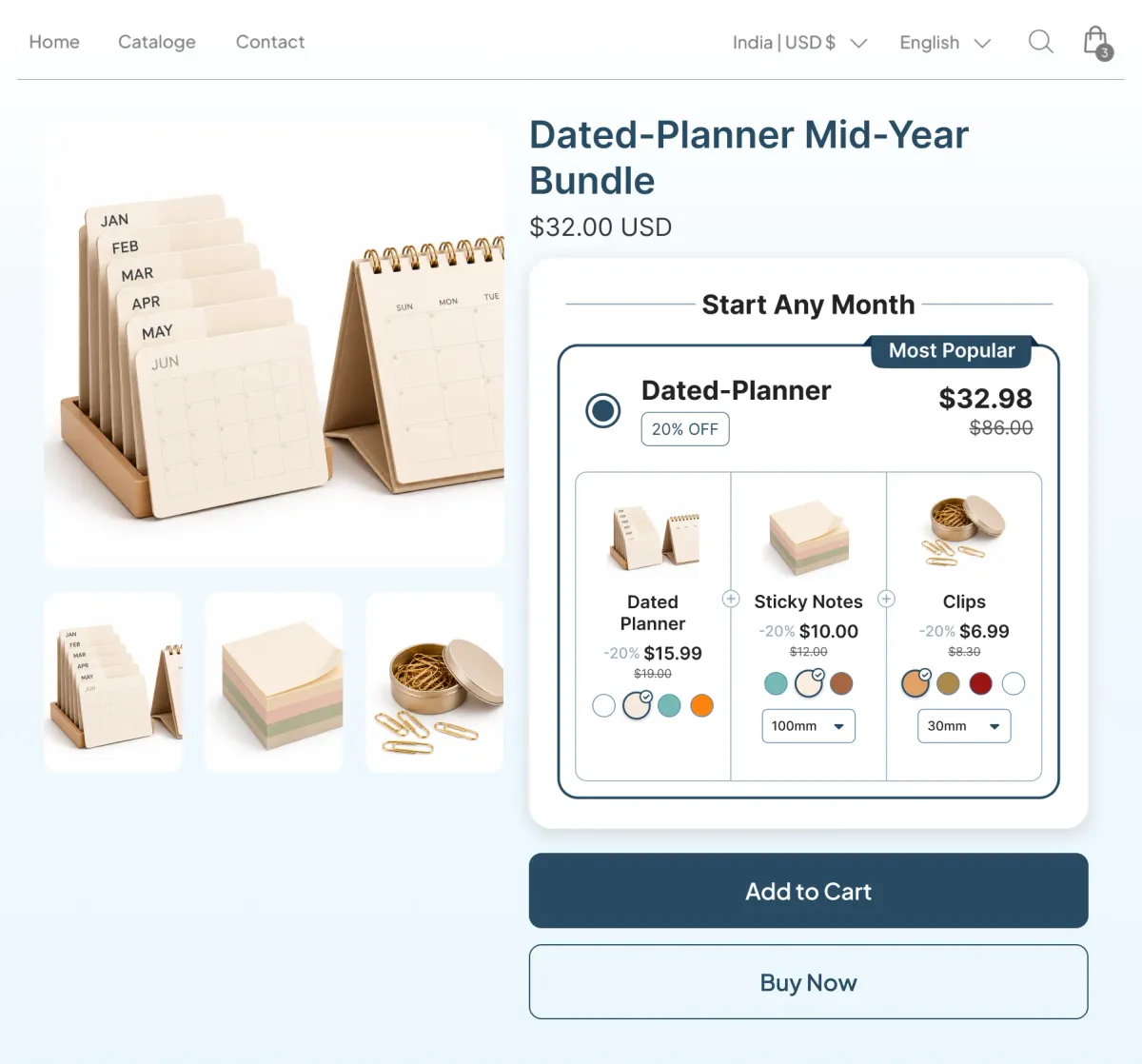
A calendar-year planner is worth noticeably less to a shopper in July than in January, and it is worth nothing after December. Rather than a public markdown that teaches customers to wait, pair the remaining planners with undated accessories in a "start any month" bundle, so the offer reads as a fresh start and not as leftover stock.
Ink sample and paper swatch unlocks
Let customers test the pairing before they commit to a full bottle or ream
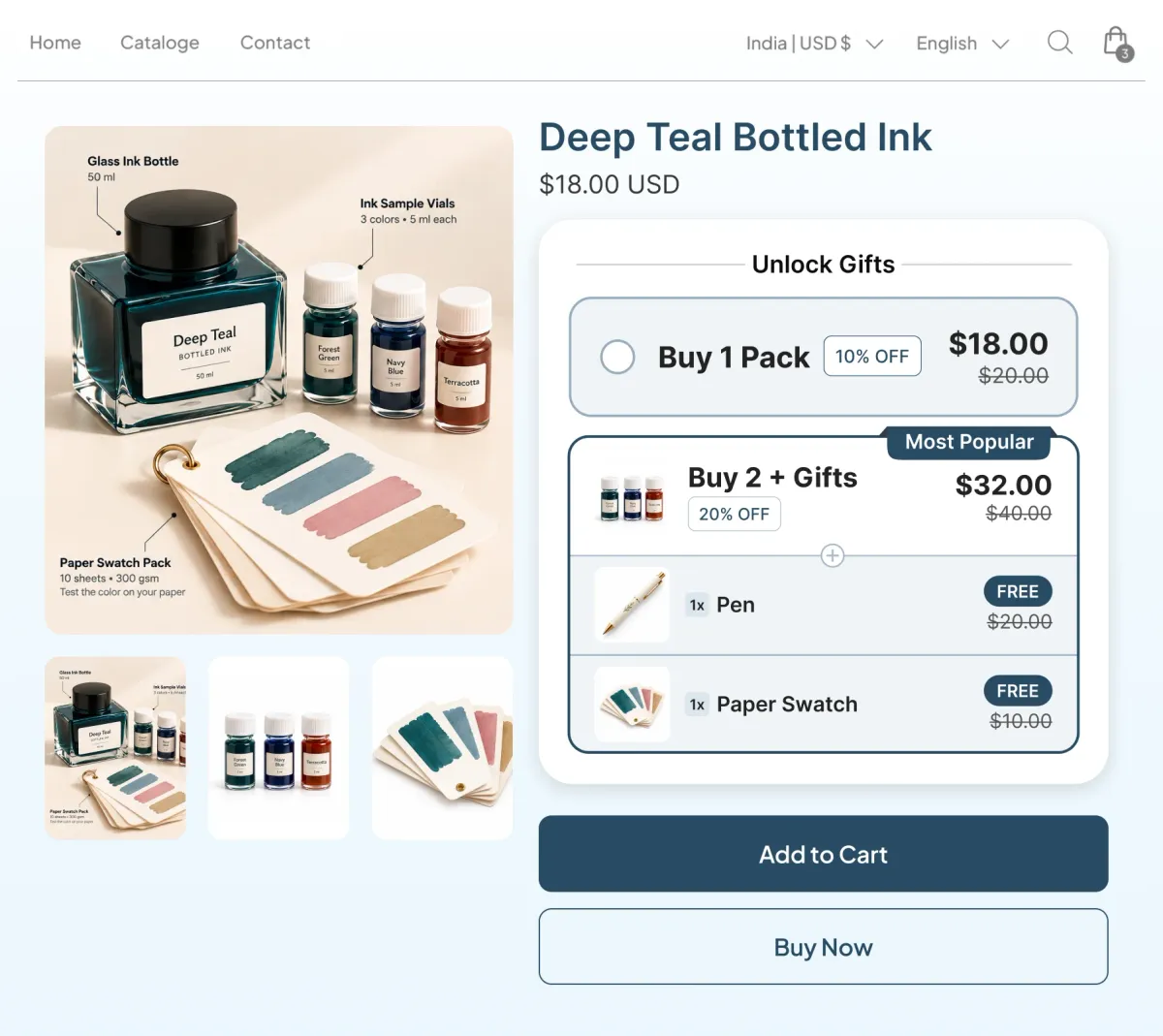
Small ink sample vials and paper swatch packs are a staple of the hobbyist side of this category, because color on a screen and color on a page rarely match. Offering a sample set as the cart-threshold gift lets customers test a new ink on the paper they already use, and it puts a second product in front of them with almost no risk.
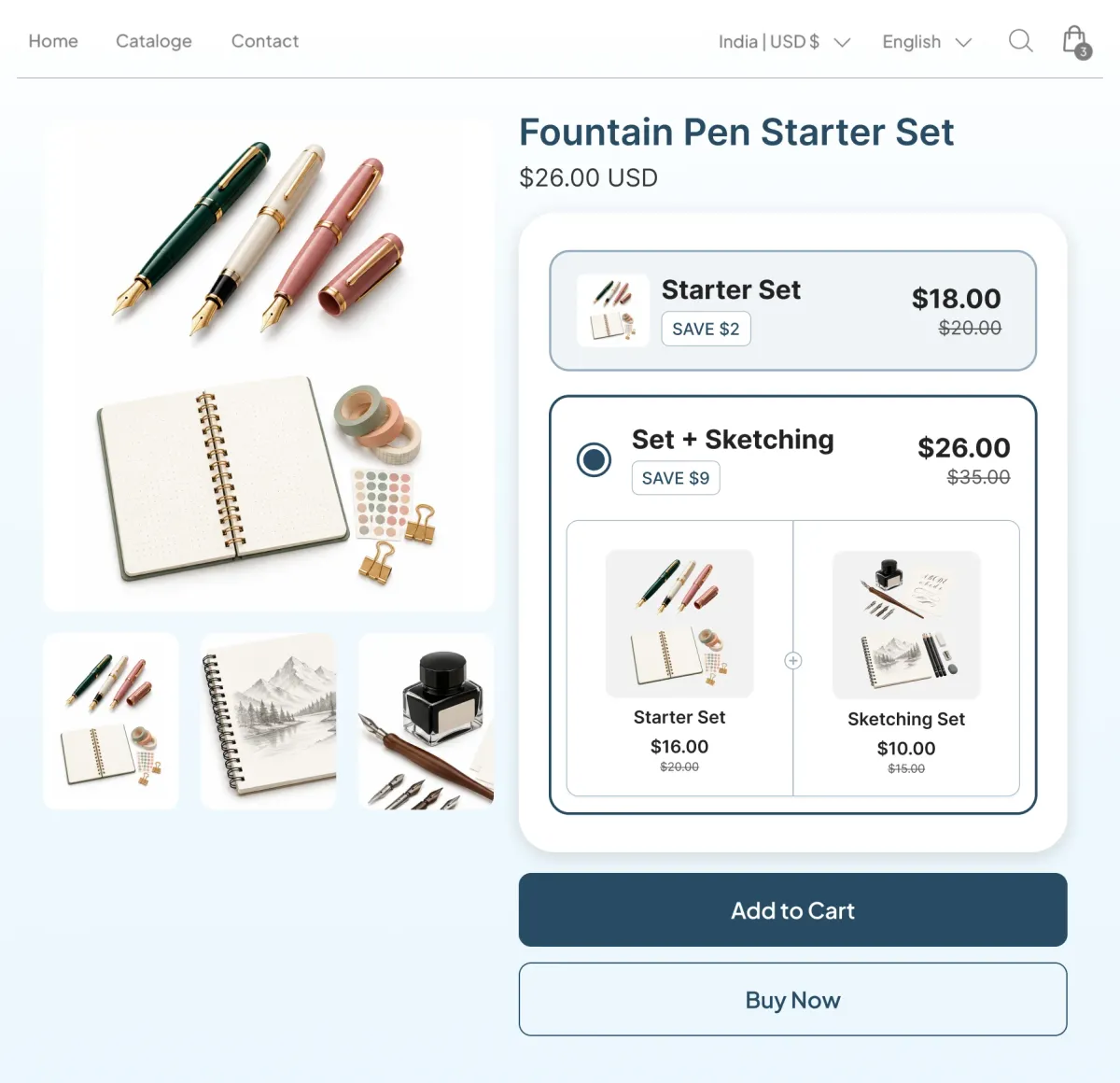
Enthusiast starter kits
Two different buyers shop the same catalog
The everyday buyer wants a reliable pen and a notebook that works. The enthusiast wants to explore fountain pens, calligraphy or bullet journaling, and does not yet know which pieces fit together. A starter kit built around one hobby gives that second buyer a safe first purchase, with every piece already tested against the others.
This is where cross-selling is strongest. The customer is not being upsold to a pricier pen, they are being given the complementary items that make the first pen worth using.
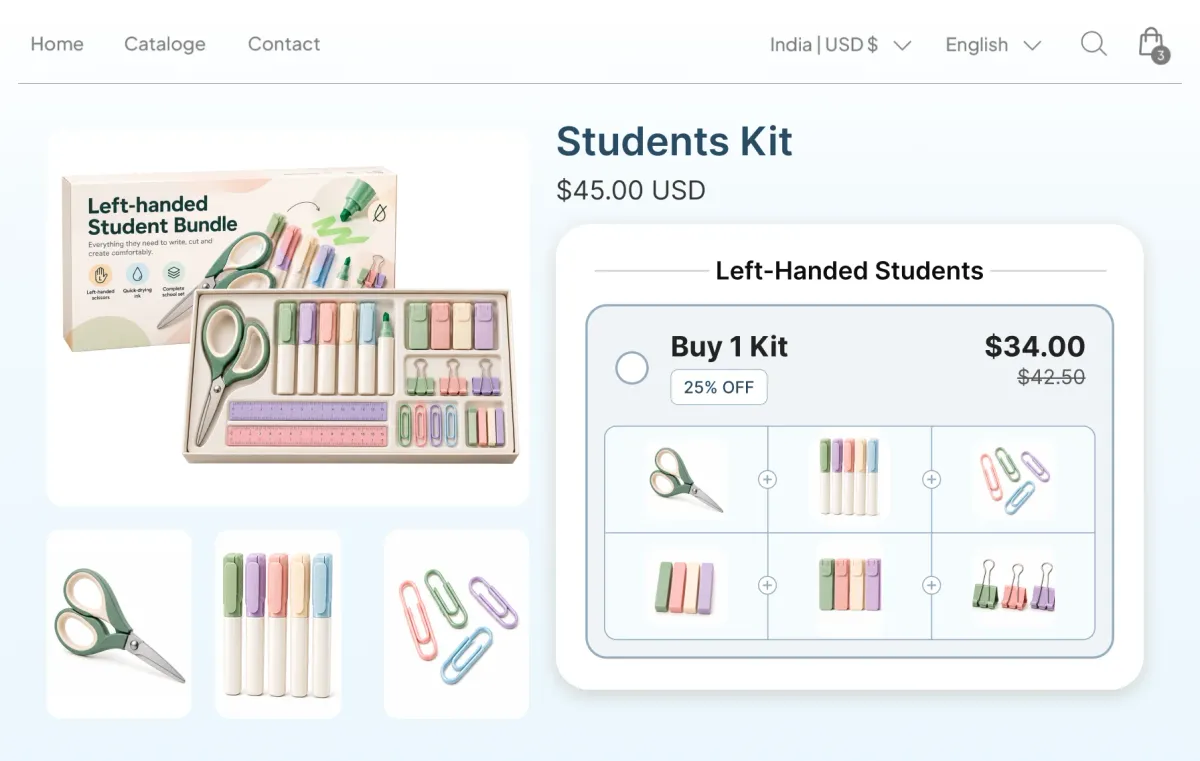
Handedness-aware bundles
A detail that quietly breaks a school-list bundle
Left-handed students need left-handed scissors, and many also prefer quick-drying or smudge-resistant ink, because a left-handed writer drags a hand across wet lines. A school-list bundle that ships right-handed scissors to a left-handed child is incomplete, even though every box on the list was ticked.
Offering a handedness option inside the bundle solves that, and it signals that the bundle was built by someone who understands the way children use these tools.
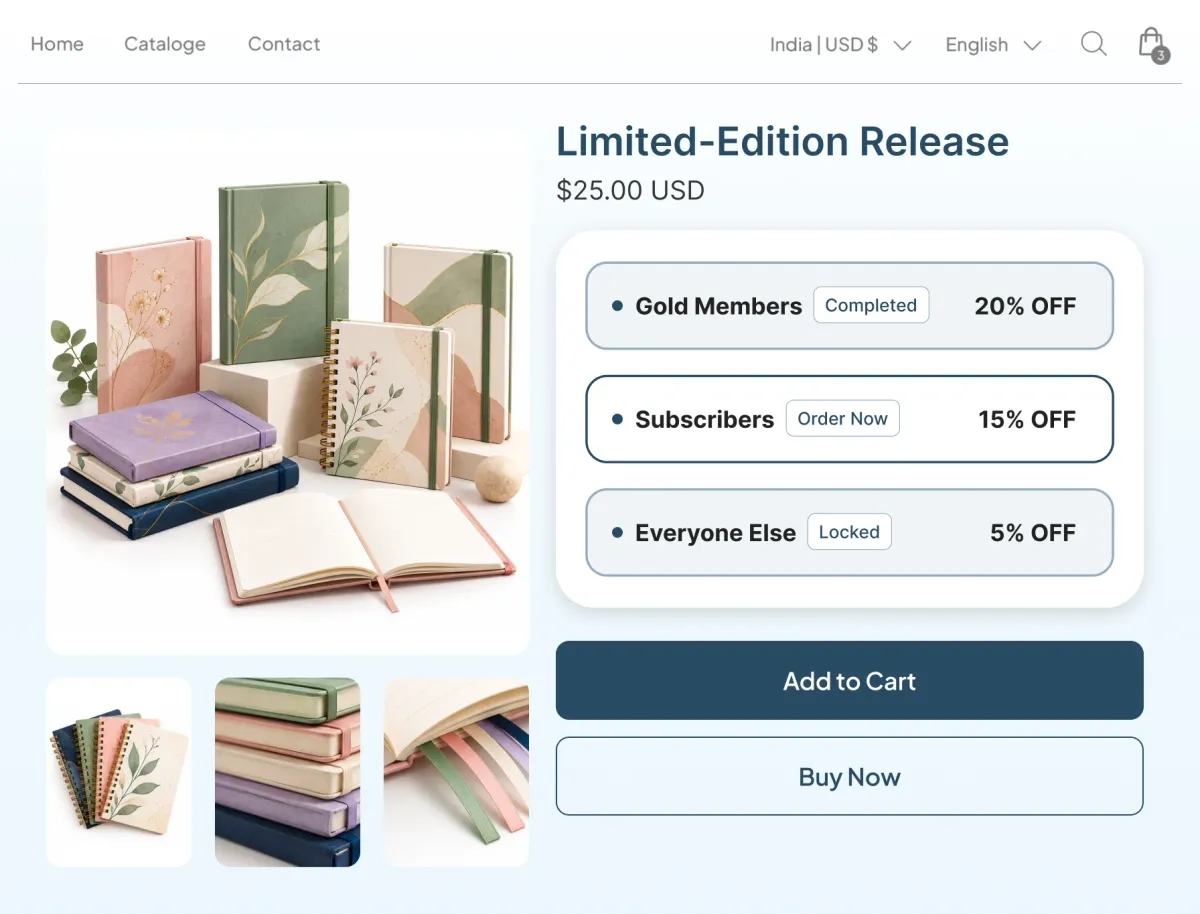
Loyalty-gated limited-edition releases
Limited colors and collaborations sell out, so access is the reward
Seasonal ink colors, limited-edition notebooks and designer collaborations are produced in small runs and often sell out quickly. Offering top-tier customers early access, instead of a discount, rewards loyalty without cheapening the release, and it builds the anticipation that collectors respond to.
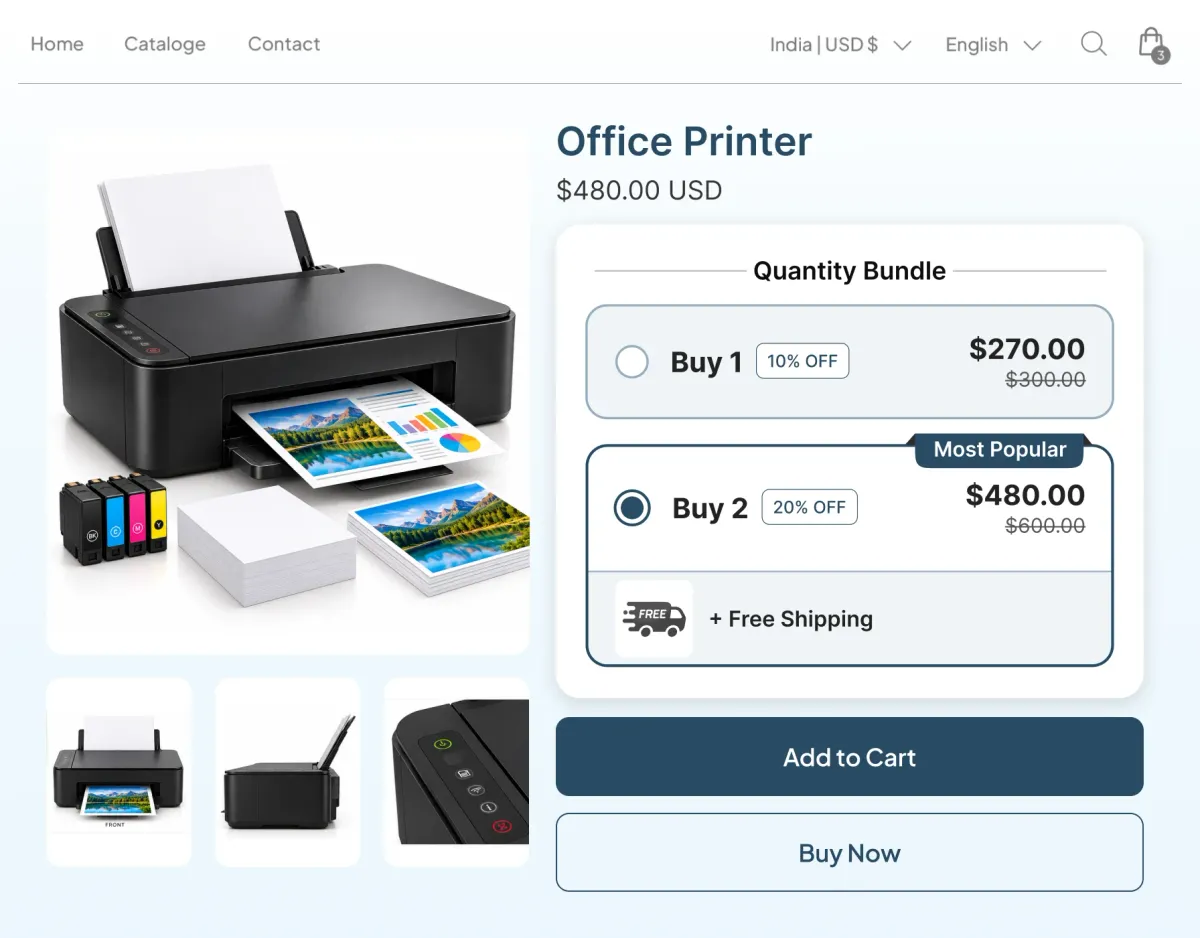
Free shipping thresholds built on order rhythm
Set the line where real orders already land
Paper is heavy and carries a thin margin, so shipping weighs more on a stationery order than on most categories. Set the free shipping threshold from two numbers you already have: the typical total of a school list and the typical monthly office reorder. A line just above those totals gives shoppers a reason to add one more item without feeling the threshold is out of reach.
Post-purchase upsell: the matching refill or paper
One more relevant item after the order is placed
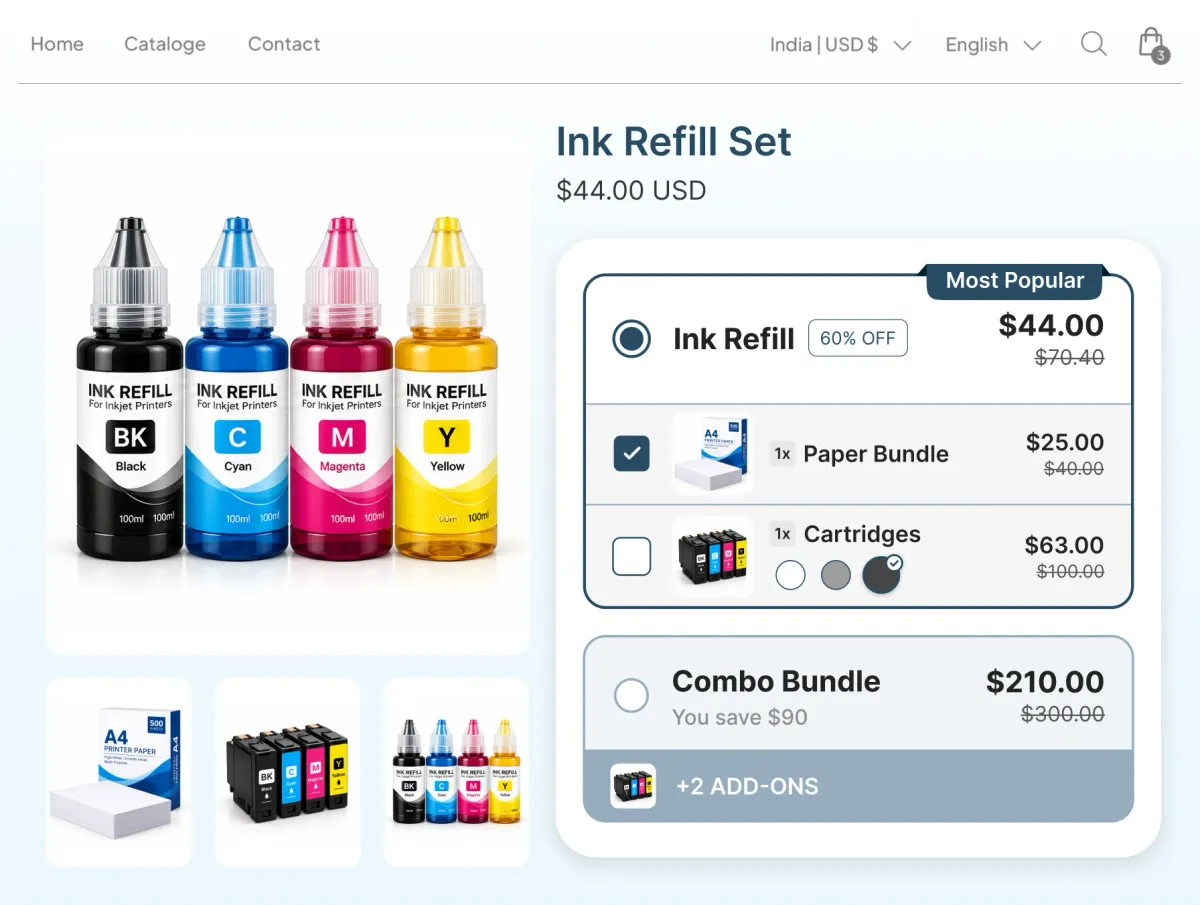
Once checkout is complete, a one-click offer can add the refill pack for the pen the customer just bought, or a pad of paper that suits the ink in the order. Because payment details are already on file, accepting takes one tap and leaves the original order untouched.
Stationery promotion calendar
Stationery demand follows the school year, the fiscal calendar and the planning season more closely than most categories. This month-by-month map shows which strategy fits each period, using US timing.
Self-audit: how bundle-ready is your store?
Score your current setup against these six dimensions before you implement the strategies above. Stationery brands most often miss ink-and-paper tagging and refill standard attributes, even when the rest of their bundling is solid.
The bars are an illustrative self-check, not measured data. Use them to spot where your own setup is thin.
From solo stores to 8-figure brands, teams trust Profit Pumper to grow their revenue.
Consistently rated 4.9 stars on the Shopify App Store for ease of use and reliability.
Install, pick a template, configure your offer, and go live. No coding or developers needed.
Frequently asked questions
How is stationery bundling different from bundling in other categories?+
Can a bundle cause returns in this category?+
Do I need a developer to set these up on Shopify?+
Which strategy should a small stationery brand start with?+
How is this different from a sitewide sale?+
Your offers. Configured, not discounted.
Set up school-list bundles, refill-matched sets and per-headcount quantity breaks on your Shopify store in minutes, with no developer or theme edits needed.
Try Pumper Bundles Free