


Shopify Promotion Strategies
Built for Food & Beverage Brands
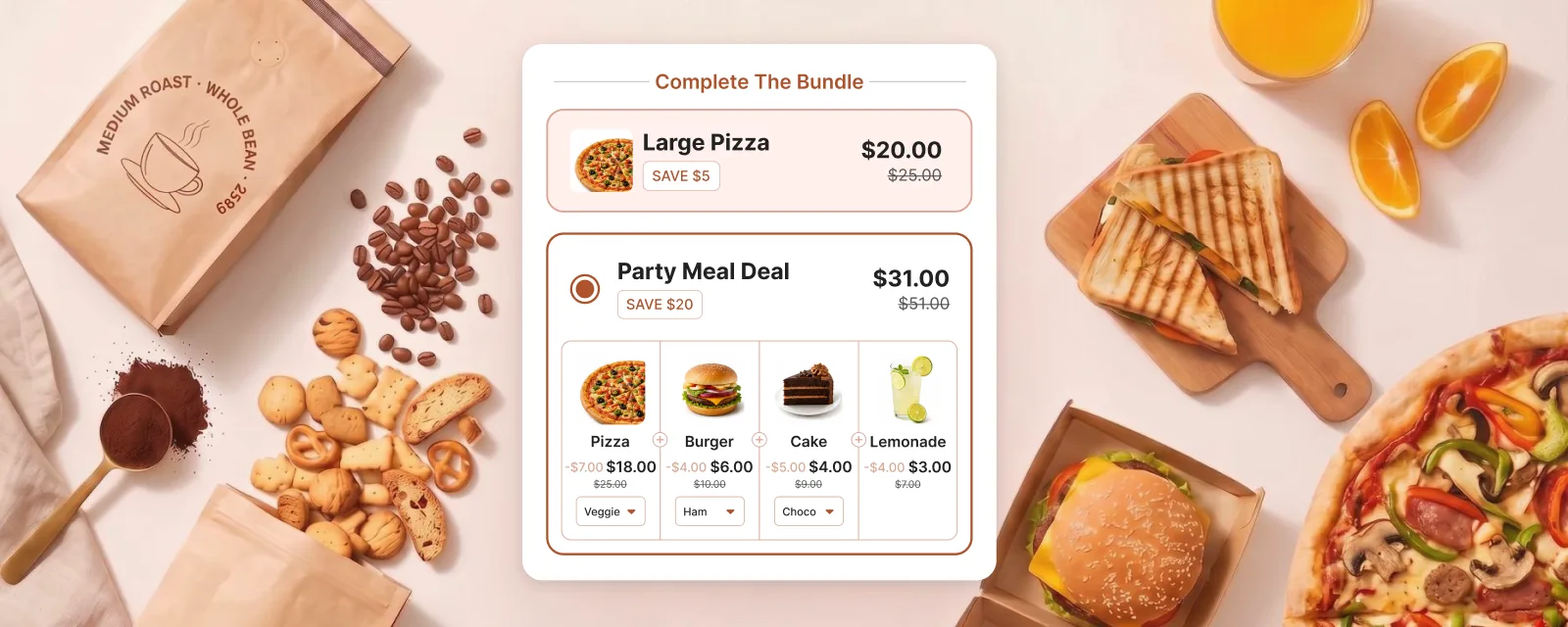
Food and beverage carries three constraints most Shopify advice ignores: shipping cost relative to product value, freshness windows, and dietary restrictions. These fifteen strategies grow AOV around those realities instead of around a generic percentage-off.
Why food & beverage promotions behave differently
Generic Shopify AOV advice assumes the product is light, shelf-stable, and roughly the same margin whether it's shipped alone or in a bundle. Food and beverage breaks all three assumptions at once. Shipping cost is often a larger share of the order economics than in almost any other vertical, since coffee, sauces, and snacks are heavy or bulky relative to their price. Freshness has a real clock on it, so a bundle that sits in a warehouse queue for two weeks isn't the same product as one that ships same-day. And a meaningful share of customers are shopping around a dietary restriction, not just a preference, which makes a careless bundle a trust problem, not just a mismatch.
That means the highest-leverage food and beverage promotions aren't the ones that maximize basket size in the abstract. They're the ones that maximize basket size per shipment, respect freshness windows, and route dietary-restricted customers into bundles that actually work for them.
The strategies below are ordered from immediate, low-effort plays to structural and seasonal ones. Each includes the mechanism, who it works for, and the Pumper Bundles offer type that runs it without a developer.
Variety pack bundling by occasion, not SKU
The highest-converting food and beverage promotion, and the most under-used
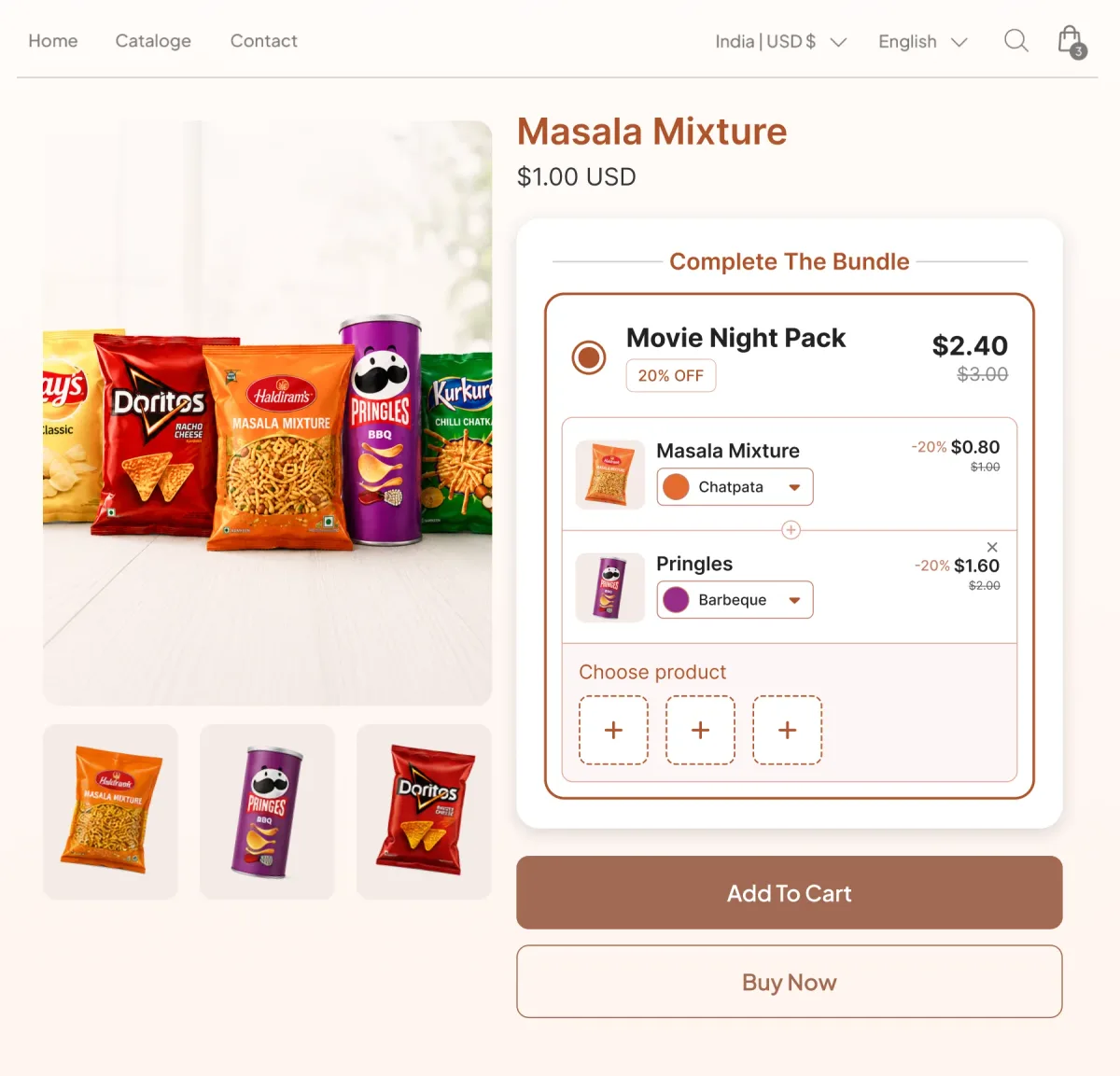
Instead of discounting one flavor or product, group products by the occasion they serve: a "morning routine" pack (coffee, creamer, oatmeal) or a "movie night" pack (three snack flavors). The bundle discount applies only to the full set, so no hero product is ever discounted alone.
Food shoppers already think in consumption occasions, not individual SKUs, and it converts new-flavor trial far better than asking someone to commit to a full-size flavor unseen.

Replenishment-cycle quantity breaks
Sell against how fast the product actually runs out, not arbitrary quantity tiers
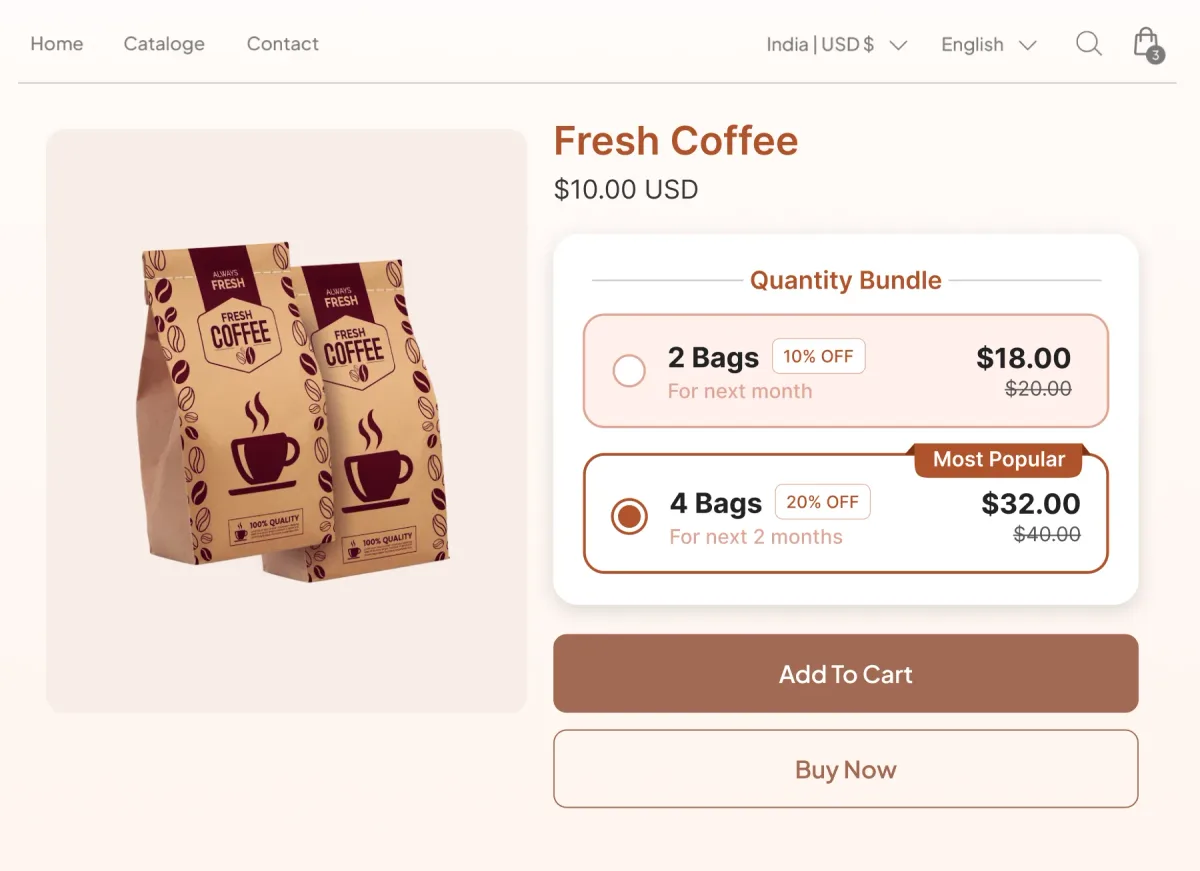
Consumables have a known depletion rate: a 12oz bag of coffee brewed daily lasts roughly two weeks for a single household. Framing quantity breaks around that cycle, "2-bag: your next month," "4-bag: your next two months," converts better than a generic "buy 2, save 10%" because it answers the reorder-timing question the shopper is already asking.
Discovery-size sample gift unlocks
Turns your gift-with-purchase into a low-risk new-flavor launch channel
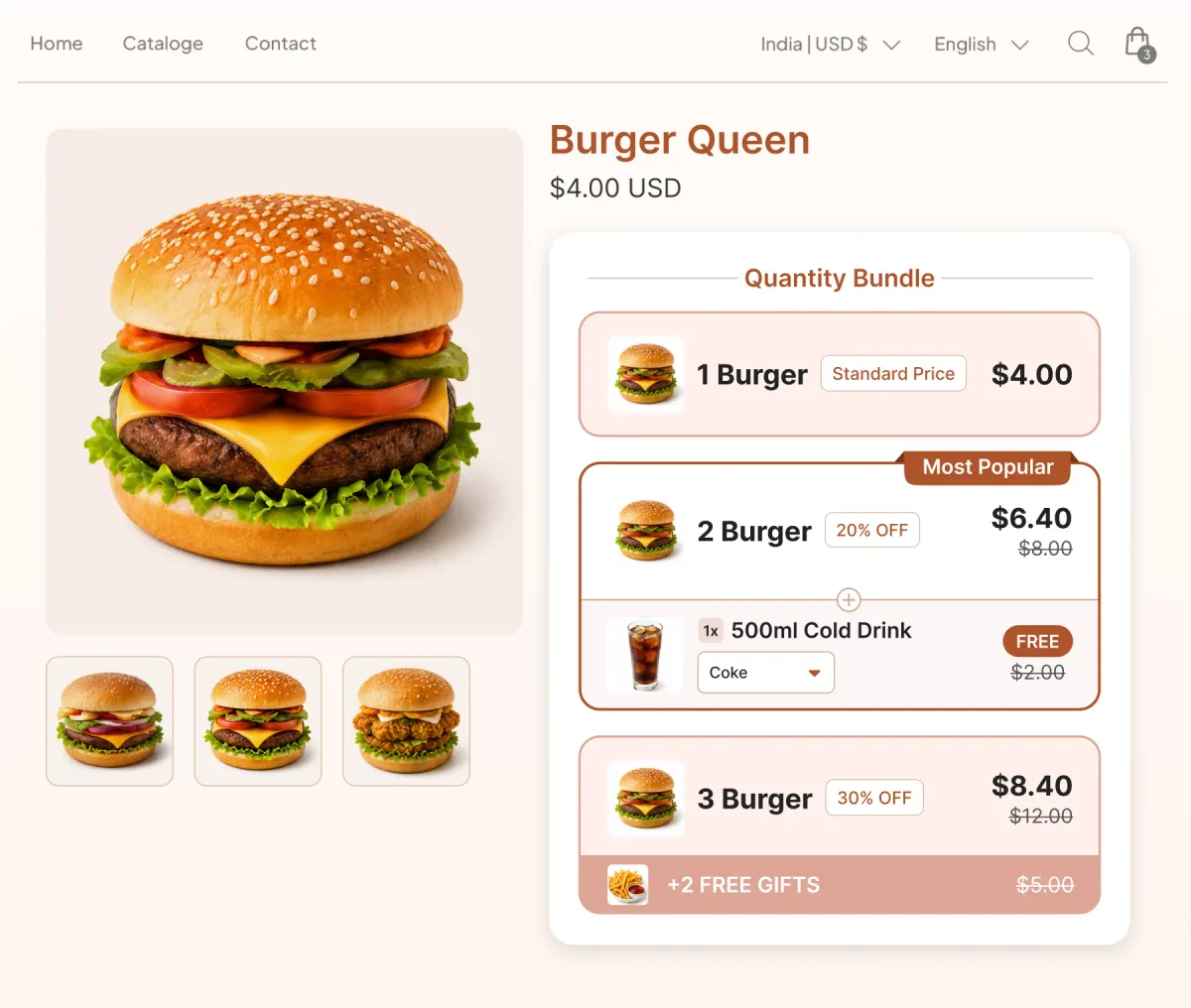
Instead of a generic branded item as the cart-threshold gift, unlock a single-serve or trial-size sample of a flavor the customer hasn't bought yet. This does double duty: it lifts AOV like any GWP, and it seeds trial of a new or slower-moving SKU without asking the customer to commit to a full case sight (and taste) unseen.
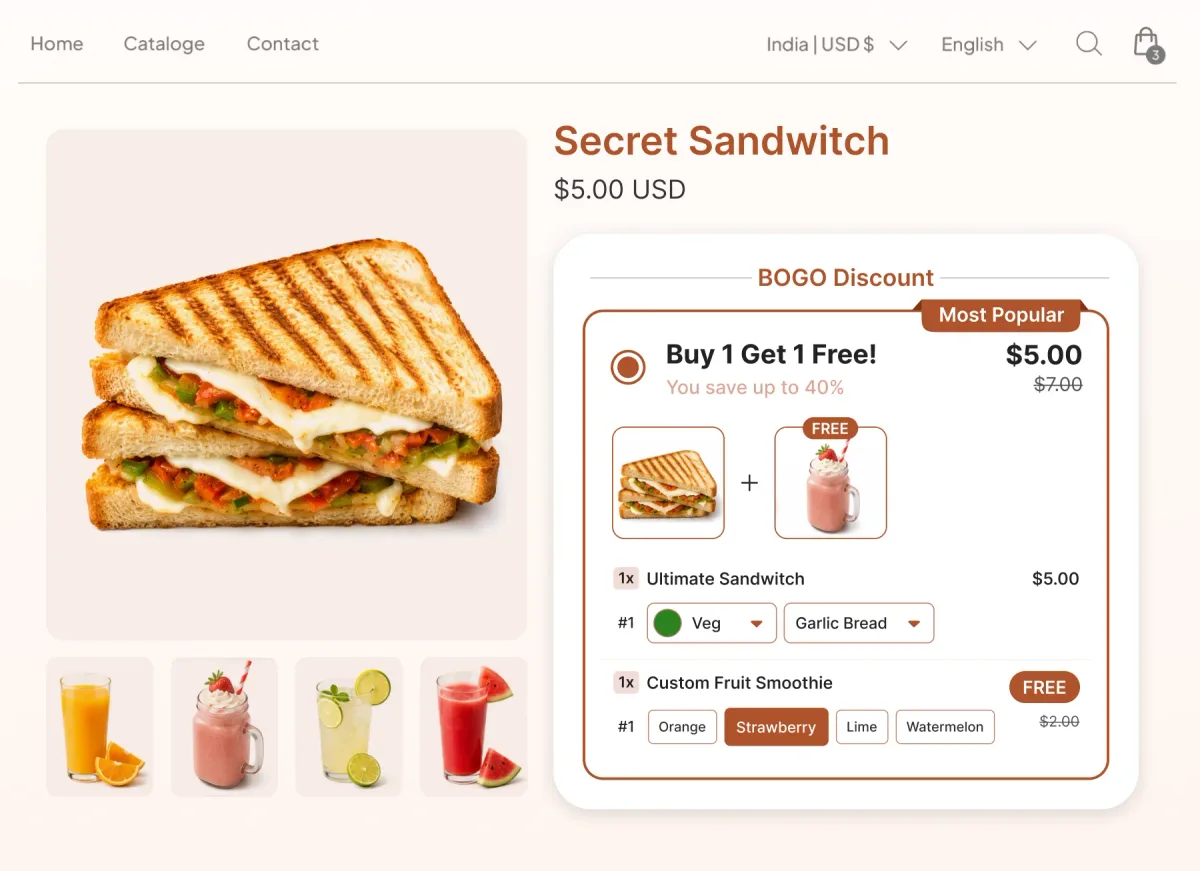
Pairing-based cross-sell BOGO
Pairs the anchor product with the item that's actually consumed alongside it
Rather than BOGO on two units of the same product, structure BOGO across products that are genuinely consumed together, coffee and creamer, chips and salsa, pasta and sauce. This mirrors real consumption behavior instead of just discounting a duplicate unit, and it introduces a second SKU the customer may not have tried yet.
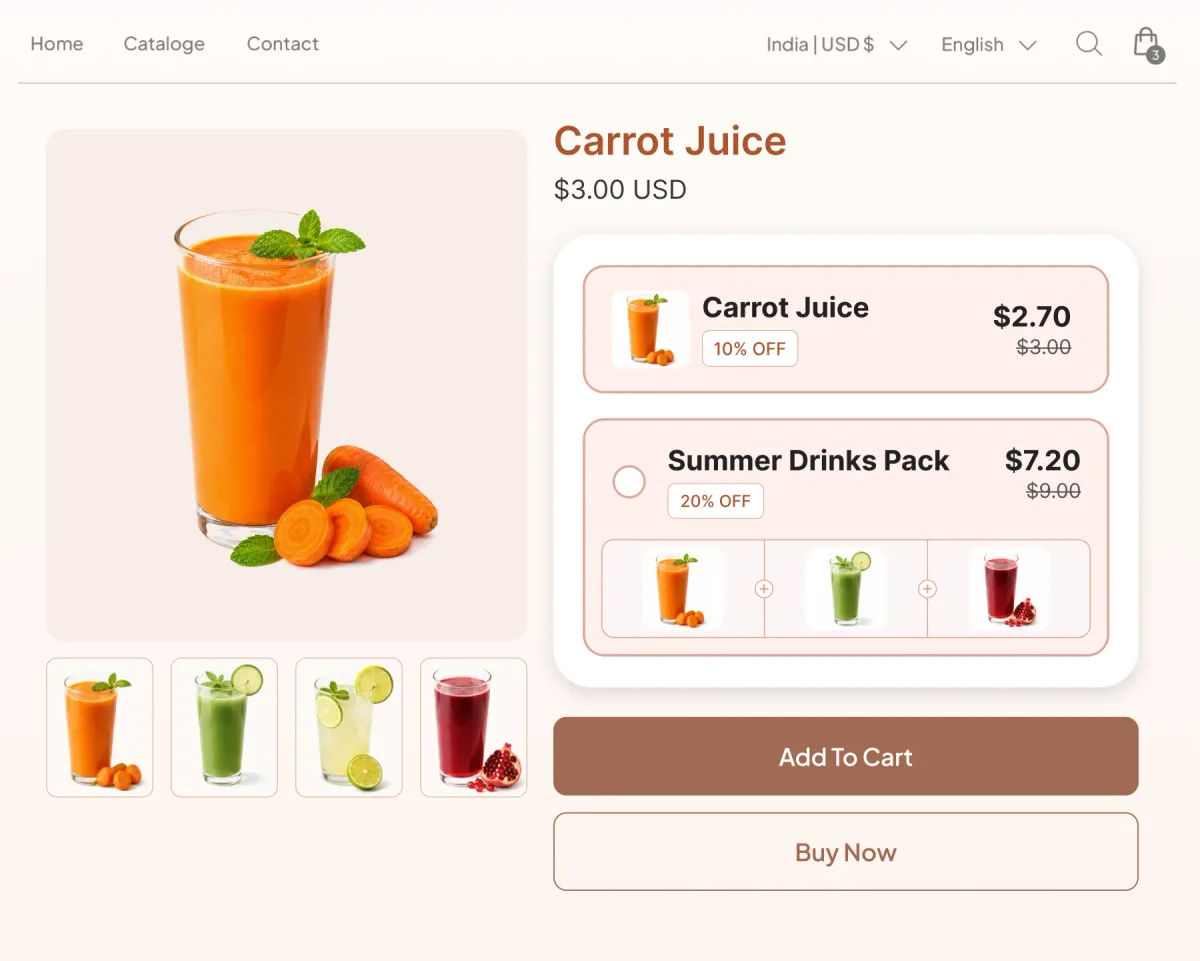
Seasonal and occasion capsule bundles
Food consumption shifts with the calendar more than almost any other category
Bundle around what people are actually cooking or drinking each season: grilling sauces and spice rubs in summer, hot cocoa and baking mixes in winter, iced tea and cold-brew concentrate in warm months. This creates a natural, non-arbitrary reason for a limited-time bundle instead of a manufactured sale date.
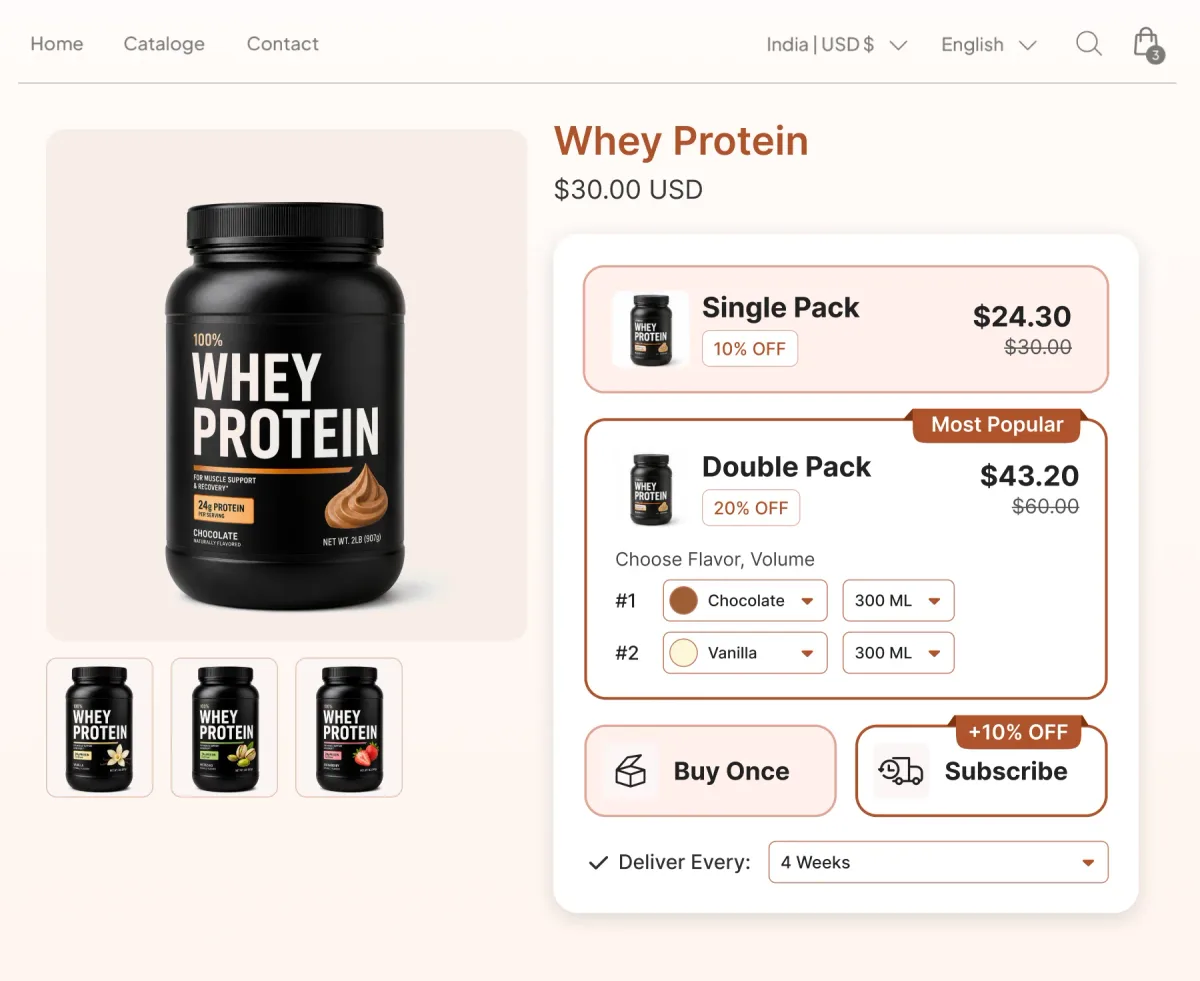
Subscribe & save for daily consumables
Food and beverage's most natural fit for subscription in all of ecommerce
Coffee, tea, snack bars, and pantry staples are consumed on a genuinely predictable cadence, which makes subscribe & save less of a forced feature and more of a core revenue channel. A 10–15% recurring discount tied to a delivery cadence matched to real household consumption keeps subscribers from over-ordering or running out mid-cycle.
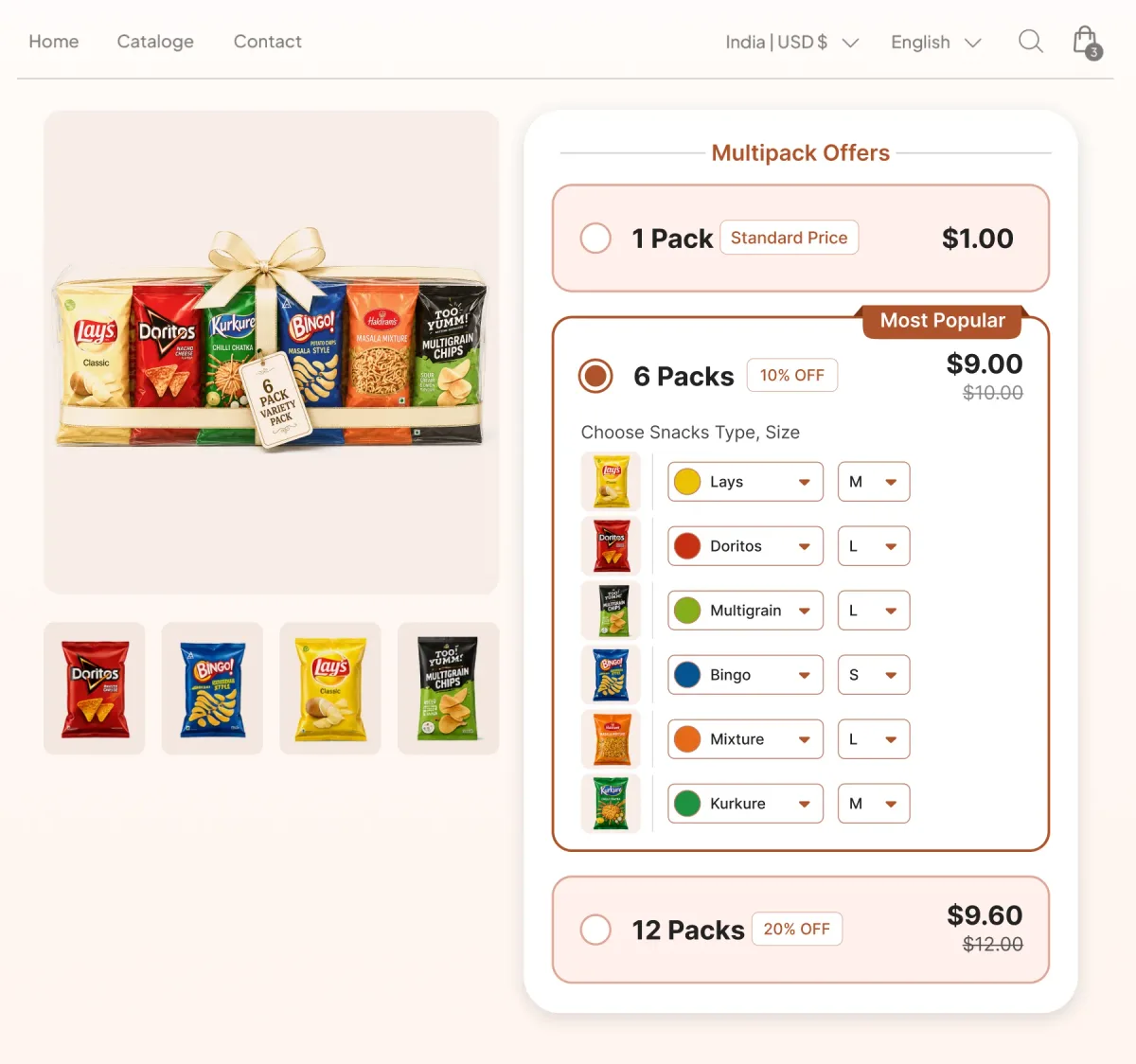
Case-size logic multipacks
Borrows a pricing structure shoppers already understand from grocery and wholesale
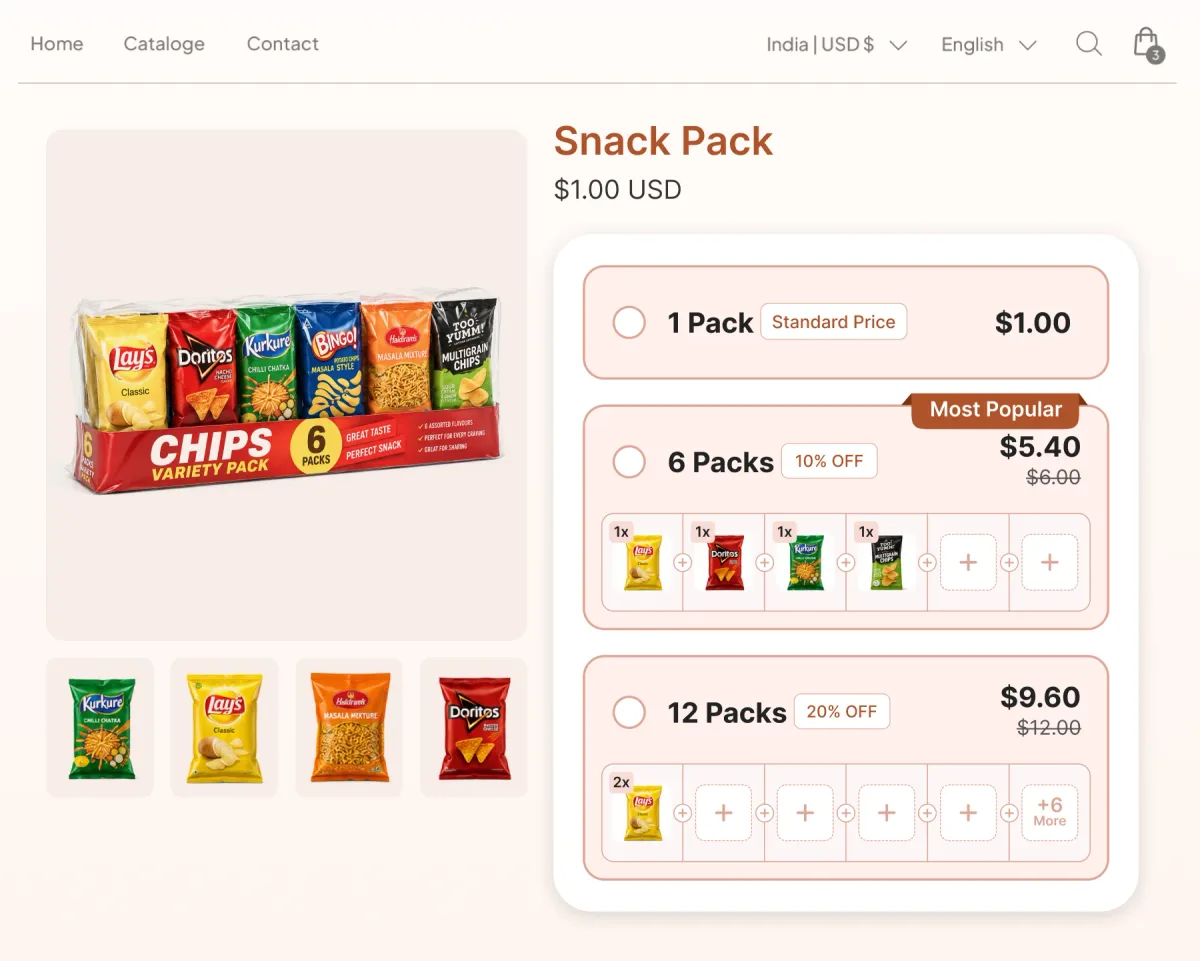
Framing quantity breaks explicitly as "single," "6-pack," and "case of 12," rather than generic "buy 2 / buy 3" tiers, taps into pricing logic food and beverage shoppers already recognize from grocery stores. Showing the per-unit price at each tier makes the value increasingly obvious as quantity rises.
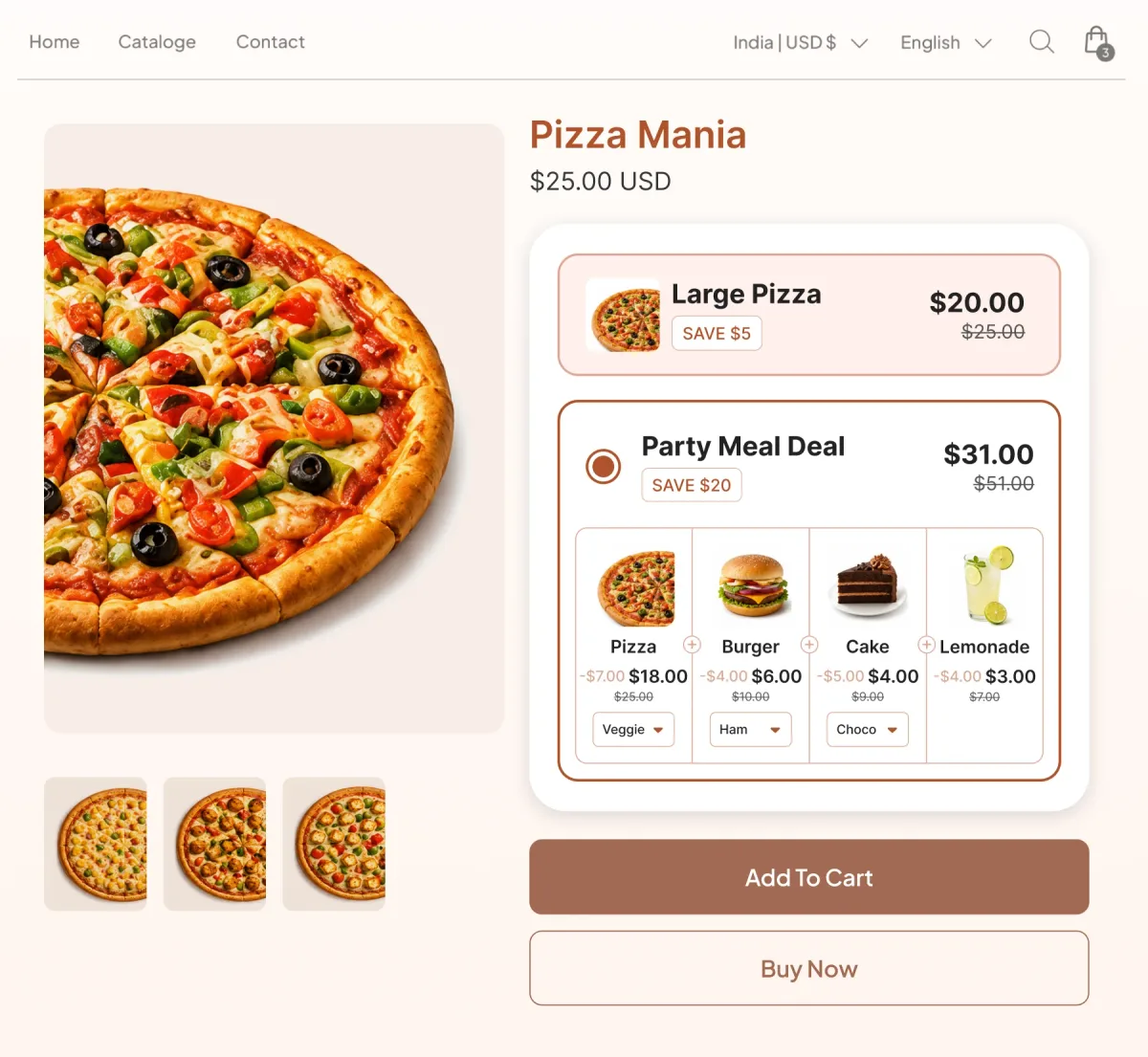
Occasion kits (breakfast, snack, charcuterie, brunch box)
Sells the meal or moment, not the individual product
A pre-built occasion kit, a breakfast bundle, a snack box, a charcuterie kit, removes the decision fatigue of assembling a spread from a large catalog. It's typically the highest-converting single offer for gifting-adjacent or entertaining-adjacent traffic, since the shopper is buying an outcome (a hosted brunch) rather than a list of ingredients.
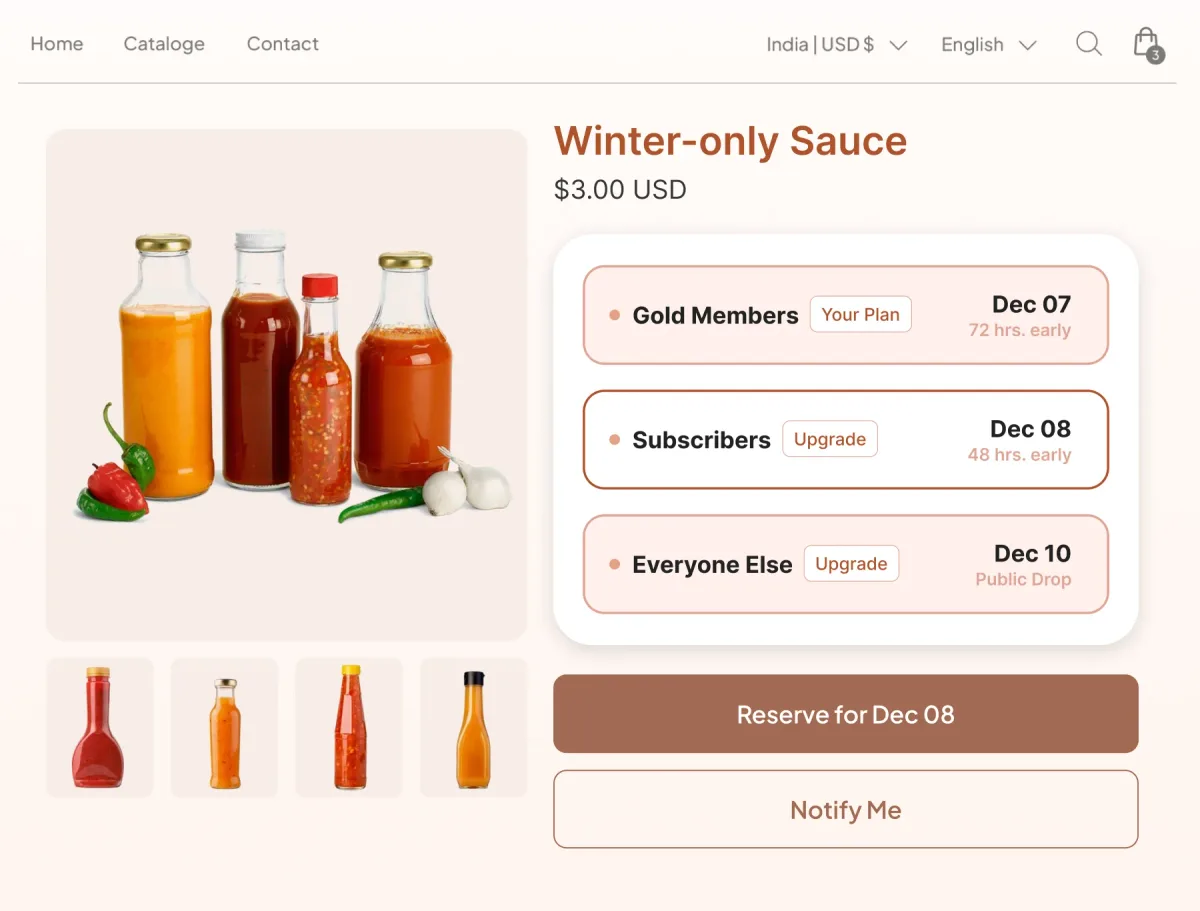
Loyalty-gated early access to limited drops
Turns a limited seasonal flavor into a retention mechanic, not just a launch
When a brand releases a limited-run seasonal flavor (a holiday roast, a summer-only sauce), give top-tier loyalty customers early access ahead of the general launch. This drives the same urgency and repeat-purchase behavior a discount would, without ever discounting the limited item itself, and it rewards the customers most likely to reorder once the season repeats next year.
Shipping-cost and freshness-aware bundling
The strategy no other food and beverage promotion guide addresses directly
Generic AOV advice treats every product as equally cheap to ship and infinitely shelf-stable. Food and beverage is neither. A bundle that pairs two heavy, low-margin items (two bags of coffee) can erase its own AOV gain in shipping cost, and a bundle that mixes a fast-perishing item with a slow-moving one risks the perishable arriving past its ideal freshness window if the order sits in a fulfillment queue.
This is a genuine gap in food and beverage bundling content. Most guides optimize purely for basket size and never connect the mechanic back to the freight and freshness costs that are unique to this category.
Build-your-box mix and match
Gives shoppers control while still steering toward a higher basket
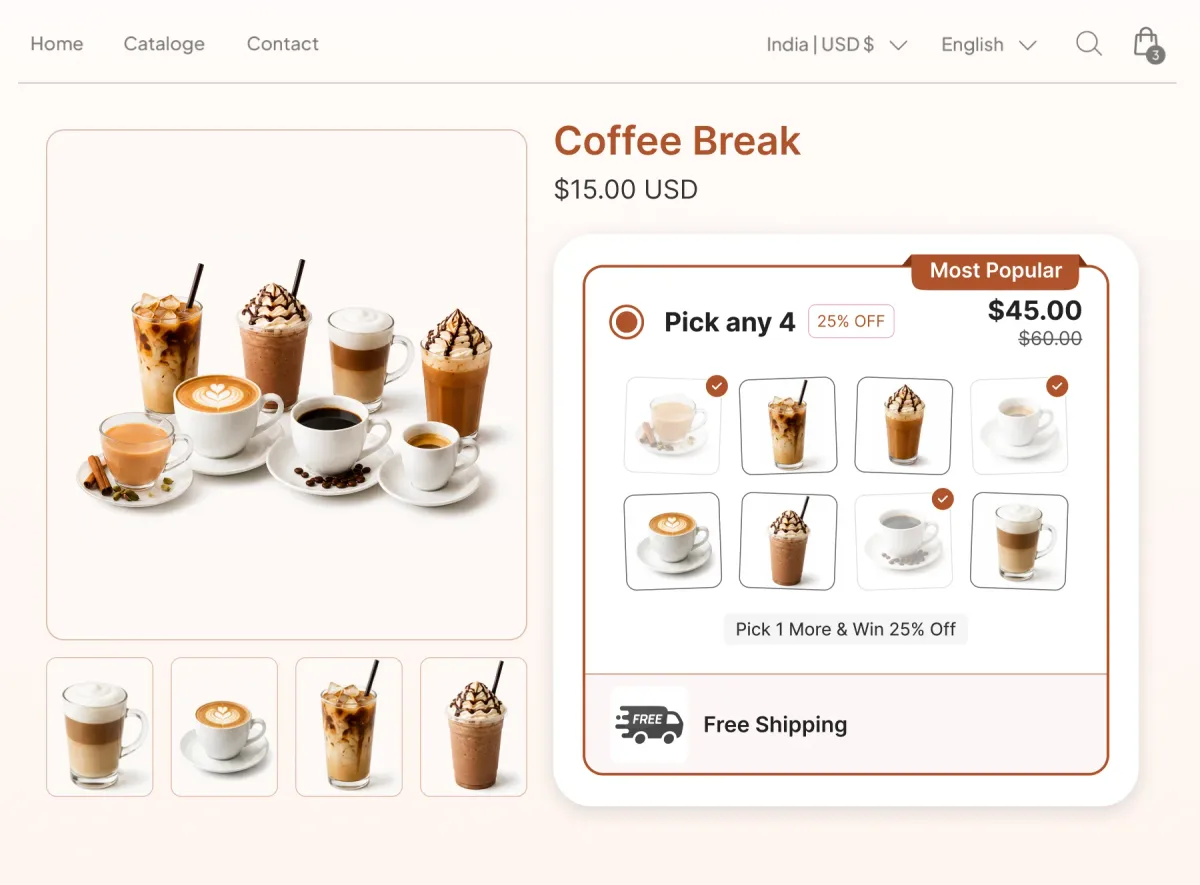
Rather than a fixed variety pack, let shoppers choose any N flavors from a curated eligible group (any 6 of 12 available snack flavors) at a set box price. This performs especially well for brands with a wide flavor range, where the shopper's real hesitation isn't "should I buy more," it's "which flavors do I actually want."
Dietary and allergen-segmented bundling
Protects trust with a customer segment where a mistake isn't just a bad fit
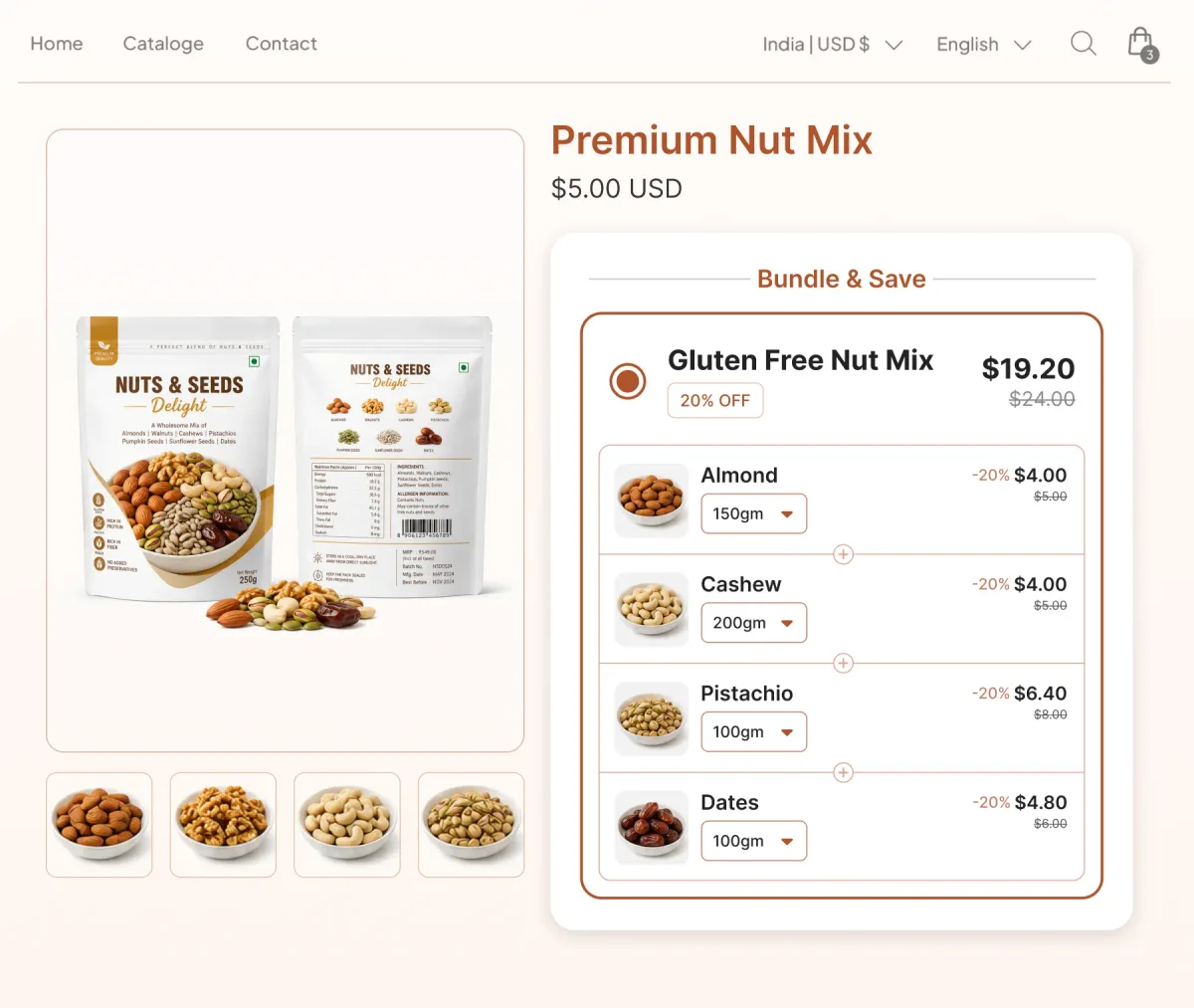
A meaningful share of food and beverage customers are shopping around a real dietary restriction, not a taste preference. A generic bundle that accidentally mixes a gluten-free or vegan product with one that isn't creates a support and trust problem far more serious than a mismatched flavor would be. Building dedicated bundles scoped to a single dietary category (all gluten-free, all vegan, all nut-free) removes that risk entirely.
Influencer and creator bundle drops
Packages a creator's exact go-to order as a one-click purchase
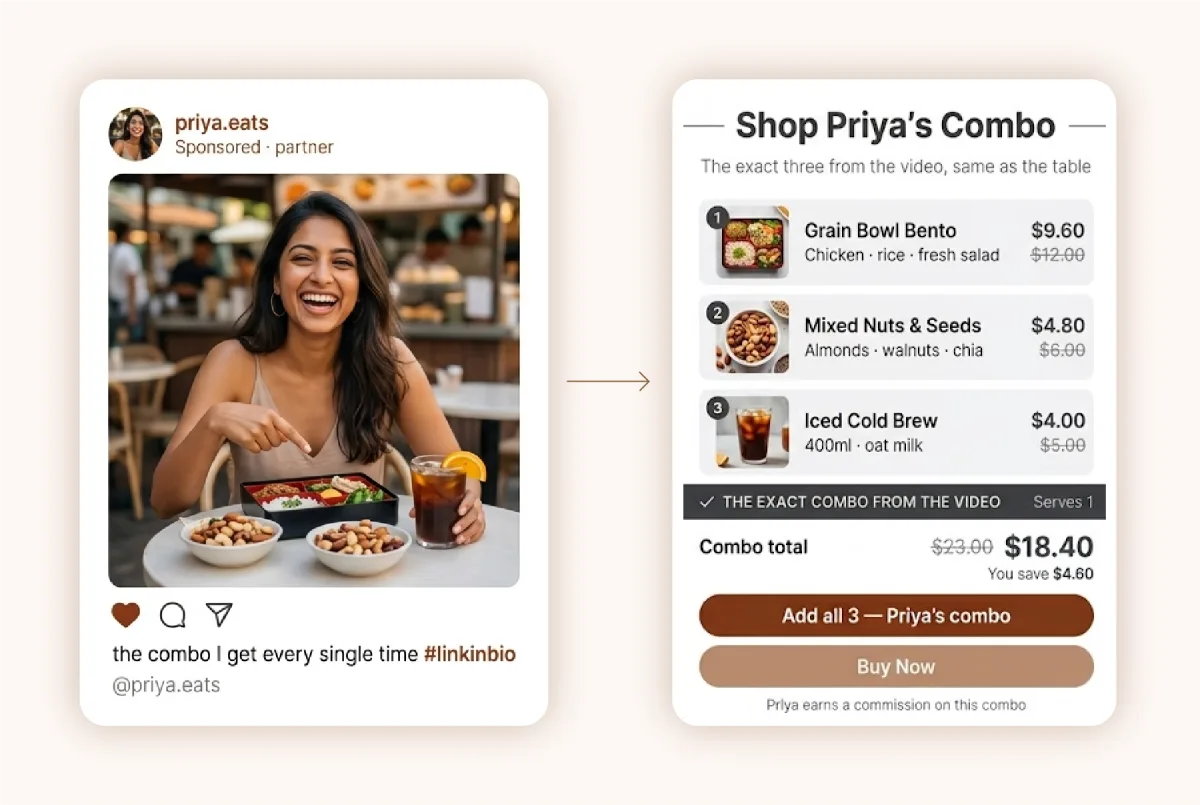
When a creator posts their go-to coffee order or snack rotation, standing up a bundle that mirrors that exact product set, linked directly from the post, converts far better than sending traffic to a general shop page and asking the viewer to reassemble the order from memory.
Gifting season and corporate gift sets
Food and beverage is one of the strongest gifting and corporate-gifting categories on Shopify
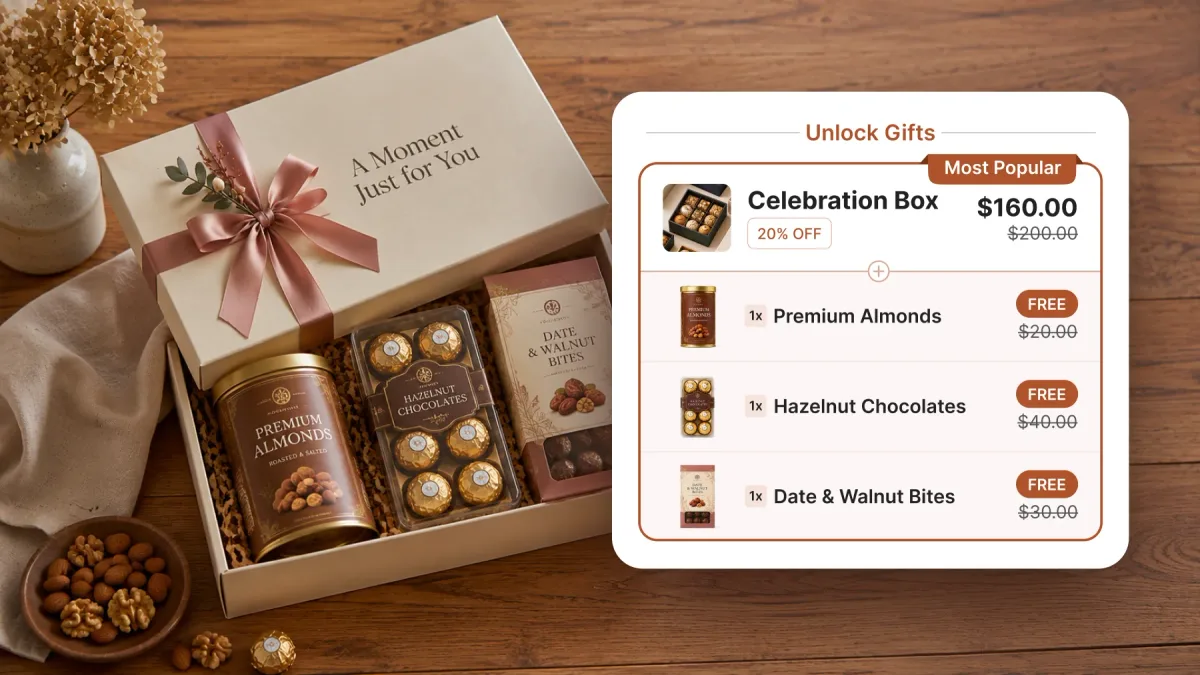
Around major gifting periods, pre-packaged gift crates and boxes reframe the purchase: the shopper isn't comparing per-item prices, they're evaluating whether the set feels complete and giftable. A dedicated corporate-gifting bundle with bulk-order support (multiple identical crates shipped to different addresses) captures a B2B-adjacent revenue stream most food and beverage brands leave untouched.
Threshold free shipping stacked with bundles
The single biggest conversion lever in a category this shipping-cost sensitive
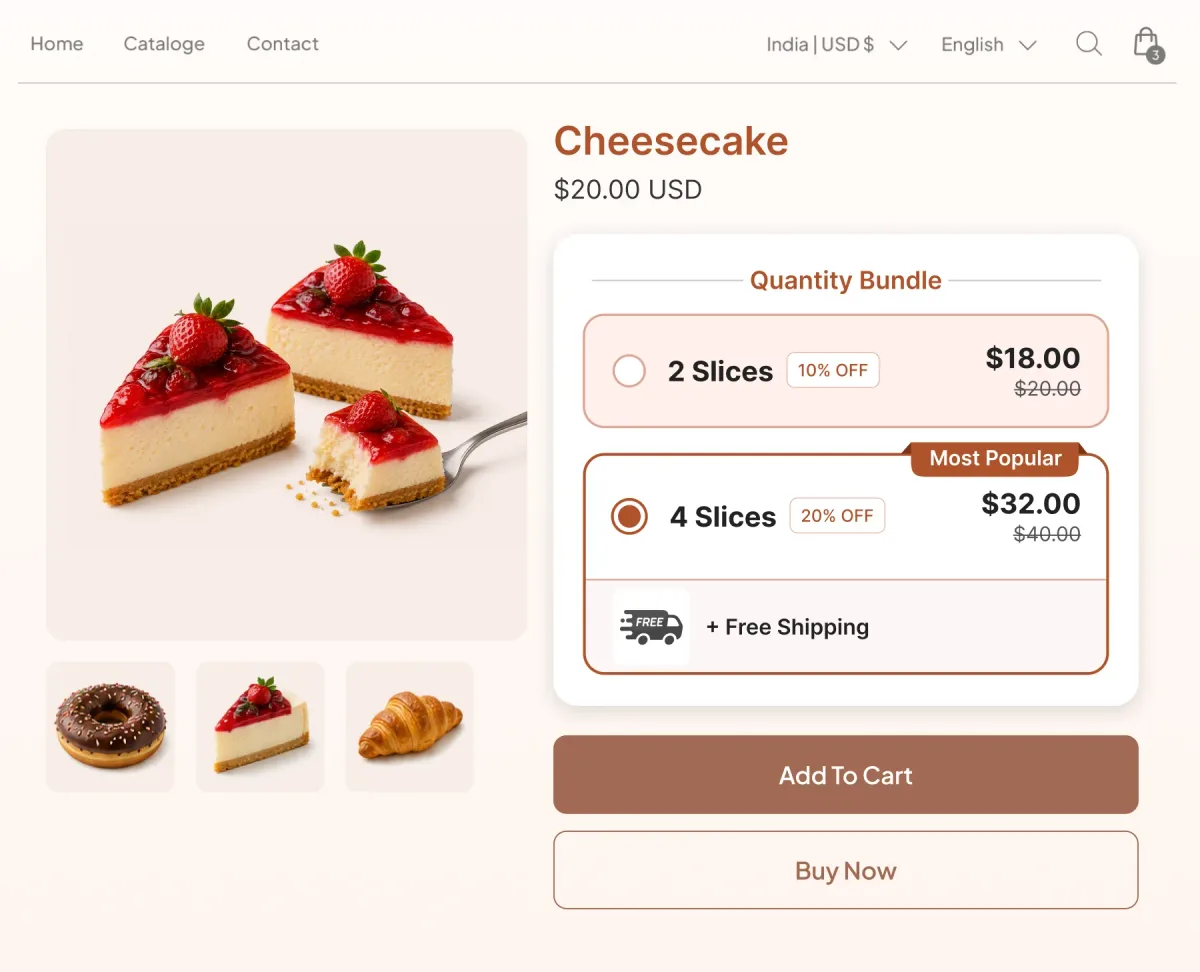
Food and beverage shoppers are unusually shipping-cost sensitive, since a single bag of coffee or box of snacks can cost nearly as much to ship as it does to buy. Setting a free-shipping threshold just above the average bundle price gives shoppers a second, independent reason to add one more flavor or item rather than abandoning the cart over a shipping line.
Food & beverage promotion calendar
Consumption habits shift with the season and with specific calendar moments more sharply in food and beverage than in most categories. Below is a month-by-month map of which strategy fits each period.
Self-audit: how bundle-ready is your store?
Score your current setup against these six dimensions before implementing the strategies above. Most food and beverage Shopify stores fall short on shipping-cost modeling and dietary segmentation specifically, even when their core bundling is otherwise solid.
Directional benchmarks based on patterns observed across food and beverage merchants running structured offers. Use this as a self-check, not a scored audit.
From solo stores to 8-figure brands, teams trust Profit Pumper to grow their revenue.
Consistently rated 4.9 stars on the Shopify App Store for ease of use and reliability.
Install, pick a template, configure your offer, and go live. No coding or developers needed.
Frequently asked questions
How is food and beverage bundling different from bundling in other categories?+
Can bundling actually hurt margin in this category?+
Do I need a developer to set these up on Shopify?+
Which strategy should a small food or beverage brand start with?+
How is this different from a sitewide sale?+
Your offers. Configured, not discounted.
Set up variety pack bundles, replenishment quantity breaks, and discovery sample unlocks on your Shopify store in minutes, no developer or theme edits needed.
Try Pumper Bundles Free