


Shopify Promotion Strategies
Built for Crafts & Hobbies Brands
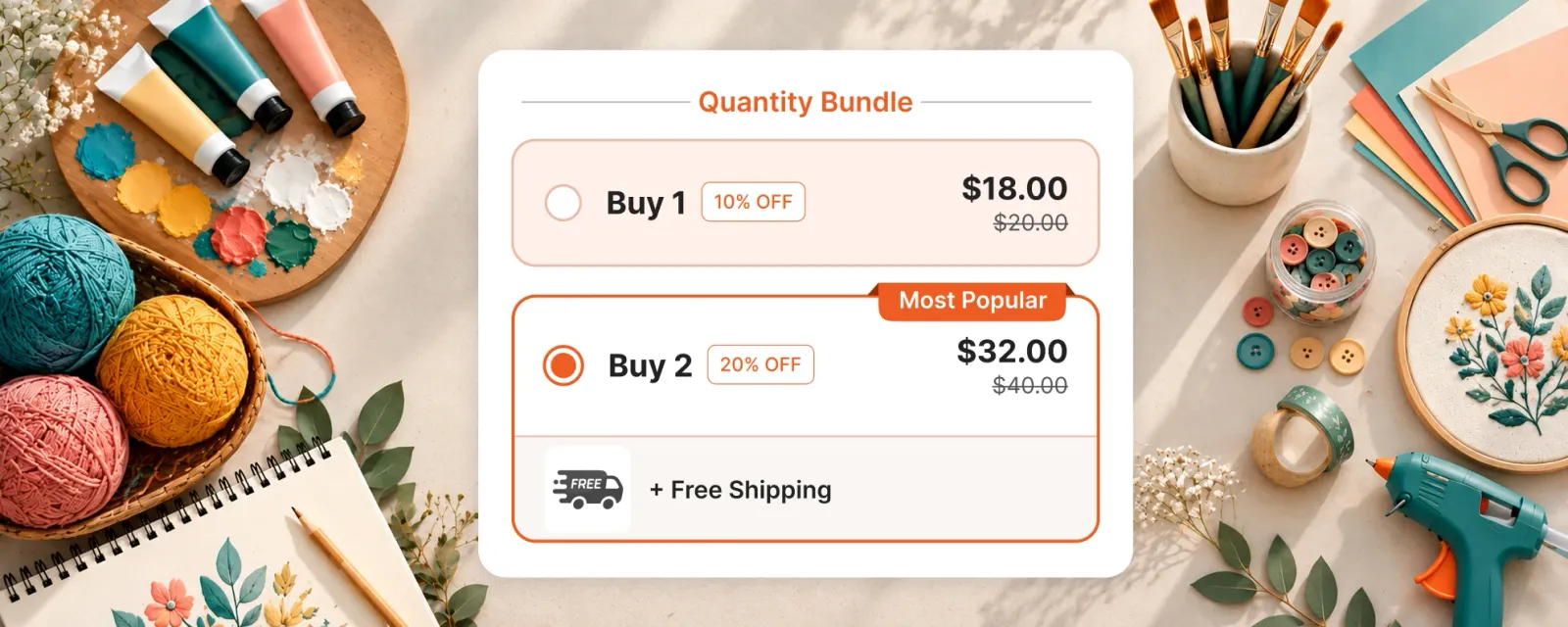
Two skeins of the same yarn from different dye lots can leave a visible stripe across a finished sweater, and a resin kit mixed at the wrong ratio never fully cures. A craft purchase is a project someone will spend hours on, so a mismatched material shows up long after checkout. These sixteen strategies grow AOV around dye lots, project quantities, curing and firing, and the way makers count what a project needs.
Why craft promotions behave differently
A craft shopper is not buying a product. They are starting a project, and the project decides what goes in the cart: how much yarn, which needles, what glaze, how many hours of work the materials must survive. The question in their mind is whether they have everything to finish.
Quantity has to be right the first time. Many materials are made in batches that differ slightly, so running short and buying more later can produce a visible mismatch. Many crafts also depend on chemistry, curing or firing, where the wrong combination fails quietly and only shows after hours of work.
Making also runs on schedules. Resin, candles and kiln pieces take days or weeks to finish, and craft communities work through shared patterns and group projects with start dates. Timing a promotion means timing it to the maker's calendar.
The strategies below start with batch consistency and project quantity, which generic bundling advice ignores, then add the chemistry, timing and loyalty layers. Each one names the Pumper Bundles offer type that runs it without a developer.
Dye-lot-safe project bundles
The strategy no other craft promotion guide covers
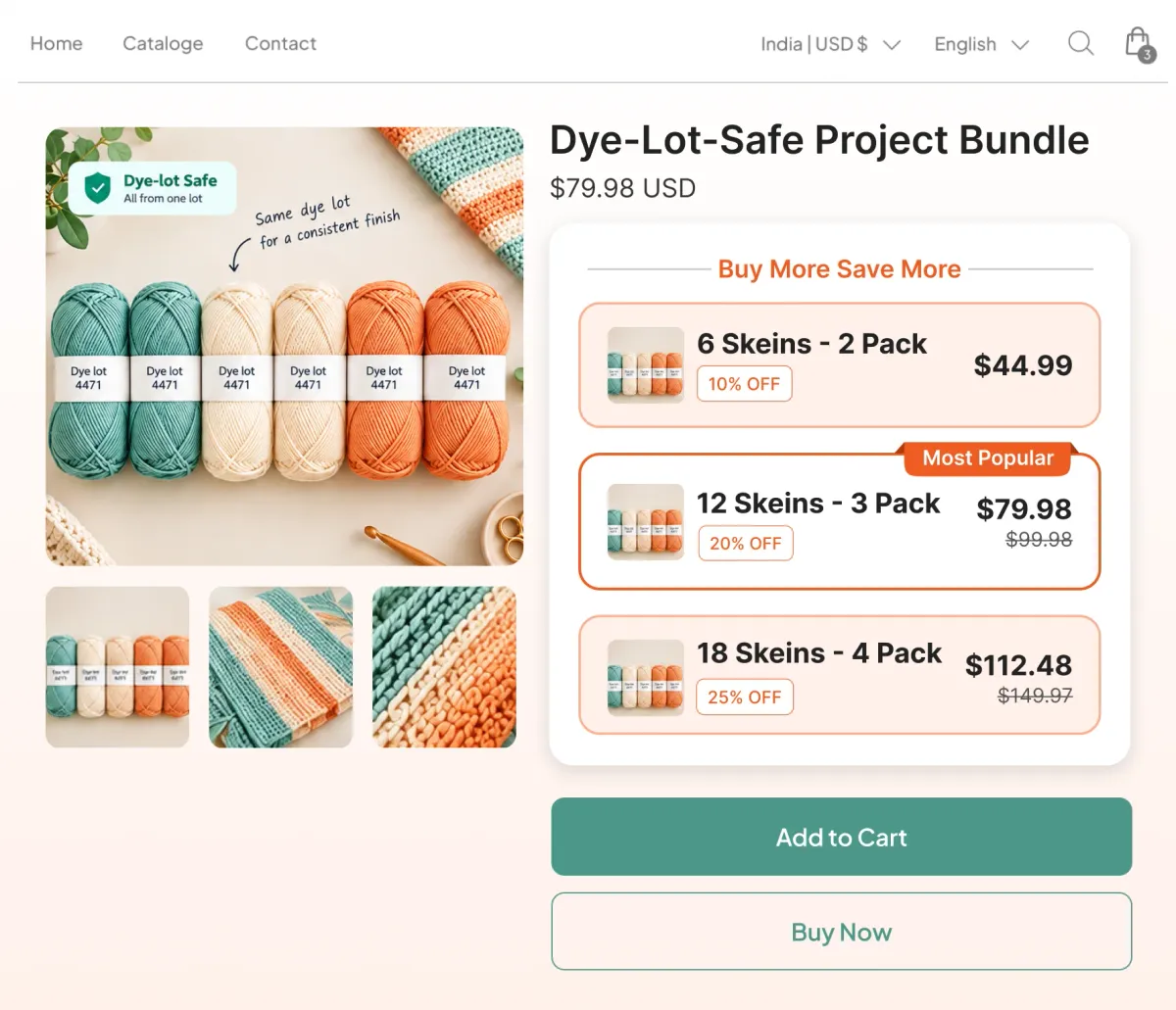
Yarn, thread and fabric are dyed in batches, and the same named color can differ slightly between batches. Side by side in a finished piece, the difference shows as a band or a stripe. Crafters know this, and many will not start a project until they are sure all of it comes from one lot.
Generic advice says to bundle the items a project needs. Here, the bundle has to guarantee that every skein or yard in it comes from the same lot. A bundle that mixes lots to clear stock creates the exact problem the shopper is worried about.

Project-size quantity tiers
Makers think in projects, not skeins
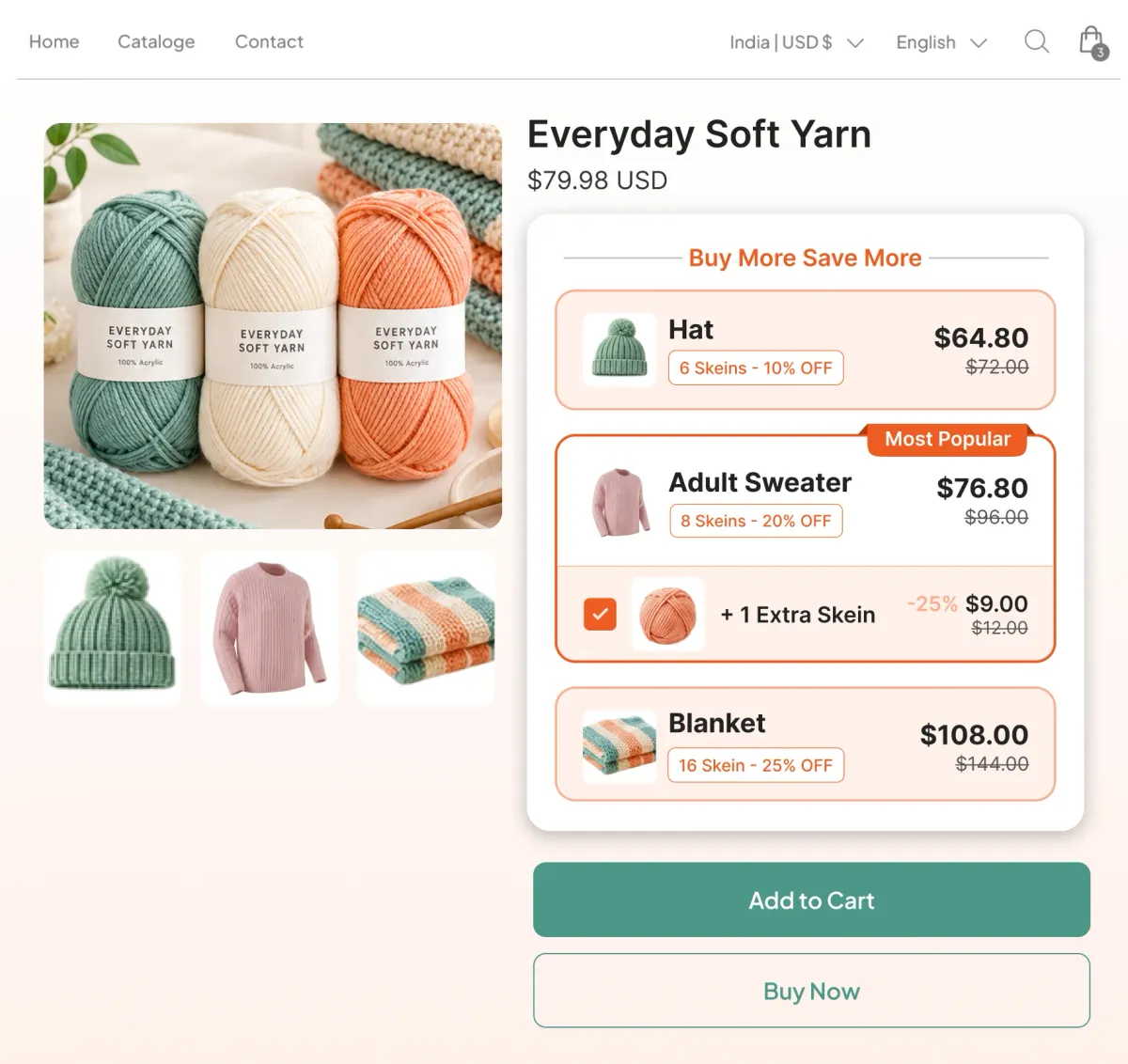
A shopper knows they want to knit a sweater. They do not know it takes eight skeins. Naming quantity tiers by the project they cover (hat, adult sweater, blanket) answers the question they are really asking, and the discount follows the size they chose.
Fabric works the same way with yardage for a quilt or a garment. Add a small buffer option, since running short in the last row is a real fear and a leftover skein costs less than a mismatched one.
Yarn weight, fiber and needle matching
Yarn labels say which tools the fabric needs
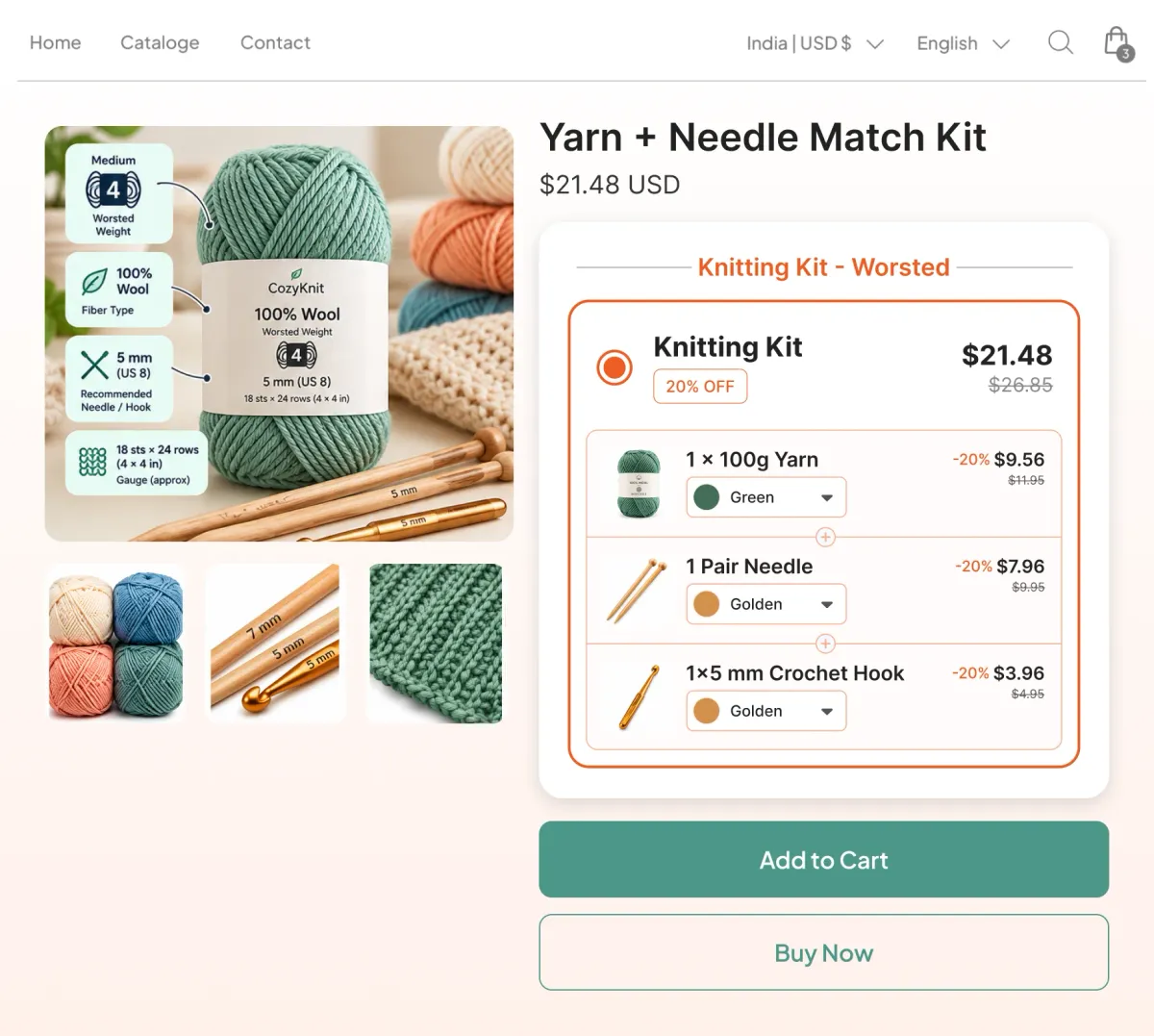
Yarn comes in weight categories, from fine lace to jumbo, and each one suggests a needle or hook size and a gauge. Using the wrong size changes the fabric, and the finished piece may not fit the pattern. Bundling yarn with the needles on its label removes the guesswork.
Fiber matters too. Superwash wool is treated so it will not shrink or felt, which makes it unsuitable for felting projects. A felting kit that includes superwash yarn fails, and the shopper cannot see why.
Cutting-machine ecosystem bundles
The machine decides which blades, mats and materials work
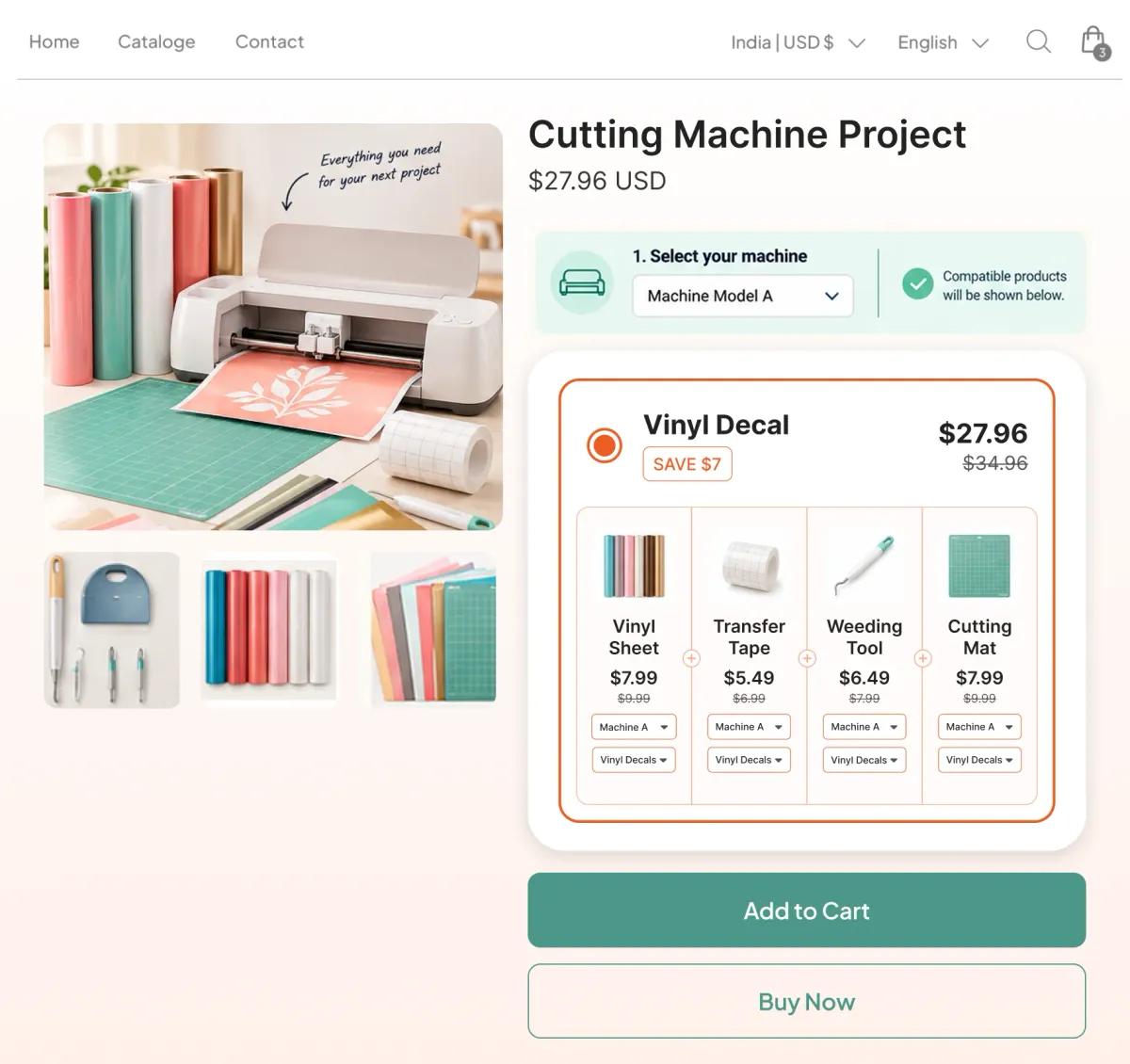
Electronic cutting machines work with specific blades and mats, and mats come in set sizes. Each machine also has limits on the thickness of the material it can cut. Vinyl for decals, iron-on material for fabric and cardstock all behave differently, and the right tools for one are wrong for another.
Ask for the machine model first, then show only the mats, blades and materials that work with it. Bundle the material with its transfer tape and a weeding tool, since a decal project needs all three.
Resin and two-part chemistry kits
The ratio, the pot life and the cure all decide the result
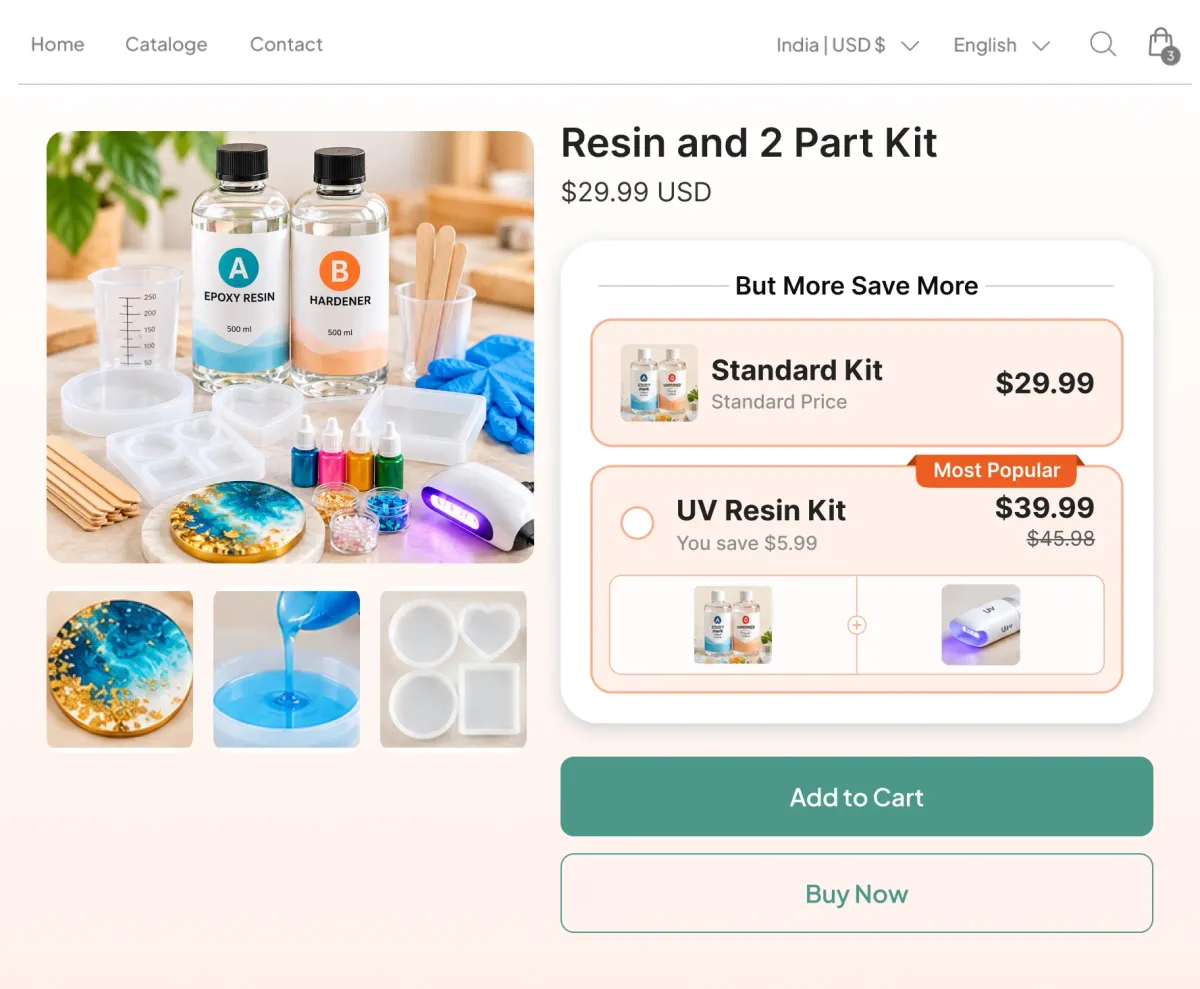
Two-part epoxy resin must be mixed at the exact ratio the maker states, by volume or by weight. A wrong ratio leaves the piece sticky and never fully cured. The mix also has a limited working time, and the cure can take from a day to several days.
A resin bundle should therefore hold measuring cups marked for the ratio, molds, pigments made for resin, and gloves and eye protection. Add the manufacturer's guidance on ventilation and workspace. Colorants made for other media can interfere with the cure, so list which ones are safe for each resin.
Candle and soap kits by container size
The wick has to match the width of the jar
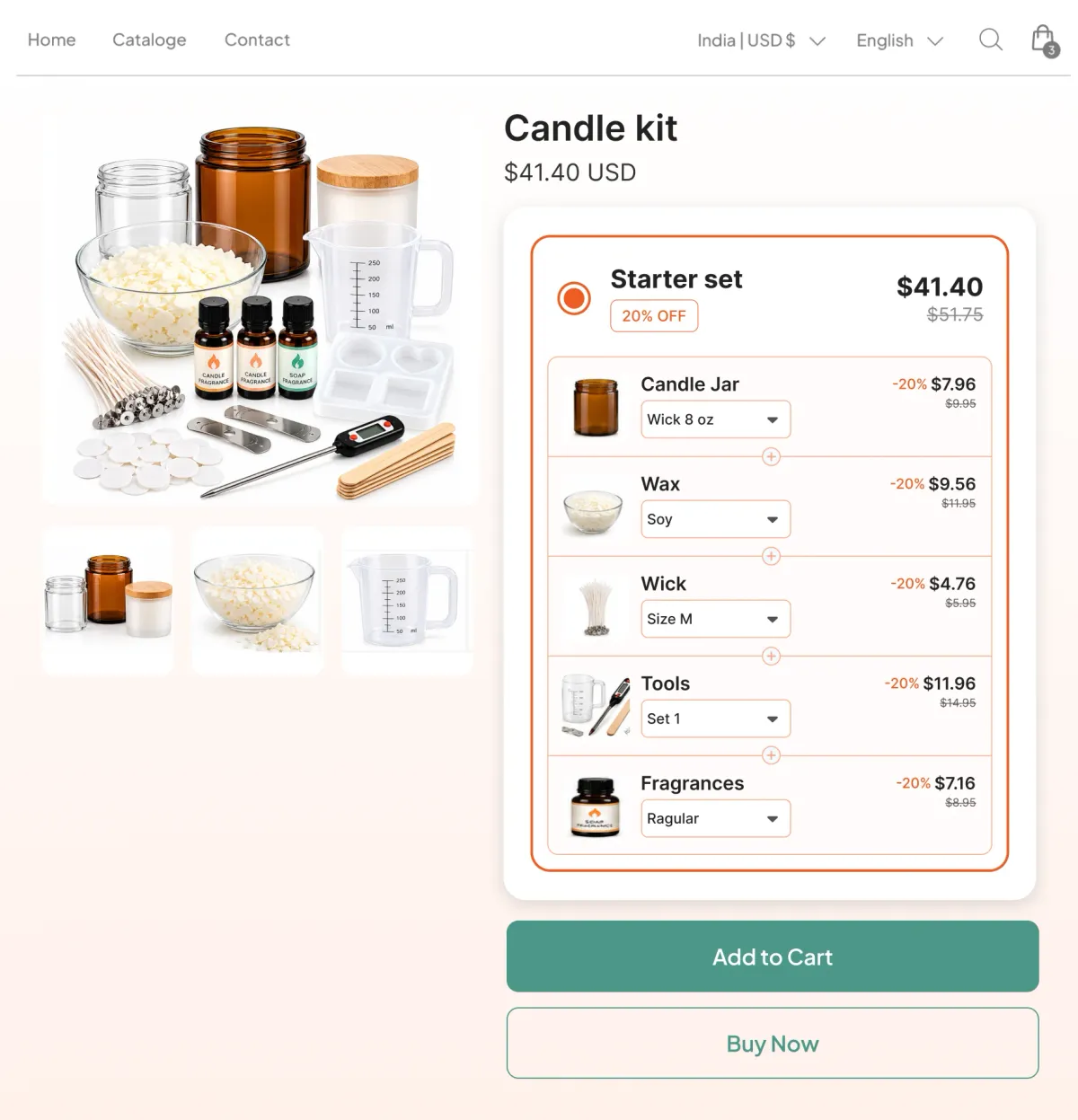
A candle wick is chosen by the diameter of the container and the type of wax. A wick that is too small drowns in its own wax, and one that is too large burns too hot. Each wax also has a limit on how much fragrance oil it can hold, and the container must be heat safe.
Build candle kits by container size, and include the matching wick, the wax, a fragrance oil rated for candles and the jars. Many makers allow the finished candle a cure period of a week or more before use, so say so on the page.
Clay, glaze and kiln cone matching
A piece fired at the wrong temperature is a ruined piece
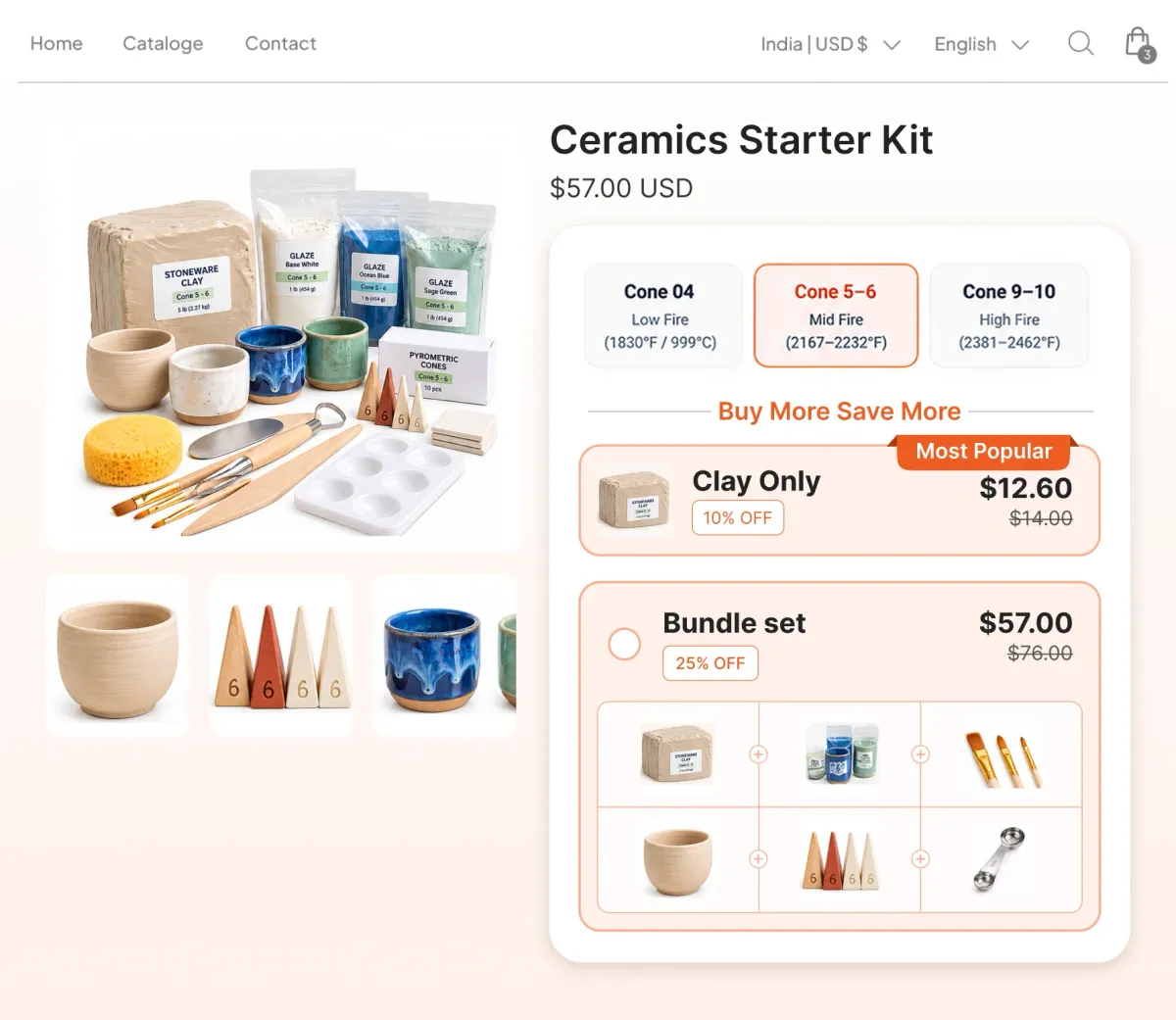
Clay and glaze are fired to a specific temperature range, usually described by a cone number. Low-fire and mid-fire materials behave differently, and a glaze rated for one range can run, blister or fail to melt at another. The kiln must also be able to reach that temperature.
Bundle clay bodies with glazes rated for the same cone range, and show the range on every card. Air-dry clay needs no kiln at all, so keep it in its own collection to avoid confusing hobbyists who do not own one.
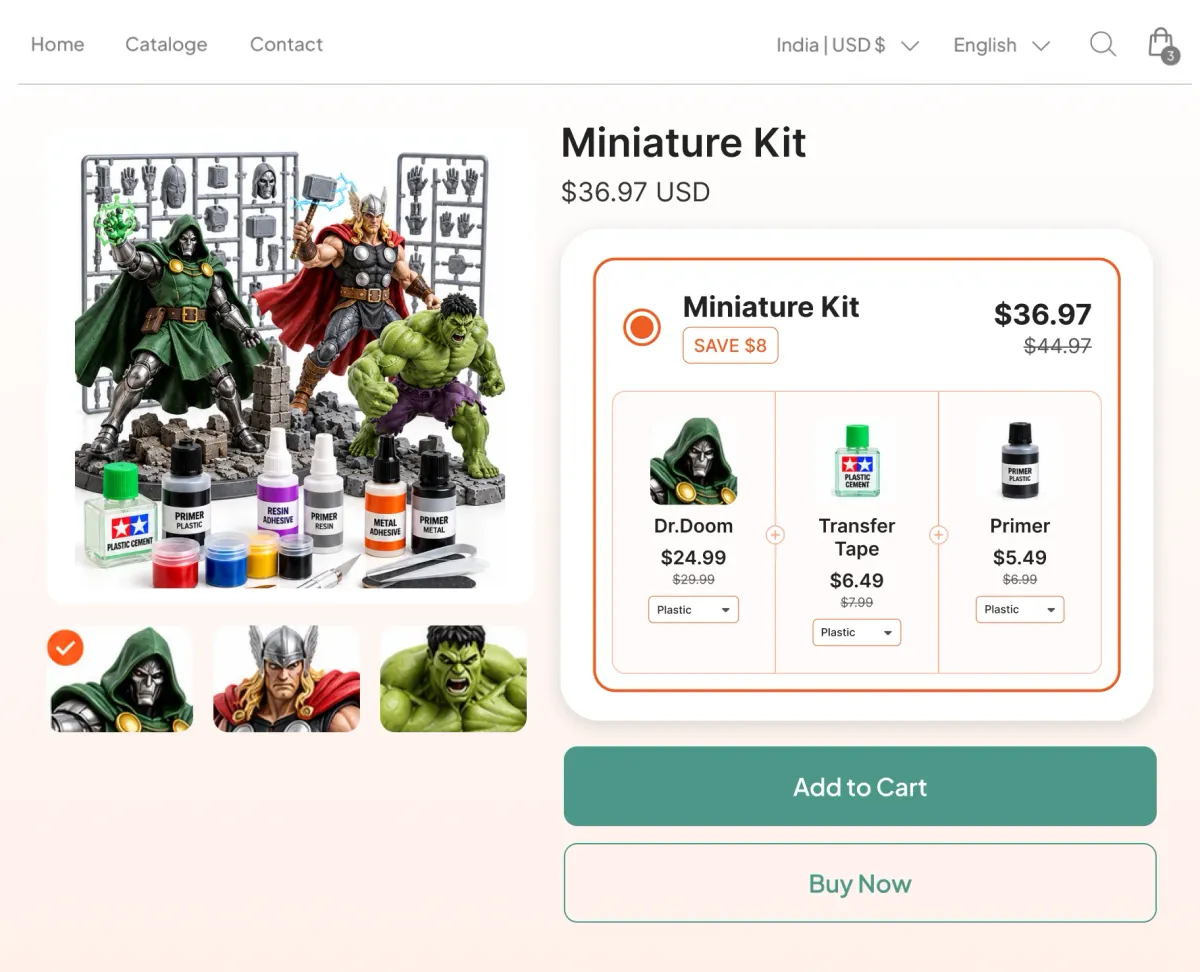
Model and miniature kits by material
The glue that works on plastic can fail on resin
Model and miniature hobbyists work with different materials, and each has its own adhesive and prep. Plastic cement joins styrene by softening it, while resin and metal parts usually need a different adhesive. Primer prepares the surface for paint, and some solvent-based products can damage certain plastics.
Offer the glue, primer and paint set that suits the material of the kit in the cart. A hobbyist who buys the wrong adhesive for a resin figure finds out when the parts will not stay together.
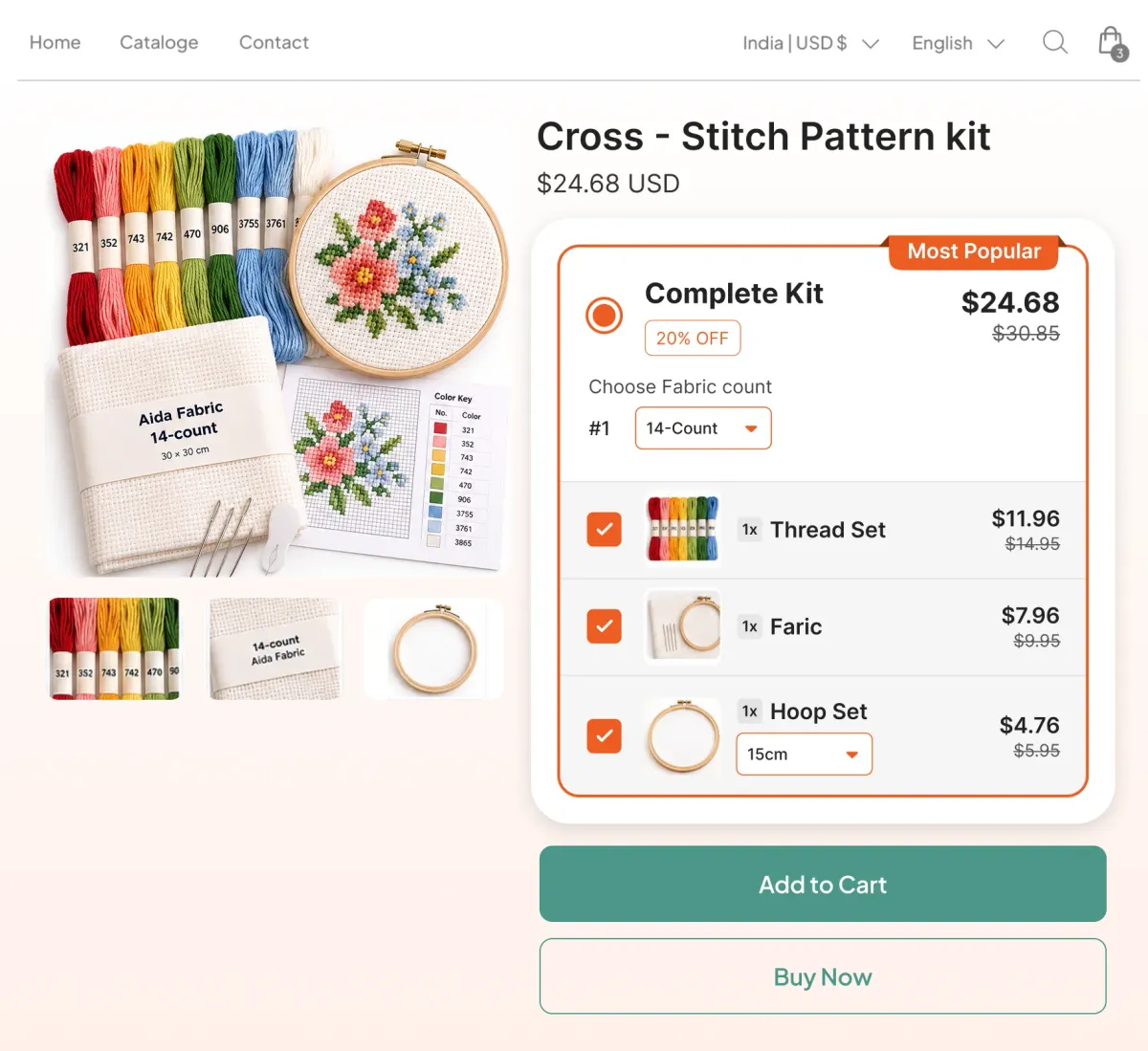
Thread-number and fabric-count kits
A pattern calls for exact colors, and every one must be in the box
Embroidery and cross-stitch patterns list thread colors by number from a brand chart, and a missing number stops the project. The fabric count, such as 14-count, sets the size of each stitch and the finished size of the piece, and the hoop must suit that size.
Offer a complete thread set for each pattern, matched to the fabric count and hoop. A separate top-up of the colors used most reduces the chance of running out mid-project.
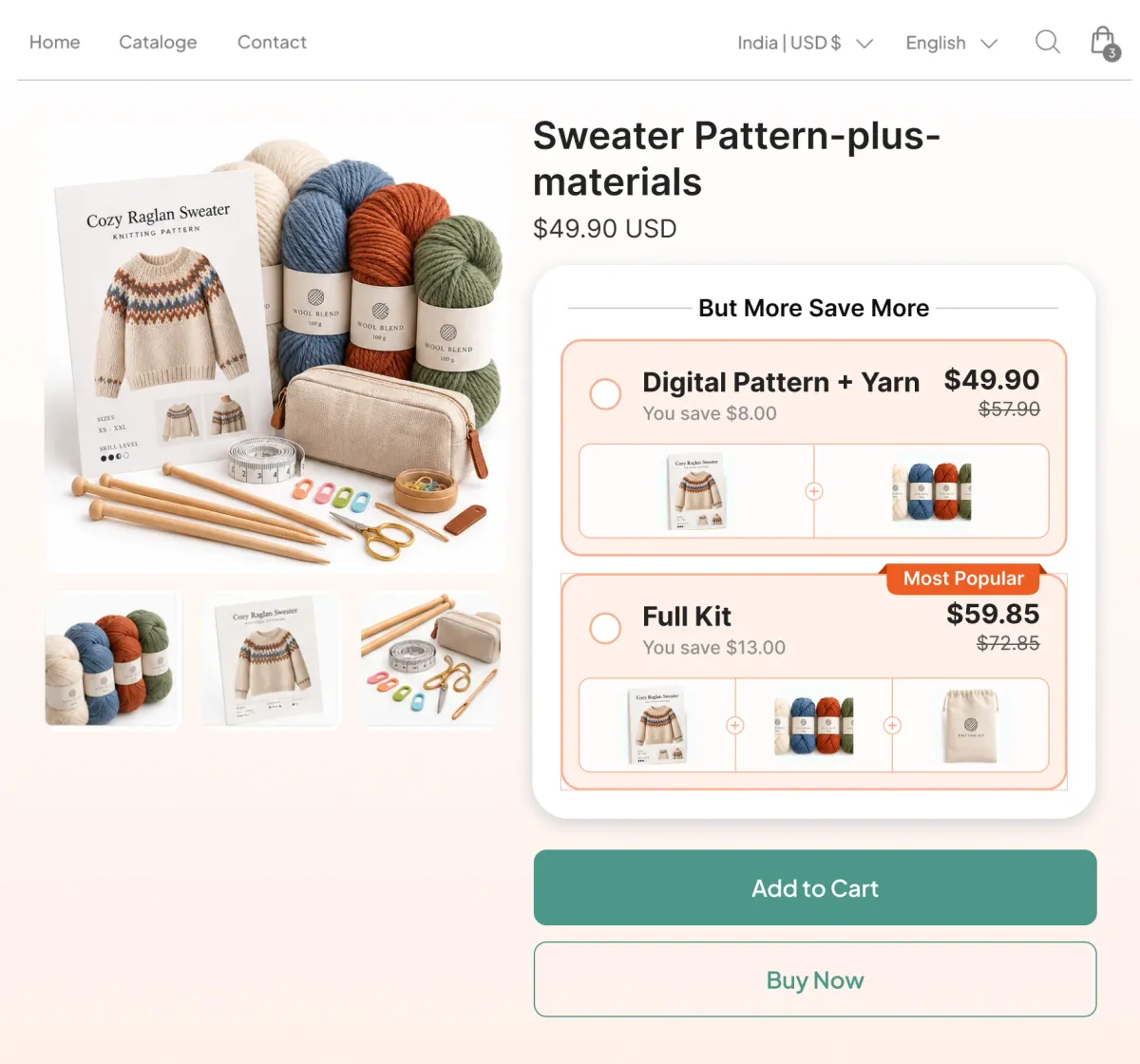
Pattern-plus-materials bundles
The pattern is the shopping list
A pattern states the yarn, tools and notions a project needs, and shoppers often buy the pattern first and hunt for the rest. Turn that around by putting the pattern and its materials in one bundle at a price that rewards completing the project.
Patterns that designers publish as digital files give you an easy entry point. The pattern costs little to deliver, so a discount on the materials becomes the offer.
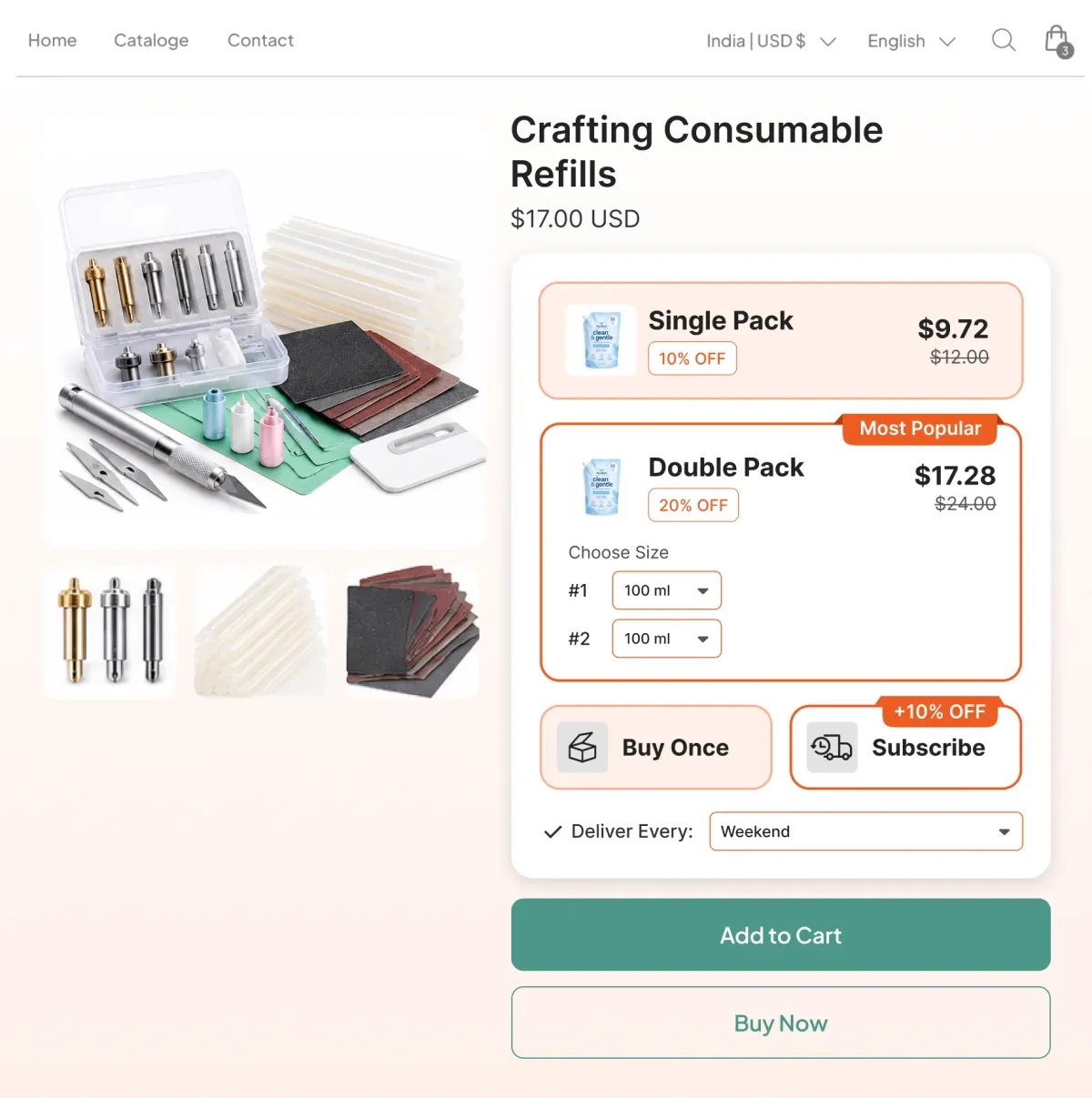
Consumable refills by crafting frequency
Some supplies wear out with every project
Cutting blades dull with use, needles bend, glue sticks run out and sandpaper wears away. A frequent crafter replaces them often, and a casual one barely at all. A subscription fits when each cadence is named for how often the shopper makes things.
Label the options by crafting frequency, for example daily crafter, weekend maker and seasonal maker, and keep the refills to items the shopper already uses.
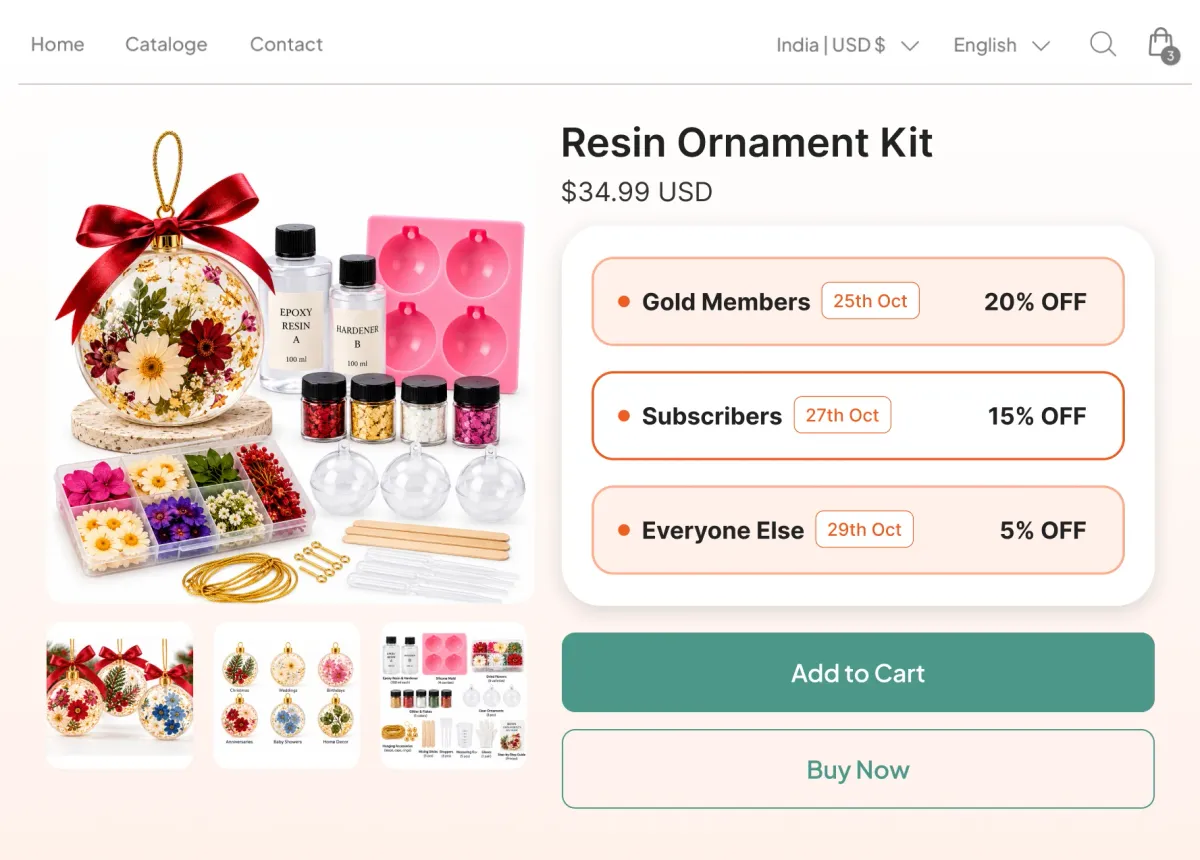
Cure-time-aware seasonal launches
The making takes longer than the shopping
A maker planning handmade items for a holiday or an event has to count back from the date. Resin takes days to cure, candles need weeks to settle, and glazed pieces wait for the kiln. A promotion that arrives close to the deadline is too late to be useful.
Launch seasonal bundles earlier than a general retailer would, and show the make-by or order-by date on each one. The shopper sees that the store understands their timeline.
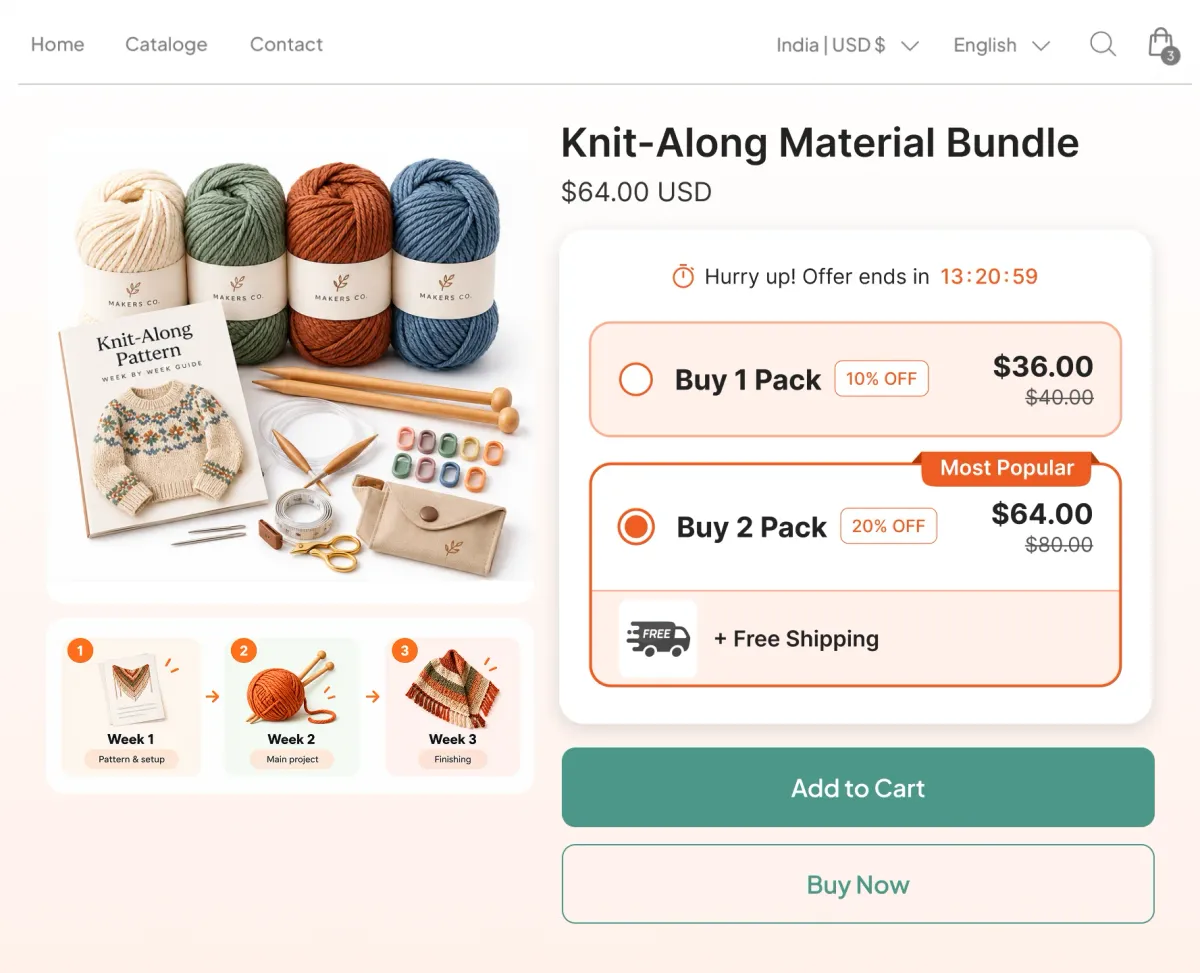
Make-along bundles on a schedule
Craft communities make things together, on dates
Knit-alongs, crochet-alongs and quilt-alongs release a pattern in stages over several weeks, and participants buy materials before the first reveal. The start date gives the shopper a deadline and a community, which many other categories cannot offer.
Bundle the materials for the whole make-along, with the colorways matched to the designer's samples. Open sign-ups ahead of the start date, and close them when the first release goes live.
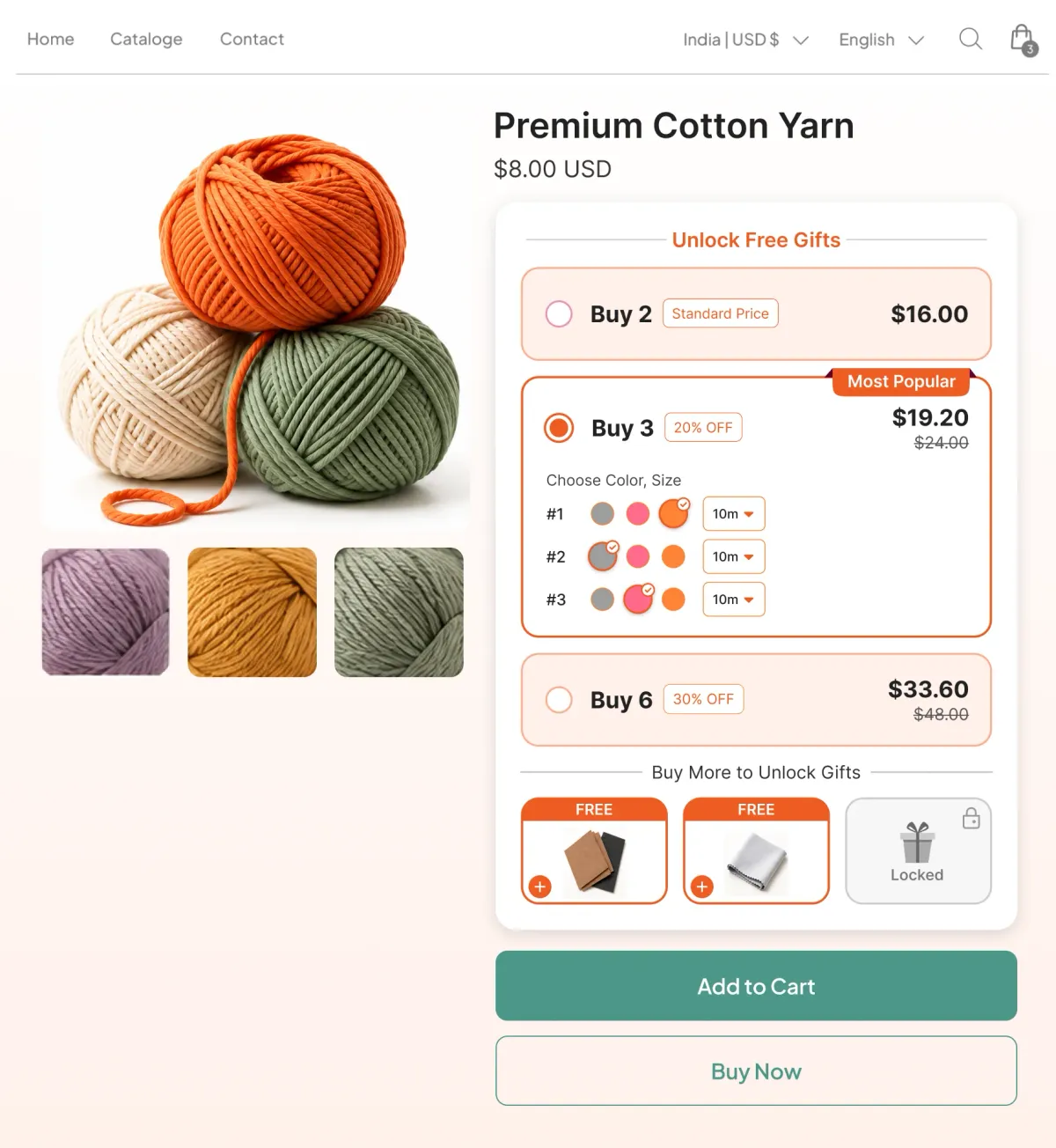
Finishing-touch gifts matched to the medium
The small tool the last step needs, and nobody lists
Every craft ends with a finishing step that has its own small tool. A knitter needs a tapestry needle to weave in ends, a woodworker needs fine sandpaper, and a resin maker needs a polishing cloth. These items cost little and make the project feel complete.
Offer the right one as a free gift at a quantity tier, matched to the main product in the cart. A gift the customer can use on the same project feels thoughtful, and a random one gets ignored.
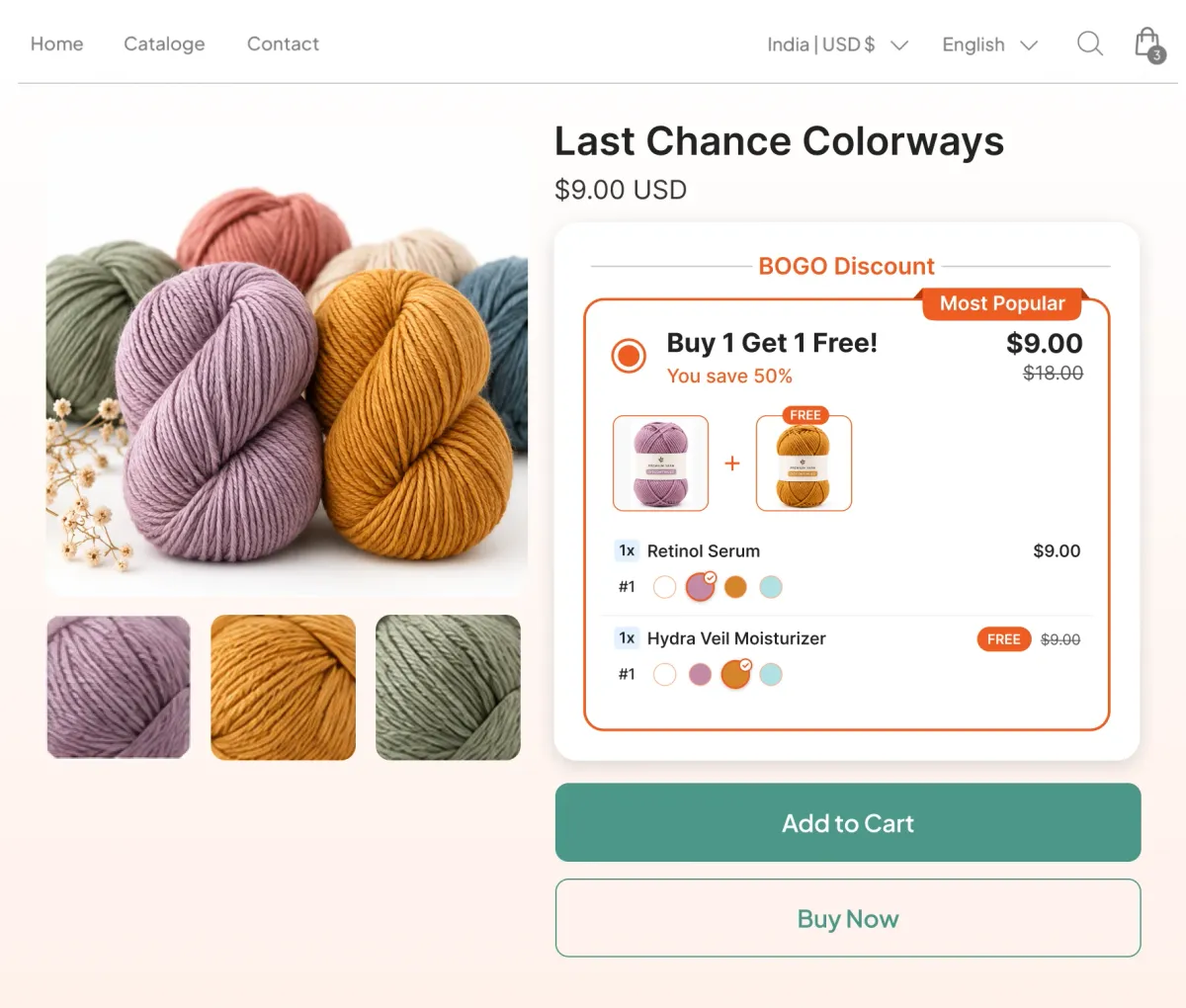
Discontinued-colorway BOGO
Makers call leftover stock a destash, and they love one
When a color is discontinued, the remaining stock has a clear and honest story: it will not be made again. Crafters buy it for stash, for small projects and for colorwork, where one skein is enough. A buy-one-get-one offer clears it without cutting your regular line.
Mark these as odds and ends and say plainly that the lots may differ from your current range. That frankness protects the lot promise you make in strategy 1.
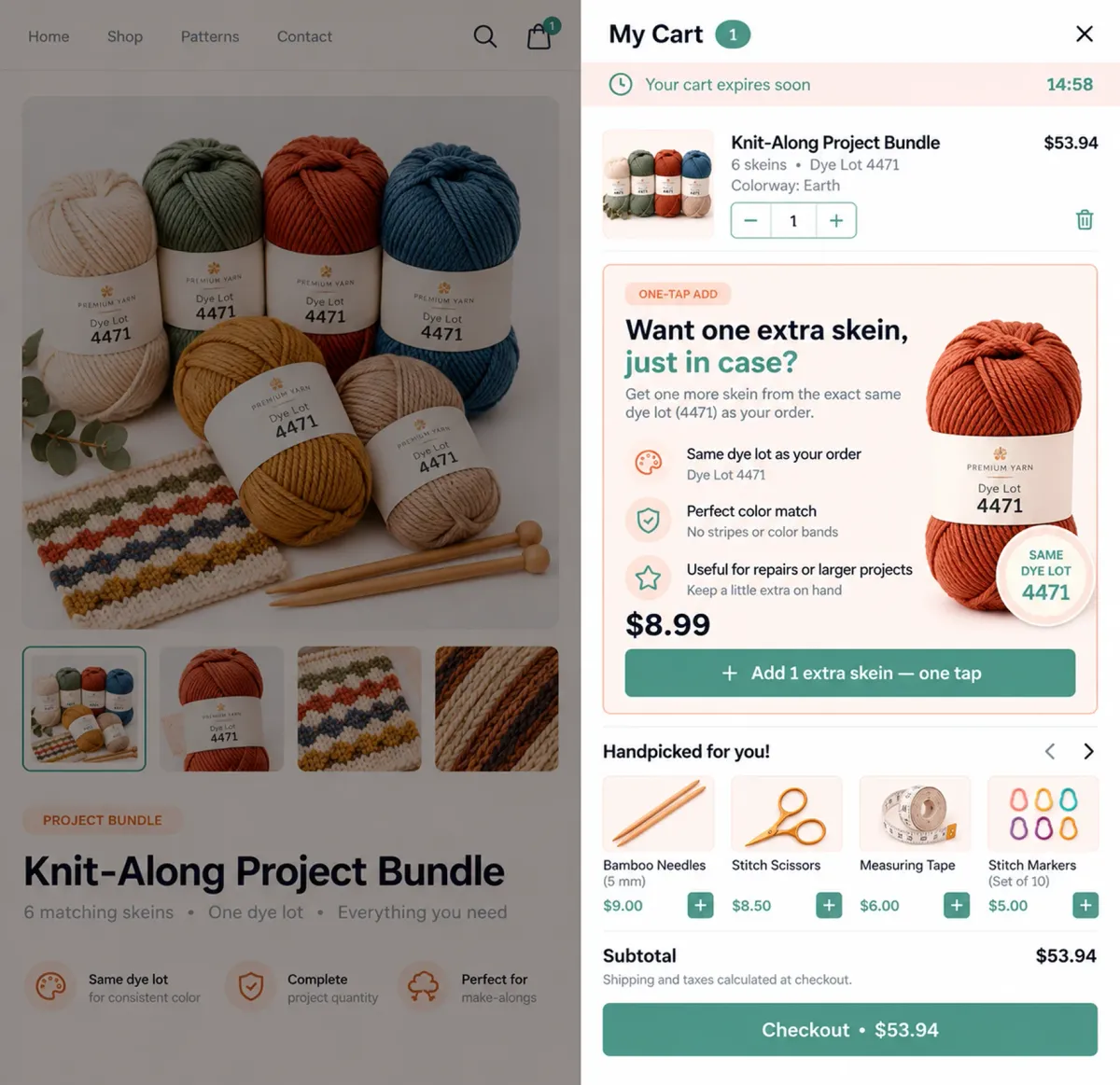
Post-purchase upsell: the dye-lot top-up
One spare skein from the same lot is cheap insurance
Makers worry about running short, because a replacement from a later lot may not match. After checkout, offer one extra skein or yard from the lot already in the order. If the project uses it, the maker is relieved. If not, the extra goes into the stash.
Payment details are already on file, so accepting takes one tap and the original order stays untouched. The same offer works for the thread colors that run out first, or a spare blade for a cutting project.
Craft promotion calendar
Craft demand follows the maker's calendar: cold-weather fiber seasons, deadlines for handmade gifts and the start of studio classes. This month-by-month map shows which strategy fits each period, using Northern Hemisphere timing.
Self-audit: how bundle-ready is your store?
Score your current setup against these six dimensions before you implement the strategies above. Craft brands most often miss lot tracking and project-level data, even when the rest of their bundling is solid.
The bars are an illustrative self-check, not measured data. Use them to spot where your own setup is thin.
From solo stores to 8-figure brands, teams trust Profit Pumper to grow their revenue.
Consistently rated 4.9 stars on the Shopify App Store for ease of use and reliability.
Install, pick a template, configure your offer, and go live. No coding or developers needed.
Frequently asked questions
How is craft bundling different from bundling in other categories?+
Can a bundle cause returns in this category?+
Do I need a developer to set these up on Shopify?+
Which strategy should a small craft brand start with?+
Can I offer both beginner kits and supplies for experienced makers?+
Your offers. Configured, not discounted.
Set up dye-lot-safe project bundles, project-size quantity tiers and finishing gifts on your Shopify store in minutes, with no developer or theme edits needed.
Try Pumper Bundles Free