


Shopify Promotion Strategies
Built for Automotive Brands
A brake pad set that fits the wrong trim is not a small return. It is a heavy box, a refund that can cost more than the margin, and a customer who may already have the car up on jack stands. These sixteen strategies grow AOV around vehicle fitment, replace-together parts, hazmat shipping and emissions rules.
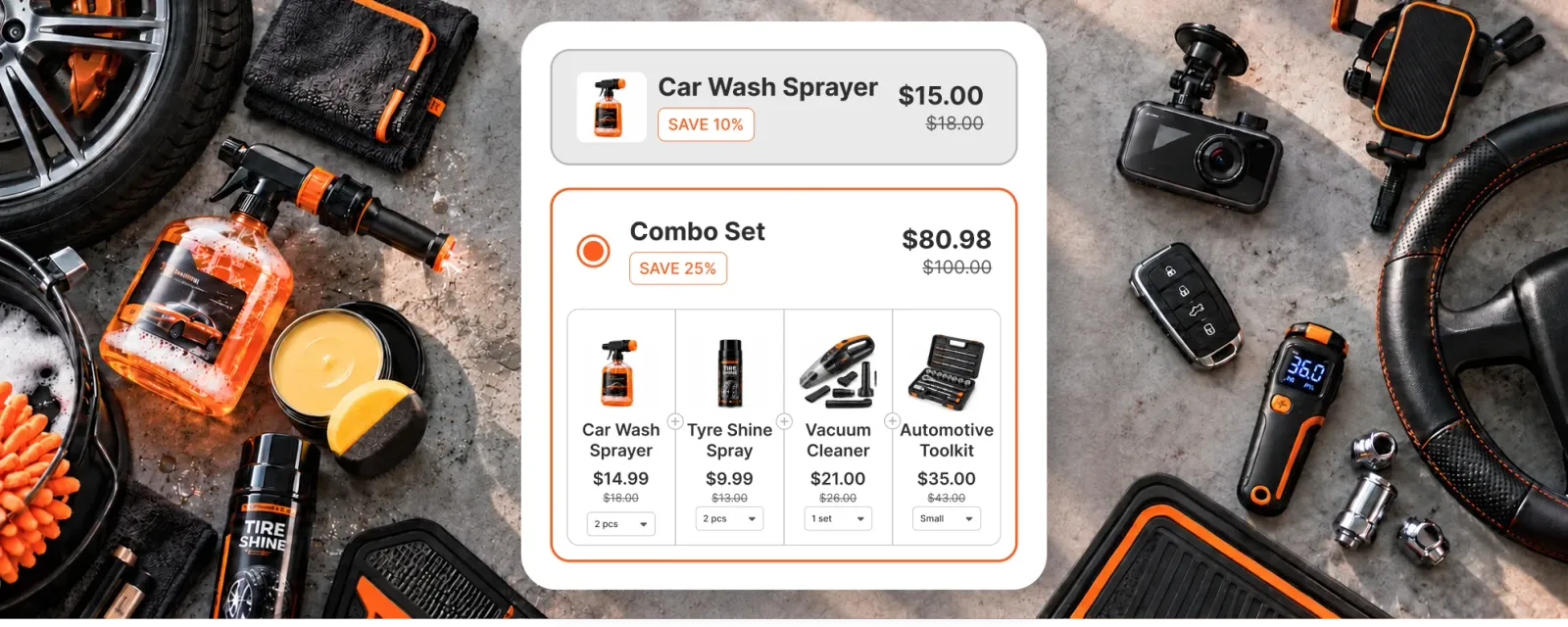
Why automotive promotions behave differently
Most categories sell a product to a person. Automotive sells a part to a specific vehicle. The same model can take a different filter depending on its engine, a different brake pad depending on its trim, and a different bulb depending on its build date. The shopper is not choosing between options. They are looking for the one that fits.
The stakes are higher too. Brakes, tires and steering parts are safety parts, so a wrong or incomplete order has consequences beyond disappointment. Many jobs also have to be done in sets, such as both sides of an axle, and many parts are single use, such as crush washers and torque-to-yield bolts.
Then there are rules and logistics that other categories never meet. Performance parts can be illegal to install on a road vehicle in some states. Batteries and aerosols ship under hazmat limits. Oil is heavy, and bumpers and wheels are oversize.
The strategies below start with fitment and job logic, which generic bundling advice skips, then add the timing, loyalty and shipping layers. Each one names the Pumper Bundles offer type that runs it without a developer.
Garage-verified fitment bundles
The strategy no other automotive promotion guide covers
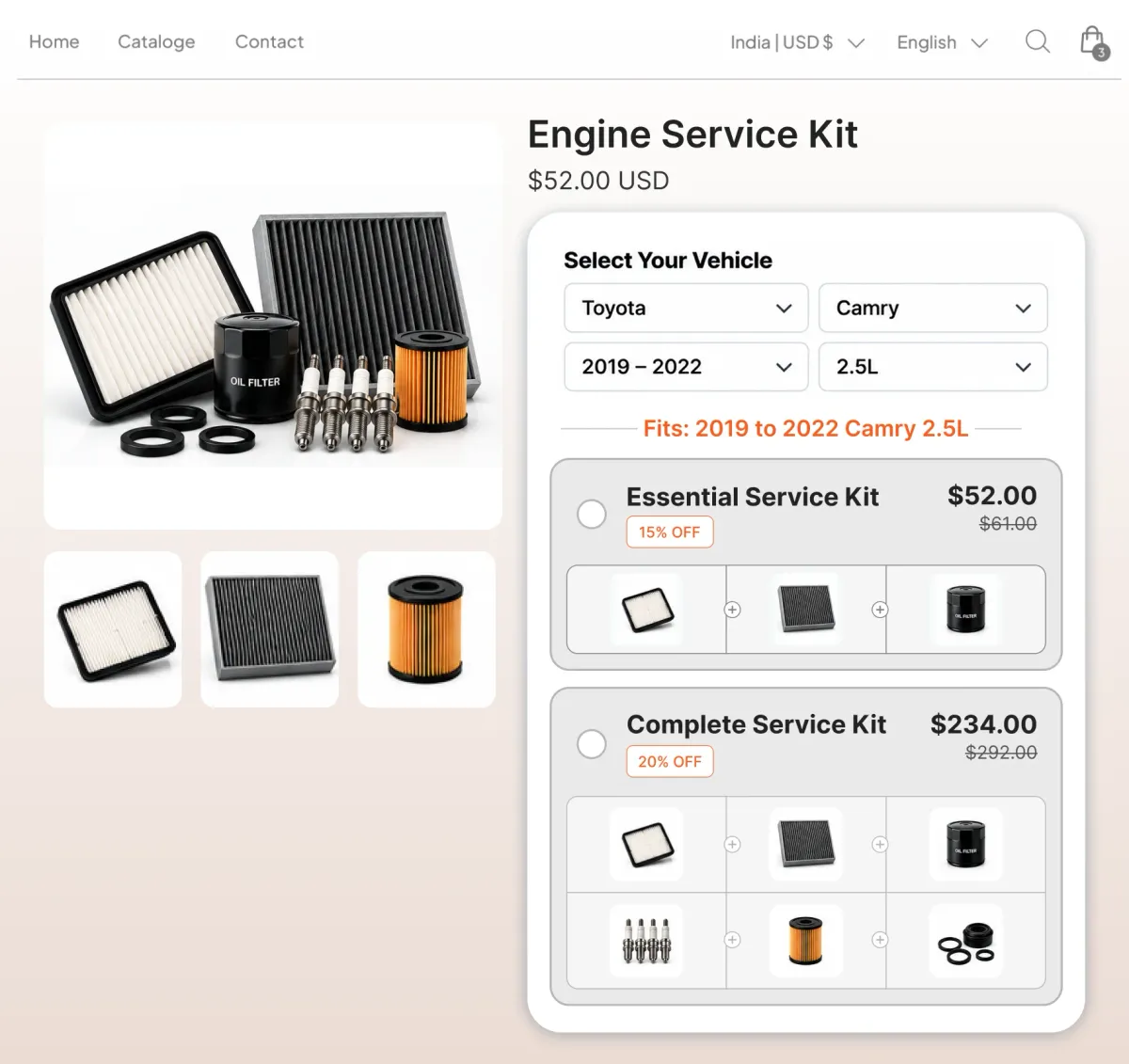
Generic advice says to bundle parts that go together. In this category, going together means going on the same vehicle: the same year, make, model, trim and engine. Two cars that look identical can take different filters, and a mid-year production change can split one model year into two fitments.
A bundle shown to a shopper before their vehicle is confirmed will be wrong for some of them. Build each bundle for a specific vehicle platform, show it only after the shopper has picked their vehicle, and put the fitment in the bundle title so they can check it themselves.

Maintenance-job service kits
Sell the job, not the part
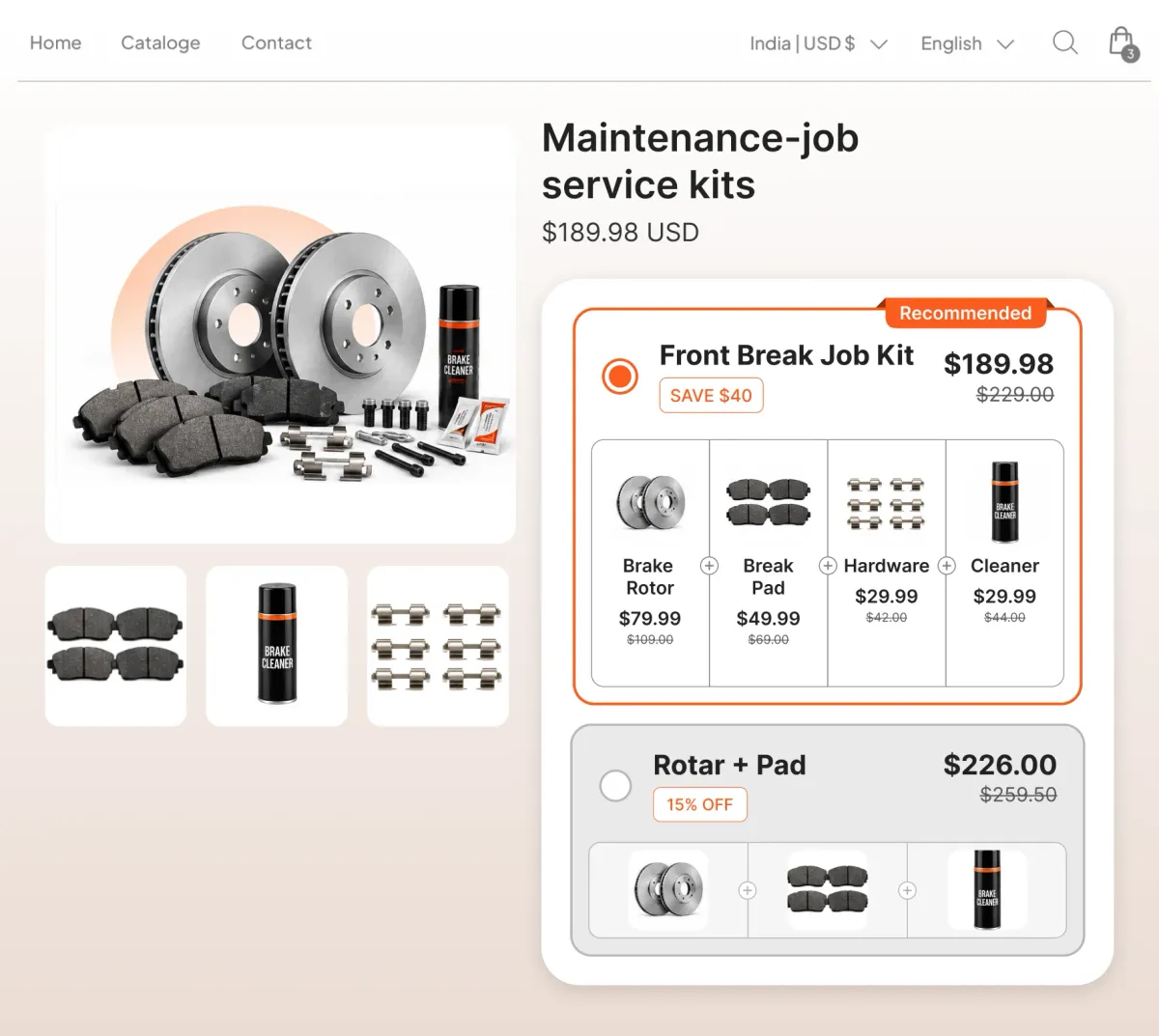
Shoppers search by task: "oil change kit for my Silverado" or "front brake job". A kit that matches the job puts every part the task needs in one cart, so the shopper does not stop mid-repair to order the one item they missed.
Include the parts that wear out together. A timing belt kit that also holds the tensioner and, where the belt drives it, the water pump saves the customer a second teardown later.
Oil quantity tiers by engine capacity
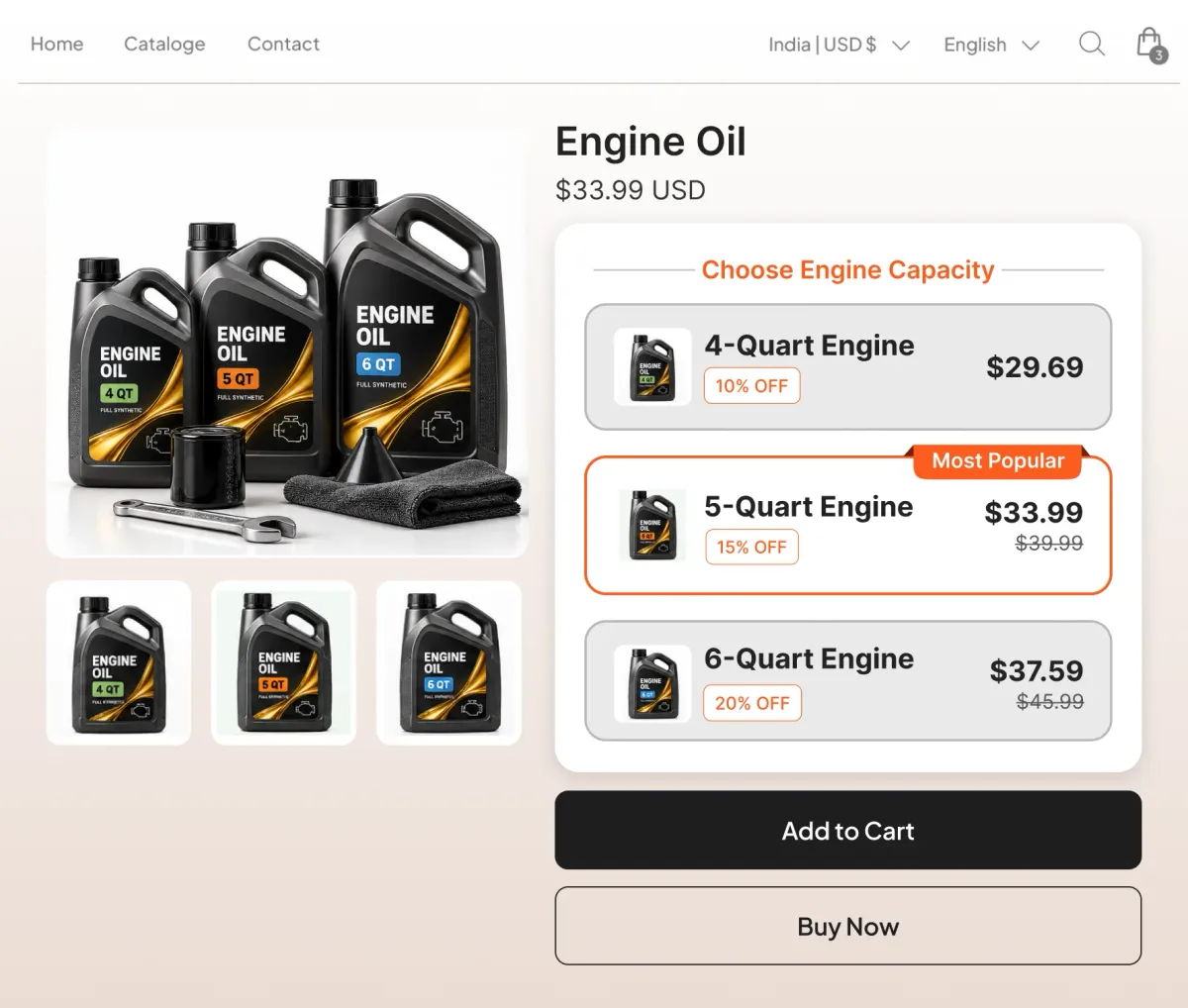
Drivers buy the number of quarts their engine holds
Engines hold anywhere from about four quarts to eight or more, so a shopper's real question is how much to buy for their engine. Labeling quantity tiers by engine capacity answers it. The shopper picks their tier and avoids both a short fill and a half-used jug.
The grade matters as much as the amount. The viscosity and the approvals the manufacturer calls for are set in the owner's manual, so show the grade and spec on the same card as the tiers.
Axle-pair and set-completion bundles
Some parts are only correct as a pair or a set
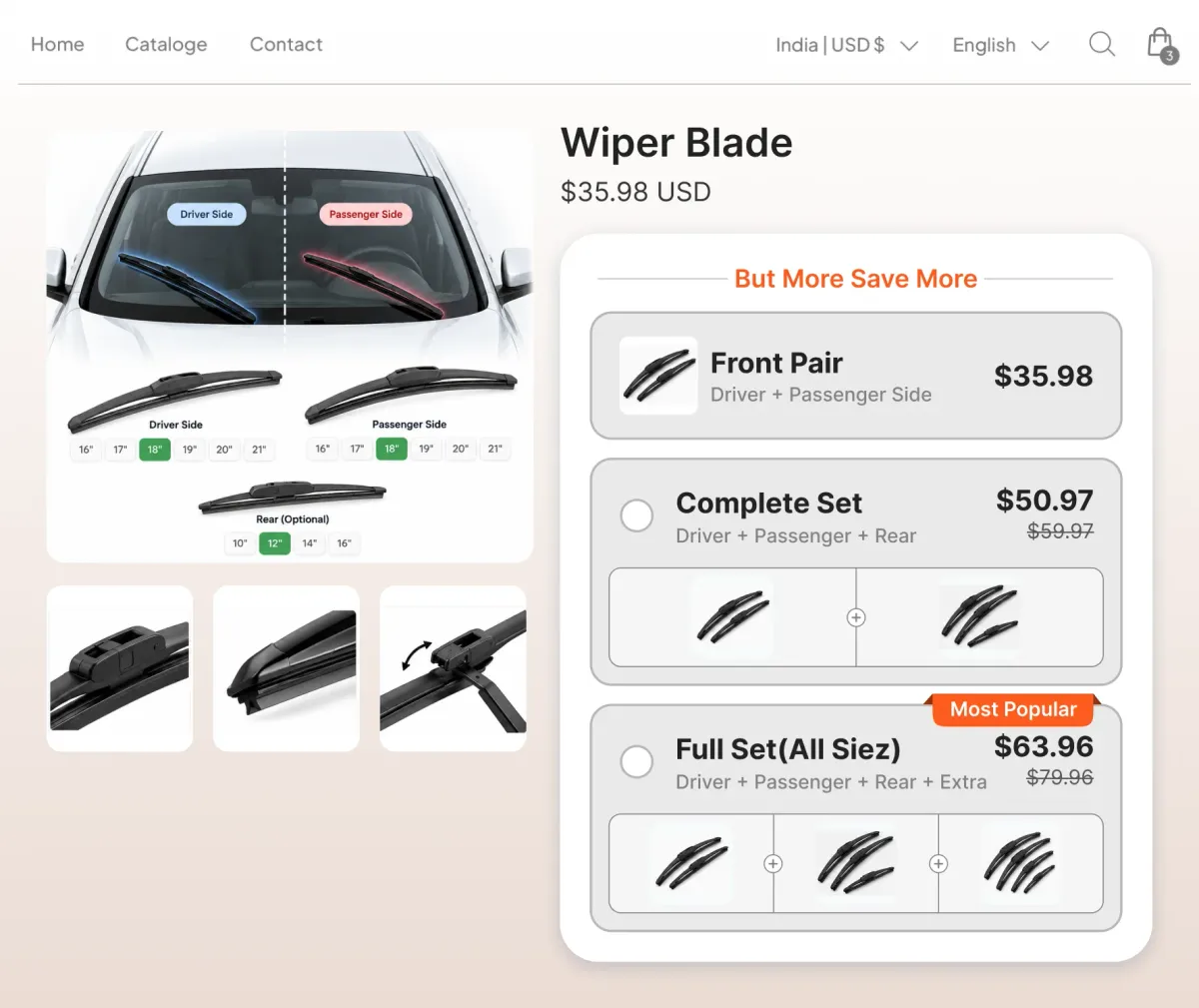
Brake pads and rotors are replaced across a whole axle, both sides at once, because mixing a new side with a worn side gives uneven braking. Headlight bulbs are commonly replaced in pairs so that brightness and color match. Wiper blades come as a set of different lengths, since the driver side, passenger side and rear are often not the same size.
Make the complete set the default listing and treat a single piece as the exception. The bundle price then supports the correct purchase.
Spark plug tiers by cylinder count
The quantity is set by the engine, not the shopper
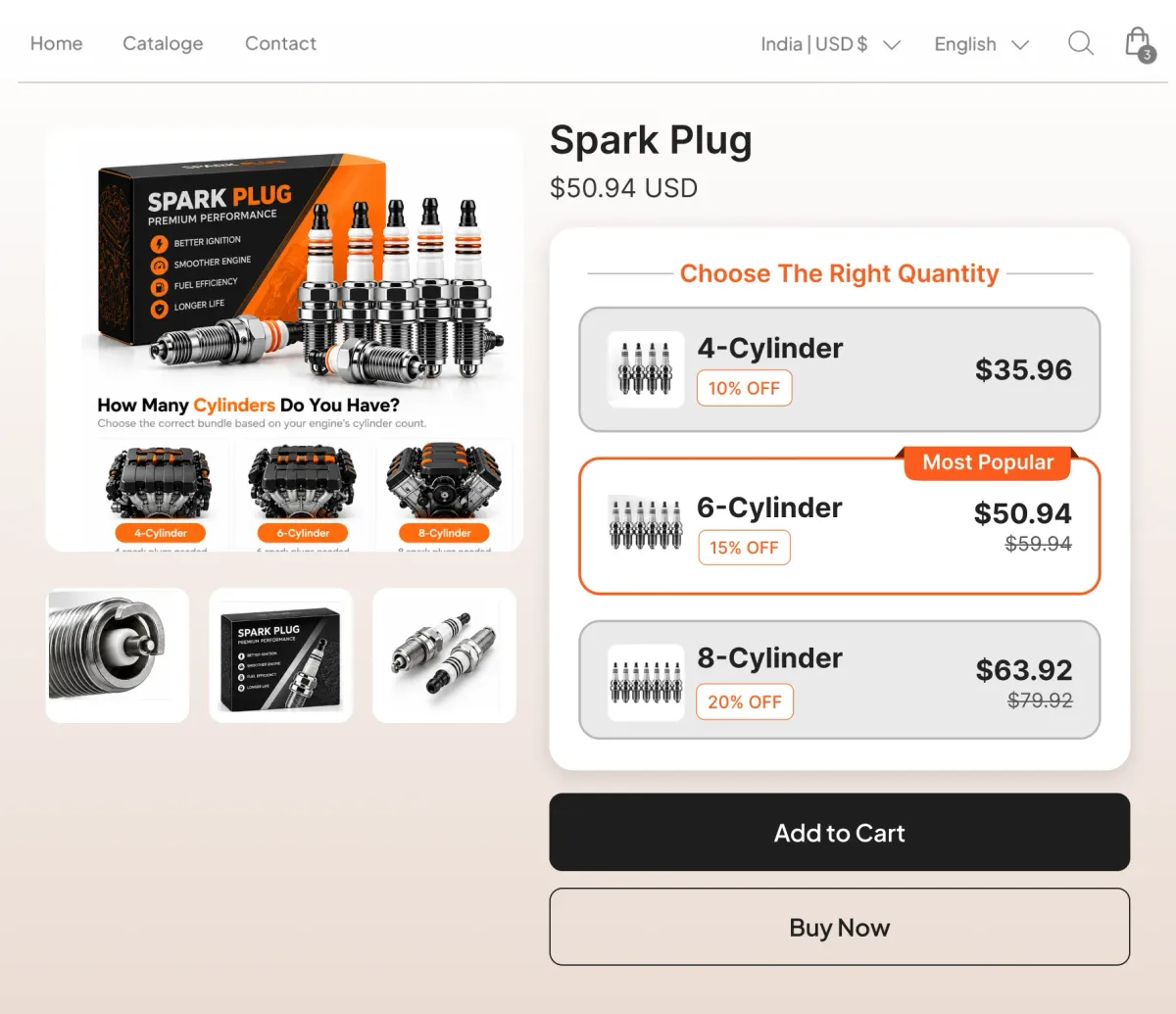
A tune-up needs one plug per cylinder in most engines, so the right quantity is four, six or eight. Tiers named by cylinder count let the shopper pick theirs without counting plugs, and the price per plug falls as the count rises.
Tire and wheel packages by set
Four tires, and everything that mounts them
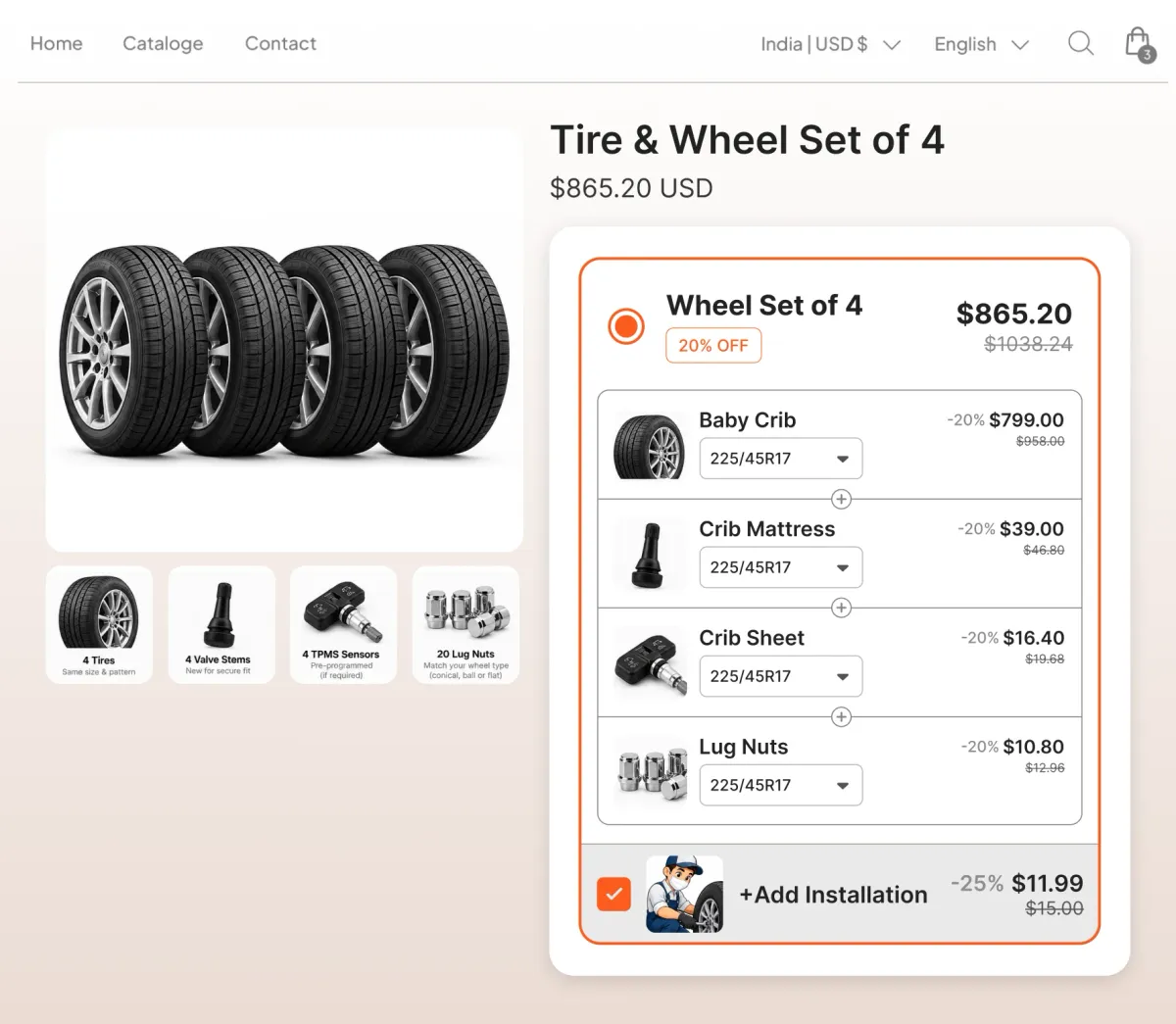
Tires are read by size code, such as 225/45R17, and a set of four keeps tread matched across the vehicle. Many manufacturers of all-wheel-drive vehicles advise matched tire sizes and similar tread depth on all four corners, so a set of four is often the correct purchase and not an upsell.
Add the small parts that mounting needs: valve stems, tire pressure sensors and lug nuts. Lug nuts come with different seat shapes (conical, ball or flat), and the seat has to match the wheel.
First-time DIY kits with the tools included
Many first jobs stall at the tools, not the parts
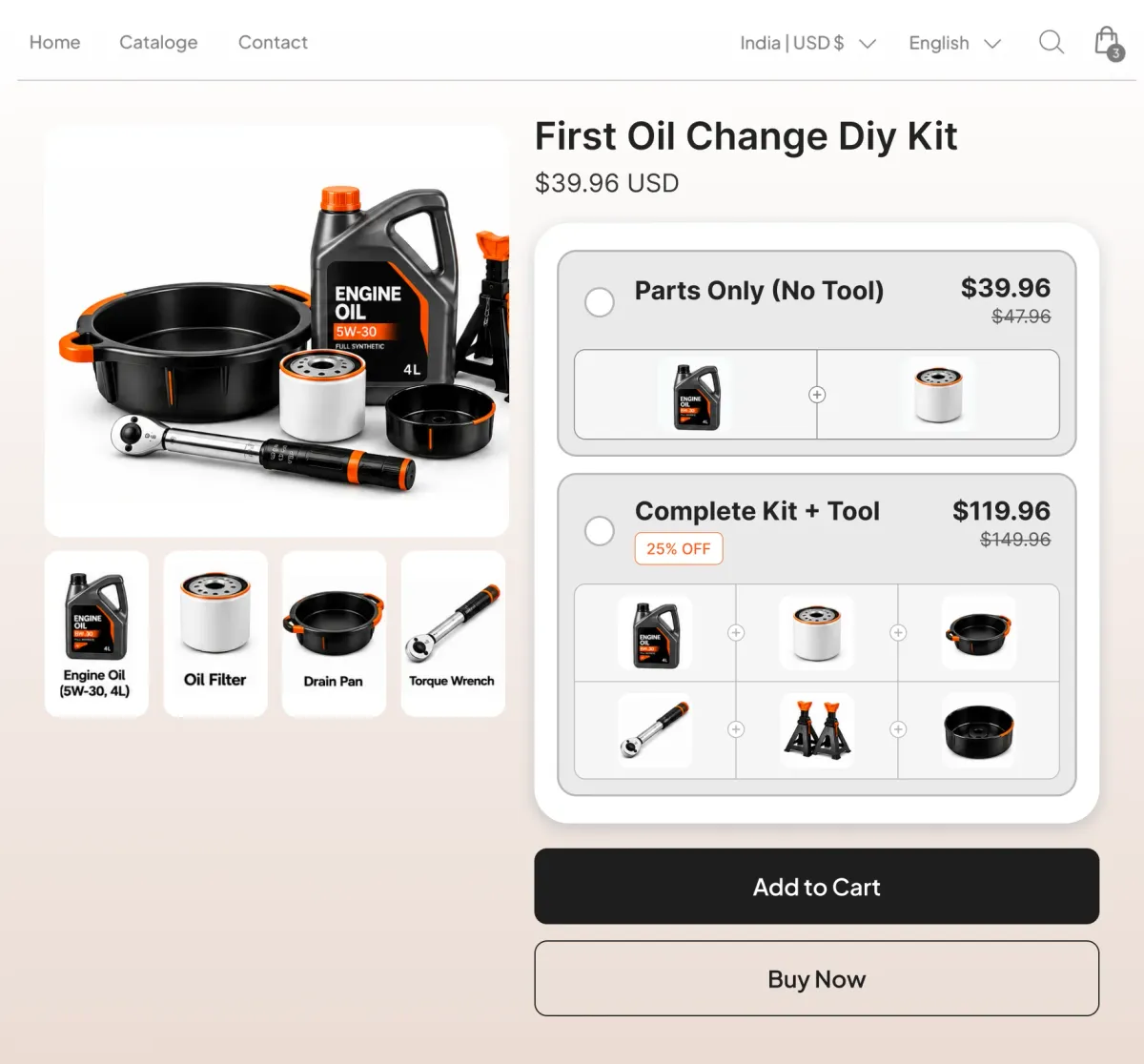
A first-time DIYer has the parts list right and still lacks the filter wrench, the torque wrench or a drain pan. A kit that holds the parts and the tools at one price removes the second order and the delay between them.
Offer a "tools already owned" version of the same kit for the second job. Without it, repeat buyers pay for tools twice.
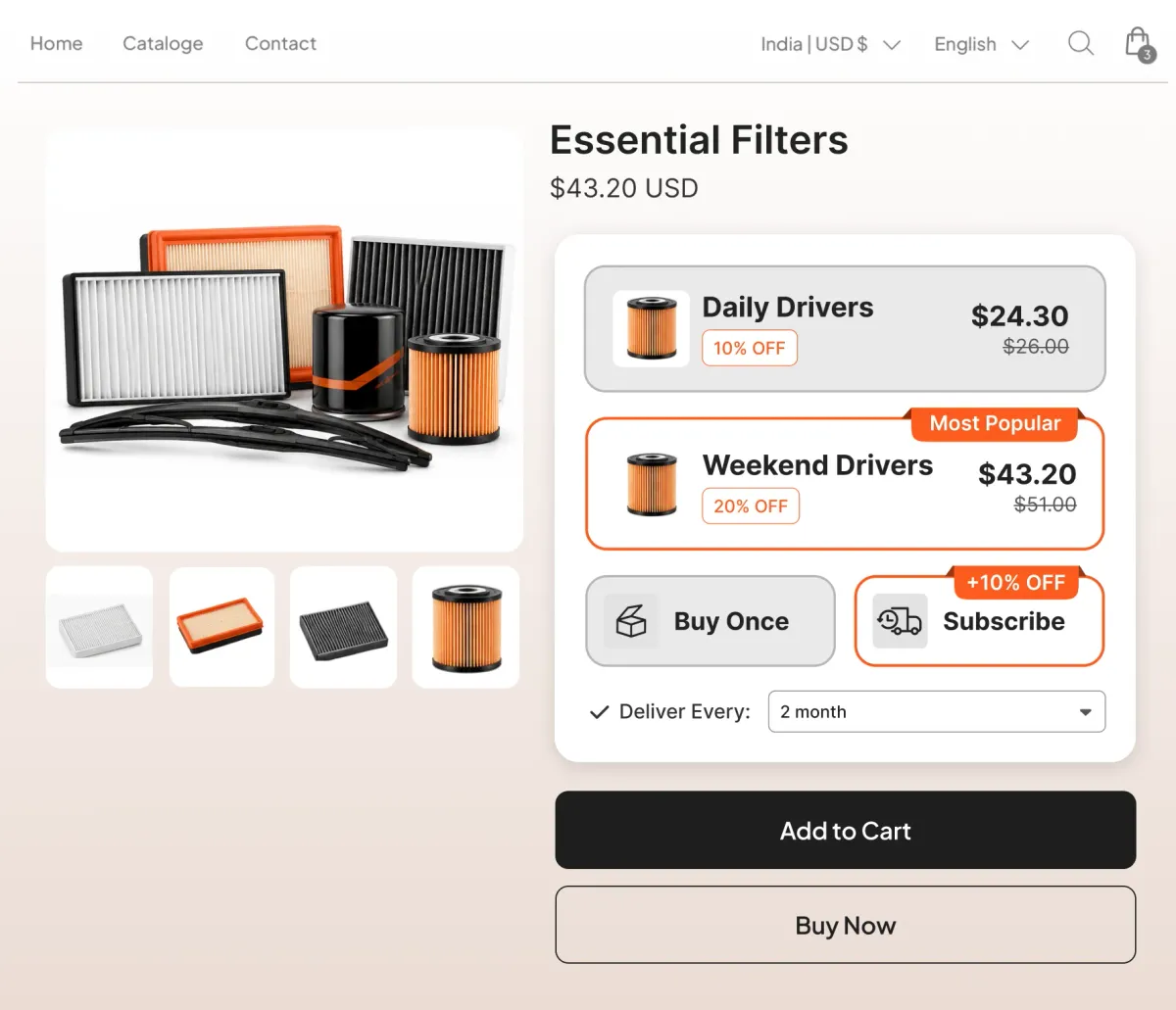
Filter subscriptions by driving pattern
Wear parts run out by use, and use varies by driver
Cabin and engine air filters, wiper blades and oil all follow a replacement rhythm. A commuter who drives all day and a weekend driver reach the same interval at very different times, so a single cadence suits neither of them.
Label the cadence options by driving pattern, for example high mileage, average and weekend driver, so the shopper chooses the one that matches how they actually use the vehicle.
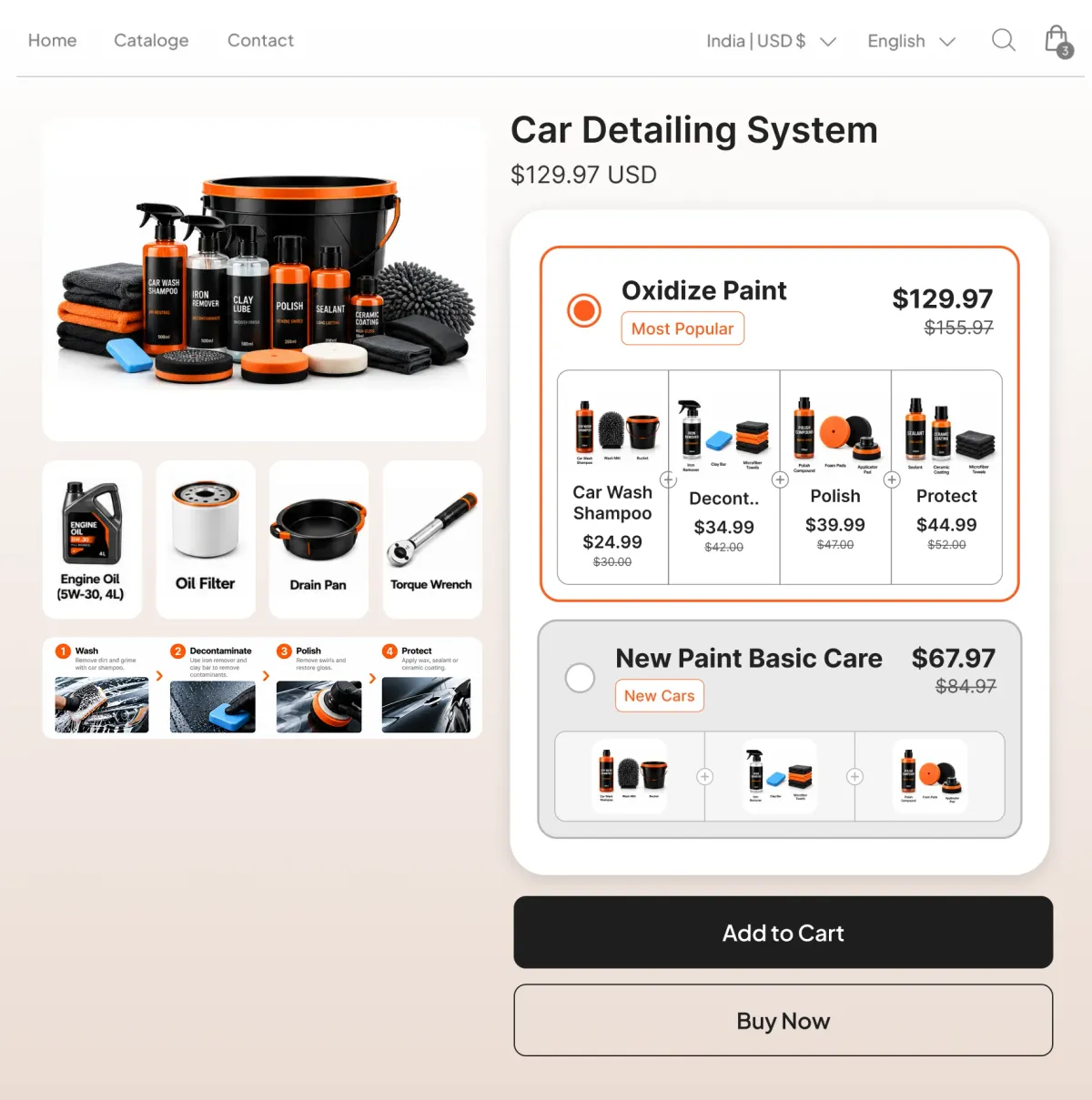
Detailing systems by paint condition
The steps run in a fixed order, and the right products depend on the paint
Paint care is a sequence: wash, decontaminate, polish, then protect with wax, sealant or a ceramic coating. Skipping a step or running them out of order wastes the later products, since a coating applied over contamination will not bond well.
Paint condition also changes the shopping list. New paint needs little correction, while swirled or oxidized paint needs polishing steps first. Offer one system per condition so the shopper buys the set for the paint they have.
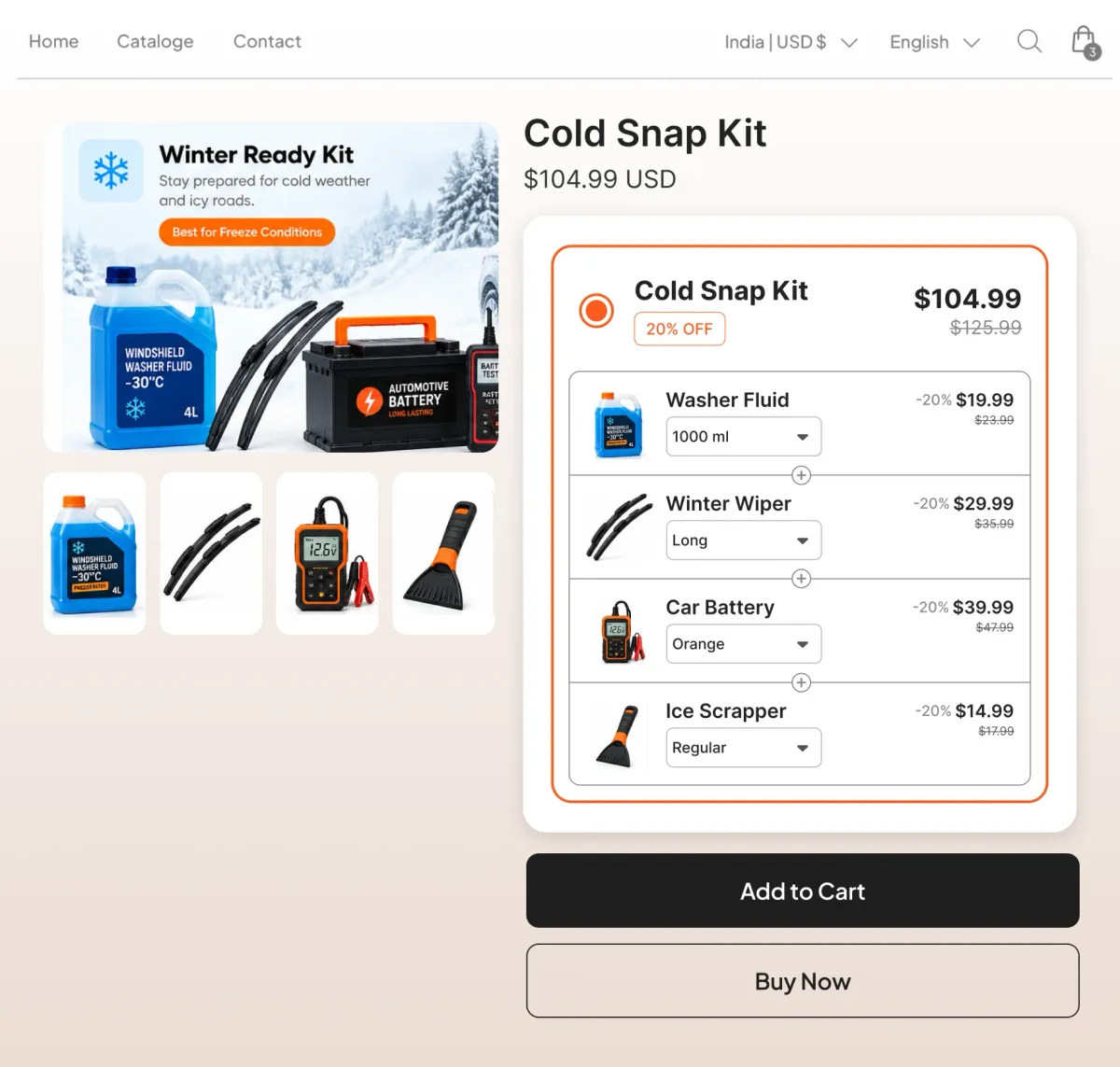
Weather-triggered seasonal bundles
The first cold morning sells more batteries than any ad
Automotive demand follows the weather. A hard freeze drives batteries, wipers and washer fluid, and a heat wave drives coolant and air conditioning work. Winter arrives in different weeks across the country, so one national launch date is early for some shoppers and late for others.
Build seasonal kits ahead of time, then release them by region when the forecast turns. The shopper meets the offer on the morning they need it.
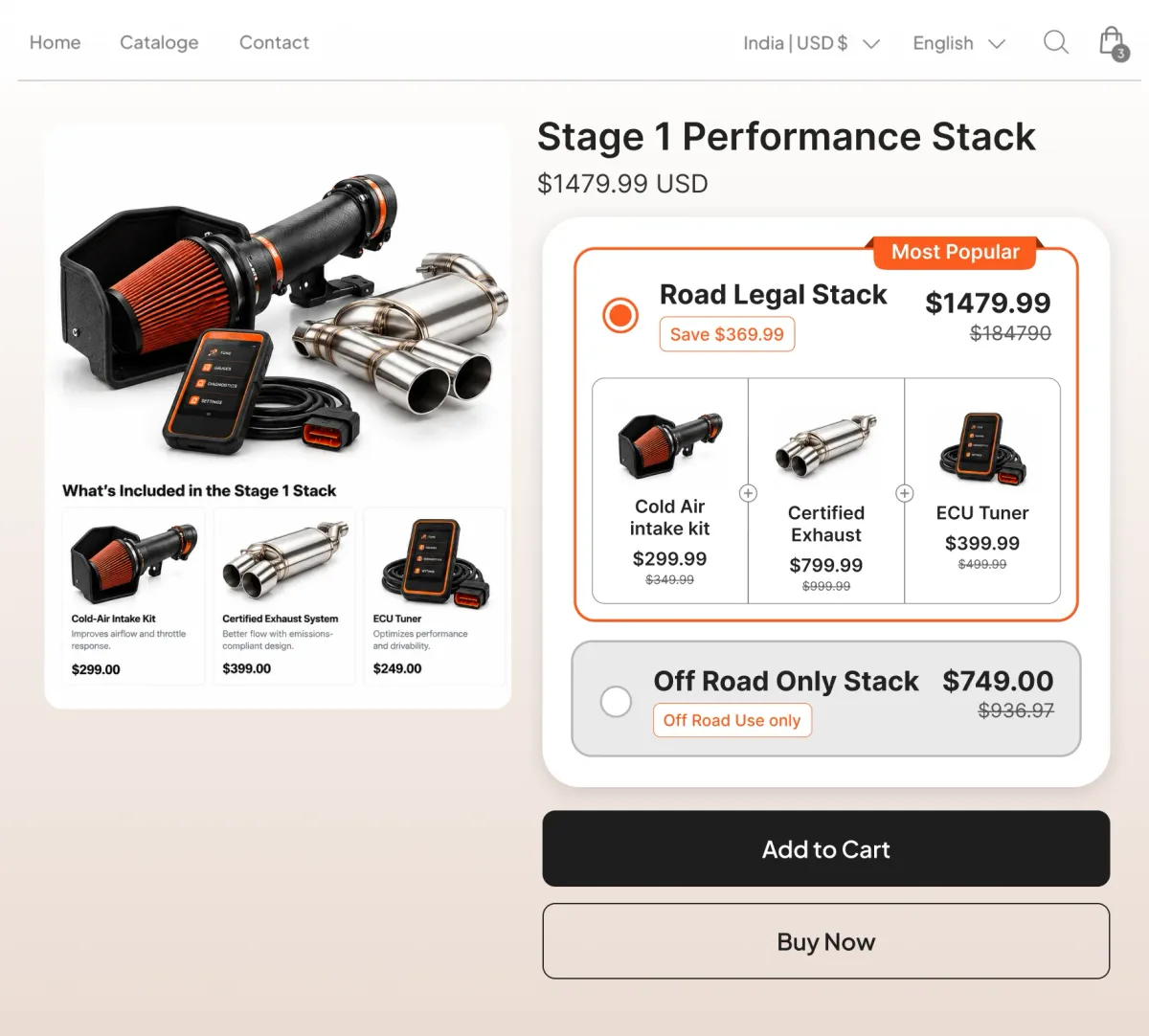
Emissions-legal performance stacks
Some upgrades are legal in one state and not in the next
Intakes, exhausts and tuning parts are often bought together as a stage. Some of them lack the emissions certification needed for road use in certain states, and California is the best-known example, where the relevant approval is an Executive Order number. A bundle that sells a non-compliant part into a restricted state creates a legal problem for the buyer and a liability for the store.
Build stacks from parts that carry the right approvals, show the certification on the card, and keep off-road-only parts in a separate collection that is clearly labeled.
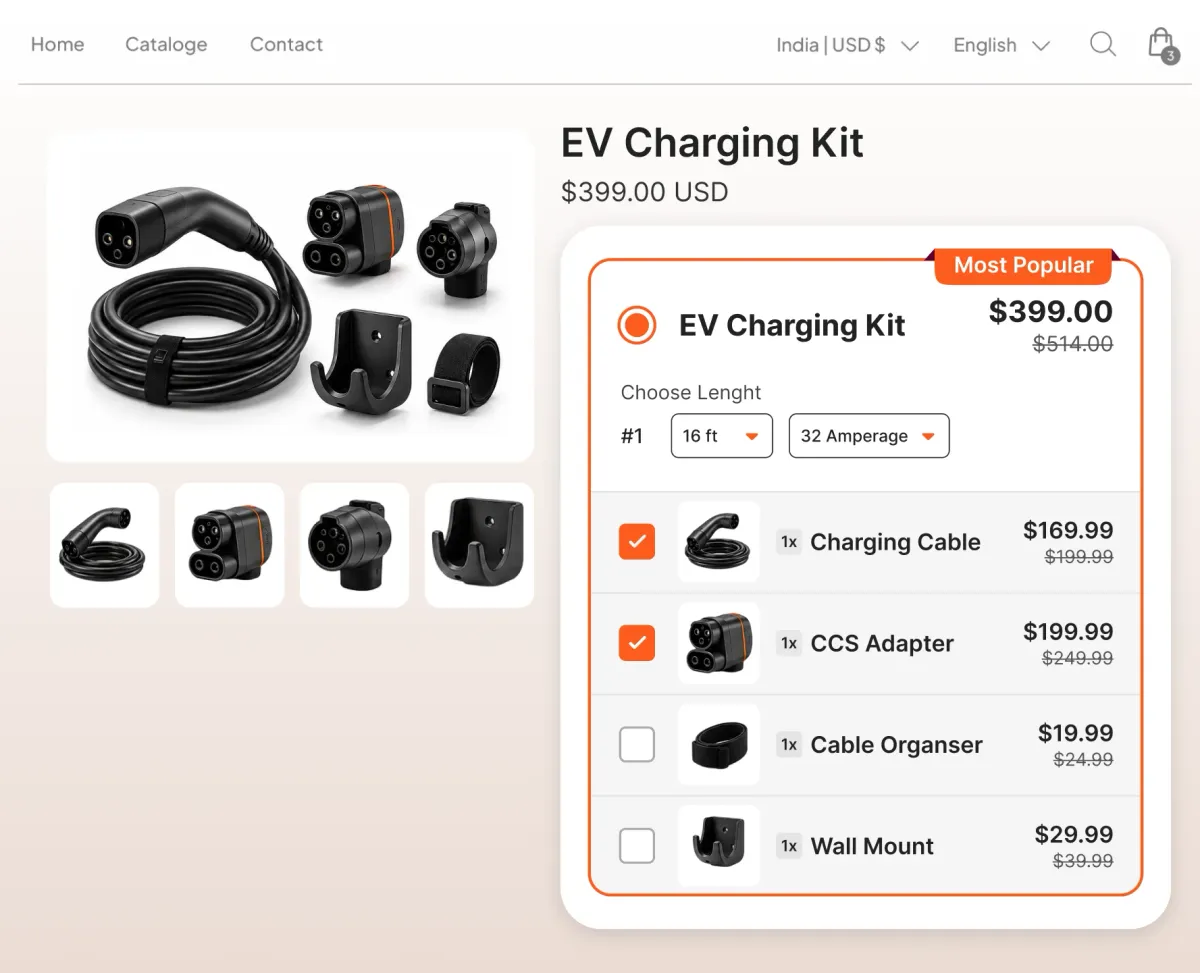
EV owner kits by connector standard
The plug shape decides whether the accessory works at all
Electric vehicles bring a new compatibility layer. Charging connectors come in different standards, including NACS, CCS and J1772, and adapters exist only for certain pairings. A cable bundled with the wrong connector is unusable.
Build kits around the connector first and the extras second: the charging cable, an adapter where one exists, a wall mount and a cable organizer. Add cable length and amperage to the card, since both depend on the owner's garage setup.
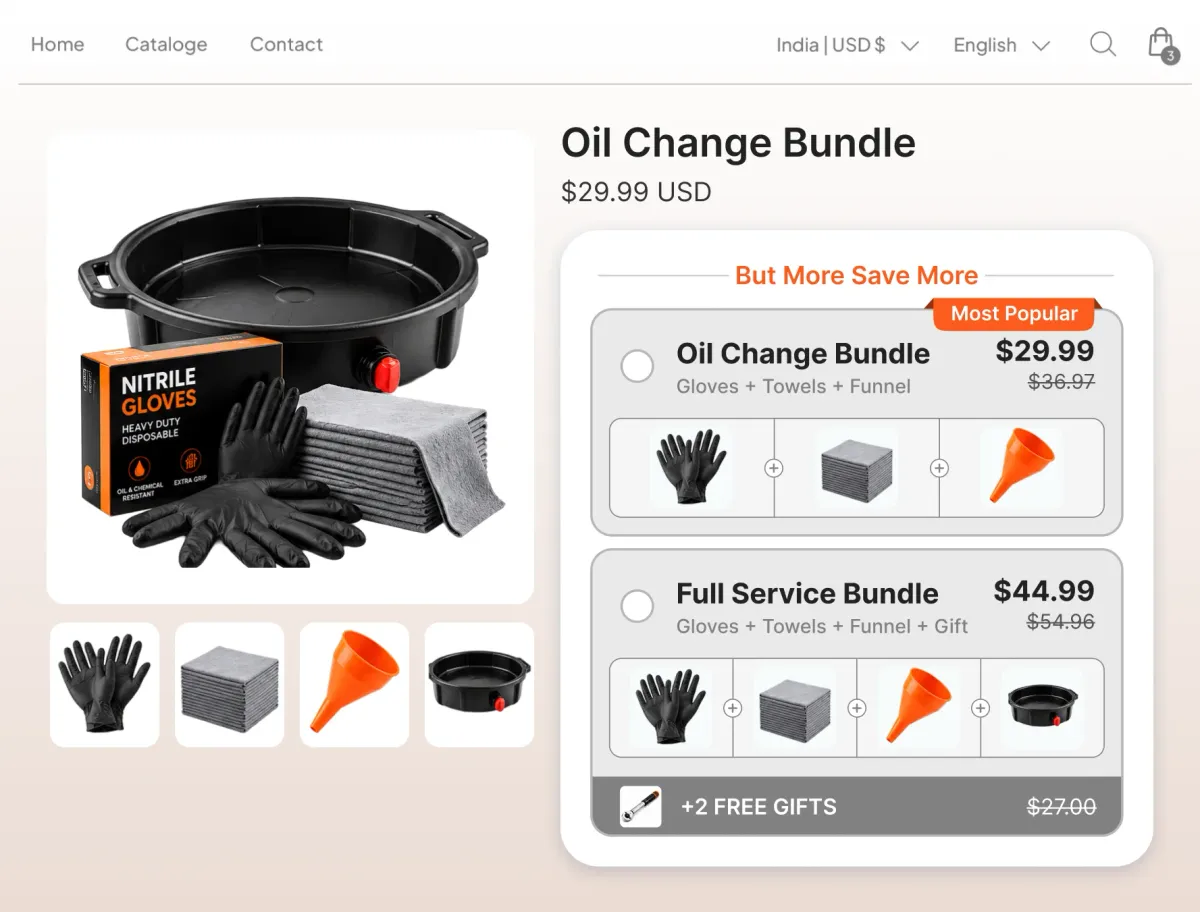
Cleanup gifts on fluid orders
Give the thing the messy job makes you need
Fluid jobs leave the customer with oil on their hands and spills on the floor. A pair of nitrile gloves and a pack of shop towels is a low-cost gift that the customer will use on the same afternoon, and it costs far less than a discount.
Tie the gift to the job in the cart. A funnel suits an oil order, and a drain pan liner suits a full service kit.
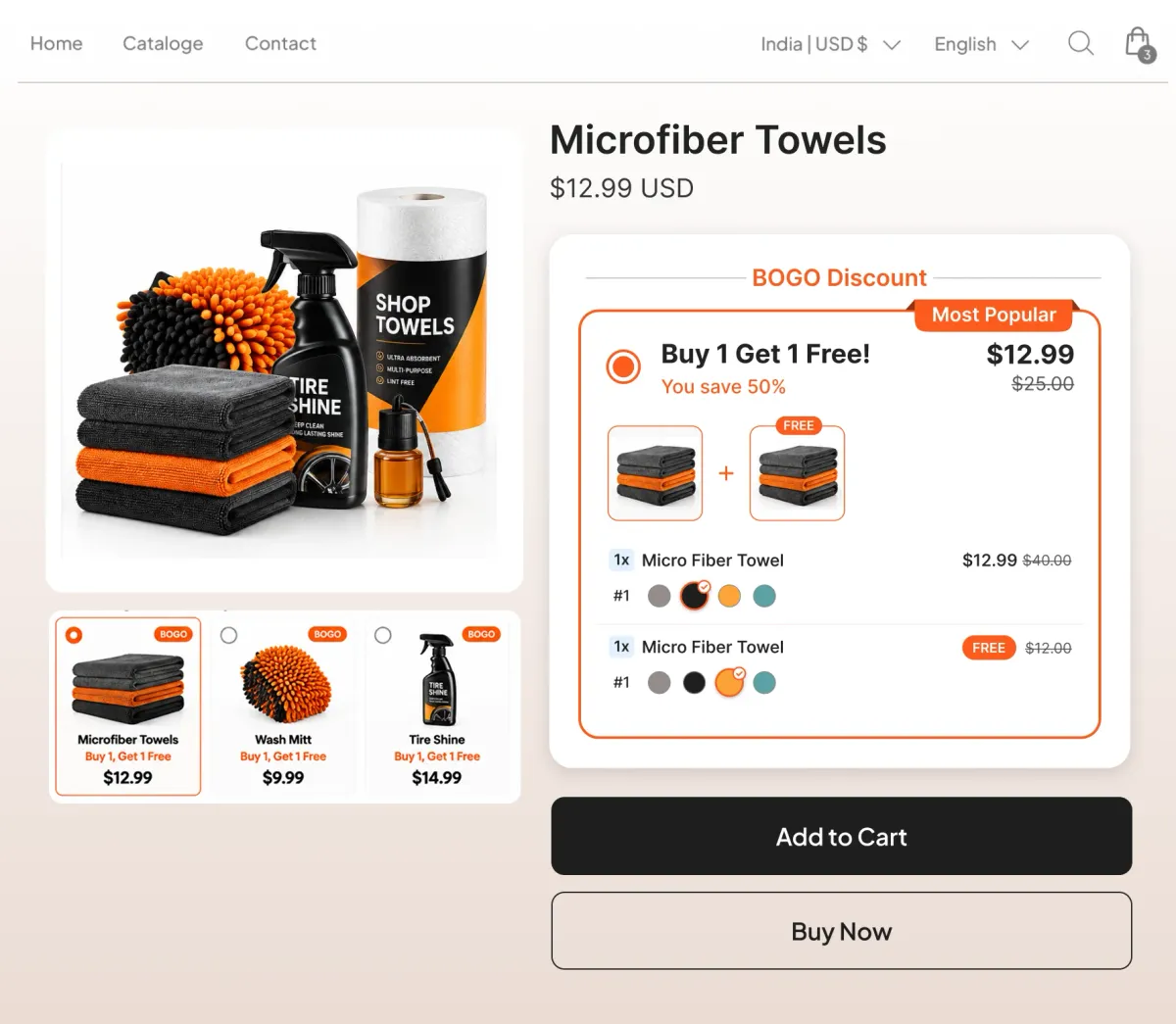
Universal-fit BOGO on consumables
Run bold offers only where fitment cannot go wrong
Your catalog splits in two. Vehicle-specific parts need fitment checks, so they belong in verified bundles. Universal items such as microfiber towels, wash mitts, tire shine, shop towels and air fresheners fit every vehicle, which makes them safe for a direct buy-one-get-one offer.
This split gives you a simple rule for the whole store: aggressive offers on universal items, and tightly gated bundles on fitment-bound parts.
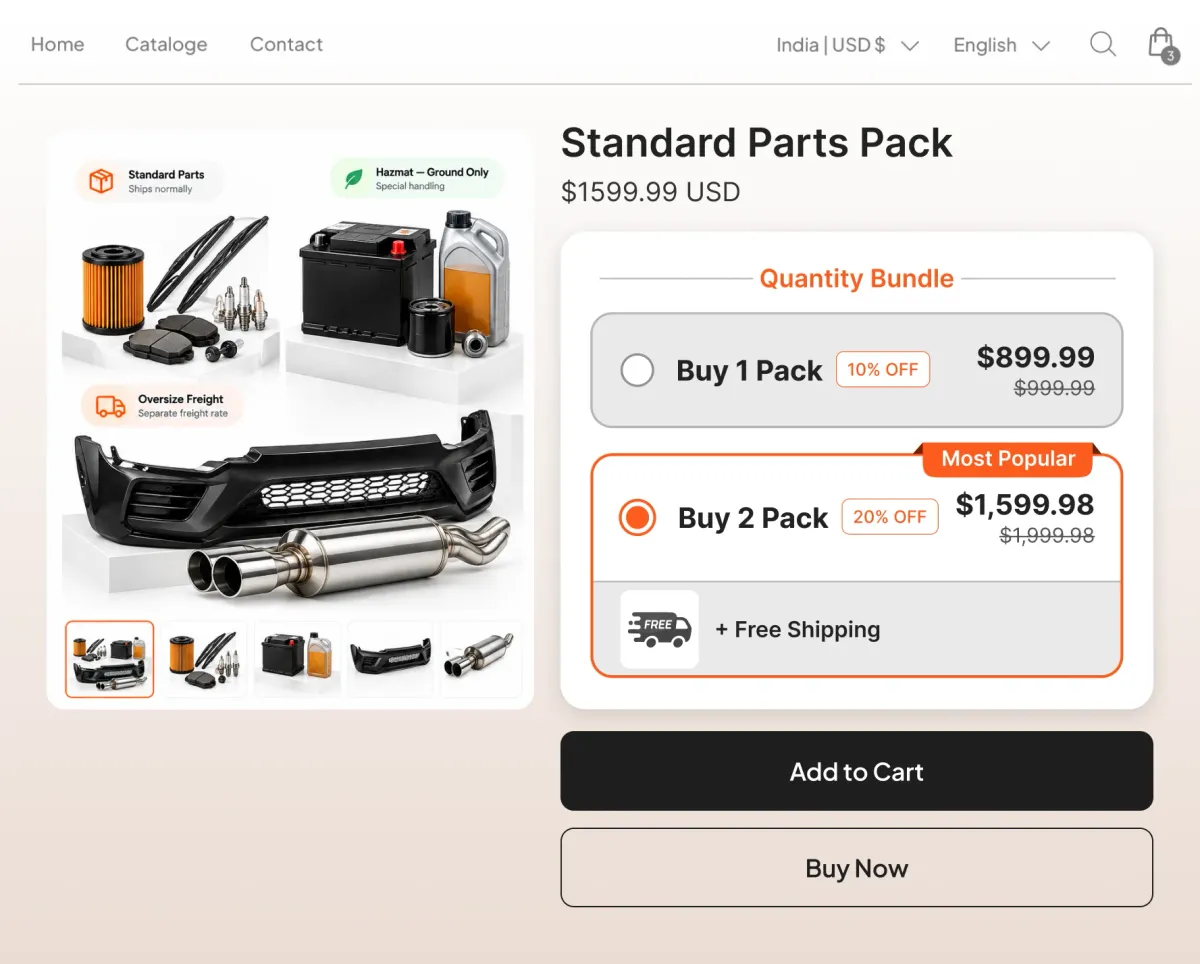
Shipping-class-aware free shipping thresholds
Not every item in your catalog ships the same way
Batteries, aerosols and some fluids ship under hazmat rules and may be limited to ground service. Cases of oil are heavy, and bumpers, wheels and exhaust systems can be oversize. A single free shipping line across all of these will either lose money on the heavy orders or sit out of reach for shoppers buying small parts.
Set the threshold on the standard-class items, and keep oversize and hazmat items on their own rates. Bundles can then lift the standard basket toward the line.
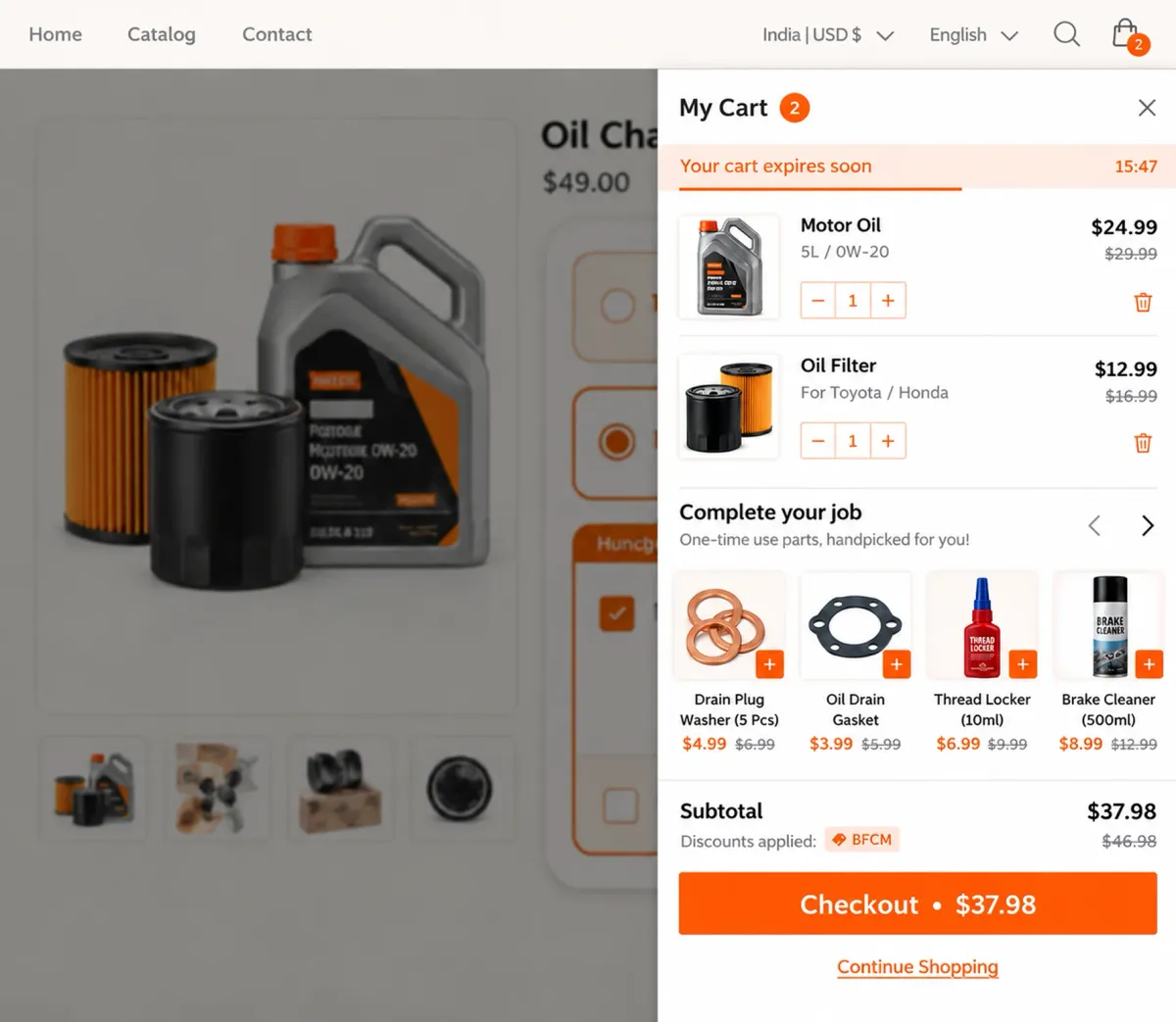
Post-purchase upsell: the one-use parts
The small part that stops the job when it is missing
Many jobs call for single-use items that shoppers forget: a new crush washer for the drain plug, a gasket, thread locker, brake cleaner or fresh grease. Torque-to-yield bolts are meant to be replaced rather than reused. Each one costs little, and each one can halt a job on a Saturday afternoon.
After checkout, offer the one-use item the job in the order requires. Payment details are already on file, so accepting takes one tap and the original order stays untouched.
Automotive promotion calendar
Automotive demand follows the weather and the maintenance cycle more than the retail calendar. This month-by-month map shows which strategy fits each period, using US timing. Move each month earlier or later to match your region's weather.
Self-audit: how bundle-ready is your store?
Score your current setup against these six dimensions before you implement the strategies above. Automotive brands most often miss clean fitment data and per-product shipping classes, even when the rest of their bundling is solid.
The bars are an illustrative self-check, not measured data. Use them to spot where your own setup is thin.
From solo stores to 8-figure brands, teams trust Profit Pumper to grow their revenue.
Consistently rated 4.9 stars on the Shopify App Store for ease of use and reliability.
Install, pick a template, configure your offer, and go live. No coding or developers needed.
Frequently asked questions
How is automotive bundling different from bundling in other categories?+
Can a bundle cause returns in this category?+
Do I need a developer to set these up on Shopify?+
Which strategy should a small automotive brand start with?+
Can I serve both DIY buyers and trade customers from one store?+
Your offers. Configured, not discounted.
Set up job-based service kits, engine-capacity quantity tiers and free cleanup gifts on your Shopify store in minutes, with no developer or theme edits needed.
Try Pumper Bundles Free