


Shopify Promotion Strategies
Built for Sports & Fitness Brands
A helmet that fits comfortably but not correctly doesn't protect on impact, and gear built for an advanced athlete handed to a beginner is an injury waiting to happen. These sixteen strategies grow AOV around skill progression, protective fit, and team-roster logistics, the things generic bundling advice was never built to handle.
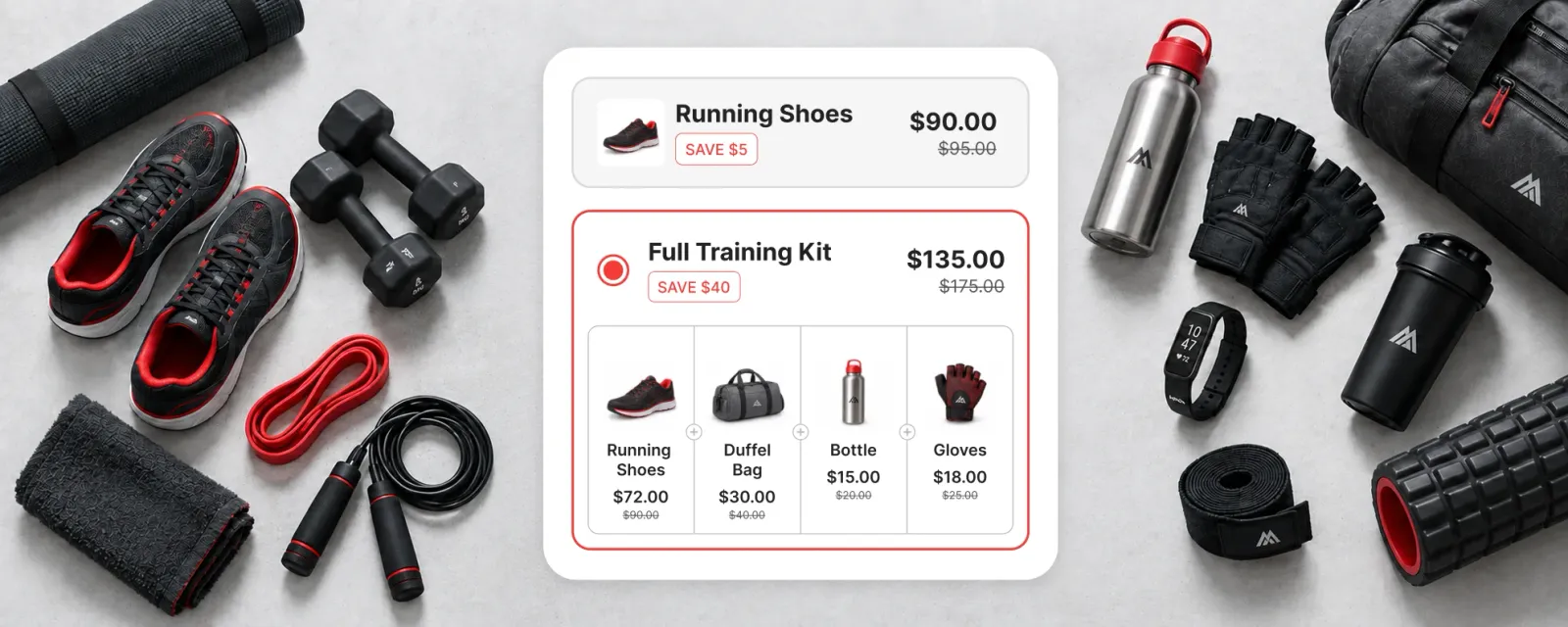
Why sports & fitness promotions behave differently
Most generic Shopify AOV advice assumes a bundle's only real risk is that the customer doesn't want the extra item. Sports and fitness adds a layer most categories never have to think about: performance and safety are directly tied to whether the gear matches the athlete's actual skill level and body, not just their stated preference. A beginner sold advanced-level equipment isn't getting a worse experience, they're at meaningfully higher risk of injury. A helmet or pad set that's comfortable but incorrectly sized doesn't just feel off, it can fail to protect on impact.
This category also has two structural realities most bundling tools were never designed around. Purchasing is often done by a coach or team manager outfitting a full roster of differently sized athletes in one order, not a single person buying for themselves. And demand is frequently locked to hard external deadlines, a race date, a season's first snowfall, a league's uniform order deadline, rather than a soft, flexible browsing window.
The strategies below are built around skill-level accuracy, protective-gear fit, and team logistics first, then the seasonal, loyalty, and discovery layers on top. Each includes the mechanism, who it works for, and the Pumper Bundles offer type that runs it without a developer.
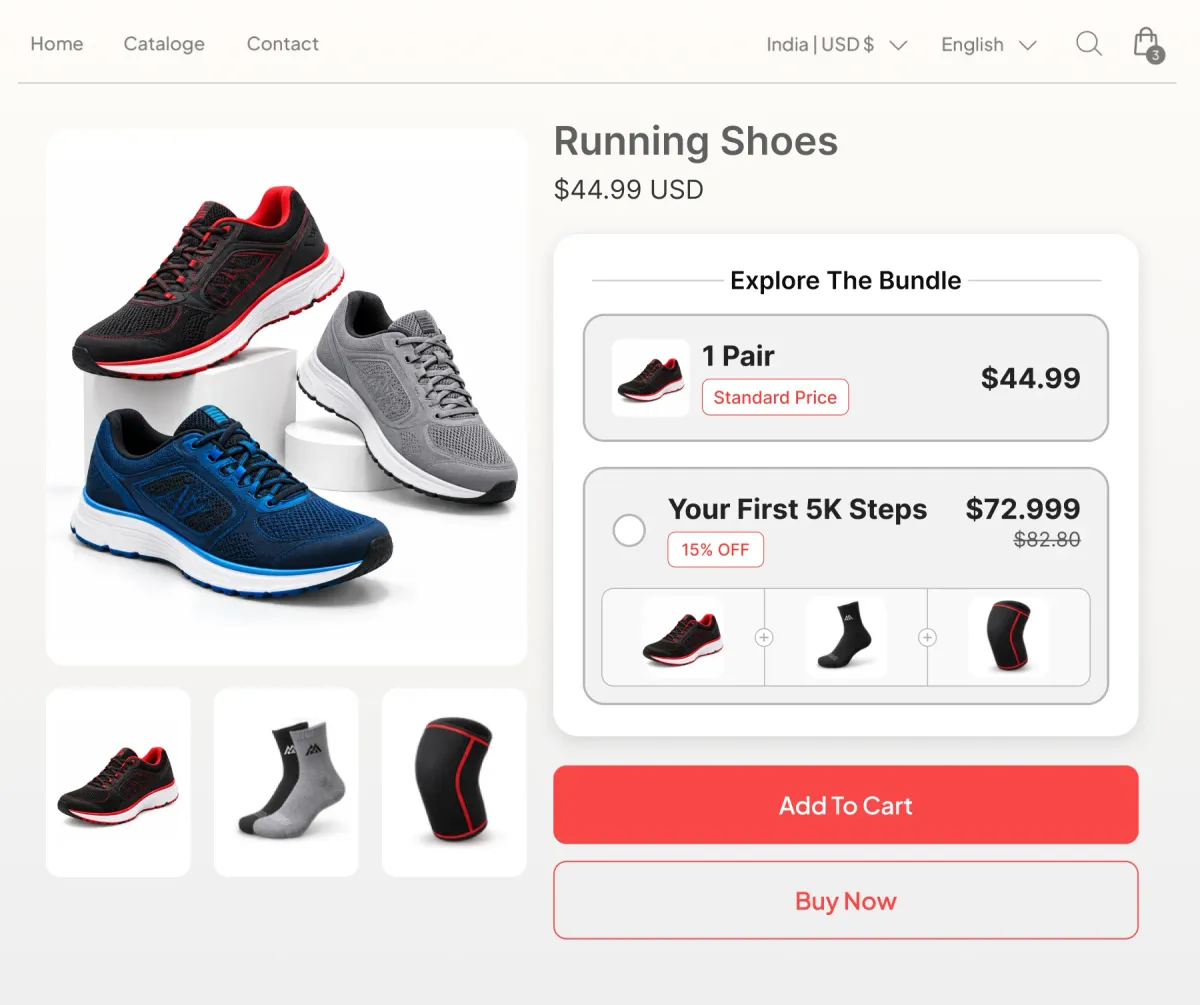
Sport-specific goal and program bundling
The highest-converting sports promotion, built around the outcome the athlete is training toward
Instead of discounting a single pair of shoes, group products around a specific training goal: a first-5K bundle, a home strength-training starter bundle, a triathlon transition bundle. The discount applies only to the full set, so the anchor product never gets discounted on its own.
This mirrors how athletes actually shop. They rarely come looking for "shoes," they come looking to accomplish something specific, and a goal-framed bundle speaks directly to that motivation instead of just listing compatible gear.

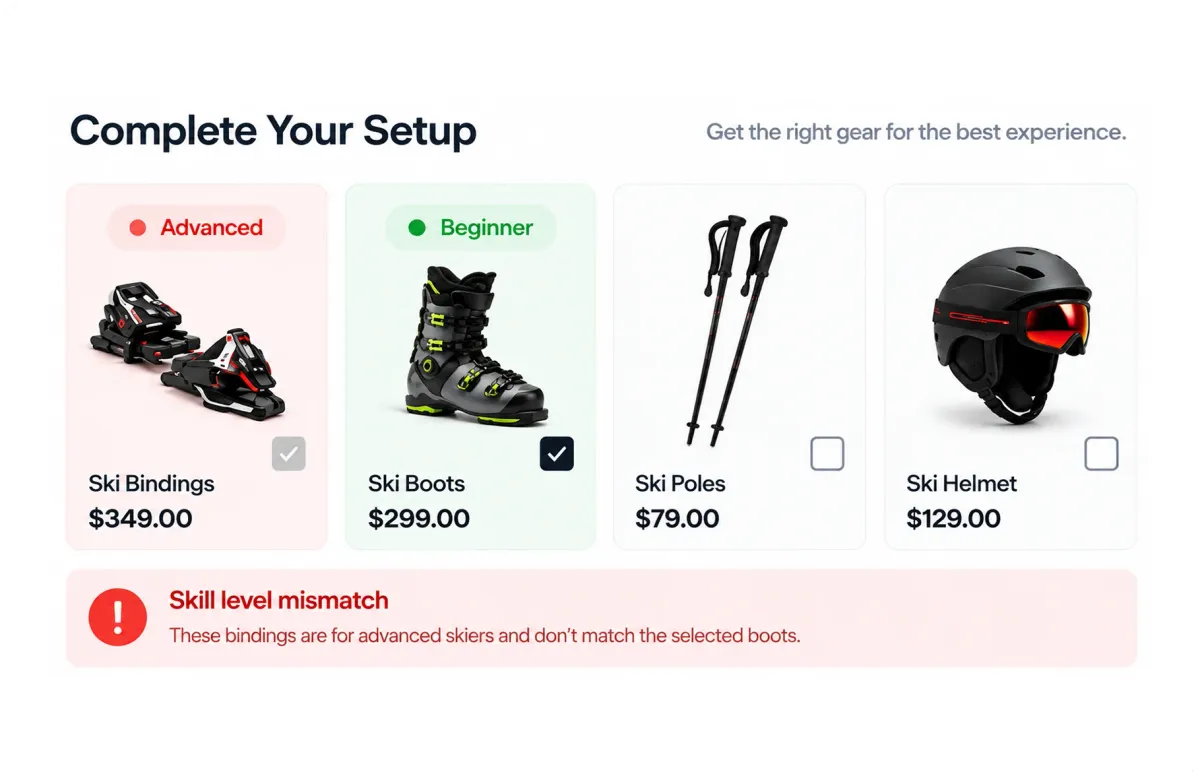
Skill-level and progression-aware bundling
The first of two safety-related gaps most sports promotion advice never addresses
Generic AOV advice treats gear as interchangeable within a sport. In many sports, equipment is deliberately tiered by skill level for real functional reasons, an advanced binding, blade, or paddle designed for responsiveness at speed can be genuinely harder and riskier to control for a beginner still building fundamentals. A bundle that pairs an advanced-tier item with beginner-tier gear because they're visually similar or from the same product line can put a new athlete on equipment that outpaces their skill.
This is a genuine gap in sports bundling content. Most guides optimize purely for AOV lift and never connect the mechanic back to the skill-progression risk that's unique to equipment where the wrong tier can mean the athlete literally can't control it safely yet.
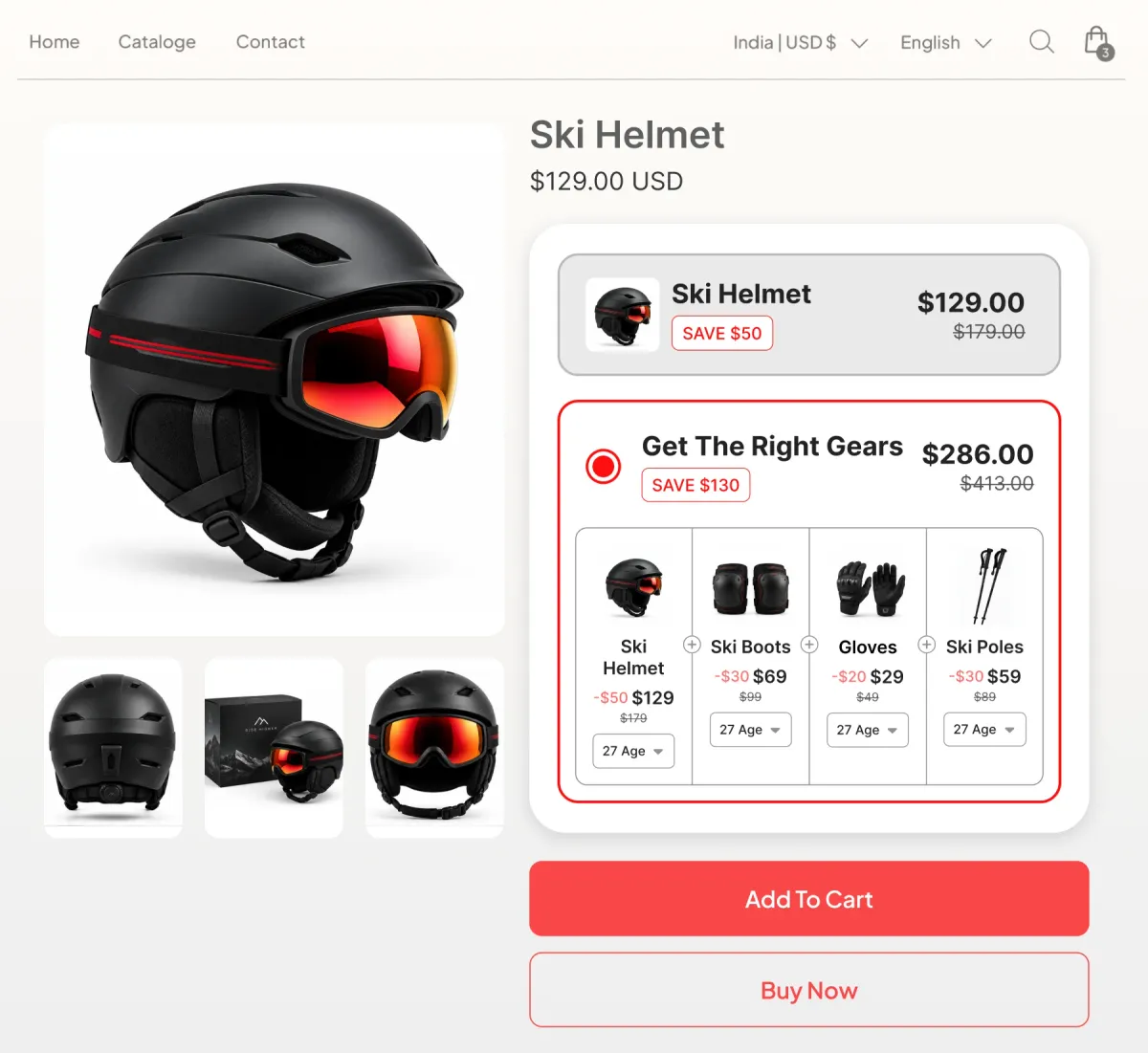
Protective-gear fit-interdependency bundling
The second safety gap: gear that has to fit correctly, not just comfortably, to actually work
A helmet, wrist guards, or padding that's slightly too large isn't simply less comfortable the way a loose sweater would be, it can fail to protect properly on impact because it shifts or doesn't sit where it needs to. Bundling protective gear purely by matching color or brand line, without verifying each piece against the athlete's actual size, misses the entire functional point of the product.
Team and league roster bundling
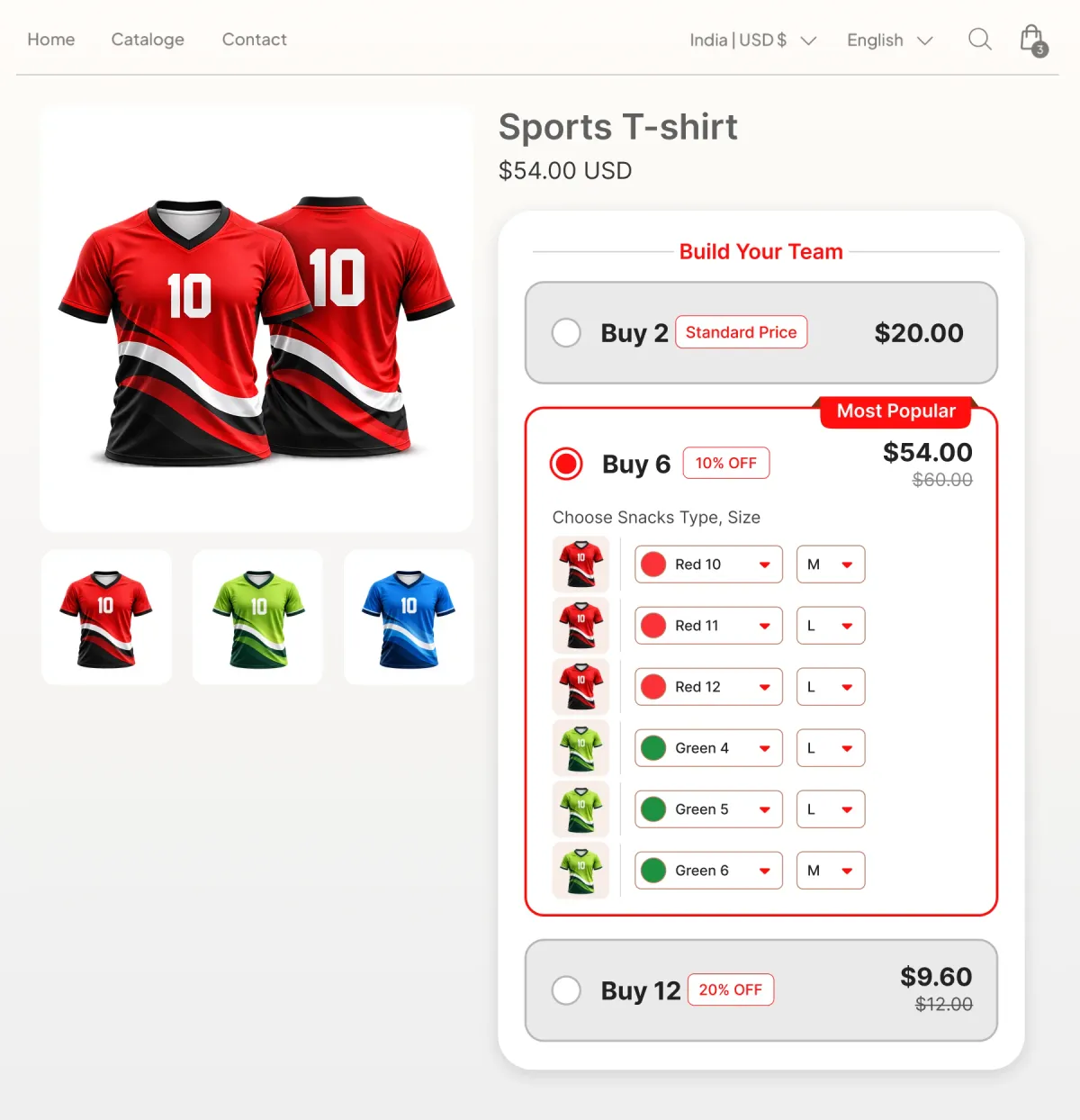
A structural mechanic almost unique to this category: one buyer, one design, a dozen different sizes
A coach or team manager ordering uniforms or gear for a full roster needs the exact same design and team branding across a range of sizes for different players in a single order, something most bundling tools handle poorly because they assume one order equals one recipient in one size. Structuring a roster bundle that keeps a single design consistent while letting quantity and size vary per player unlocks a genuinely large order type most sports brands currently handle manually over email.
Try-before-you-buy trial bundling
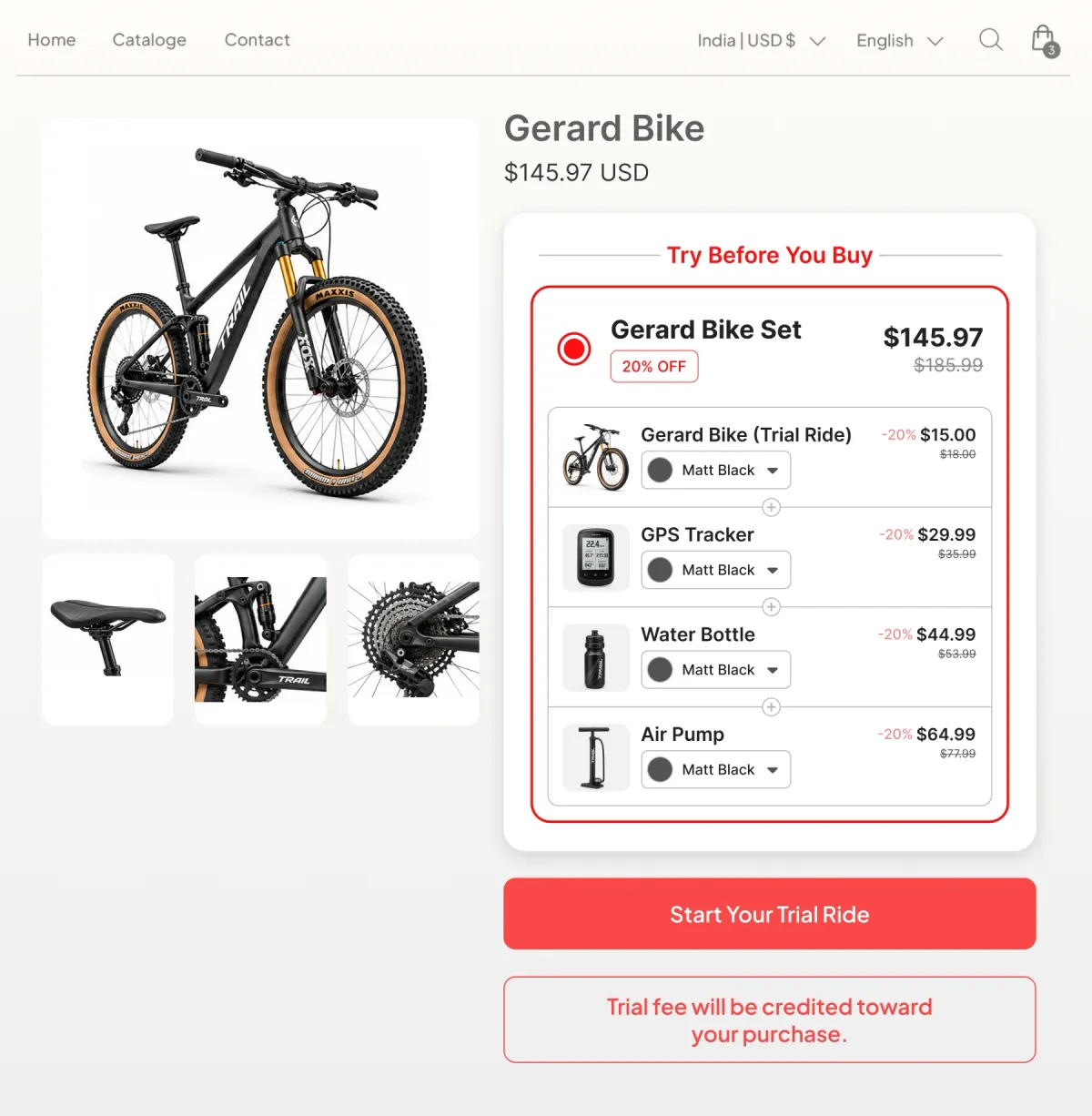
Reduces the single biggest hesitation on the category's highest-ticket items
For expensive, durable gear (bikes, golf clubs, larger fitness equipment), offering a paid trial period with the fee credited toward a full purchase if the athlete keeps the item addresses the core hesitation on a high-ticket purchase, "will this actually feel right for me", far more directly than a percentage discount would. Bundling the trial fee with a small accessory (a bike computer, a set of grips) makes the trial itself feel like a complete starter experience rather than a bare loaner.
Race and event-day capsule bundles
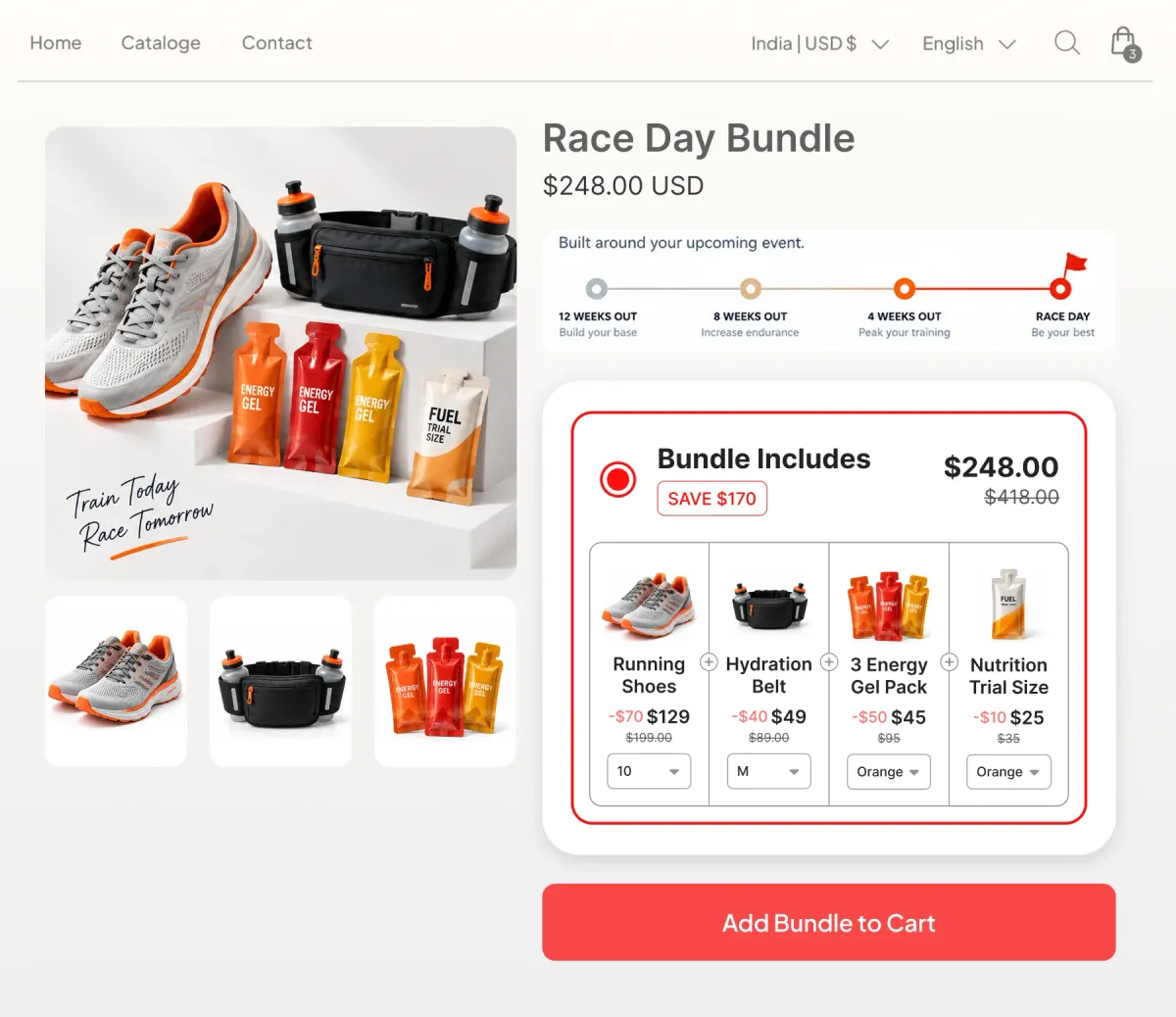
Ties a bundle to a hard external deadline the athlete is already training against
Bundle around an upcoming race or event date rather than a manufactured sale date, a marathon prep bundle timed 12 weeks out, a triathlon transition bundle a month before race day. Include a small trial size of any race-day nutrition product in the bundle, since race-day nutrition should never be tried for the first time on race day itself, and a trial size gives the athlete a safe window to test tolerance beforehand.
Seasonal sport-cycle capsule bundles
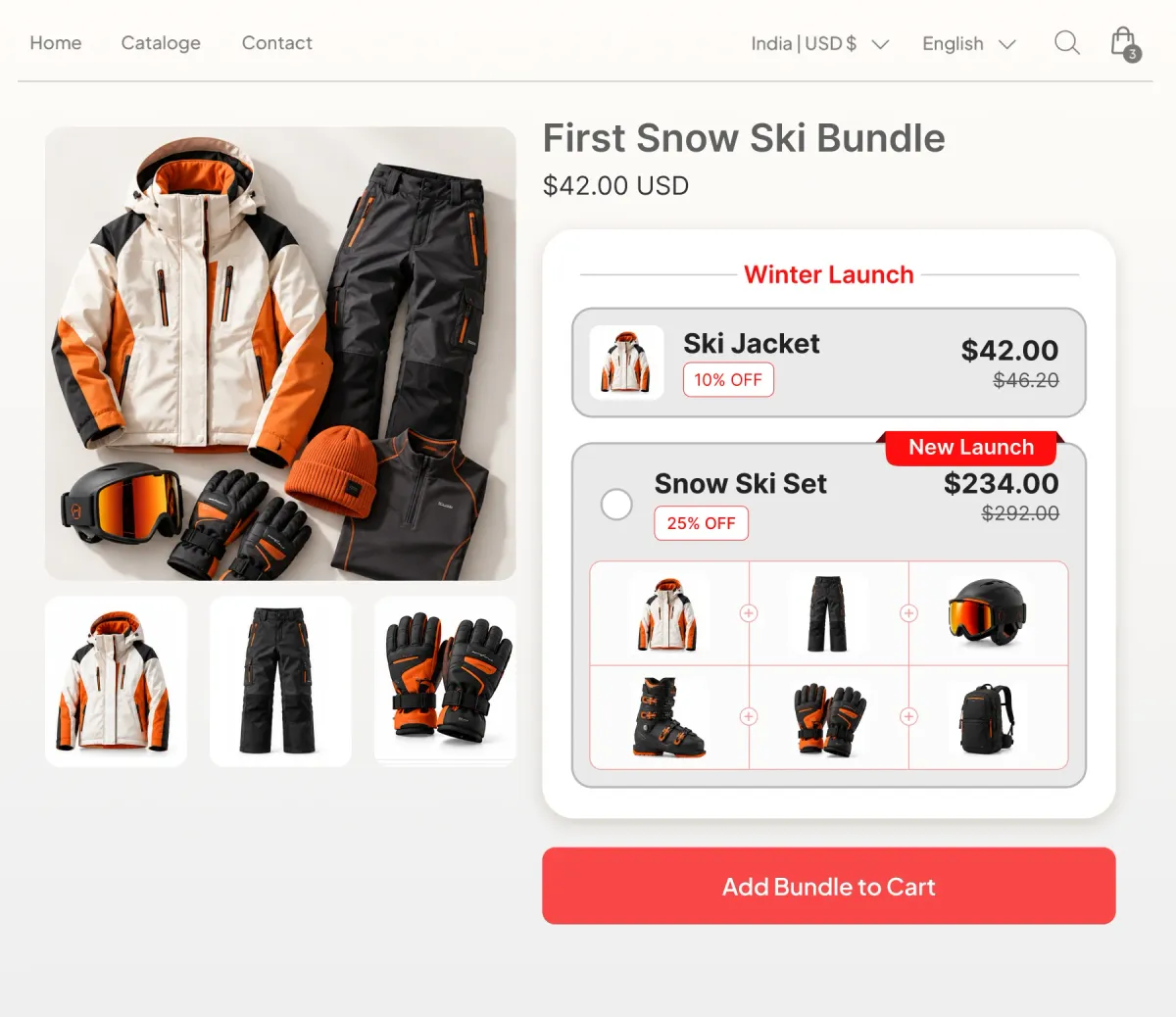
Demand is hard-locked to the season in a way most categories only loosely follow
Unlike a soft style-driven seasonal refresh in other categories, sports gear demand is often genuinely locked to weather and season, nobody buys ski gear in July regardless of how it's merchandised. Bundle ahead of each season's opening window (ski gear before first snow, swim gear before pool season, running layers before a seasonal temperature drop) to capture demand right as it turns on.
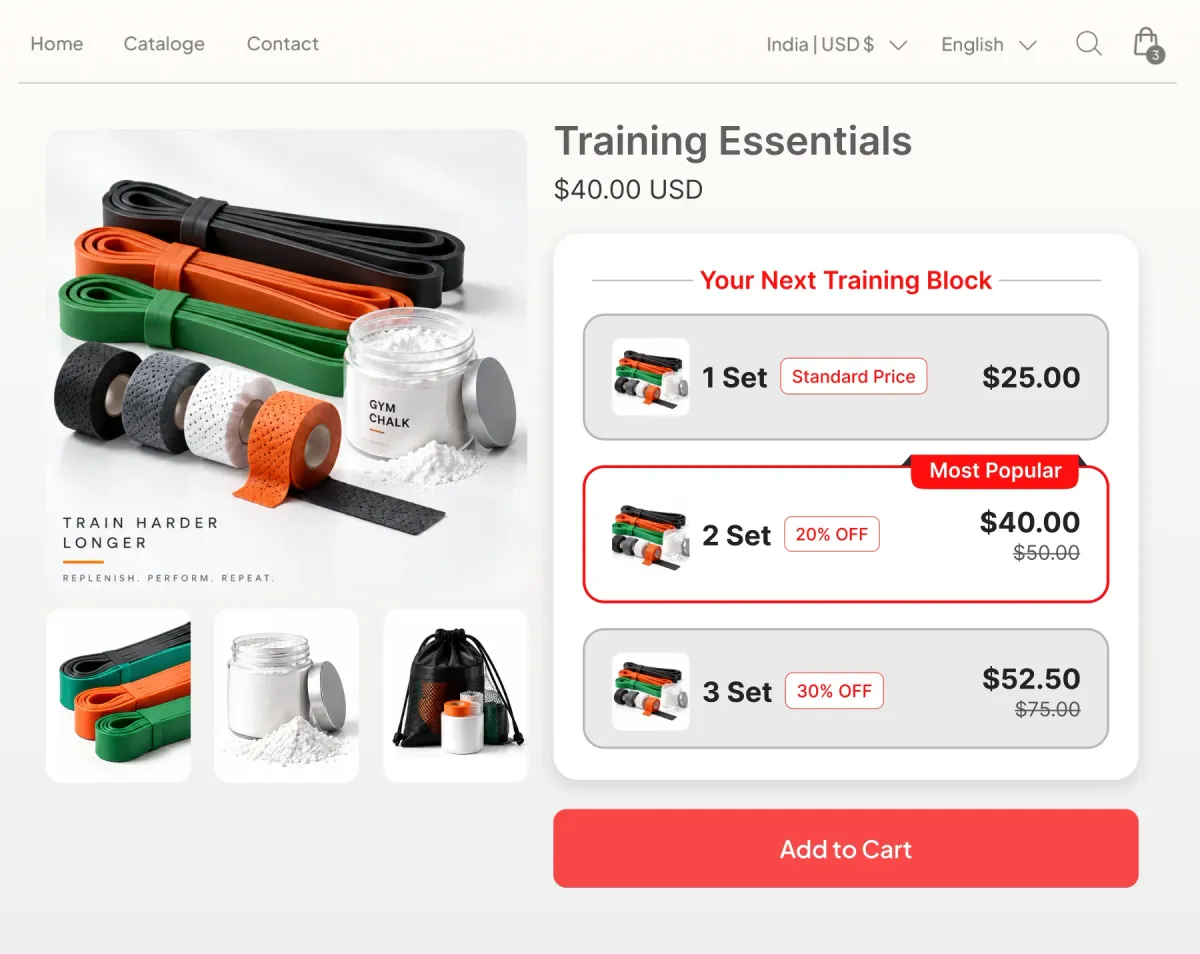
Replenishment quantity breaks for training consumables
Sell against wear-out, not a generic reorder guess
Grip tape, resistance bands, and gym chalk wear out through actual training use rather than a calendar cycle. Framing quantity breaks around "enough for your next training block" rather than a flat "buy 2, save 10%" acknowledges that these products degrade with use in a way an athlete already tracks mentally.
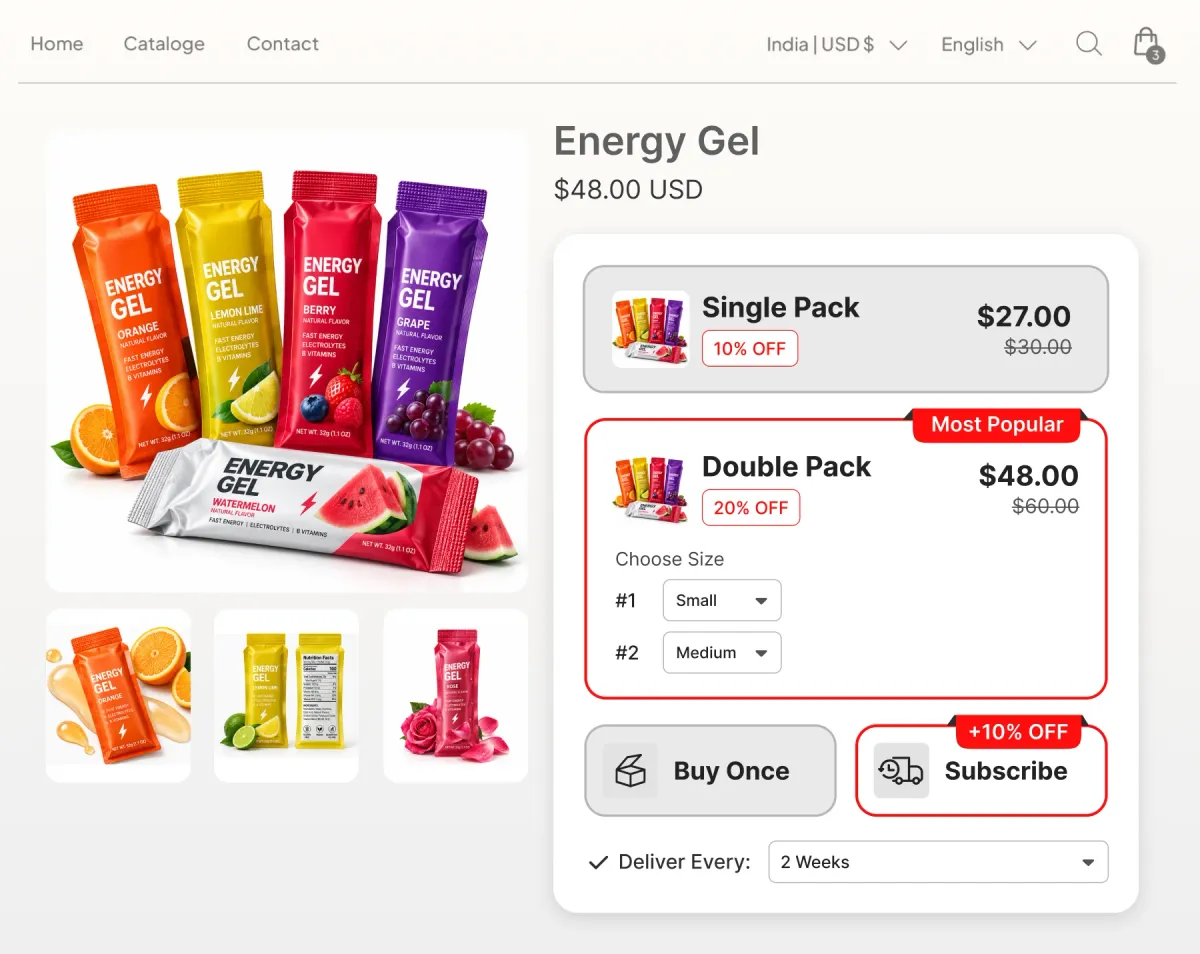
Subscribe & save for training consumables
A narrow but genuine fit for the category's actual consumable products
Energy gels, electrolyte mixes, and grip aids are consumed on a training cycle that ramps up and down with an athlete's plan, unlike a flat daily habit. A subscription that lets the delivery quantity scale with weekly training volume, rather than a fixed monthly amount, fits how these products are actually used through a training block.
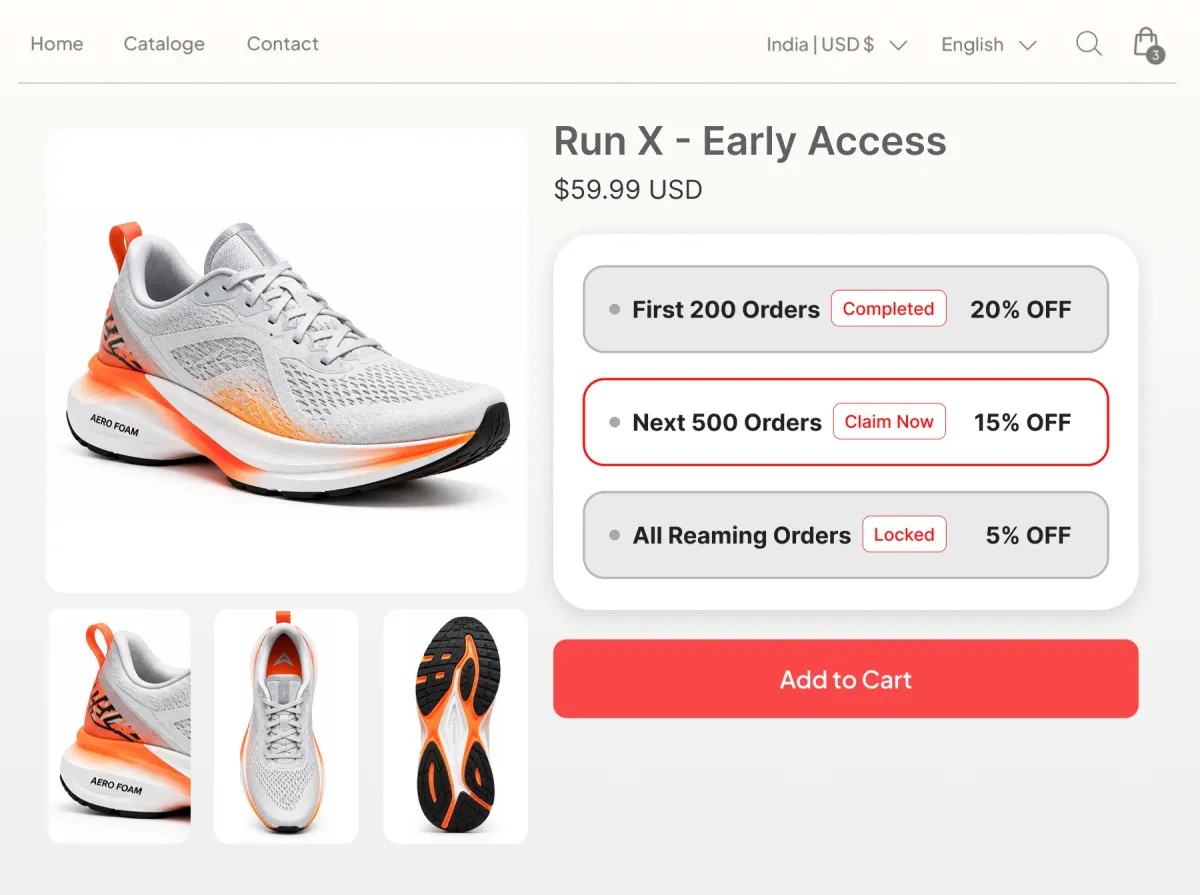
Loyalty-gated early access to new gear releases
Rewards repeat athletes with priority instead of a discount
When a brand releases a new shoe model or gear line, giving top-tier loyalty customers early access ahead of general release drives the same urgency and repeat-purchase behavior a discount would, without ever discounting the new release itself.
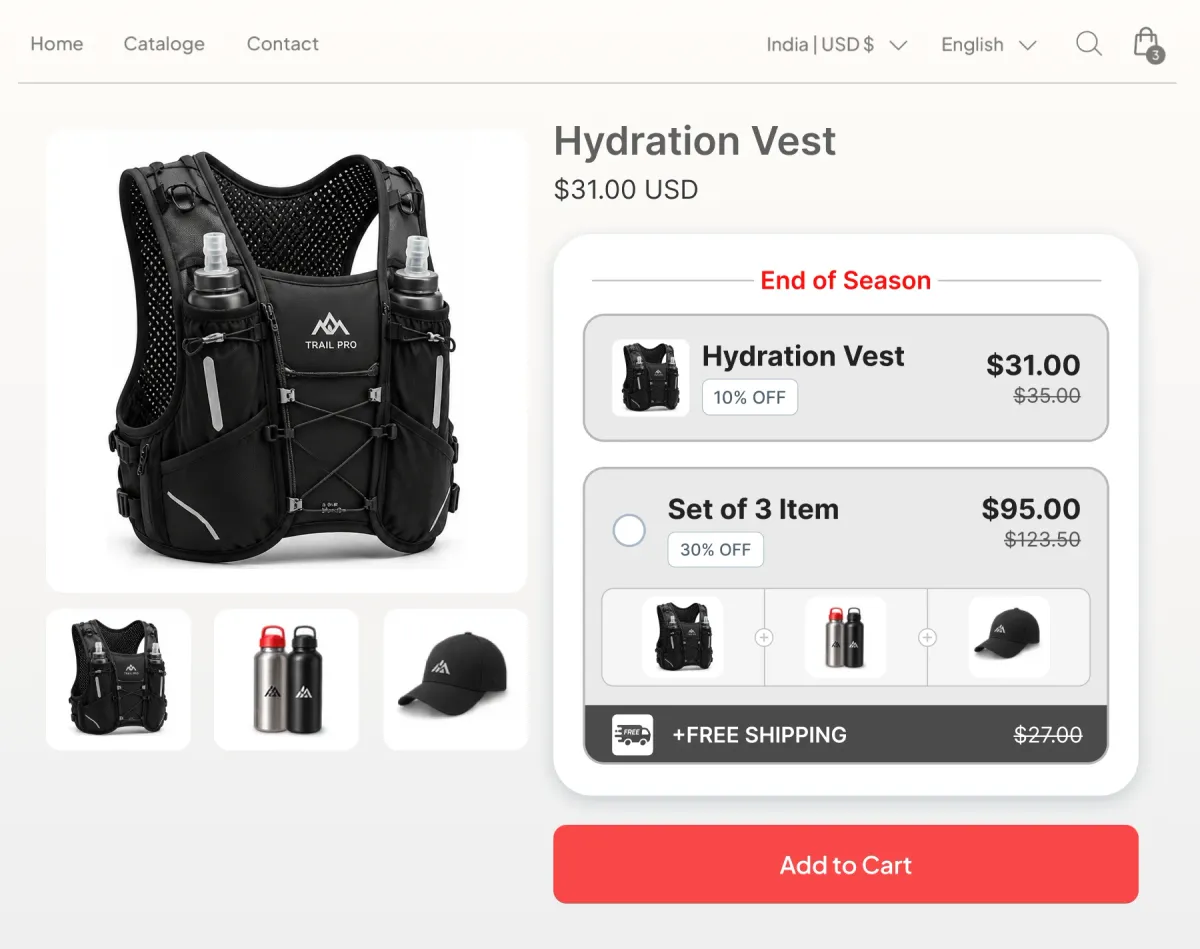
Off-season bundle-down clearance
Clears season-locked inventory before it sits unsold for months
Because sports gear demand is hard-locked to a season, off-season inventory carries a real cost of sitting unsold until next year. Rather than a deep public markdown, bundle remaining season-locked stock into a multi-item set at a bundle price as the season closes, clearing inventory while framing it as a smart early-buy for next year rather than a clearance signal.
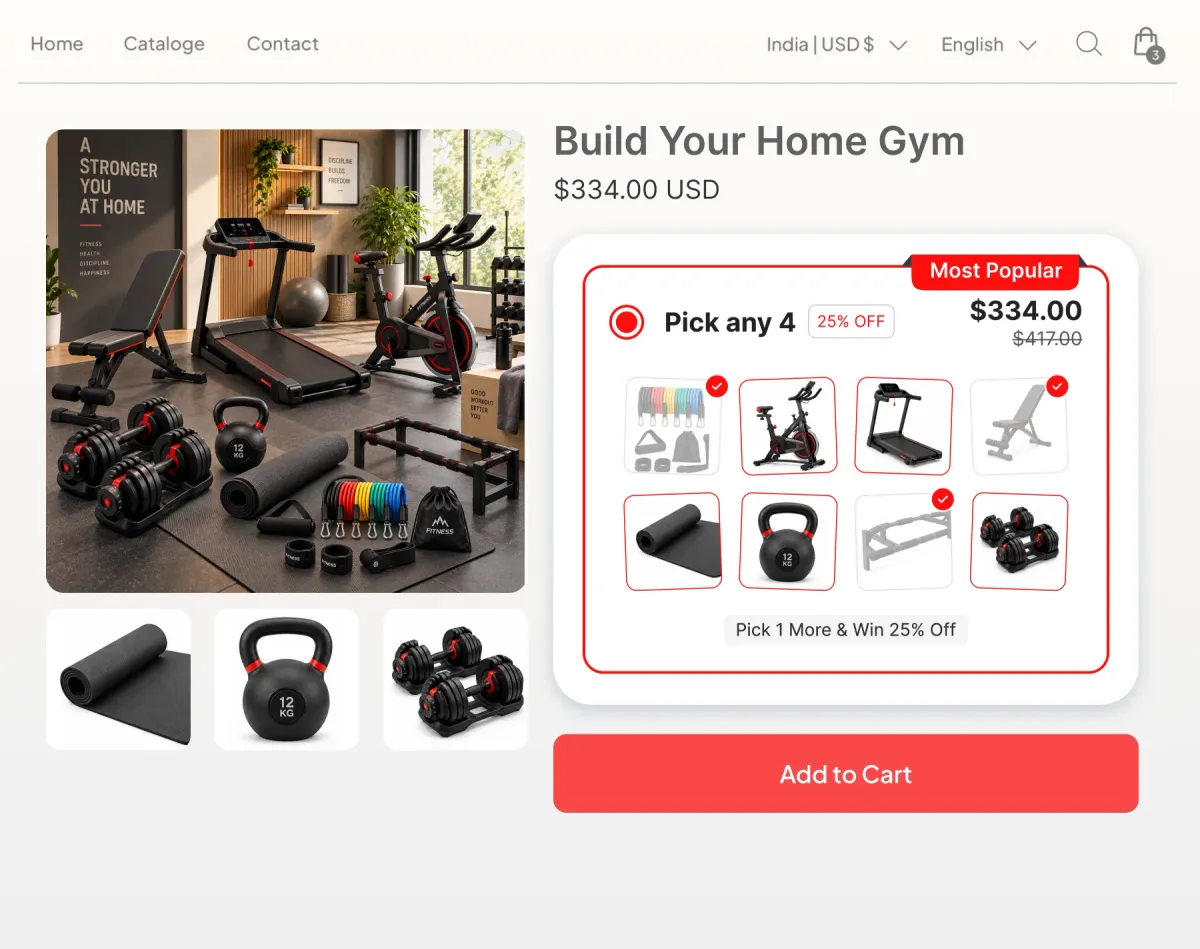
Build-your-kit mix and match
Gives athletes control while keeping every option within their tier
Rather than a fixed bundle, let athletes choose any N pieces from a curated, skill-tier-verified eligible group at a set kit price. This works especially well for strength training and home gym categories with a wide product range, where the athlete's real decision is which specific resistance or weight increments fit their current training level.
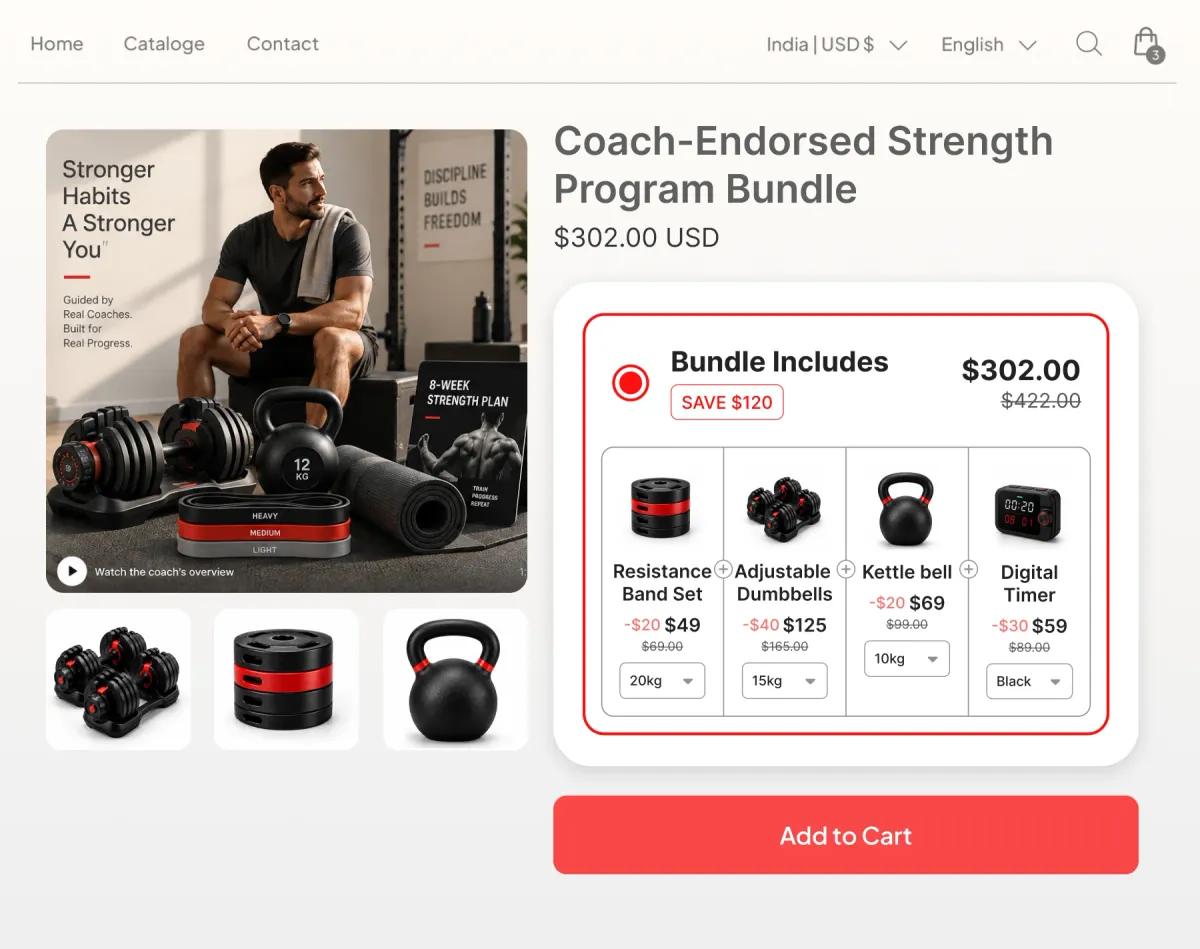
Coach and trainer-endorsed program bundles
Borrows coaching credibility to justify the bundle, not just the discount
A bundle framed as "built by our head coach for off-season strength work" converts differently than the identical bundle framed purely around a percentage saved. The credibility angle matters more here than in many categories, since the core purchase anxiety is often "will this actually help my training," not simply "is this a good deal."
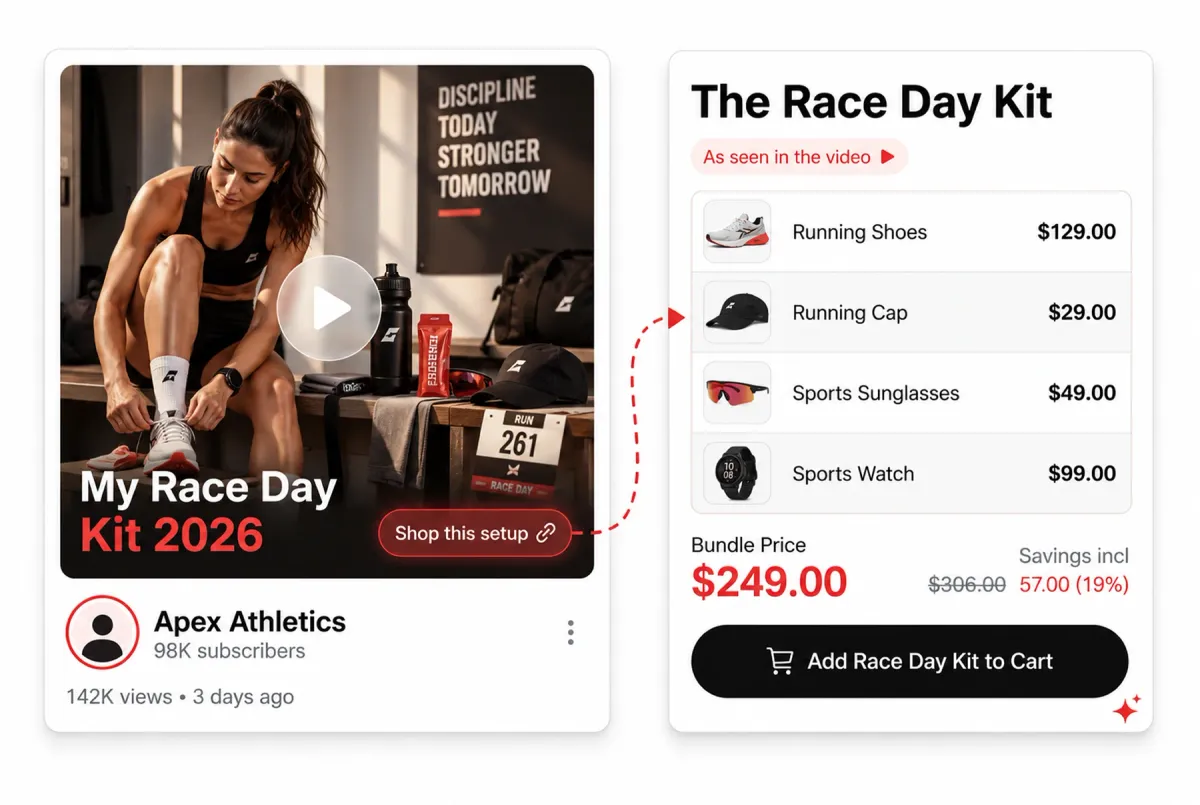
Athlete and creator bundle drops
Packages a creator's exact kit as a one-click purchase
When an athlete or fitness creator posts their race-day or training kit, standing up a bundle that mirrors that exact product combination, linked directly from the post, converts far better than sending traffic to a general shop page and asking the viewer to reassemble the kit themselves from a caption.
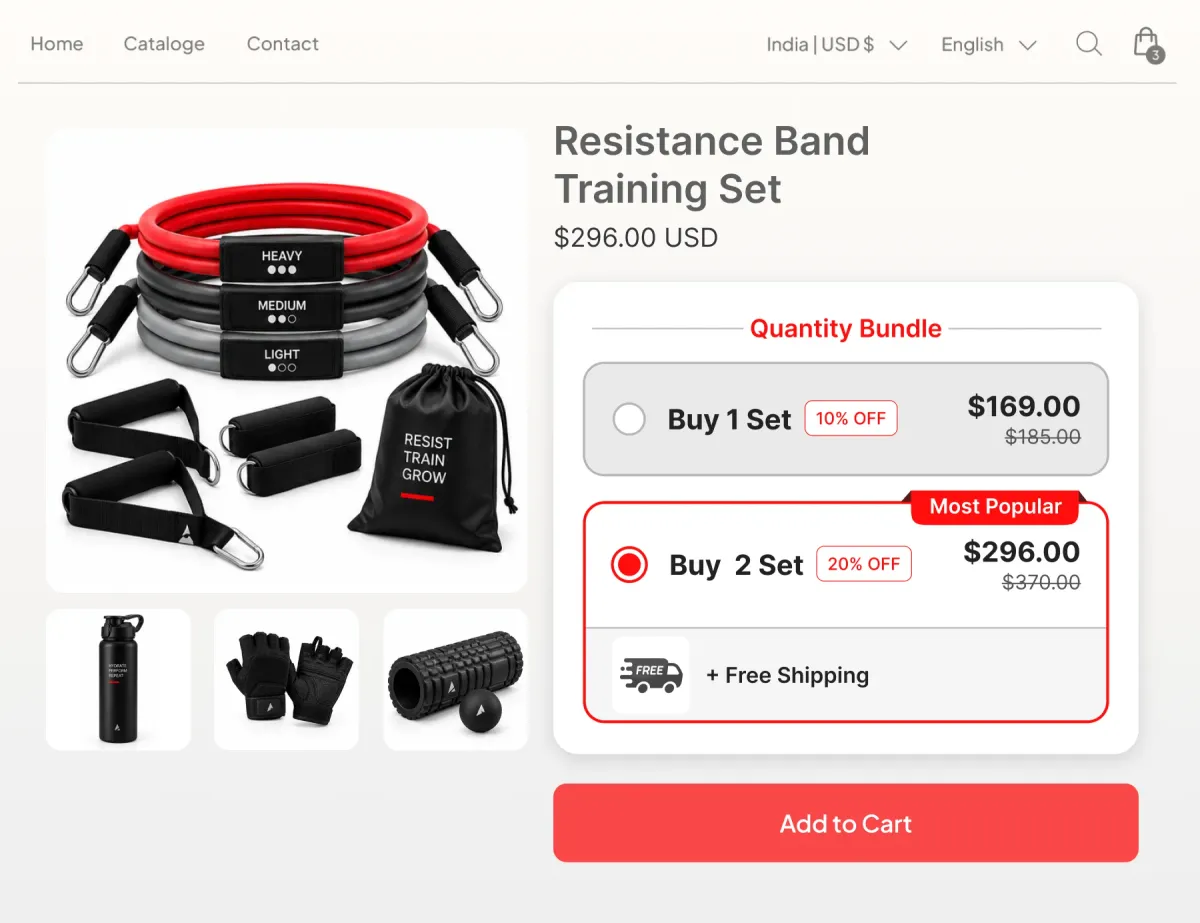
Threshold free shipping stacked with bundles
A real lever for a category with unusually heavy, bulky core products
Weights, home gym equipment, and bulk training gear are heavy relative to their price, making shipping cost unusually visible at checkout. Setting a free-shipping threshold just above the average bundle price gives athletes a reason to complete the kit rather than ordering the core item alone and shopping elsewhere for the rest.
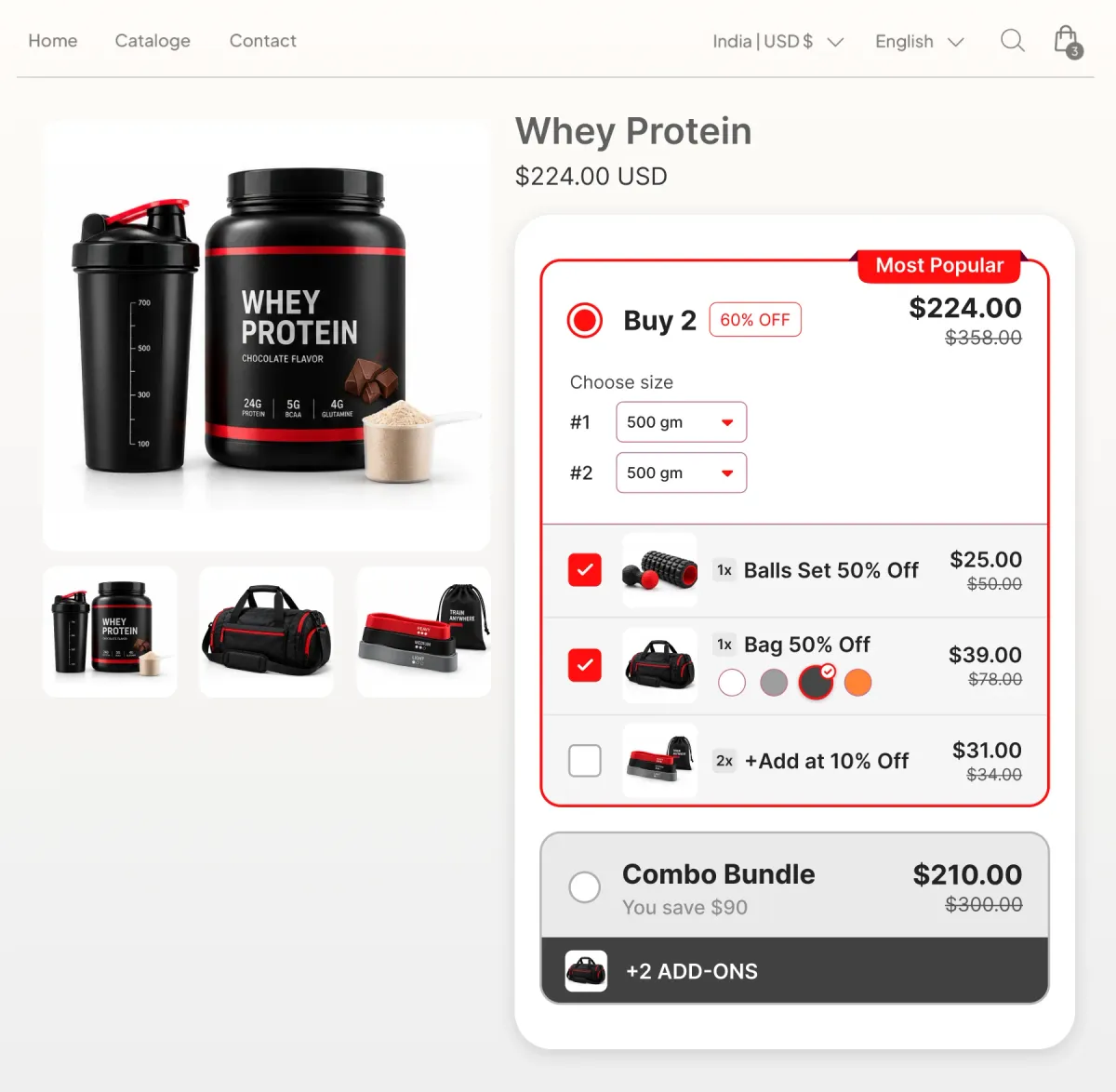
Post-purchase upsell: the next PR
A second chance to round out the training kit, after the sale is already secured
Once checkout is complete and payment is confirmed, a one-click upsell screen can offer a small companion item, a training log, a set of resistance bands one level up, or a nutrition trial pack that pairs with the gear just bought. Because payment details are already on file, accepting takes one tap and doesn't touch the order already placed.
Sports & fitness promotion calendar
Sports and fitness demand follows hard seasonal locks and race calendars more predictably than in most categories. Below is a month-by-month map of which strategy fits each period.
Self-audit: how bundle-ready is your store?
Score your current setup against these six dimensions before implementing the strategies above. Most sports and fitness Shopify stores fall short on skill-tier tagging and protective-gear fit verification specifically, even when their core bundling is otherwise solid.
Directional benchmarks based on patterns observed across sports and fitness merchants running structured offers. Use this as a self-check, not a scored audit.
From solo stores to 8-figure brands, teams trust Profit Pumper to grow their revenue.
Consistently rated 4.9 stars on the Shopify App Store for ease of use and reliability.
Install, pick a template, configure your offer, and go live. No coding or developers needed.
Frequently asked questions
How is sports and fitness bundling different from bundling in other categories?+
Can a bundle actually increase injury risk?+
Do I need a developer to set these up on Shopify?+
Which strategy should a small sports and fitness brand start with?+
How is this different from a sitewide sale?+
Your offers. Configured, not discounted.
Set up goal-based training kits, skill-tiered bundles, and team roster orders on your Shopify store in minutes. No developer or theme edits needed.
Try Pumper Bundles Free