


Shopify Promotion Strategies
Built for Fashion Brands
Sitewide sales train customers to wait for a discount. These fifteen strategies are engineered specifically for apparel, footwear, and accessories brands who want higher AOV without training shoppers to expect 30% off everything.
Why fashion promotions behave differently
Most Shopify promotion guides are written for consumables, where the goal is simple: get the shopper to buy more units of the same thing. Fashion doesn't work that way. A customer buying a jacket isn't going to buy three jackets. A customer buying a dress is thinking about what she'll wear it with, what size she needs, and whether it will still be in stock next month.
That changes what "increase AOV" actually means for an apparel brand. It's rarely about quantity of one SKU. It's about basket composition: getting one product into the cart to pull two or three more in with it, matched by size, color, and occasion. It's also about managing two problems specific to fashion: size uncertainty, which drives returns, and markdown addiction, where a brand trains its own customers to wait for 40% off instead of buying at full price.
The strategies below are ordered from highest-impact-lowest-effort to more advanced, seasonal, and structural plays. Each one includes the mechanism, who it works for, and the specific Pumper Bundles offer type that runs it without a developer.
Outfit bundling by category, not by SKU
The highest-converting fashion promotion, and the most under-used
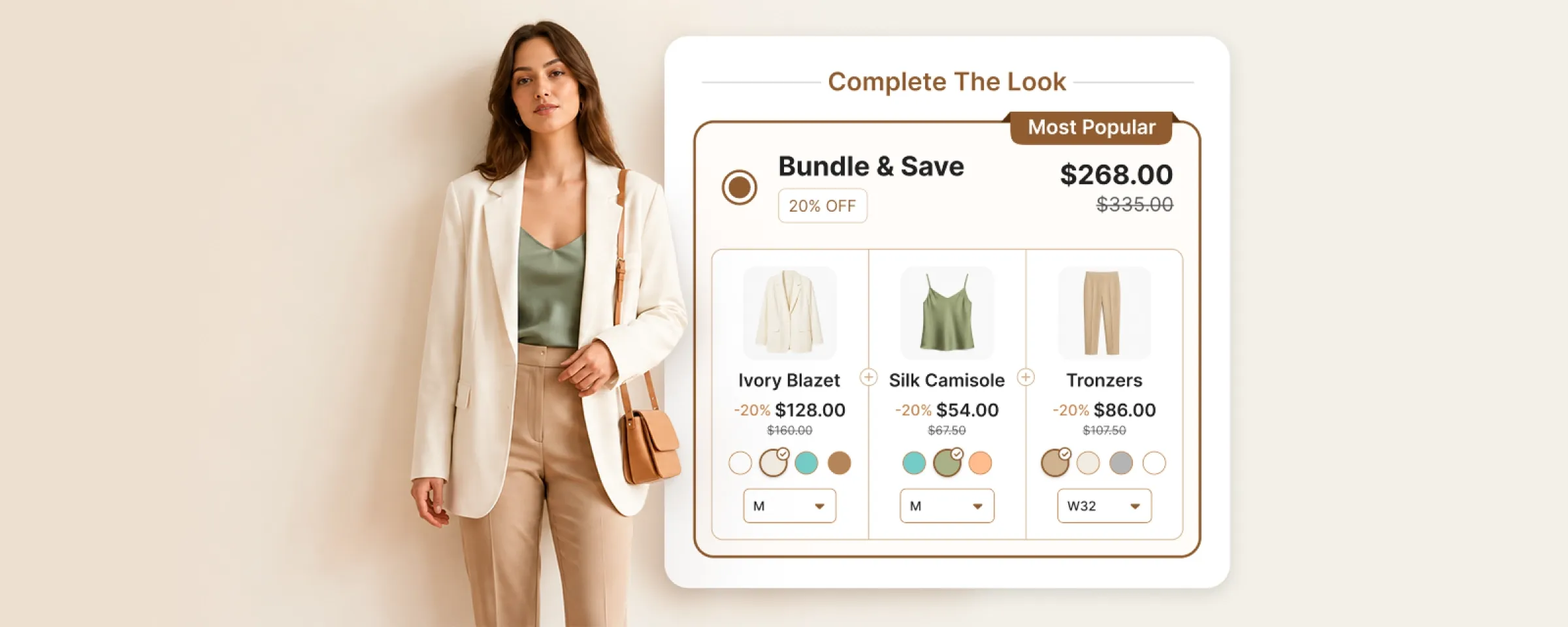
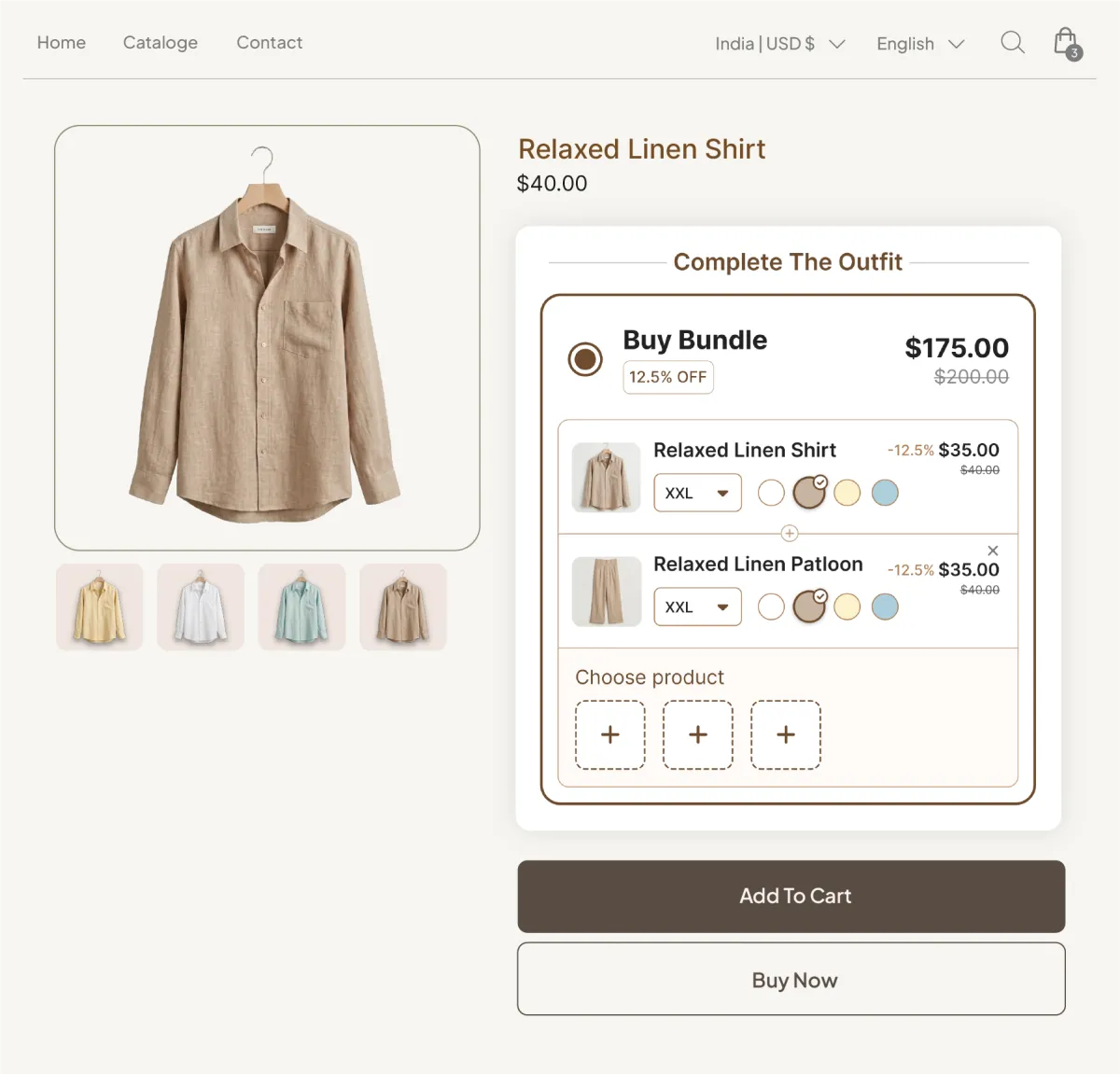
Rather than discounting one item, group products by how they're worn together: a top with a bottom, a dress with a bag, a jacket with a scarf. The bundle discount unlocks only on the full set, so the anchor product never goes on sale alone.
Fashion shoppers already think in outfits. This removes the friction of finding the matching piece and judging it separately.

Size-run quantity breaks
For brands where the customer genuinely might buy more than one
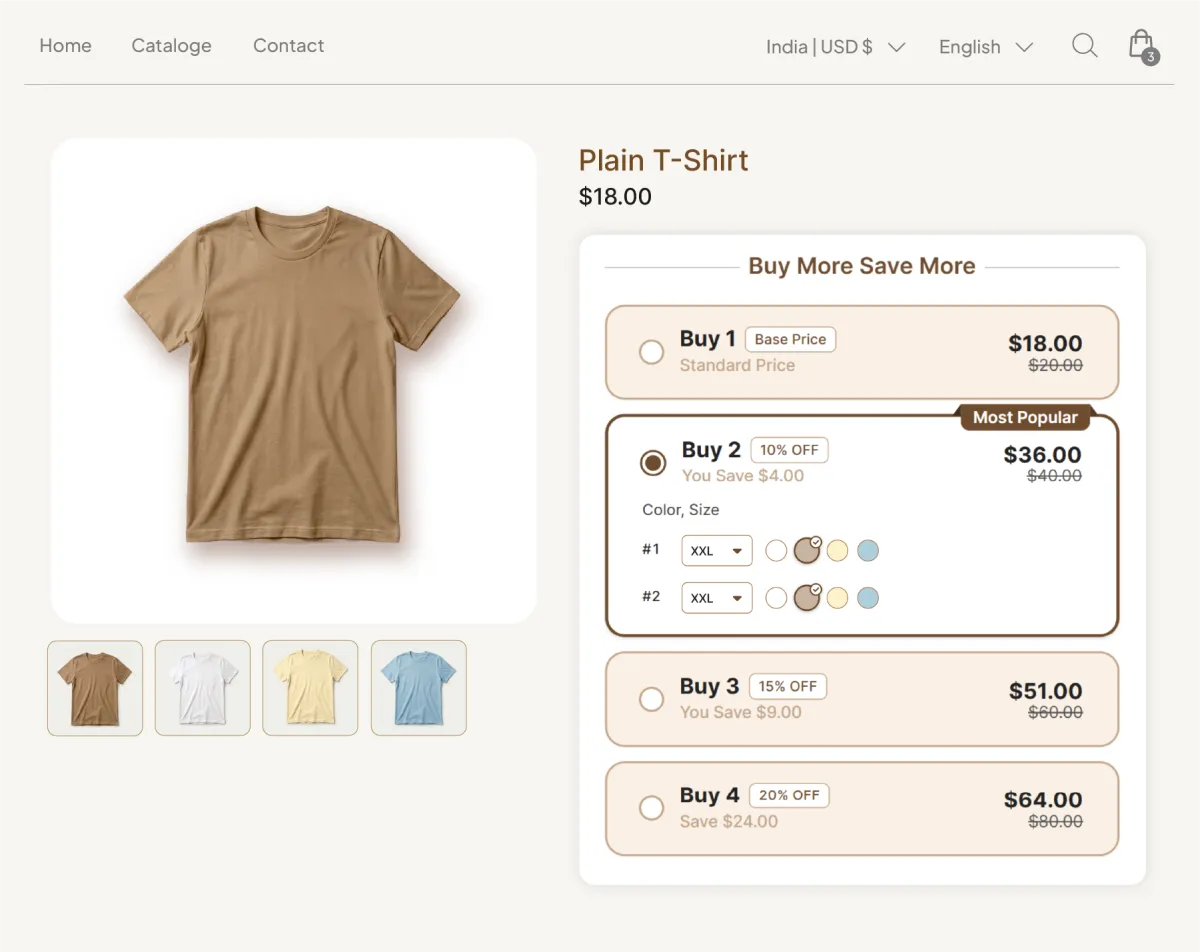
Basics, layering pieces, socks, underwear, and swimwear are the exceptions to "nobody buys three of the same jacket." For these categories, a straightforward Buy More Save More structure works exactly as it does in any other vertical: buy 2, save 10%, buy 3, save 15%, buy 4+, save 20%.
The nuance for fashion is variant handling. The discount should apply across sizes and colors within the same product, not just identical SKUs, so a shopper buying one medium and one large tee still qualifies for the tier.
Complete-the-look free gift unlocks
A lower-cost alternative to percentage-off that protects perceived value
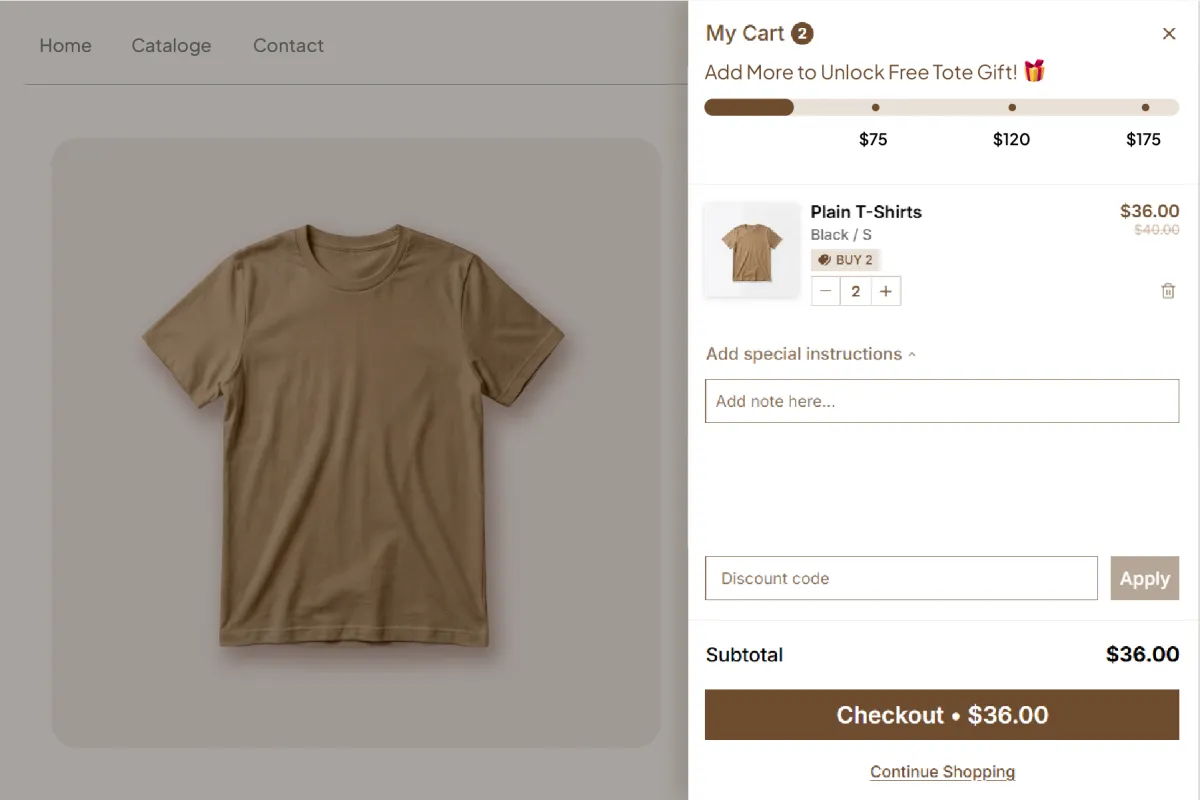
Instead of discounting the jacket, give away a low-cost accessory (a tote, a scrunchie, a travel pouch, a pair of socks) once the cart hits a spend threshold. This protects the price integrity of the core product while still giving the shopper a reason to add one more item.
Seasonal capsule BOGO drops
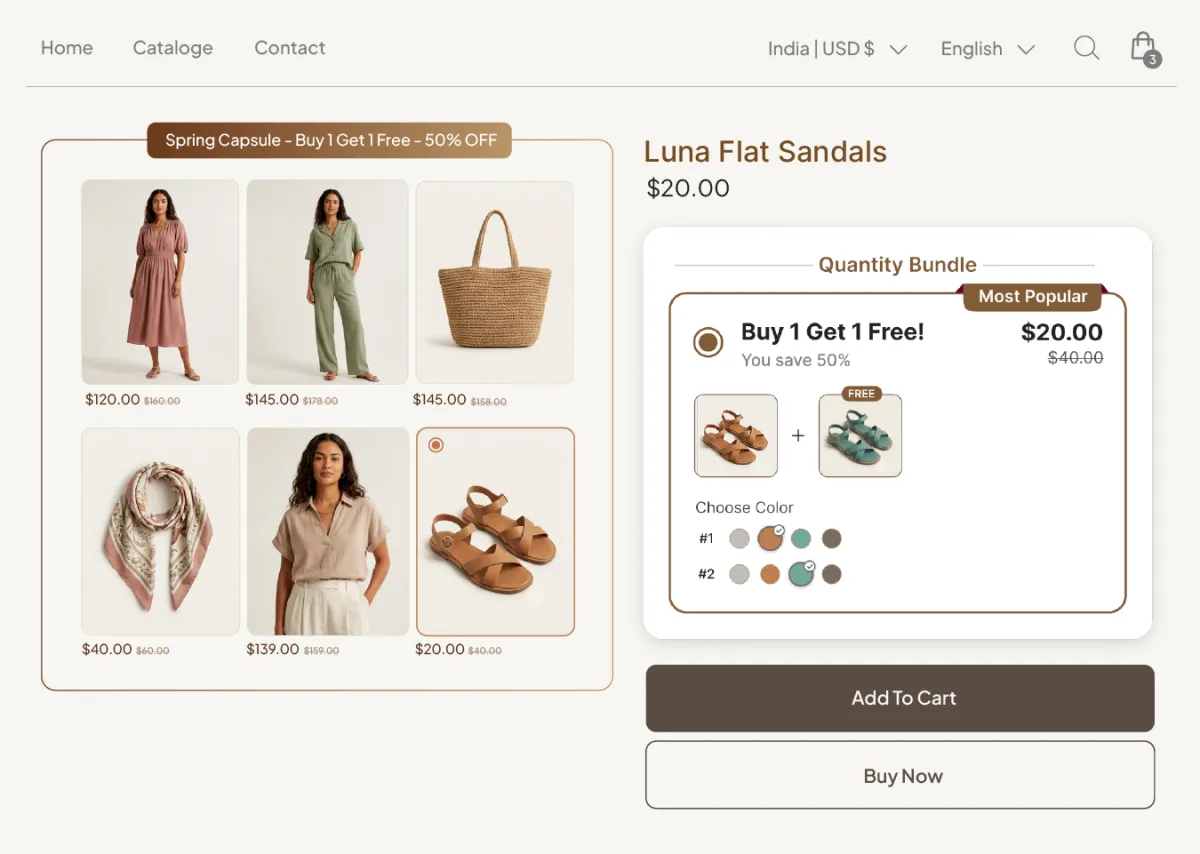
Turns a limited drop into a bundling event instead of a flash sale
When a brand launches a small seasonal capsule (8–15 pieces), running BOGO within that capsule only, rather than a sitewide sale, moves new inventory fast without discounting the evergreen catalog, and creates urgency tied to the collection's limited size rather than a calendar date.
Color and print variant BOGO
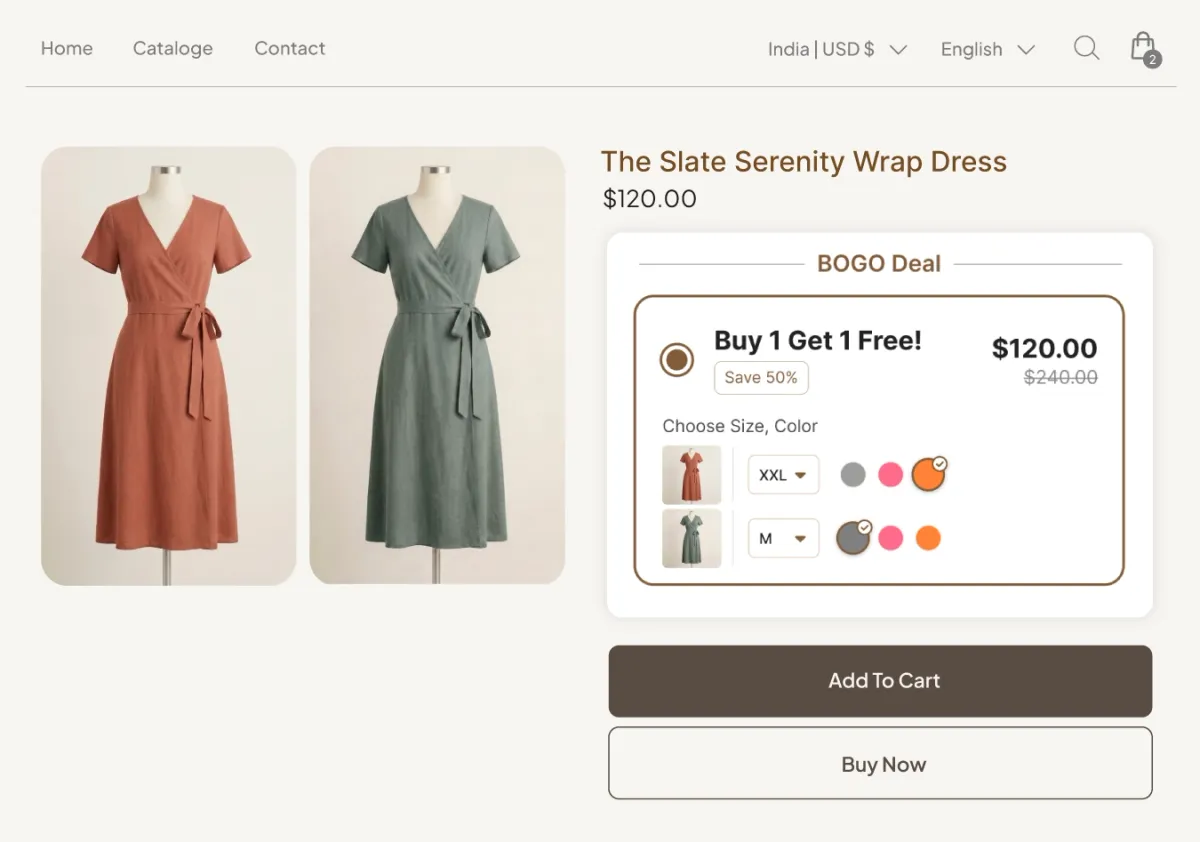
Solves the "I can't decide which color" hesitation directly
A common fashion cart-abandonment pattern is a shopper adding one color, then leaving the tab open while they debate a second. BOGO at a percentage off across colorways of the same style removes the decision entirely: buy both, save on the second.
Pre-order tiered incentives
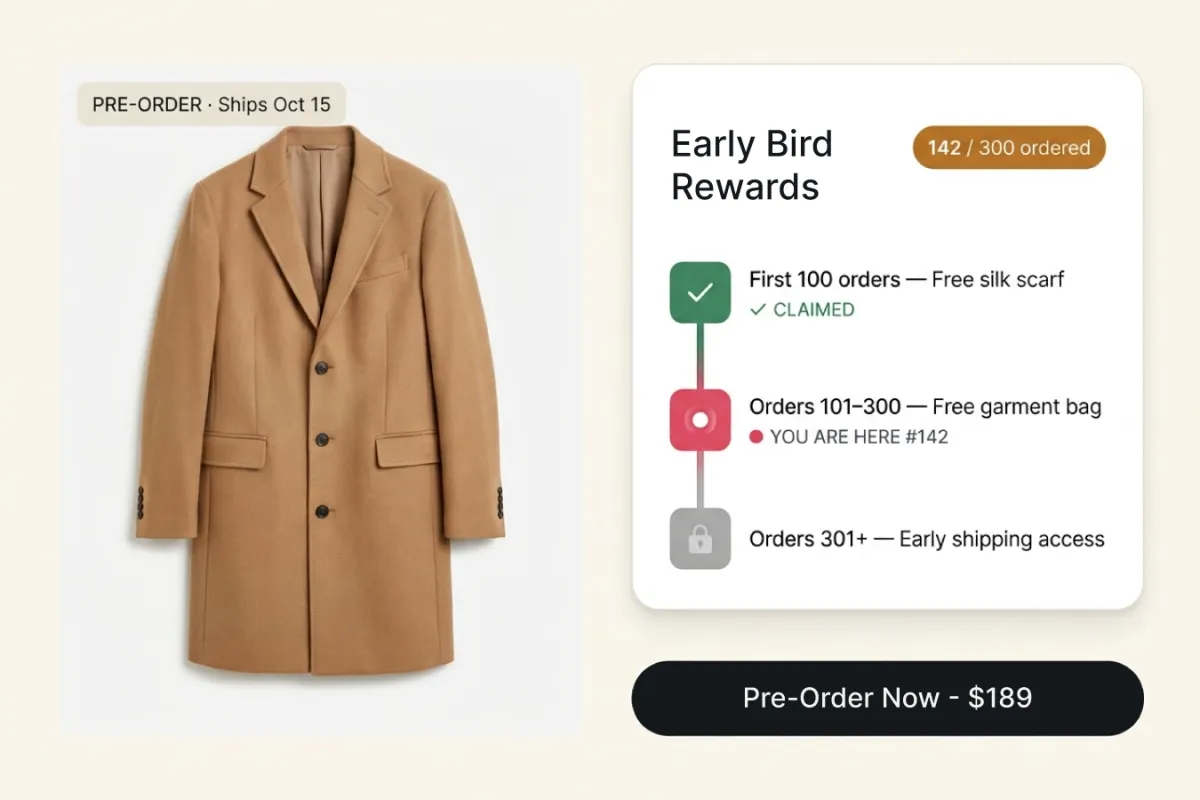
Rewards early demand signal instead of discounting stocked inventory
For brands that pre-sell before a drop ships, tiered incentives based on order position (first 100 orders get X, next 200 get Y) reward being early rather than discounting the product itself.
End-of-season markdown alternative: bundle-down
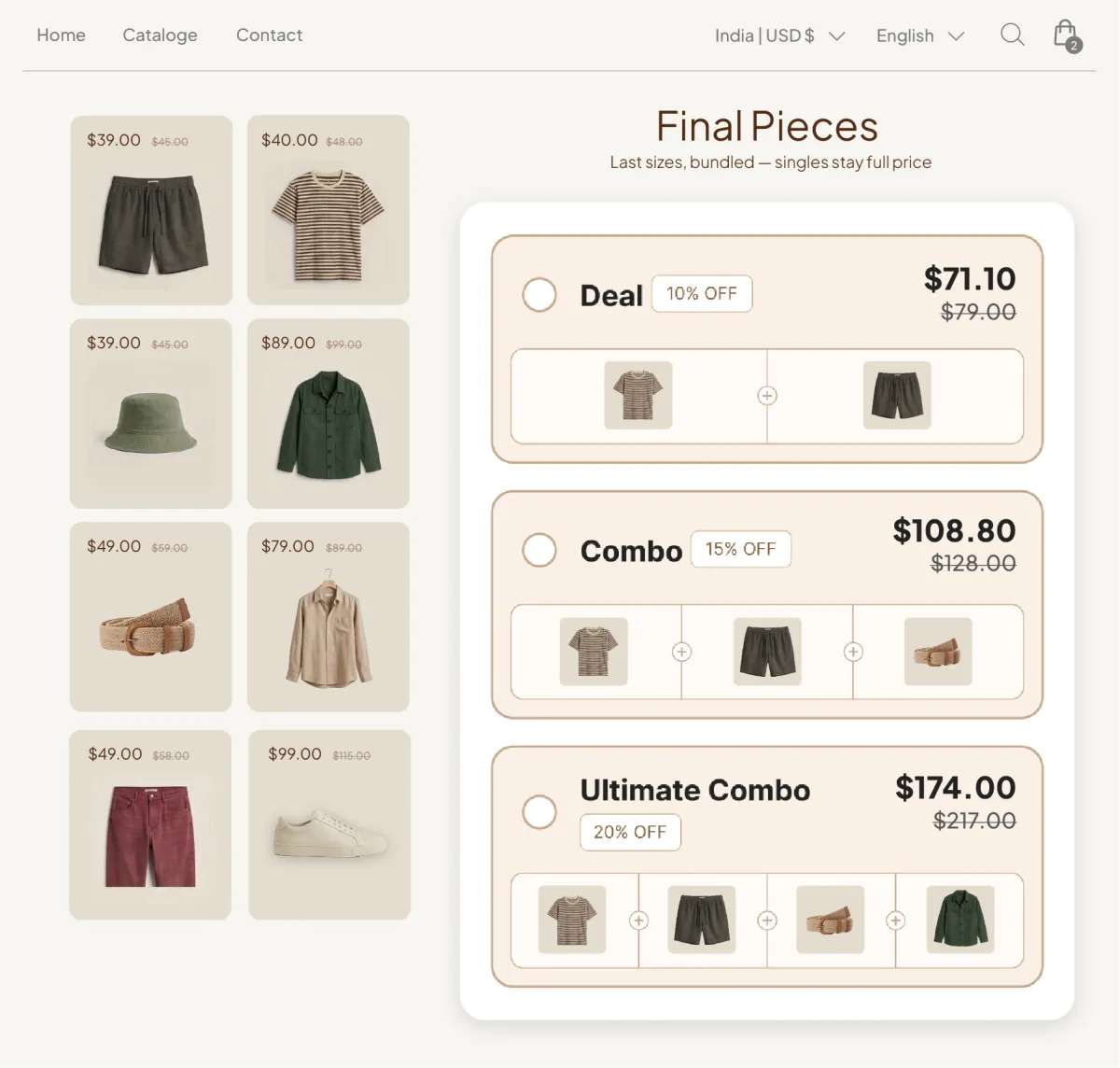
Clears inventory without training future full-price customers to wait
Rather than marking end-of-season stock down 40% publicly, bundle slow-moving sizes and colors into a "final pieces" multi-item set at a bundle price. The single-unit price never appears discounted; only the bundle total does.
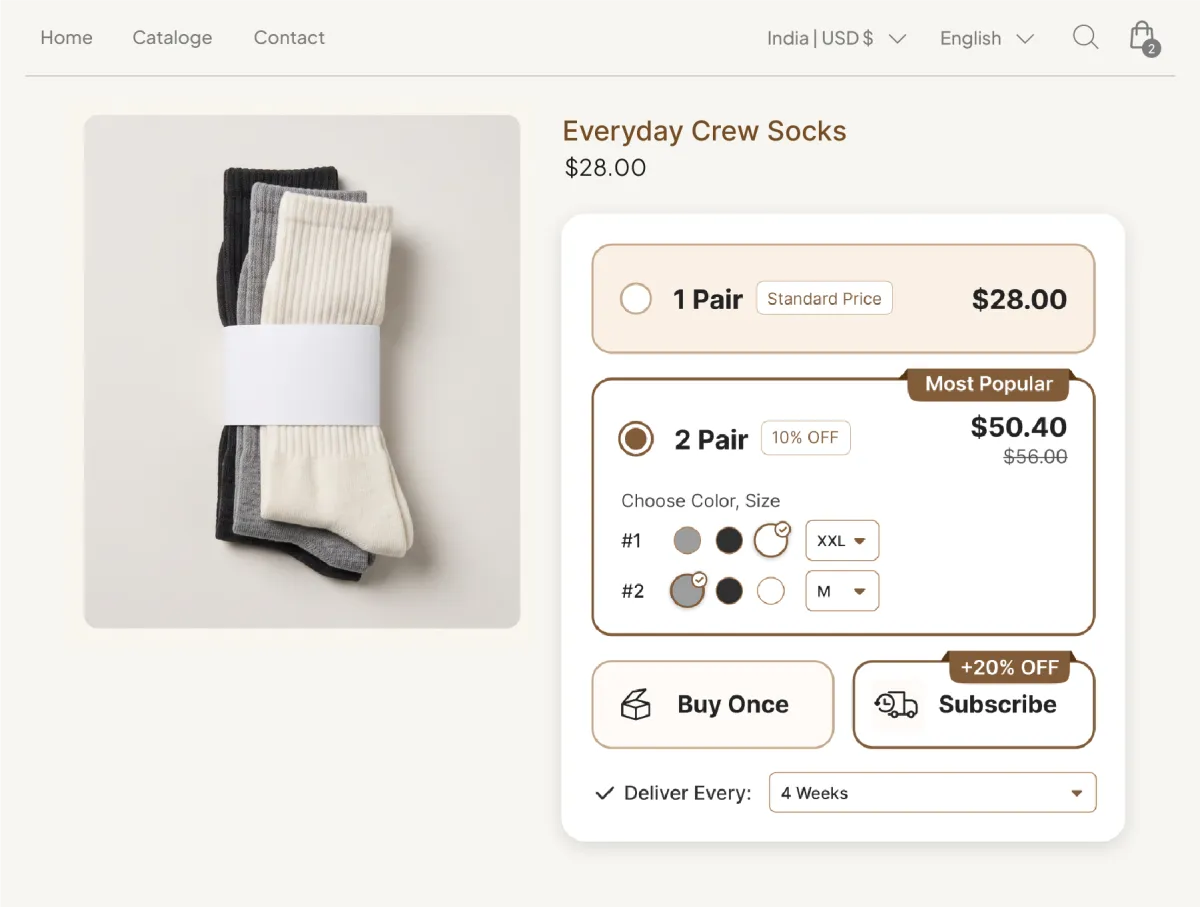
Subscribe & save for consumable fashion
Narrow but high-LTV: only for genuinely repeat-purchase apparel
Socks, underwear, basics tees, and some activewear are genuinely repeat purchases on a predictable cycle. For these SKUs, a recurring delivery option at a modest discount (10–15%) builds a subscriber base without forcing a subscription onto the catalog.
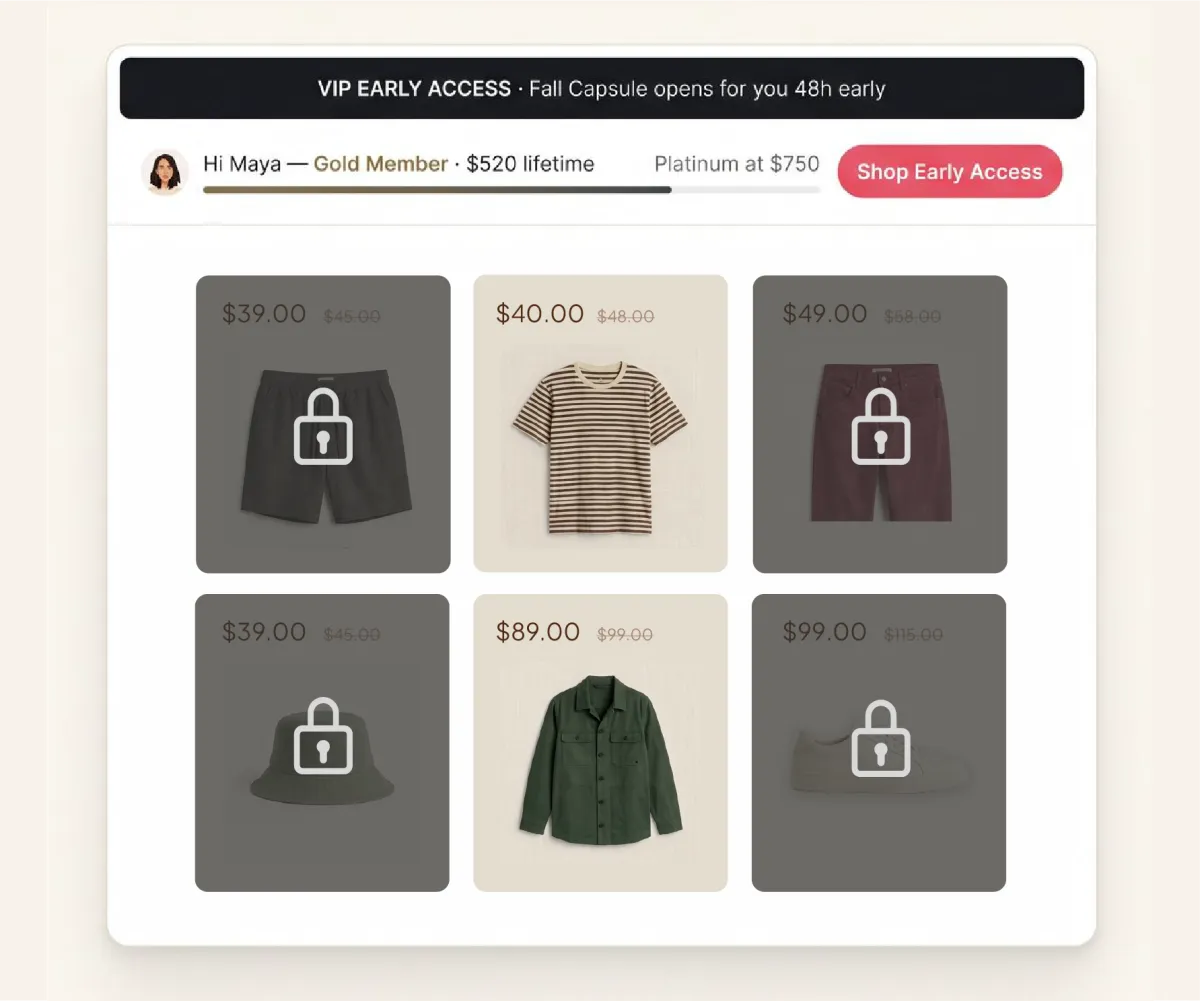
Loyalty-gated early access thresholds
Turns spend history into a promotion mechanic, not just a points balance
Rather than a generic points program, give repeat customers early access to capsule drops once their lifetime spend crosses a threshold. It drives the same larger, more frequent orders a discount would, but framed as status rather than markdown.
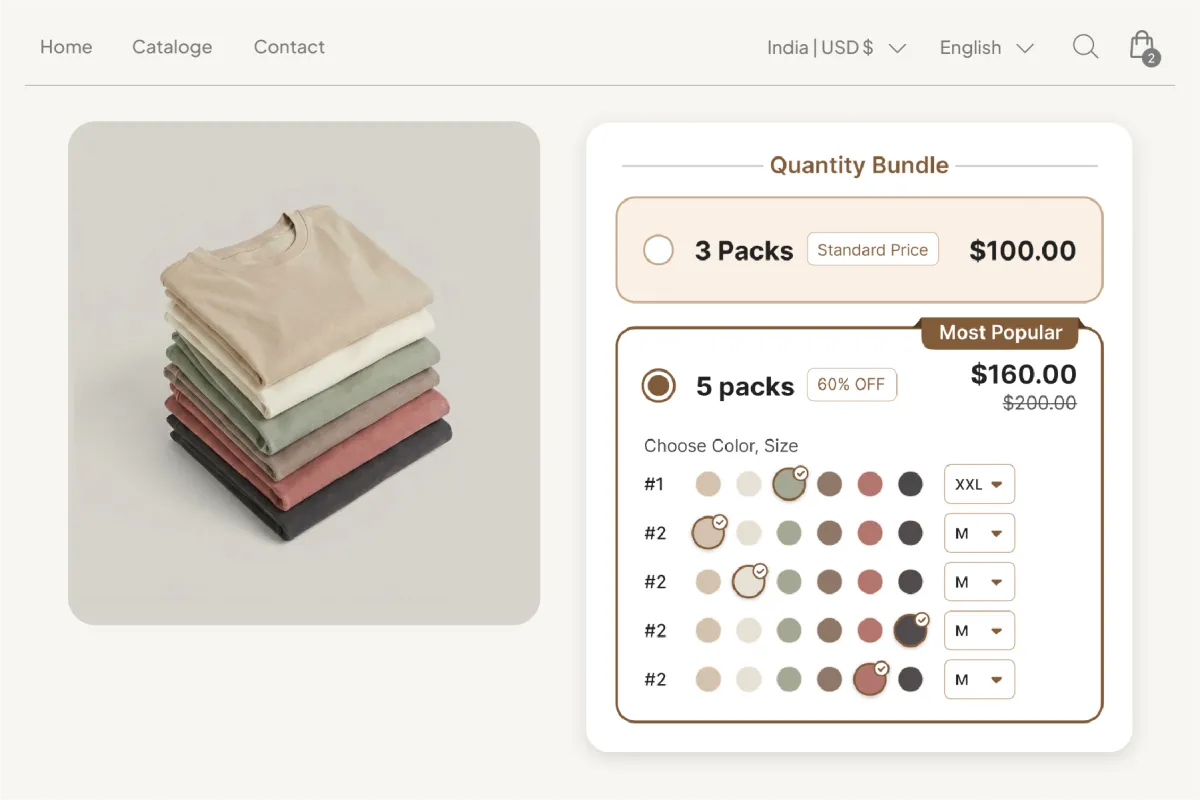
Basics multipack quantity breaks
The single highest-AOV-lift tactic for underwear, sock, and tee brands
A dedicated 3-pack and 5-pack pricing structure, presented as its own tier rather than a generic quantity discount, consistently outperforms a simple percentage-off. Same math, different perception, measurably different conversion.
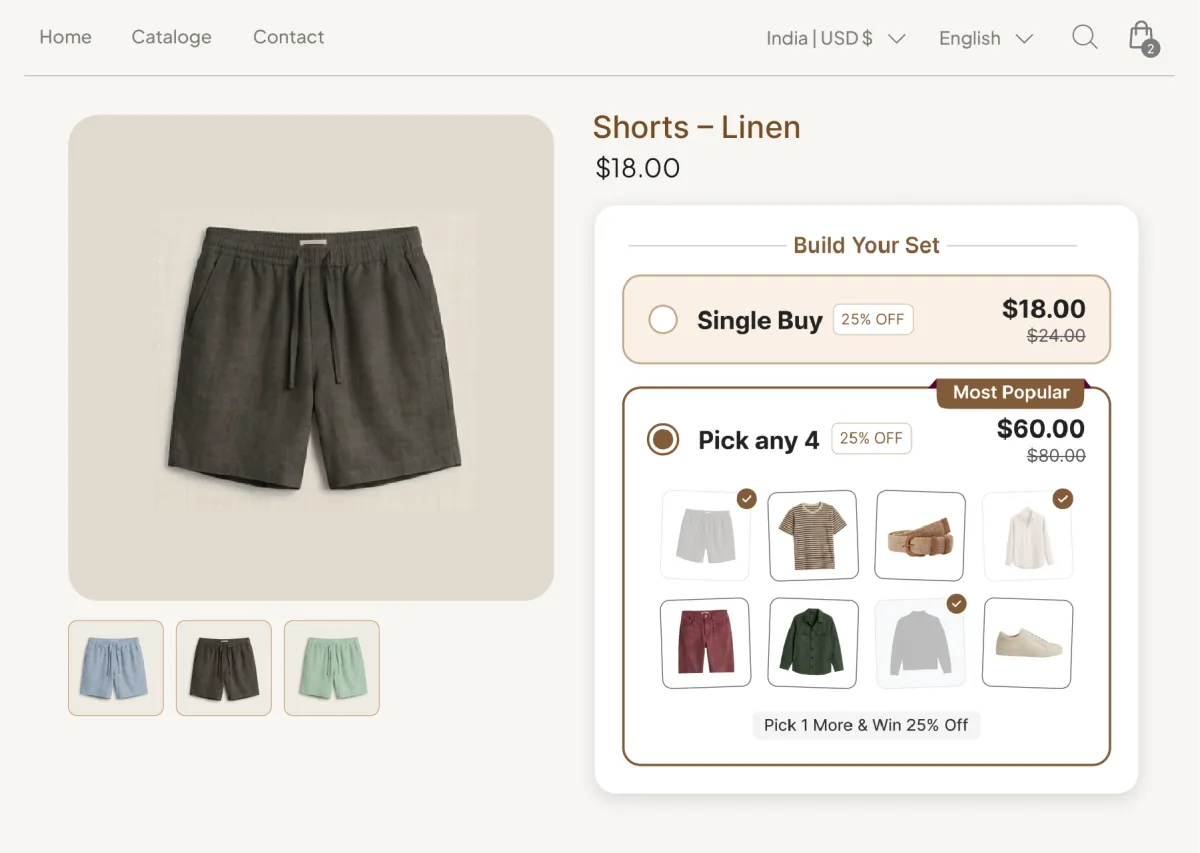
Cross-category "build a set" mix and match
Gives shoppers control while still steering toward a higher basket
Unlike a fixed outfit bundle, mix and match lets the shopper choose any N items from a curated eligible group at a set bundle price. This works especially well for brands with wide color and print ranges within one style.
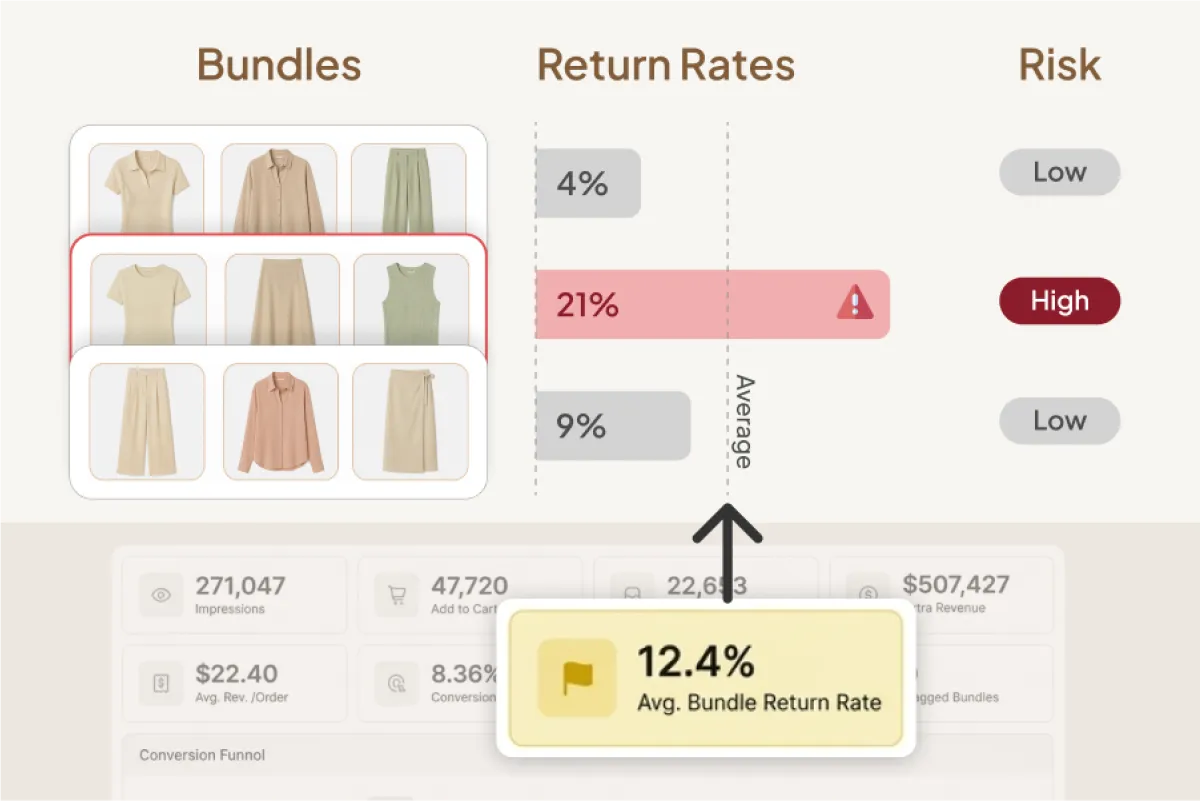
Return-rate-aware bundle design
The strategy no other fashion promotion guide addresses directly
Fashion has a structural problem generic AOV advice ignores: bundling can increase return rates if not designed carefully. A bundle that pushes a shopper into an uncertain size or color drives up returns, erasing the margin gain from the higher basket. Design around low-return-risk pairings: a proven bestseller paired with a lower-risk accessory.
This is a genuine gap in fashion promotion content. Most bundling guides optimize purely for AOV lift and never connect the mechanic back to the return-rate cost that's unique to apparel.
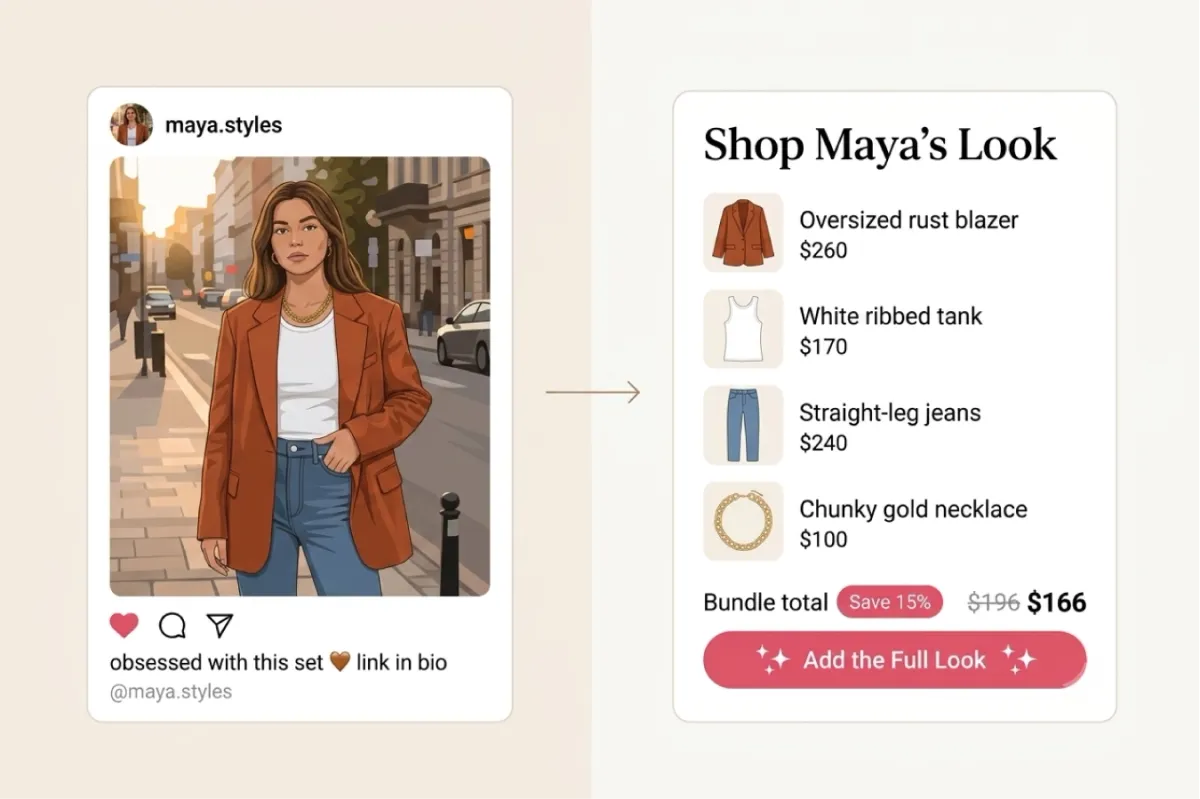
Influencer drop bundles
Packages the influencer's exact look as a one-click purchase
When a creator posts wearing a specific combination of pieces, standing up a bundle that mirrors that exact outfit, linked directly from the post or bio link, converts far better than sending traffic to individual product pages and hoping the shopper reassembles the look.
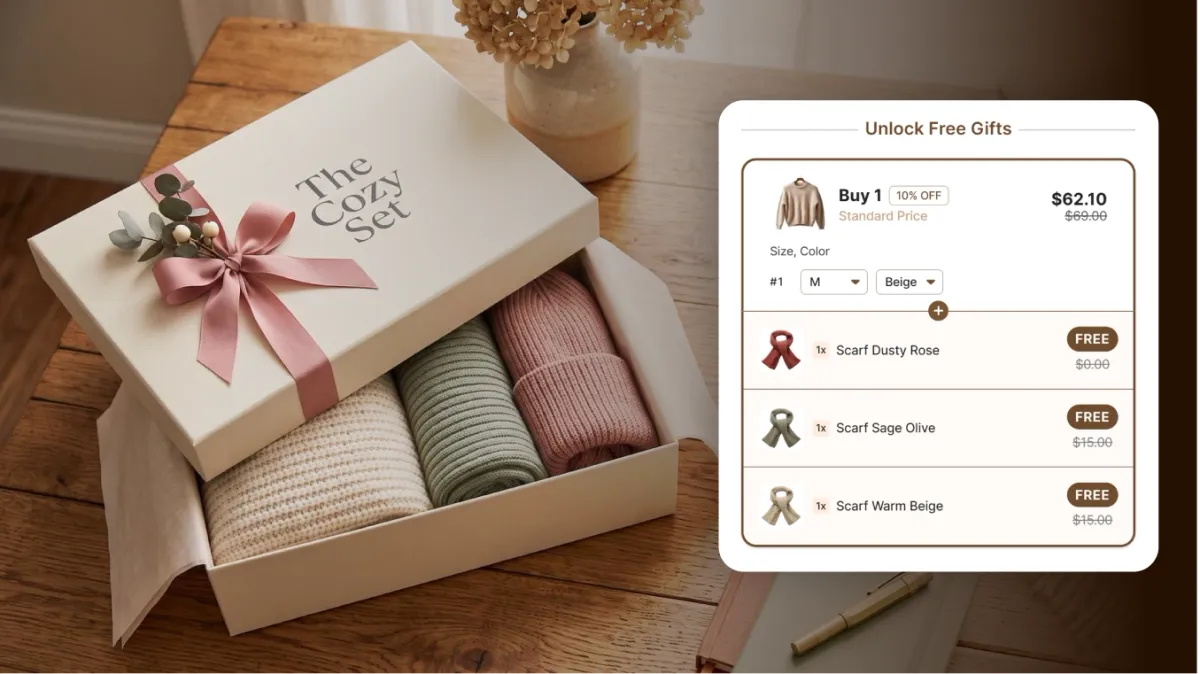
Gifting-season bundle-as-gift-set
Repositions bundling from "discount mechanic" to "product decision"
Around major gifting periods, pre-packaged gift sets reframe the bundle entirely: the shopper isn't buying multiple items to save money, they're buying one gift that happens to contain multiple pieces. This commands a higher perceived value than the same items sold as a generic quantity discount.
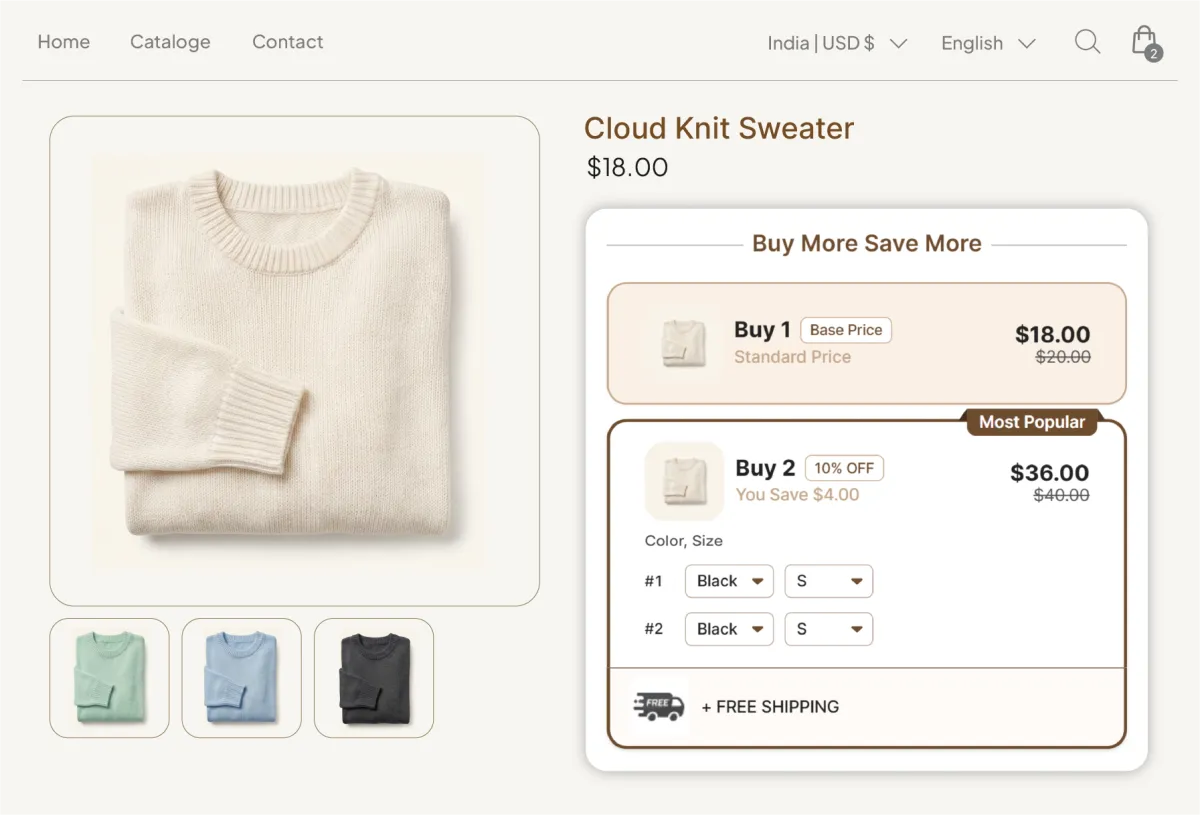
Threshold free shipping stacked with bundles
The quiet multiplier that makes every other strategy on this list convert better
Fashion has some of the highest shipping-cost sensitivity of any retail category, because return shipping is already a known cost in the shopper's mind. Setting a free-shipping threshold just above the average bundle price gives shoppers a second, independent reason to add the second or third item.
Fashion promotion calendar
Timing a bundle offer to the wrong week is one of the most common ways fashion brands waste a good strategy. Below is a month-by-month map of which strategy fits each period.
Self-audit: how bundle-ready is your store?
Score your current setup against these six dimensions before implementing the strategies above. Most fashion Shopify stores fall short on return-rate tracking and gift-set framing specifically, even when their core bundling is otherwise solid.
Directional benchmarks based on patterns observed across fashion merchants running structured offers. Use this as a self-check, not a scored audit.
From solo stores to 8-figure brands, teams trust Profit Pumper to grow their revenue.
Consistently rated 4.9 stars on the Shopify App Store for ease of use and reliability.
Install, pick a template, configure your offer, and go live. No coding or developers needed.
Frequently asked questions
What's the difference between a fashion bundle and a generic Shopify bundle app?+
Will bundling increase my return rate?+
Do I need a developer to set these up on Shopify?+
Which strategy should a small fashion brand start with?+
How is this different from a sitewide sale?+
Your offers. Configured, not discounted.
Set up outfit bundles, size-run quantity breaks, and gift unlocks on your Shopify store in minutes, no developer or theme edits needed.
Try Pumper Bundles Free