


Shopify Promotion Strategies
Built for Tea Brands
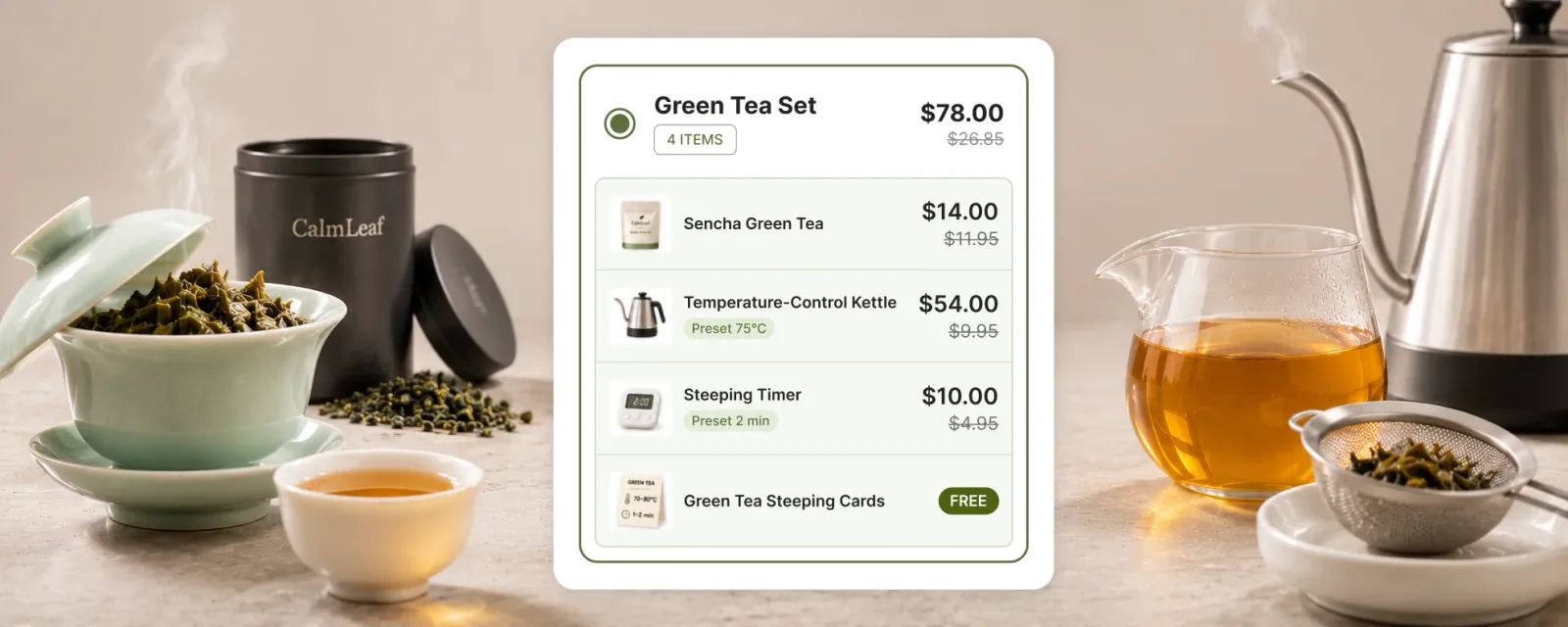
A delicate green tea brewed with boiling water turns bitter and flat, and a rolled oolong packed into a tiny ball infuser never gets the room to open. A tea purchase is a ritual that depends on temperature, time, vessel and leaf. These sixteen strategies grow AOV around steeping parameters, infuser and teapot sizing, harvest seasons and the way tea drinkers use the same leaf across many steeps.
Why tea promotions behave differently
Tea is one plant made into very different drinks, and each family has its own rules. White, green, oolong, black and dark teas ask for different water temperatures, different steeping times and often different vessels. A mistake in any one of them changes the cup, and the customer usually blames the tea.
The leaf also behaves differently from other consumables. The same leaf can be steeped many times, so value is measured in steeps and not in cups. Freshness runs both ways: many green teas are at their best within a year, while some dark teas are kept to age.
Seasons are tied to the plant. Spring harvests, called flushes, are anticipated for months, and tea absorbs odors and moisture, so storage becomes part of the product.
The strategies below start with steeping parameters, which generic bundling advice ignores, then add the vessel, season and loyalty layers. Each one names the Pumper Bundles offer type that runs it without a developer.
Steeping-parameter bundles by tea type
The strategy no other tea promotion guide covers
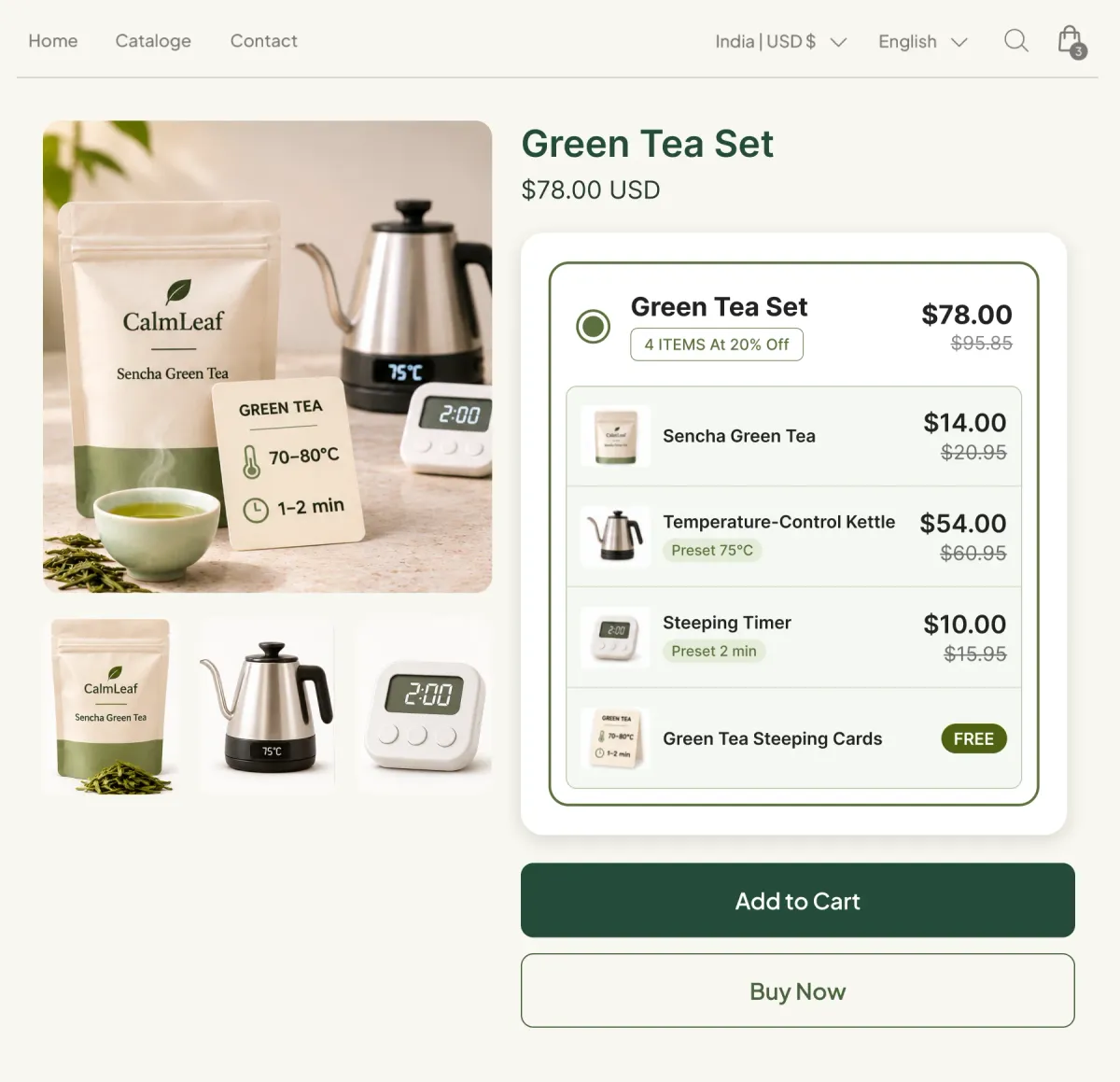
Delicate green and white teas do best with cooler water, roughly 70 to 80°C (160 to 175°F), and a short steep of a minute or two. Oolongs sit in between, and black teas and most herbal blends take water close to boiling. Boiling water on a delicate green tea gives a bitter, flat cup that the shopper may never trace to the kettle.
Generic advice says to bundle accessories with tea. Here, the bundle must carry the parameters of the tea in it: a temperature-control kettle, a timer and a steeping card set for that tea family. A bundle that ignores this leaves the shopper to guess.

Infuser and teapot sizing by leaf
Leaves need room to open
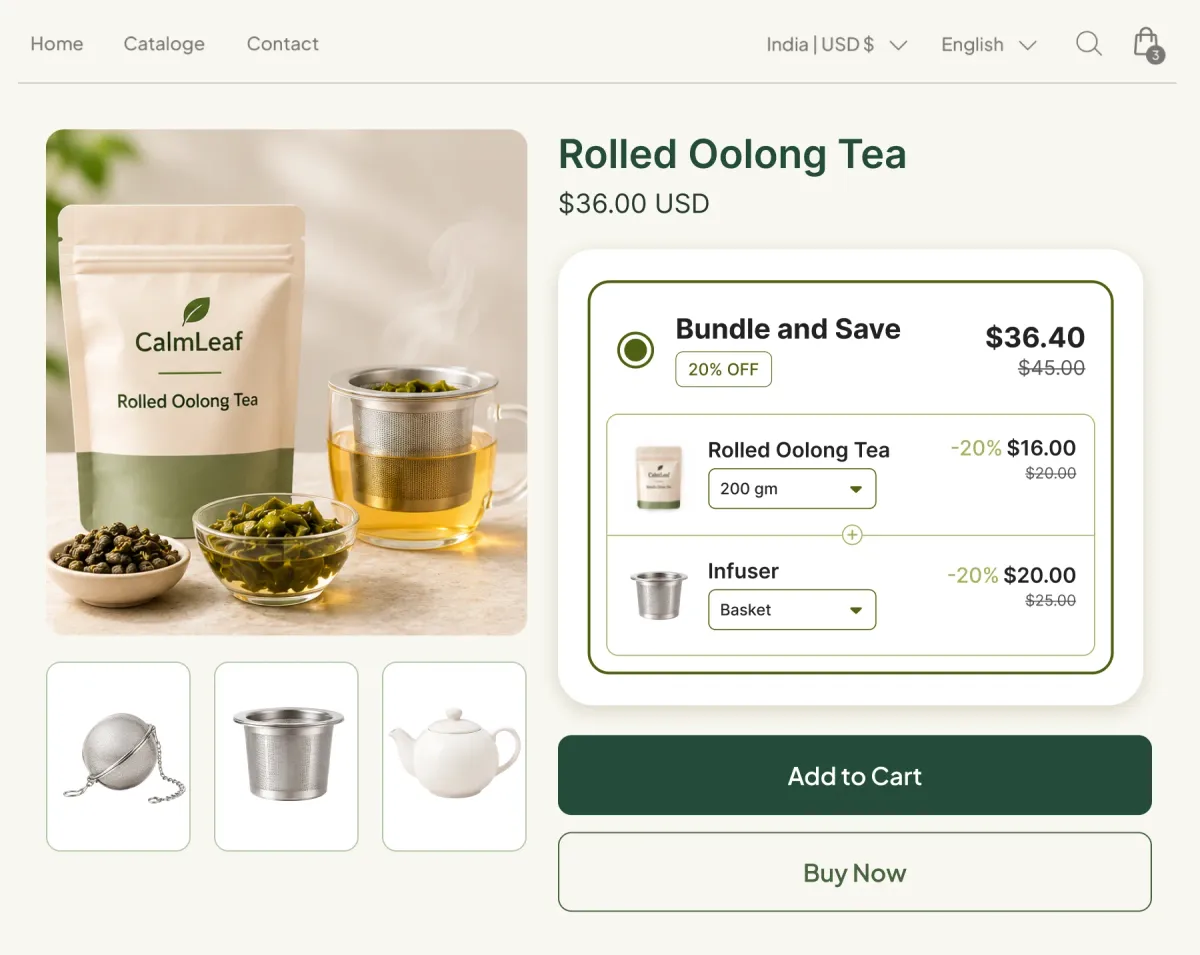
Tea leaves expand a great deal when wet. Rolled oolongs open into whole leaves, and large-leaf teas need far more room than fine cuts. A small ball infuser crowds them, so the water cannot reach the leaf and the cup comes out thin.
Match the infuser or pot to the leaf in the cart: a basket infuser or a roomy teapot for whole-leaf teas, and a smaller one for fine cuts and blends. Show the capacity next to the tea, so the shopper can see that the two belong together.
Gongfu sets built on re-steep value
Good leaf keeps giving, so value is counted in steeps
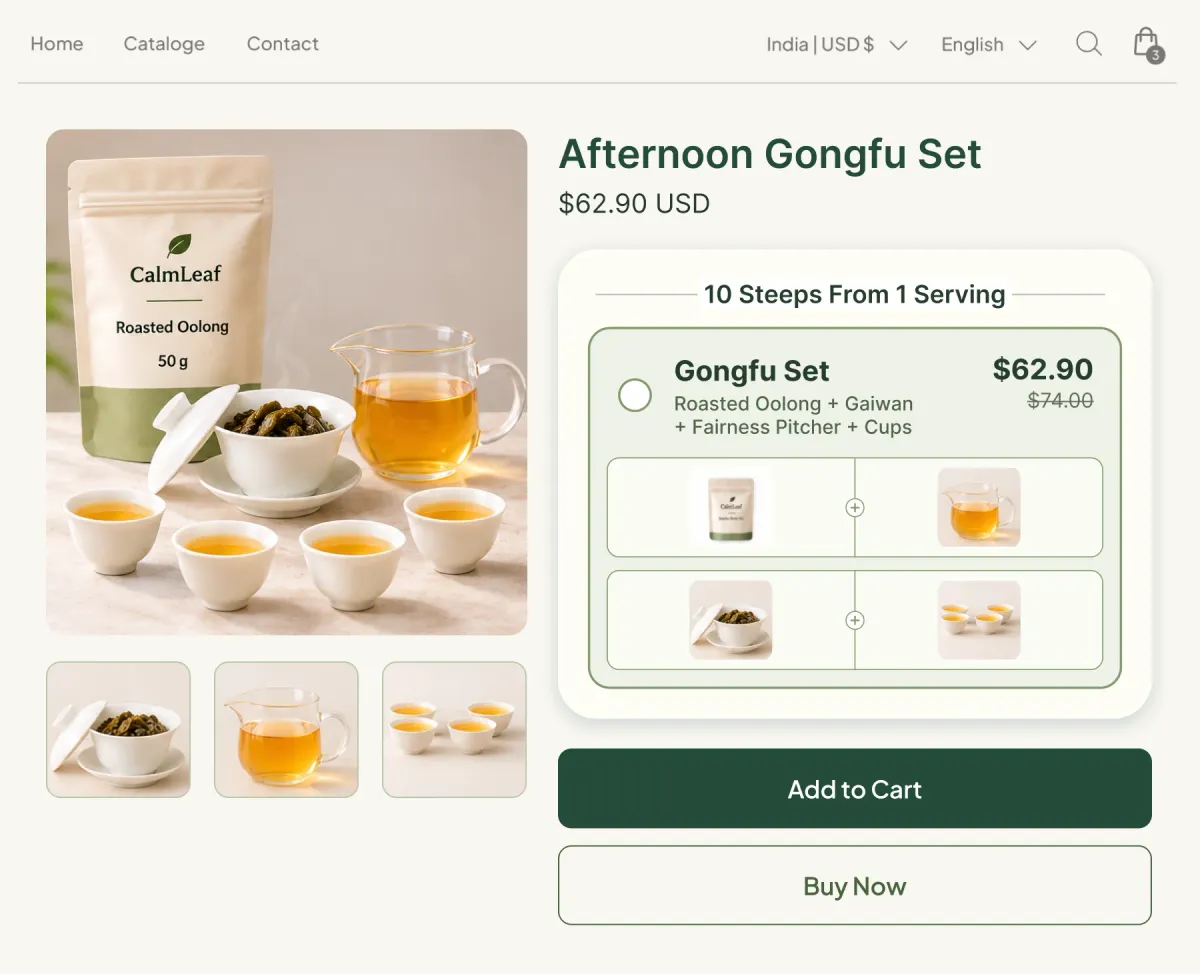
In gongfu brewing, drinkers use more leaf in a small vessel and steep it many times for a few seconds each. A good oolong or aged tea can last a long session, and each steep tastes a little different. The price per gram of such tea looks high, but the price per steep is low.
Bundle the gaiwan, a fairness pitcher and small cups with a tea that rewards repeated steeping, and show the number of steeps on the card. Shoppers who see the value per steep accept a higher basket without hesitation.
Matcha kits by grade and use
Drinking grade and baking grade are not interchangeable
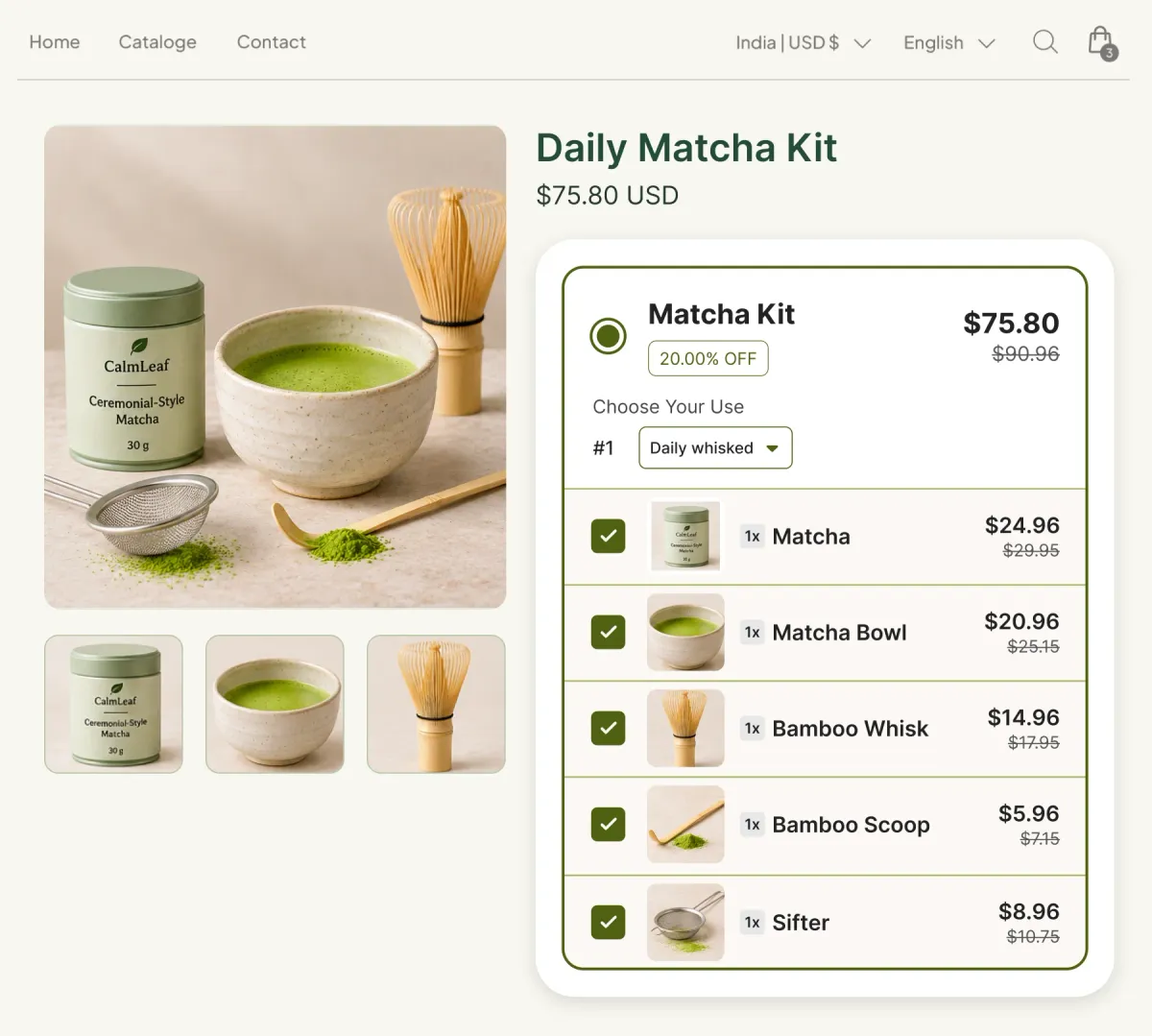
Matcha is sold for two main uses. Ceremonial-style grades are made for whisking with water and drinking plain, and culinary grades are made for lattes, baking and cooking, where other flavors cover some of the taste. Using the wrong grade disappoints either way, and the shopper blames the powder.
Build kits around the use. A drinking kit holds the matcha, a bamboo whisk, a bowl, a scoop and a sifter. A latte kit holds a culinary grade and a milk frother. Offer small tins, since matcha is best used within weeks to a few months of opening.
Day-part rotation quantity tiers
Tea drinkers rotate teas through the day
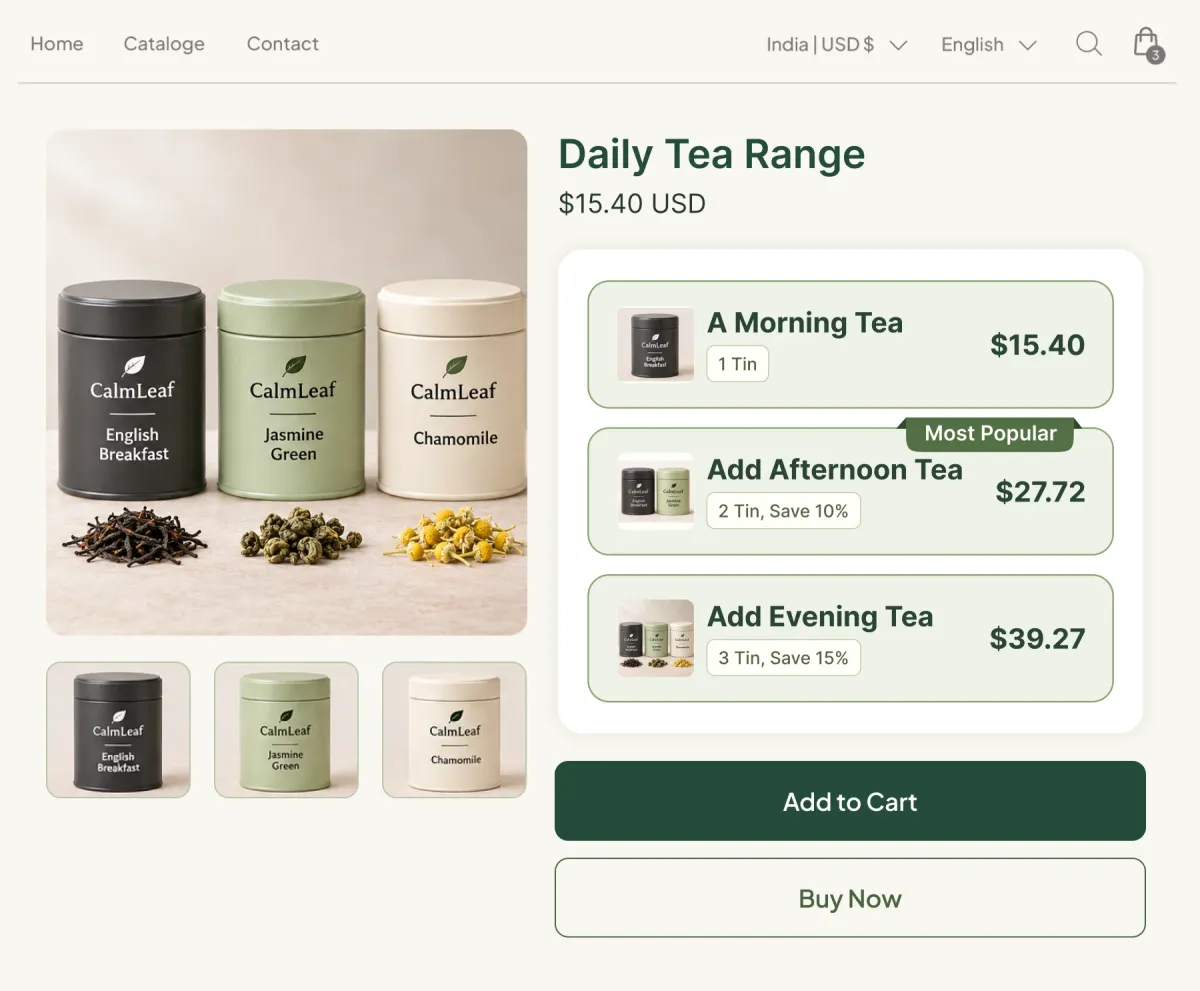
Many tea drinkers choose a different tea for each part of the day: a strong black tea in the morning, a lighter oolong or green tea in the afternoon, and a caffeine-free herbal blend in the evening. A single tin does not cover that rhythm, so buying a second and a third tin is natural.
Name quantity tiers after the part of the day they add, and show which teas suit each one. The discount then supports a habit the shopper already has, and caffeine notes help them choose.
Subscriptions by freshness profile
Some teas want to be drunk soon and others want to wait
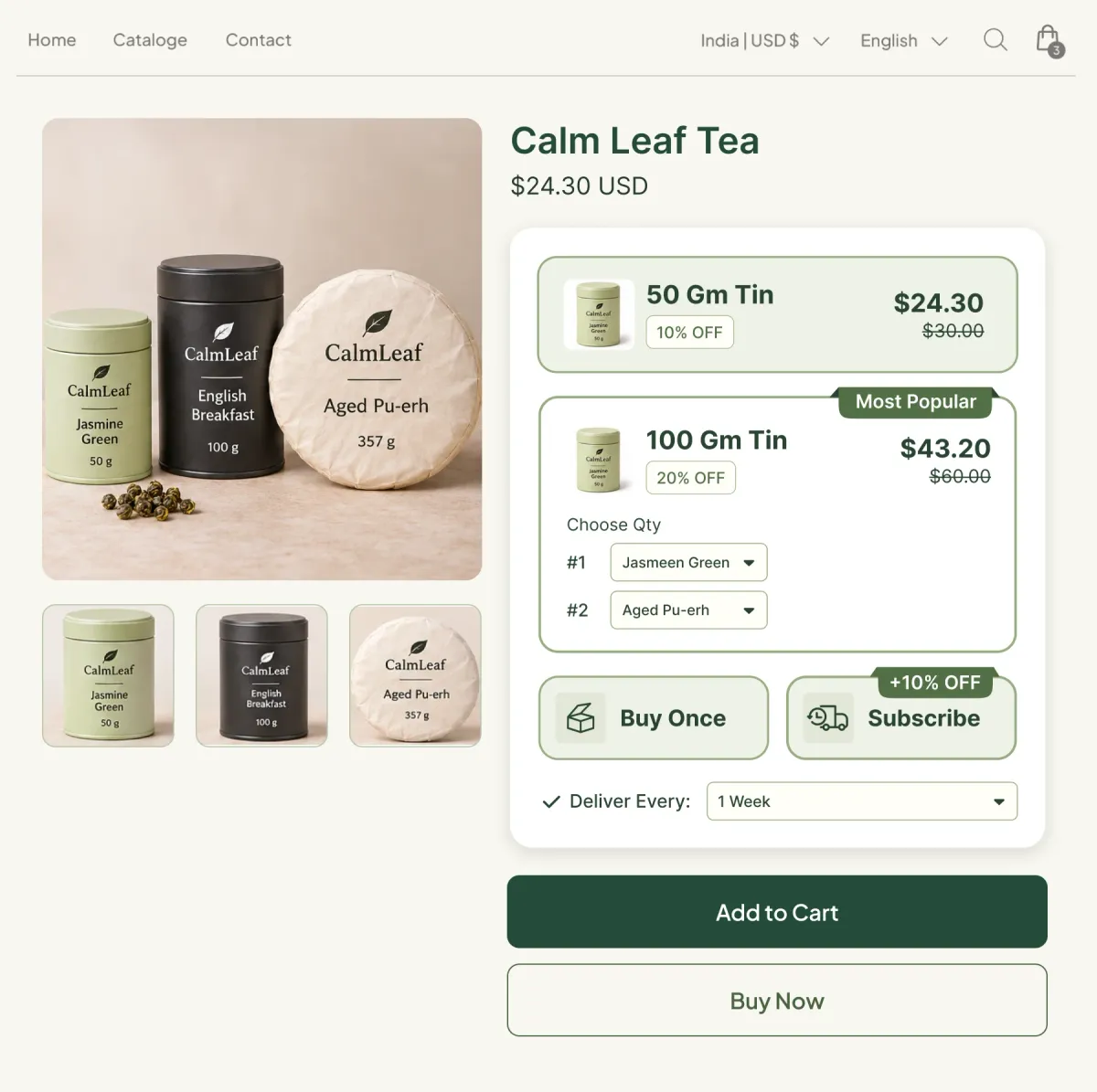
Many green teas are at their best when fresh, so a small tin on a short cadence suits them. Black teas keep longer, and aged teas are bought to be stored. A single cadence for the whole range either leaves green tea to fade or floods the shopper with aged cakes.
Set a cadence for each tea family, named after the way it is used. A shopper who subscribes to a fresh green tea every six weeks and a black tea every quarter gets each tea at the right moment.
Pu-erh cake and aged-tea kits
The one category where time adds value
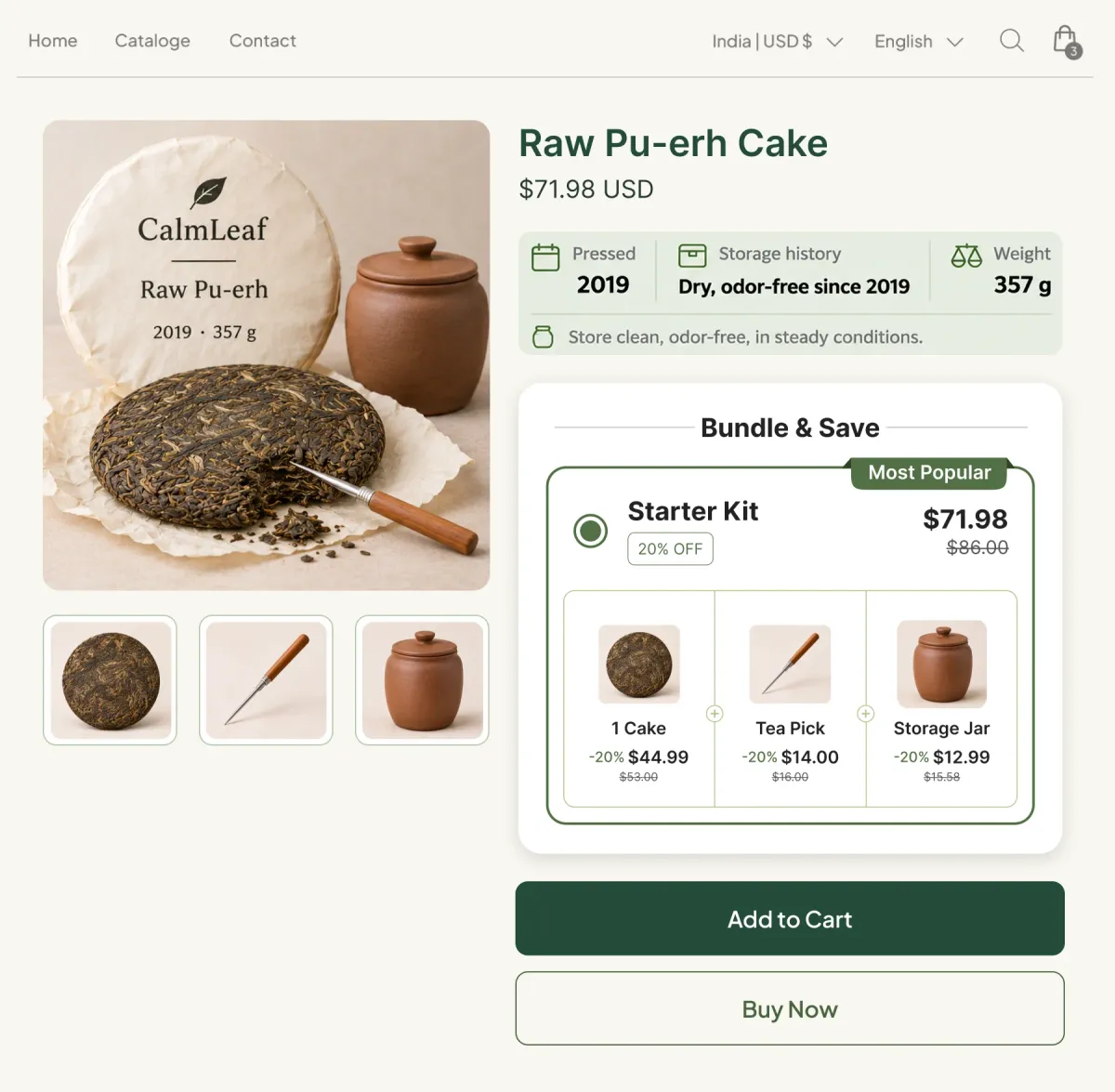
Pu-erh is pressed into cakes, commonly around 357 g, and the traditional bundle of seven cakes is called a tong. Raw pu-erh is often bought to age, and it changes over the years. Collectors buy it in quantity, and newcomers need a way in.
Build a kit for new buyers with one cake, a pick for breaking leaf from it and a storage jar. Offer the tong to collectors as a larger set. Aged tea needs a clean, odor-free place with steady conditions, so describe storage in the kit.
First-flush pre-order bundles
The spring harvest is awaited for months
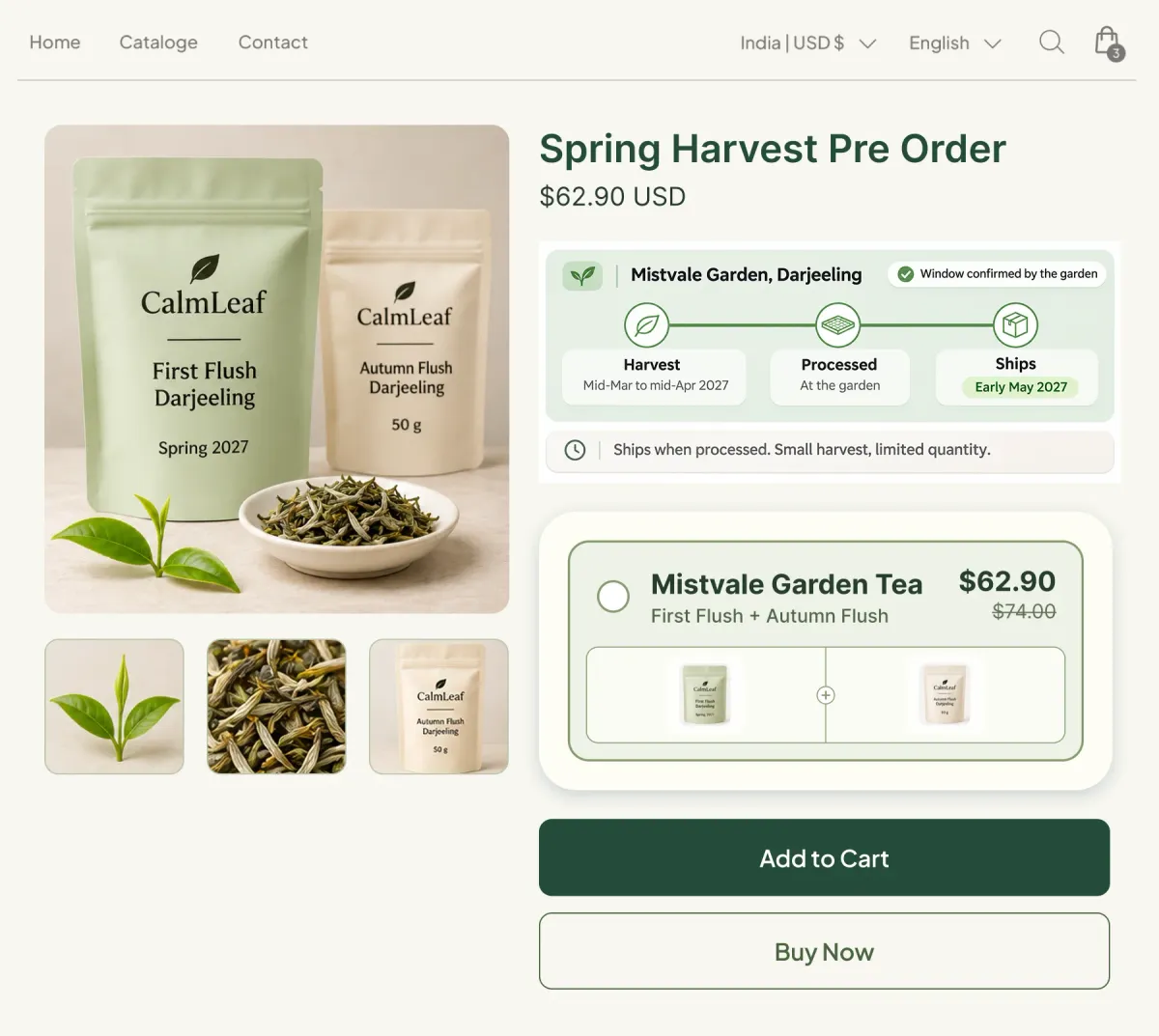
Tea plants grow in flushes, and the first spring flush is among the most anticipated of the year. Quantities are small and the tea moves fast once it lands, so enthusiasts want to reserve early. A pre-order bundle that pairs the first flush with a companion tea gives them a way to do so.
State the garden, the harvest window and a realistic ship date. Shoppers accept a wait when they understand why, and they dislike a surprise delay more than a long one.
Vessel material matched to tea family
A clay pot remembers what it brews
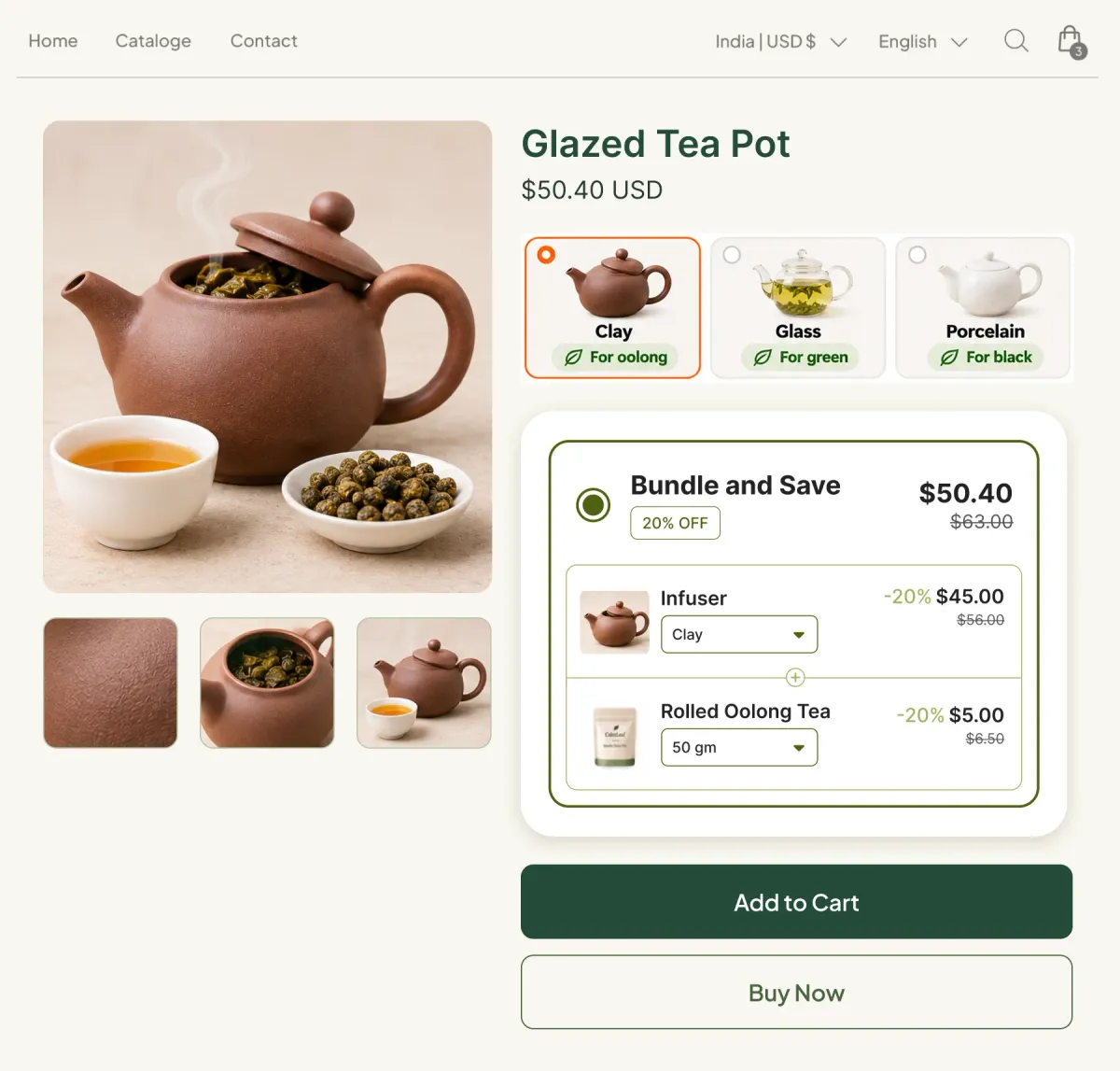
Unglazed clay teapots absorb some of the tea they hold, and many drinkers keep one pot for one kind of tea so the flavors do not mix. Glass shows the leaf open and suits delicate teas, and glazed porcelain stays neutral for any tea.
Pair each vessel with the tea family it suits, and say so on the page. A shopper who buys an unglazed pot along with a tea made for it understands the pairing, and a shopper who buys it with a scented blend does not.
Chai-at-home kits
A spiced tea is a recipe, not a single product
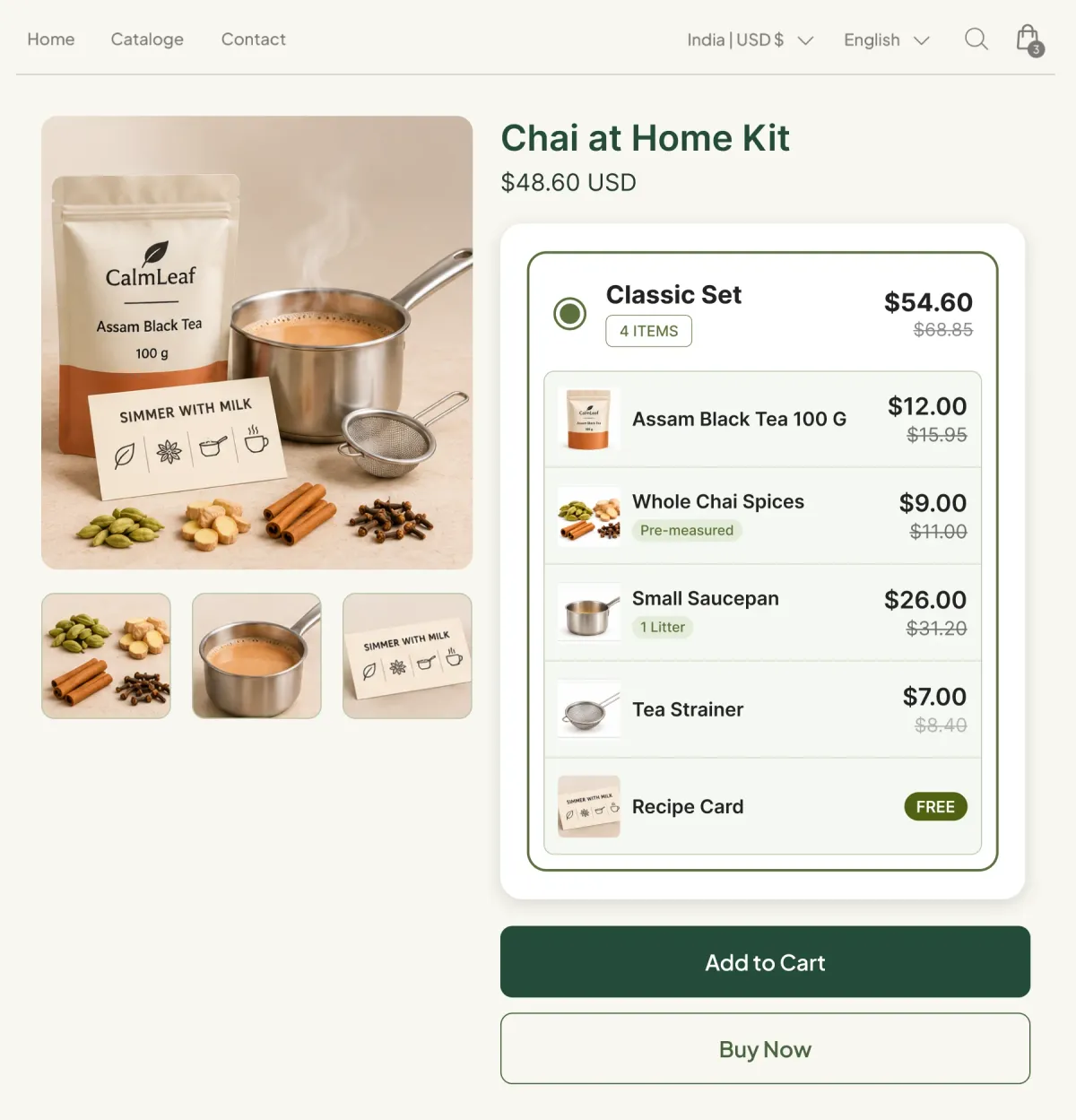
Masala chai is made by simmering a strong black tea with whole spices such as cardamom, ginger, cinnamon and clove, and then adding milk and sweetener. The shopper needs the tea, the spices in the right proportion, a pan to simmer in and a strainer.
Build a kit with each of these and a recipe card. Offer a version with a dairy-free milk suggestion, since many chai drinkers use plant milks and want to know it works.
Blend-your-own mix and match
Tea shoppers like to taste before they commit to a full tin
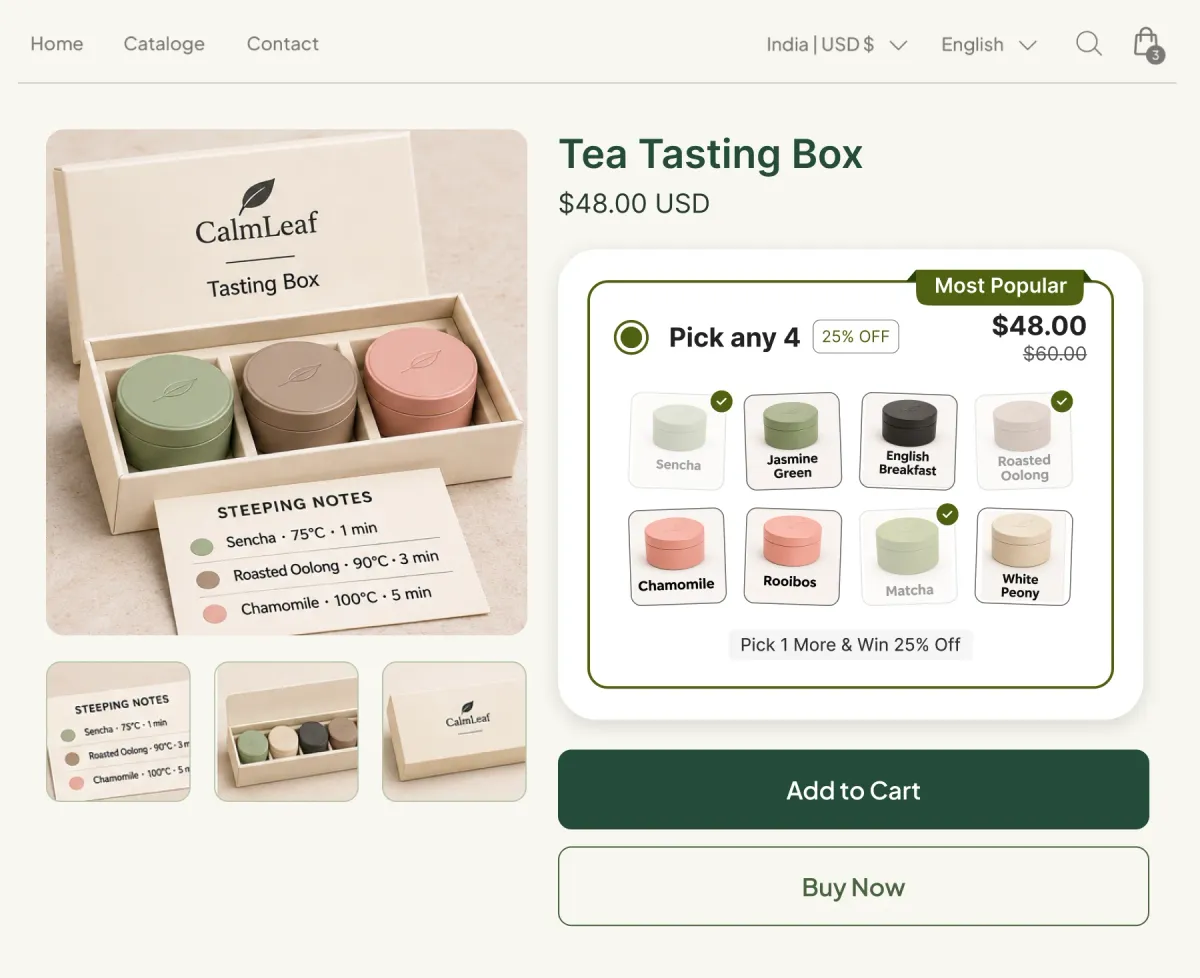
A range of eighteen teas is hard to choose from, and a full tin of the wrong one is a loss. Letting the shopper pick any three or five small tins at a set price turns browsing into a basket and lowers the risk of choosing wrong.
Print the steeping notes for each pick on the packing slip, so the box works as a guided tasting and not just a pile of tins.
Storage and freshness kits
Tea absorbs everything near it
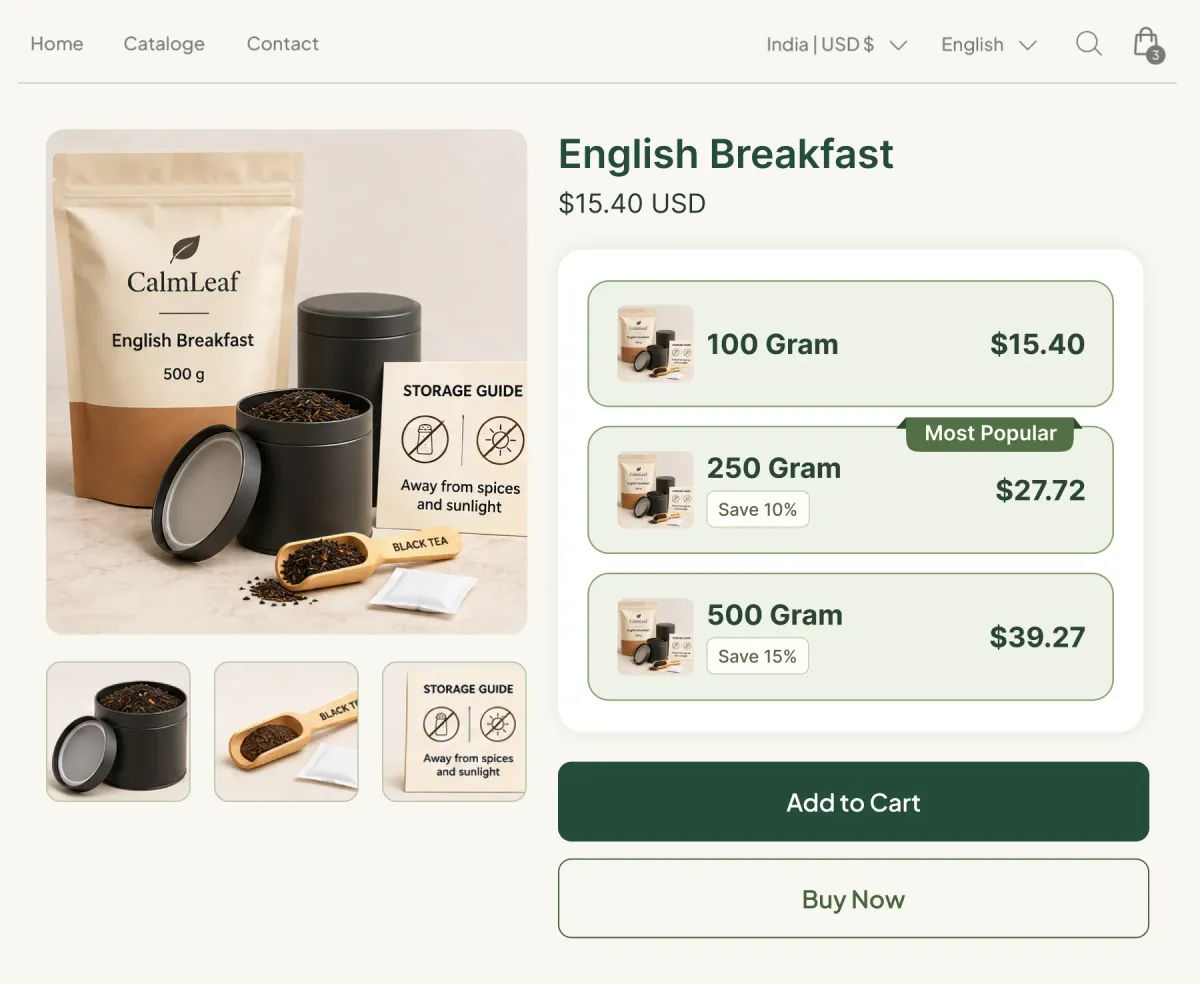
Tea takes up odors and moisture, and light and heat dull its flavor. A tin left open next to the spice rack or in a sunny window loses its character within weeks. Customers rarely connect that decline with storage.
Bundle airtight, opaque tins with a labeled scoop and a short guide, and offer the kit beside every large purchase. A shopper who has bought more than they can drink quickly needs it most.
Last-harvest green tea BOGO
Say plainly that it is last year's crop
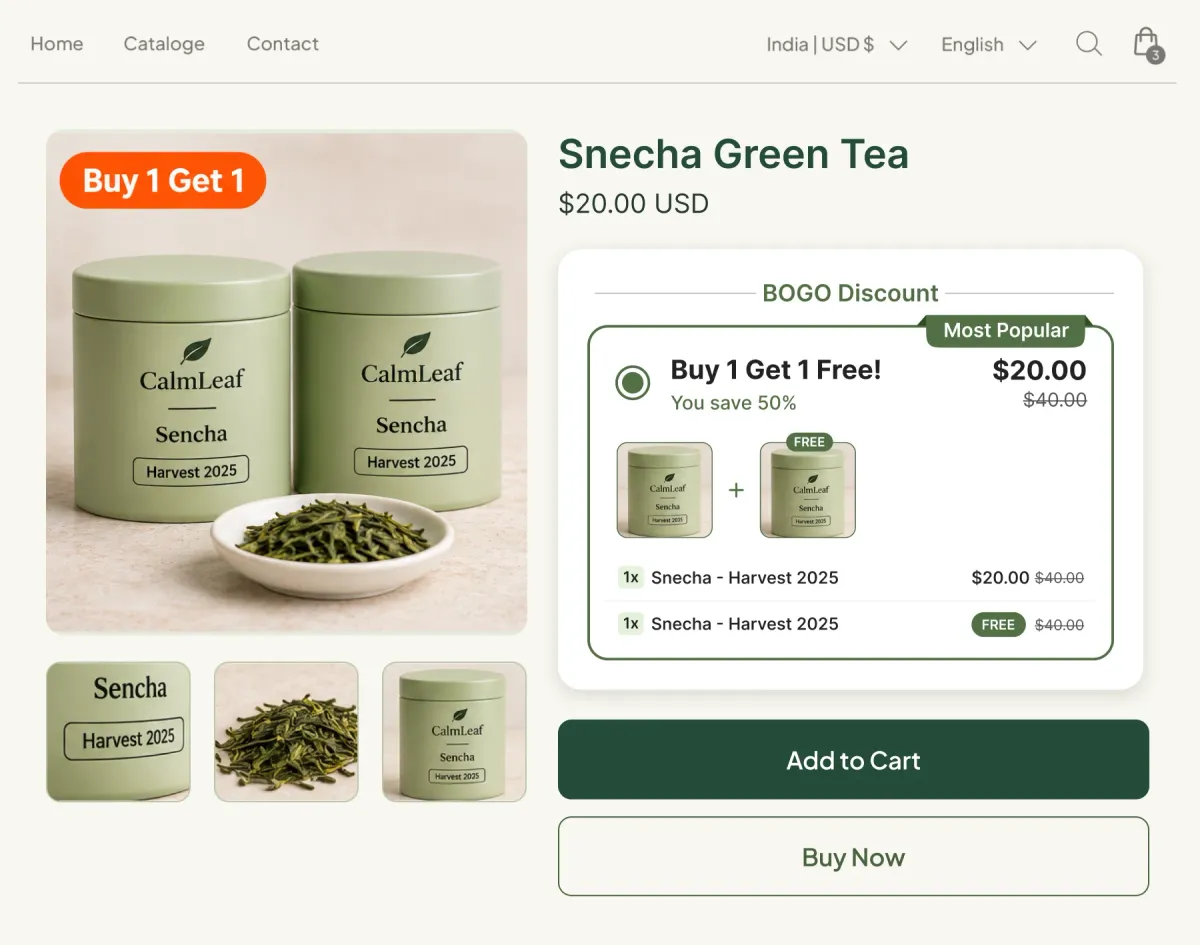
Many green teas fade as they age, and a new harvest arrives each spring. The previous year's stock is still good but no longer at its peak, and the honest way to sell it is to say so. A buy-one-get-one offer clears it without cutting the price of the new crop.
Print the harvest year on every tin and put the offer on its own page, so no shopper confuses it with the new season.
Brewing-tool gifts matched to the format
Give the tool the leaf needs
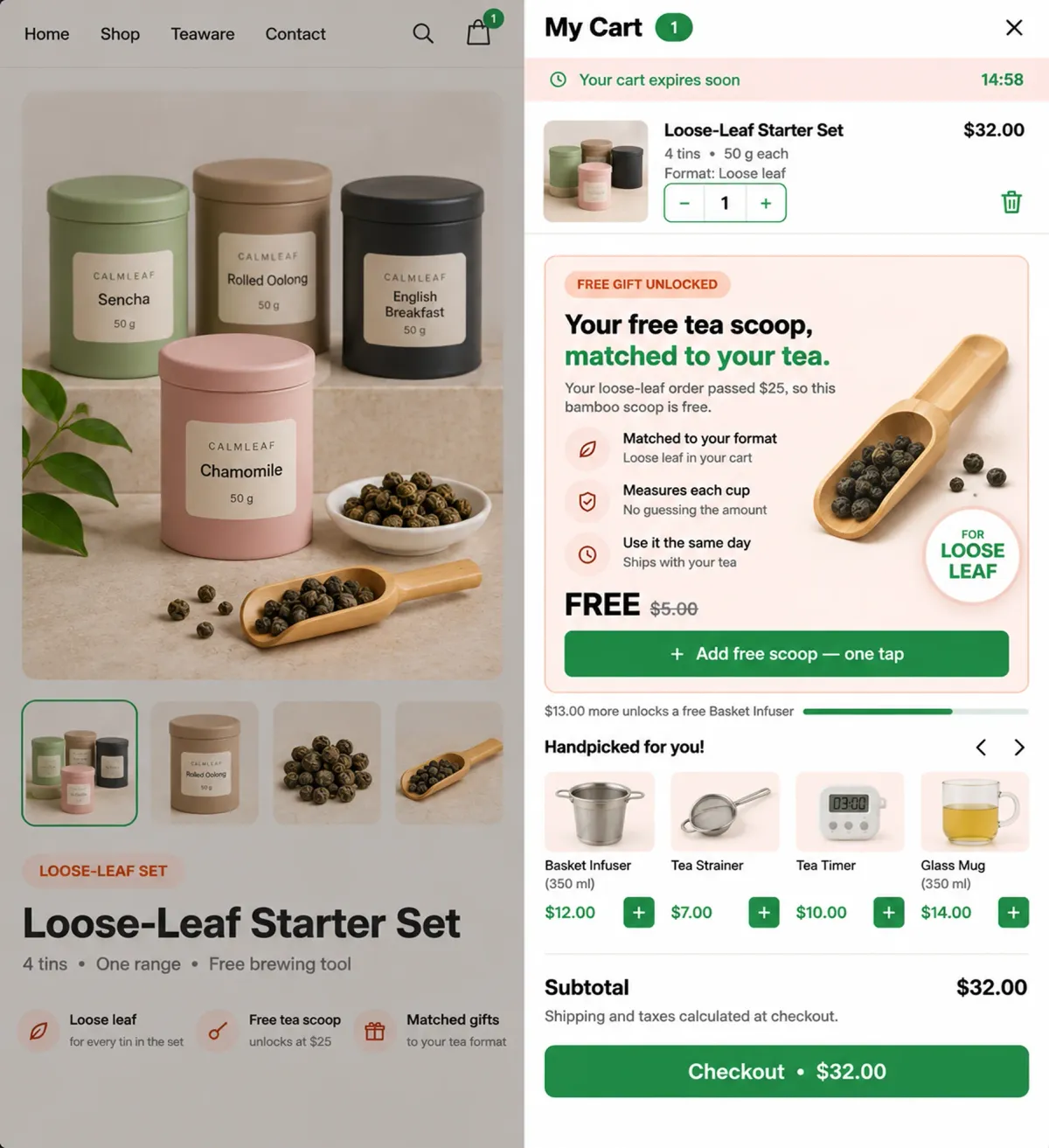
A loose-leaf order needs a way to measure and steep it. A small scoop or a reusable infuser costs the store little and removes a barrier for new loose-leaf drinkers. A gift that suits the format in the cart is used the same day.
Match the gift to the order: a scoop with a tin of loose leaf, a sachet strainer with tea bags, a bamboo whisk with a matcha tin. Size the infuser to the leaf type, as in strategy 2.
Tea-bag-to-loose-leaf conversion bundles
The largest group of tea drinkers still uses bags
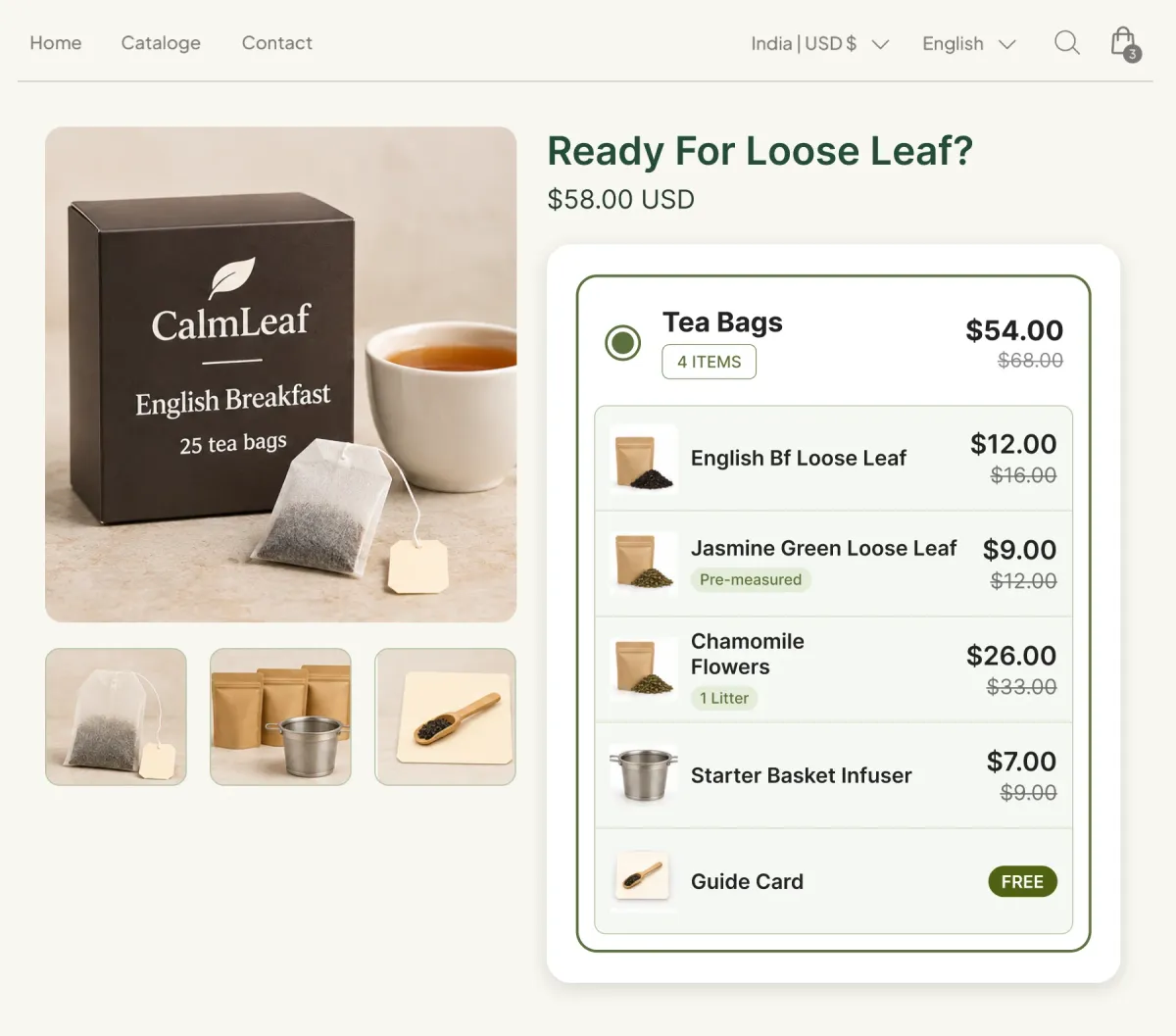
Most tea drinkers start with bags, and many are curious about loose leaf without knowing where to begin. A conversion bundle gives them a small sampler of whole-leaf teas in familiar styles and an infuser that suits them, with a card on how much to use.
Choose teas that resemble what they already drink, so the first loose-leaf cup tastes like an upgrade and not a leap. Show the price per cup next to the tea bag they are used to, since loose leaf is often lower once steeps are counted.
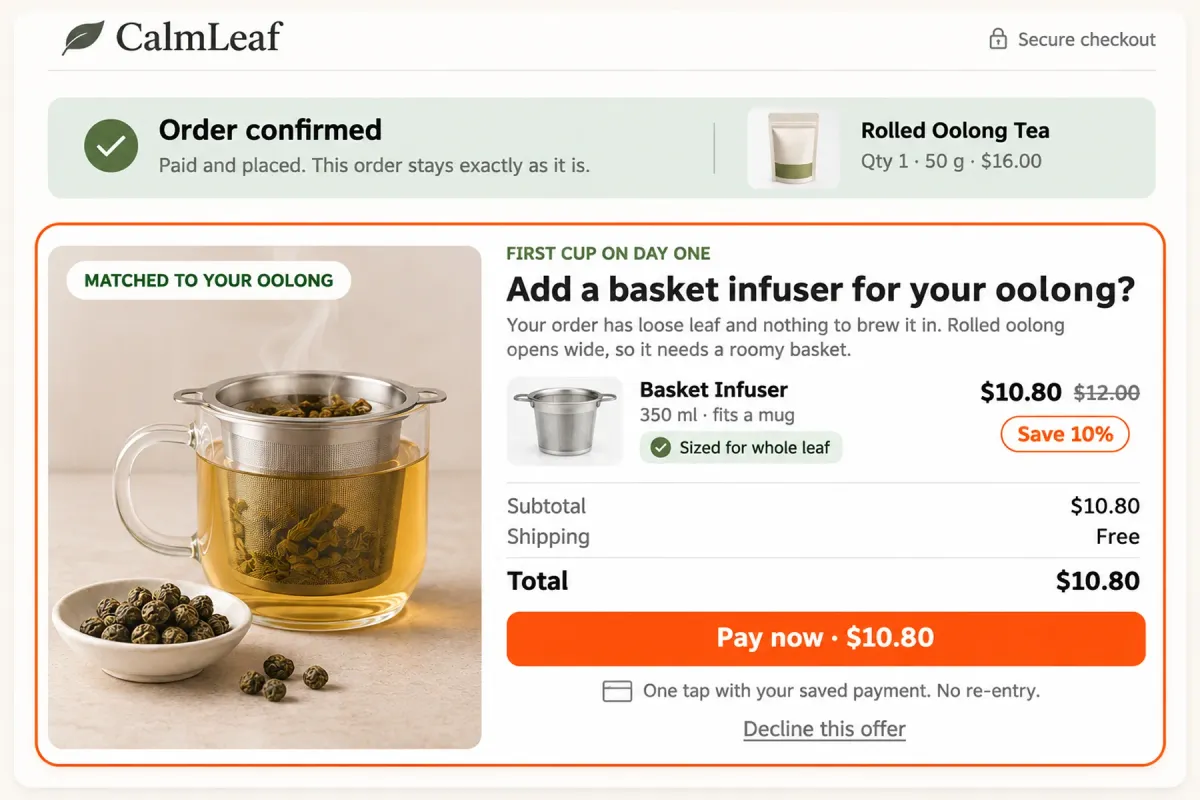
Vessel bundles: the missing vessel
A tin of loose leaf with nothing to brew it in
Many loose-leaf orders arrive with no infuser, and many matcha orders have no whisk. On the tea's product page, offer the vessel or tool that suits it, so the first cup can be made on the day the box arrives.
Tea promotion calendar
Tea demand follows the weather and the harvest. This month-by-month map shows which strategy fits each period, using Northern Hemisphere timing.
Self-audit: how bundle-ready is your store?
Score your current setup against these six dimensions before you implement the strategies above. Tea brands most often miss steeping data and harvest information, even when the rest of their bundling is solid.
The bars are an illustrative self-check, not measured data. Use them to spot where your own setup is thin.
From solo stores to 8-figure brands, teams trust Profit Pumper to grow their revenue.
Consistently rated 4.9 stars on the Shopify App Store for ease of use and reliability.
Install, pick a template, configure your offer, and go live. No coding or developers needed.
Frequently asked questions
How is tea bundling different from bundling in other categories?+
Can a bundle cause returns in this category?+
Do I need a developer to set these up on Shopify?+
Which strategy should a small tea brand start with?+
Do herbal blends belong in these bundles?+
Your offers. Configured, not discounted.
Set up steeping-matched bundles, day-part quantity tiers and freshness-based subscriptions on your Shopify store in minutes, with no developer or theme edits needed.
Try Pumper Bundles Free