


Shopify Promotion Strategies
Built for Coffee Brands
A French press customer who receives an espresso grind gets a muddy, over-extracted first cup, and a pour-over dripper bundled with the wrong filter size is a morning with no coffee. These sixteen strategies grow AOV around grind and brew method, roast dates, filter and portafilter sizes, and the way coffee drinkers actually use up a bag.
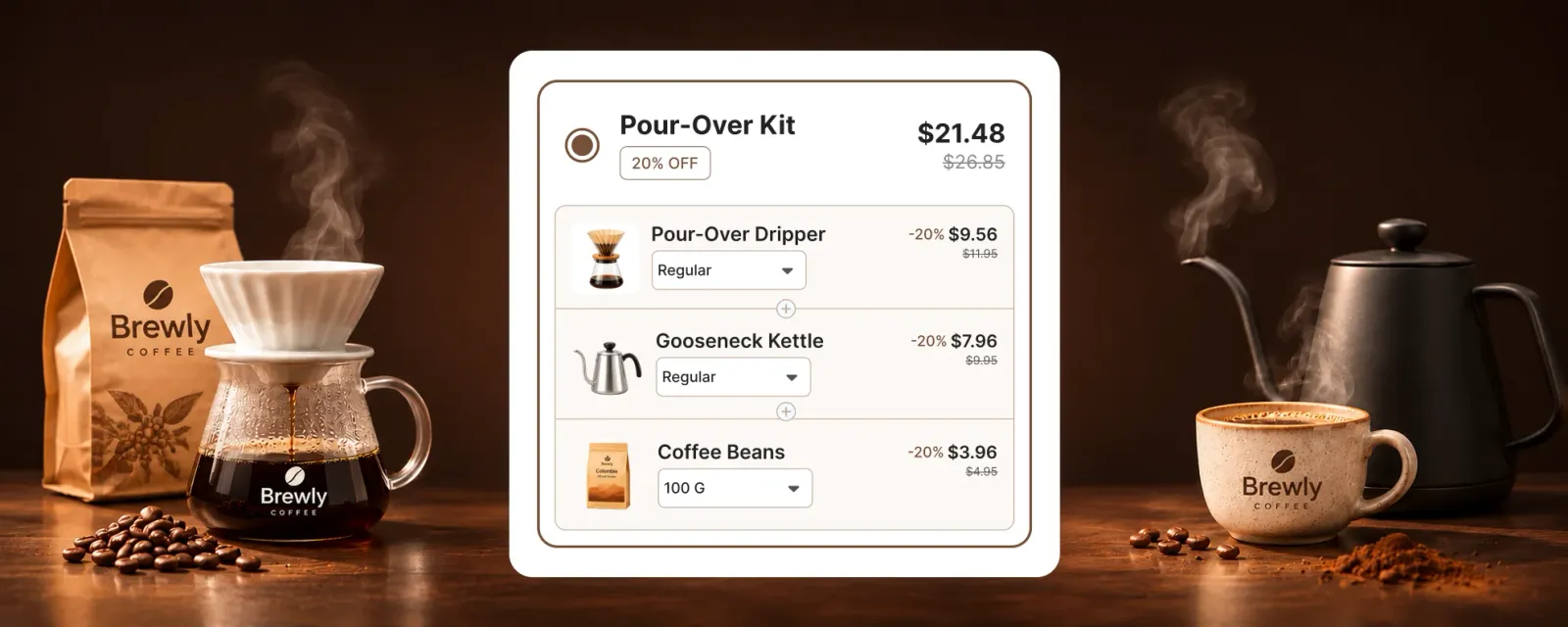
Why coffee promotions behave differently
Coffee is a daily habit built from small decisions that all have to line up. The grind has to suit the brewer, the filter has to fit the dripper, and the beans have to arrive at a point when they taste good. If one piece is off, the cup is off, and the customer rarely knows which piece to blame.
Freshness works differently here too. Beans are at their best within a window that starts a few days after roasting, and ground coffee loses aroma faster than whole bean. That makes the roast date part of the product.
Consumption is steady and measurable. A person who drinks two cups a day uses up a bag in a predictable number of weeks, which makes quantity tiers and subscriptions unusually accurate. Equipment buyers add a layer of fit, from filter sizes to portafilter diameters.
The strategies below start with grind and brew method, which generic bundling advice ignores, then add the roast, equipment and loyalty layers. Each one names the Pumper Bundles offer type that runs it without a developer.
Brew-method-matched grind bundles
The strategy no other coffee promotion guide covers
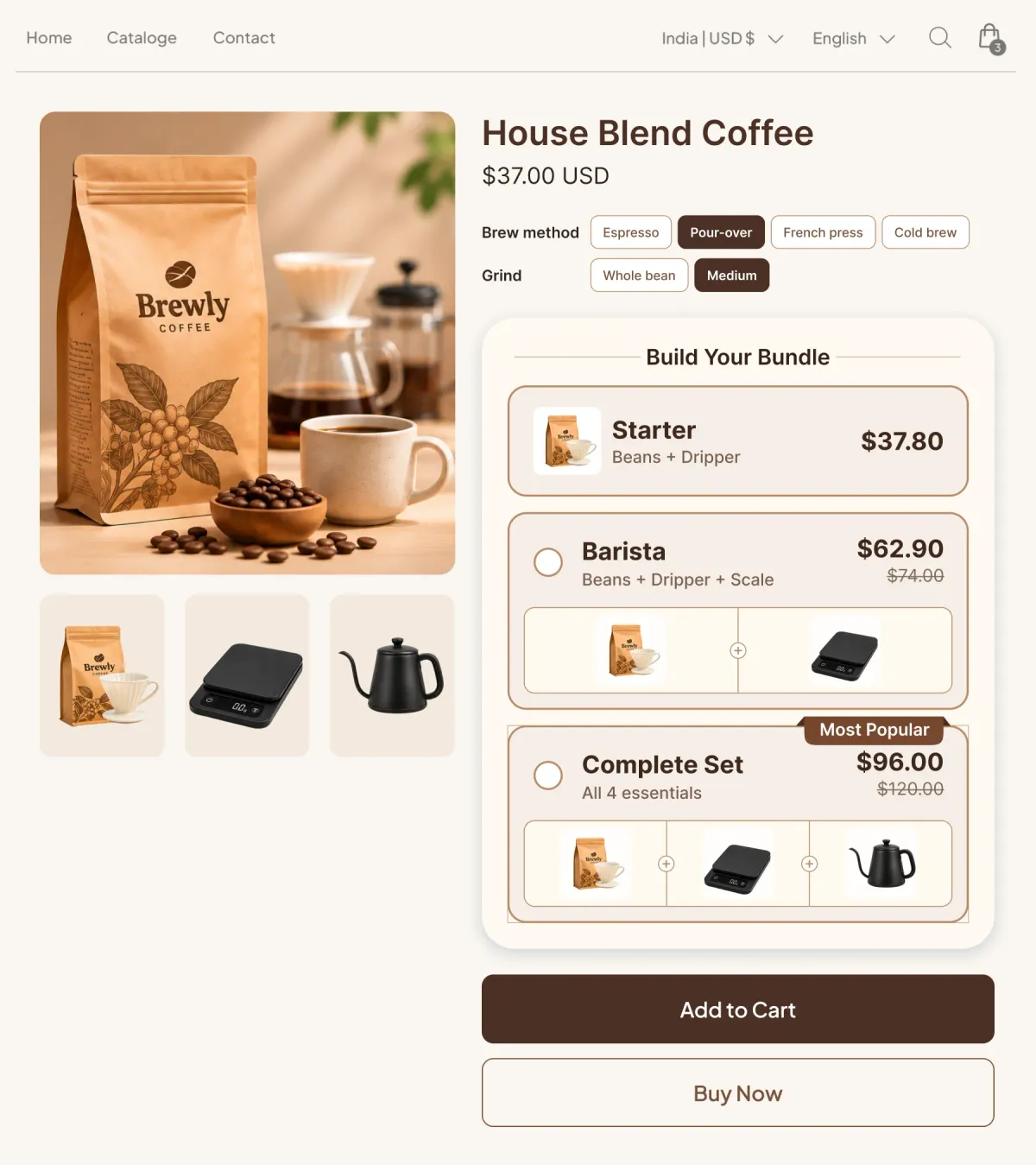
Each brew method asks for a different grind: fine for espresso, medium for pour-over, coarse for French press and extra coarse for cold brew. A grind that suits one method gives a poor cup in another, and the shopper often assumes the coffee itself is at fault.
Generic advice says to bundle beans with the gear that goes with them. Here, the bundle must start from the brew method the shopper chose, then set the grind, the filter and the extras to match. A bundle that ignores this sends the wrong grind to the wrong brewer.
Roast-day-aware bundles and ship windows
The roast date is part of the product
Beans release gas after roasting, and many roasters let them rest for several days before shipping or recommend waiting before brewing. Espresso often benefits from a longer rest than filter coffee. Roast-to-order brands also work to a weekly schedule, with cutoffs for each roast day.
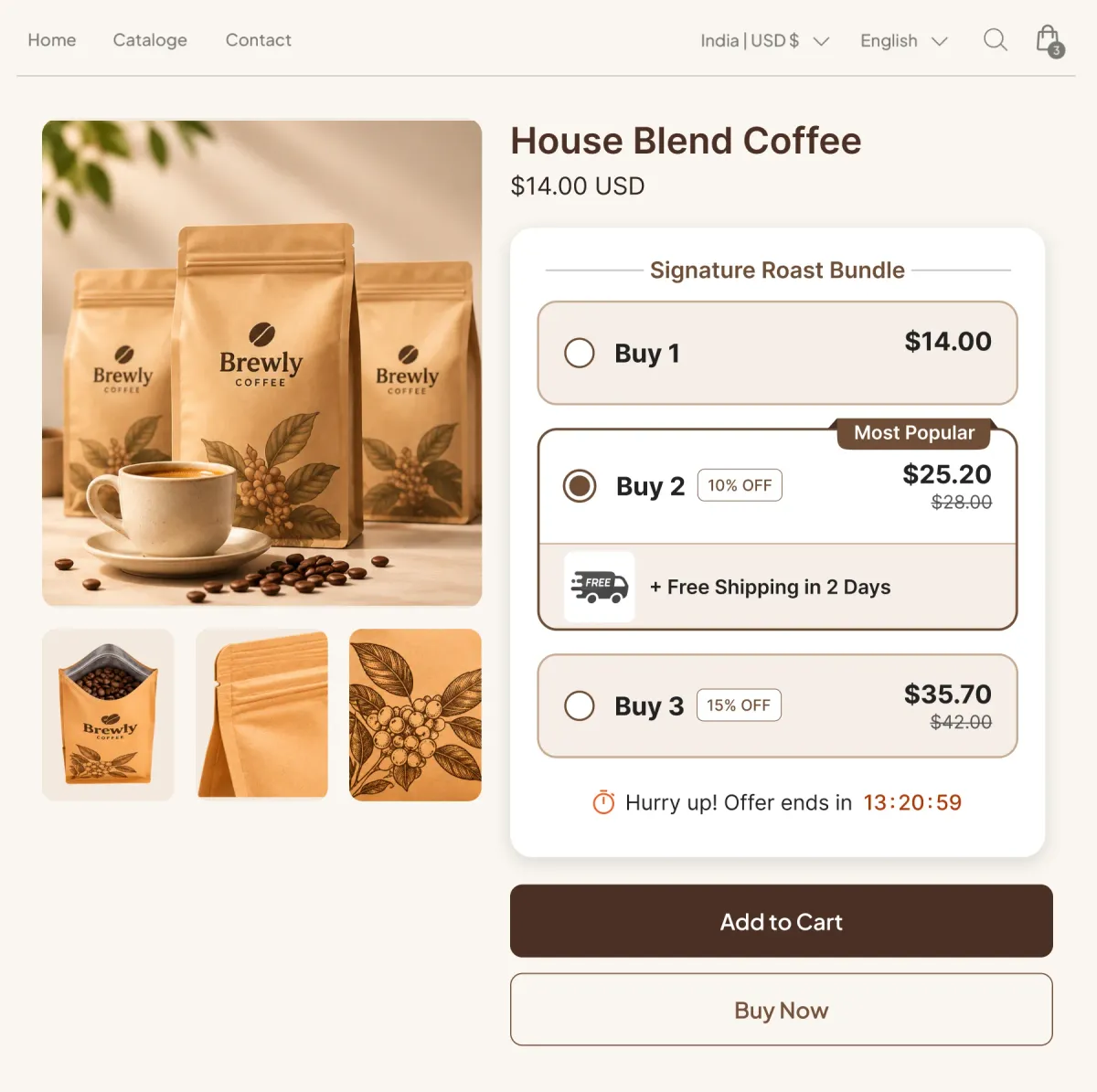
Show the next roast day and the order cutoff on every bundle, and keep bundles within a single roast batch where you can. The customer sees that the beans were roasted for them and not pulled from old stock.
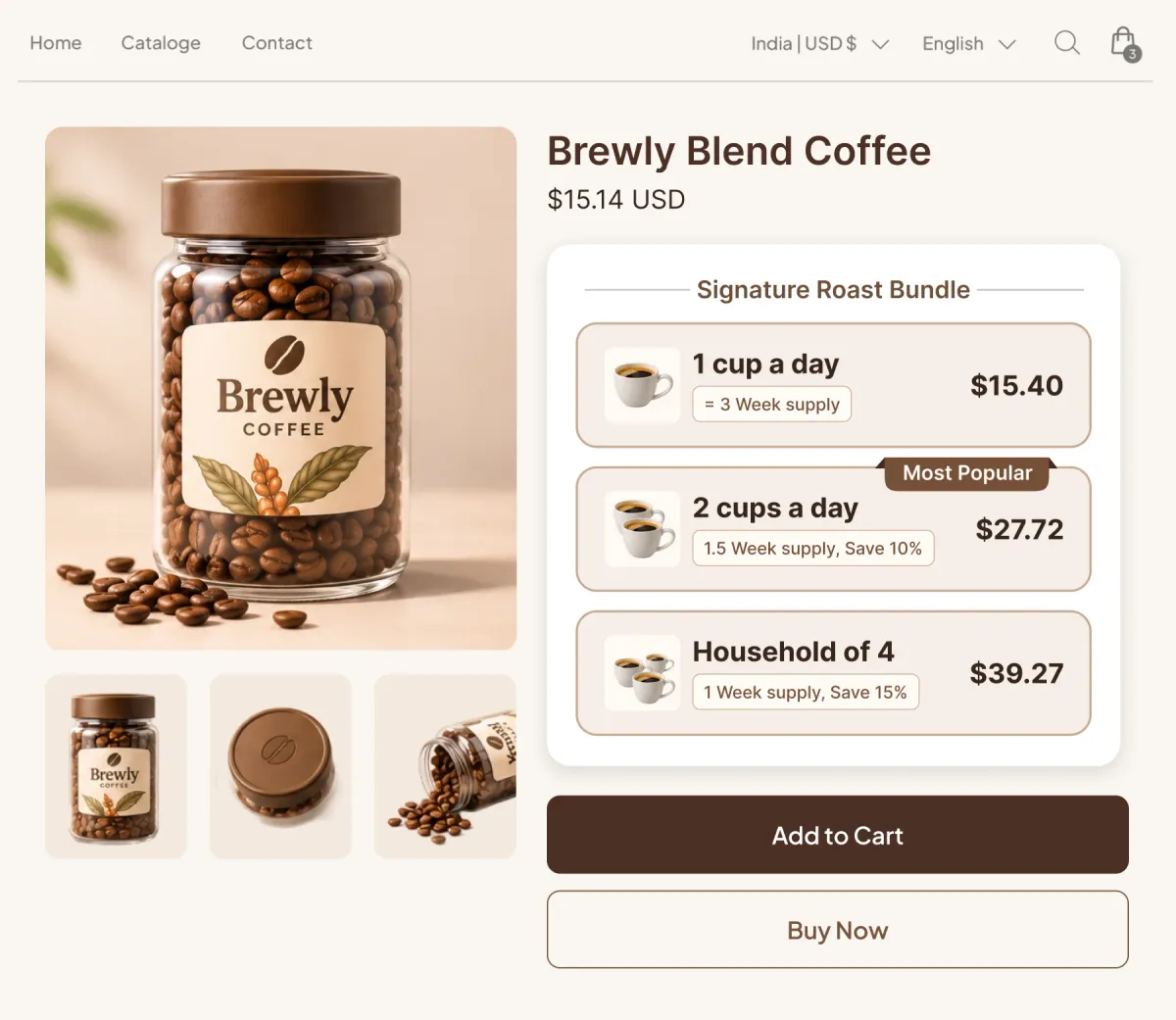
Cups-per-day quantity tiers
Drinkers know their cups, not their grams
A shopper rarely knows how many grams they use in a month. They do know how many cups they drink in a day. A standard bag makes roughly twenty cups at typical recipes, so a person on one cup a day finishes it in about three weeks, and a household on four cups goes through it much faster.
Name quantity tiers by cups per day, and show how long the bags last. The discount then reads as a way to stay supplied between orders, and the shopper picks the tier without arithmetic.
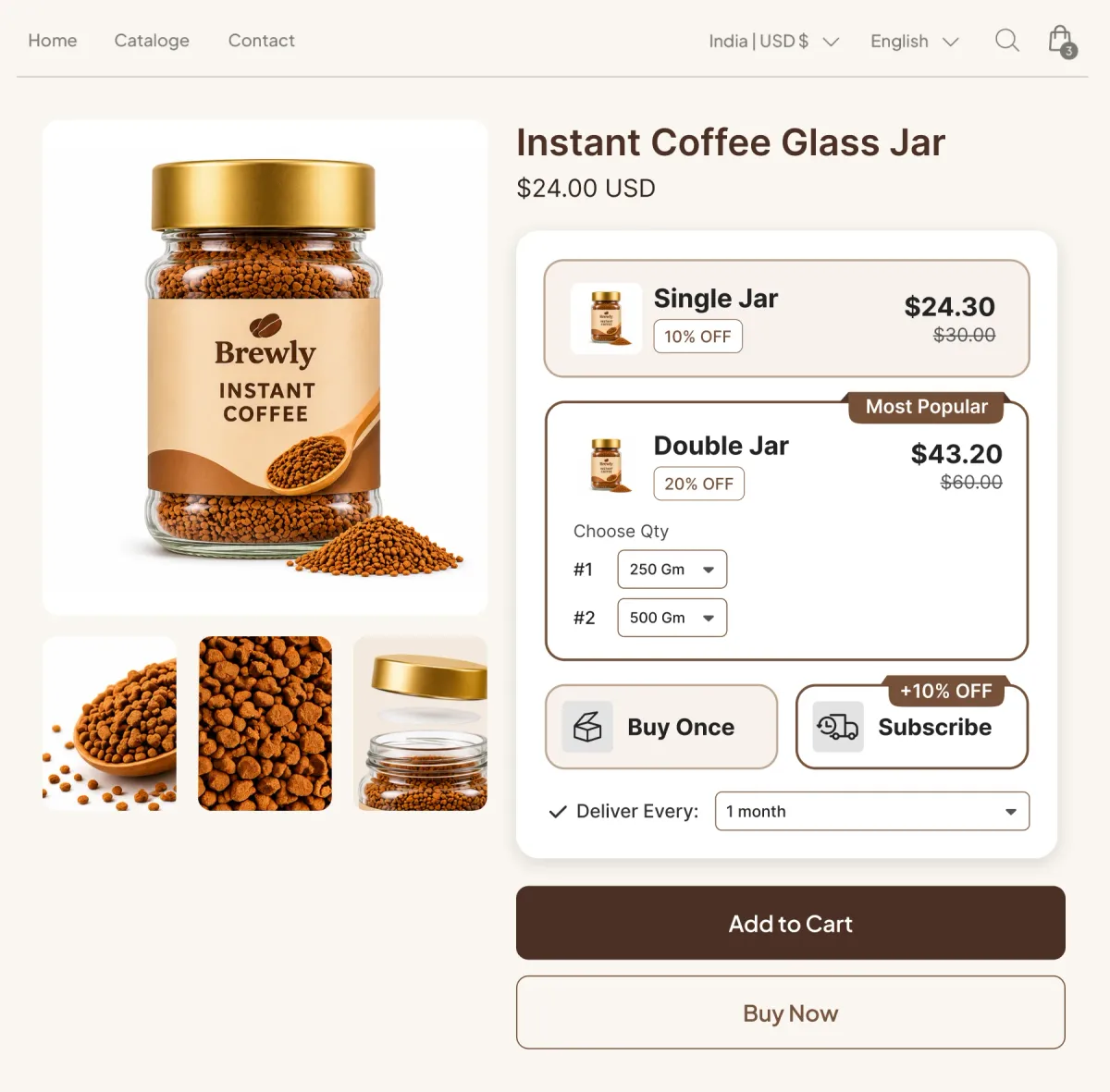
Subscription cadence by consumption
A bag should arrive just before the last one runs out
Coffee is one of the few categories where consumption is steady enough to predict. Too slow and the customer runs out, which sends them to a supermarket. Too fast and beans pile up and go stale in the cupboard.
Offer cadences tied to daily cups, and let shoppers change them easily. Align the dispatch with your roast schedule so each delivery contains beans from a recent roast.
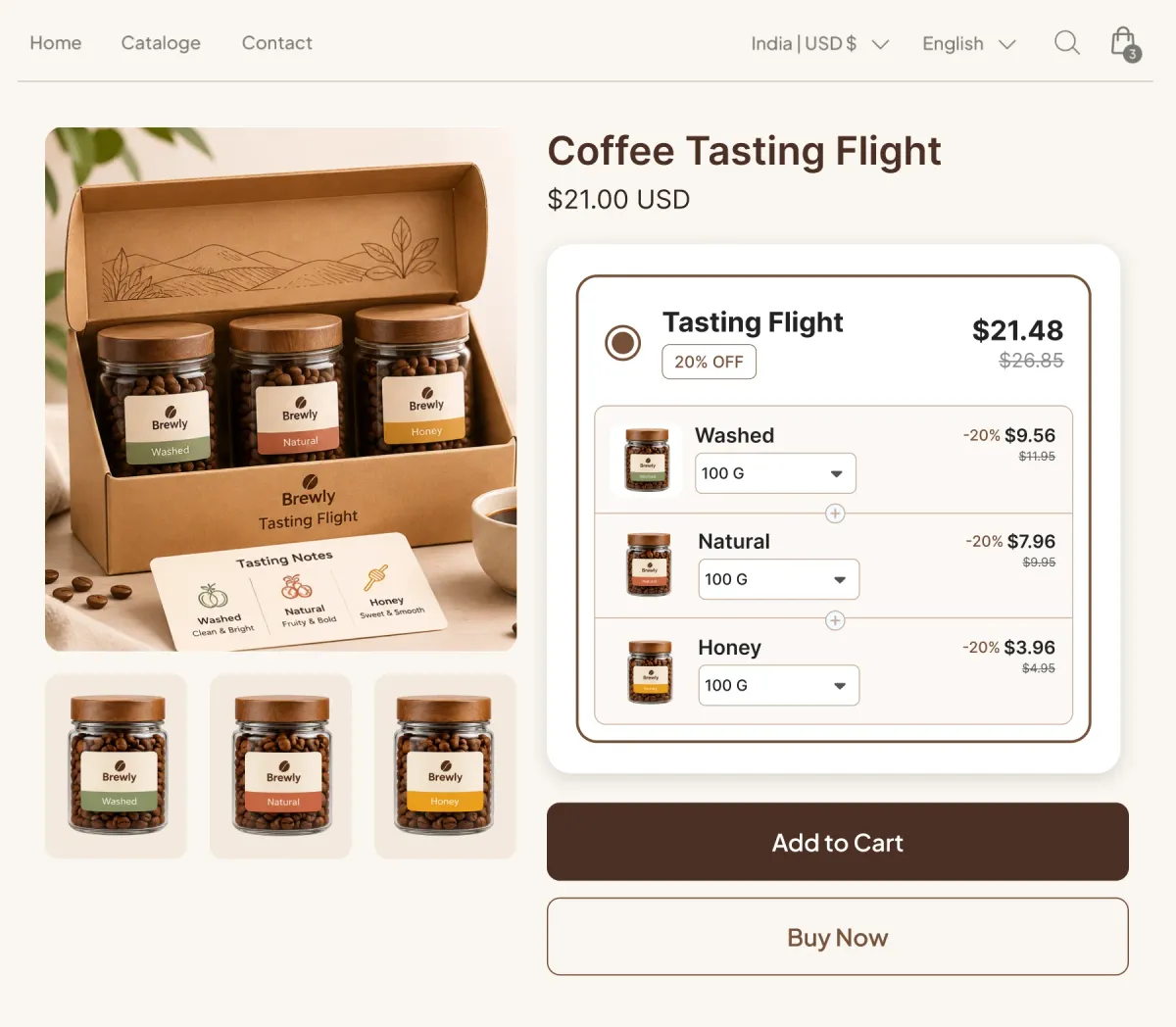
Origin and process tasting flights
Let drinkers taste the difference the farm makes
The same variety can taste quite different depending on where it grew and how the fruit was processed after picking. Washed, natural and honey processing each leave their mark on the cup. Many drinkers are curious but do not want to commit to three full bags.
A flight of small bags, built around one origin or one processing method, lets them compare side by side. Add a tasting card with notes, and the purchase becomes an activity and not only a restock.
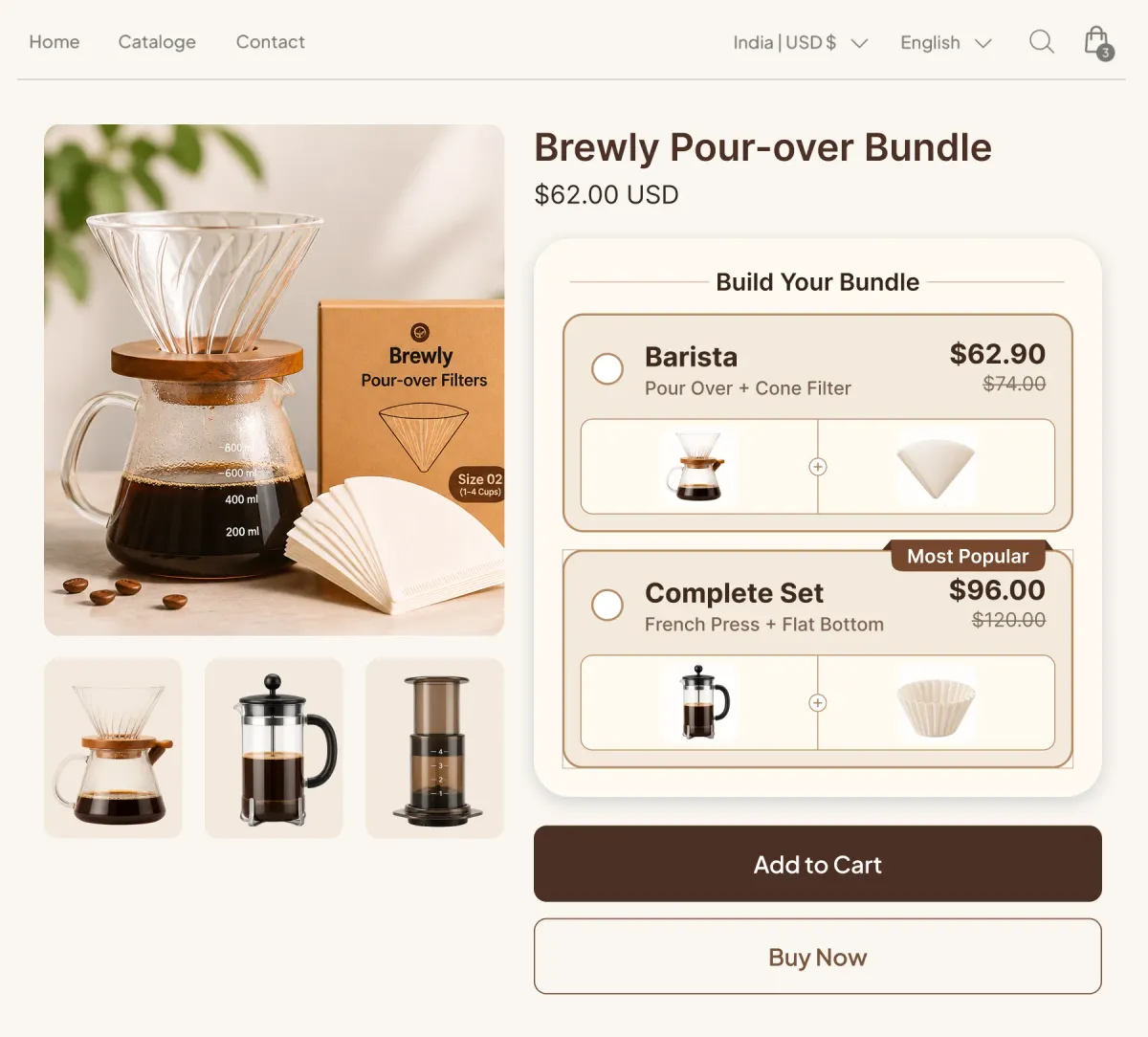
Brewer-and-filter matching
The filter has to fit the dripper
Paper filters come in set shapes and sizes. Cone filters are numbered by size, flat-bottom filters suit basket brewers, and some brewers use their own discs. A filter in the wrong size folds, leaks or sits too high in the dripper.
Record the filter size and shape on every brewer, and bundle each one with the filters it takes. A first pack of filters inside the brewer order means the first cup does not wait for a second delivery.
Espresso accessories by portafilter size
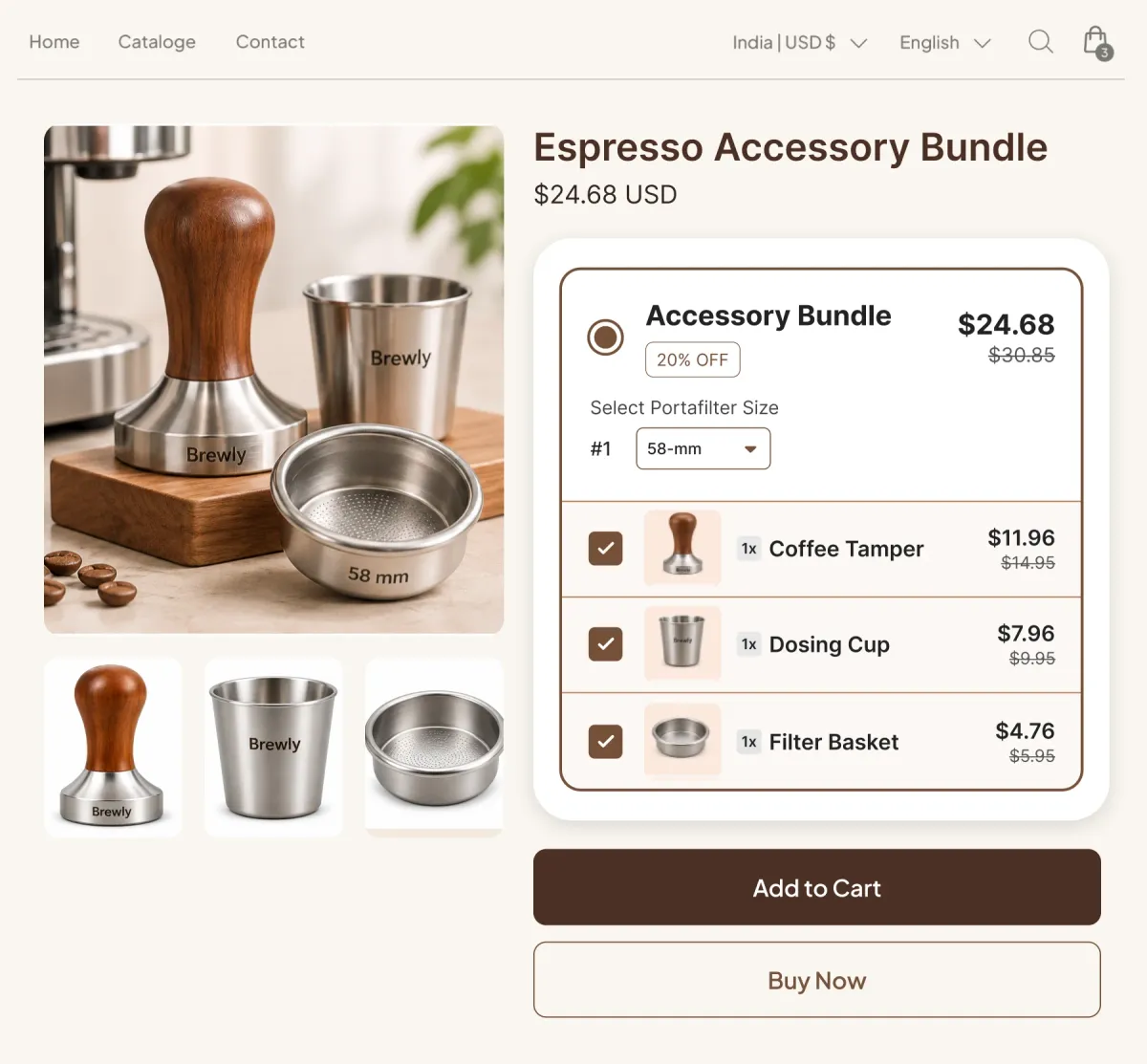
A tamper only works if it matches the basket
Espresso baskets come in set diameters, and a tamper must fit the basket it presses. A tamper that is too small leaves coffee at the edges, and one that is too large will not fit at all. Dosing cups, distribution tools and replacement baskets are sized the same way.
Ask for the machine or the portafilter size first, then show only the accessories that fit. Bundle the tamper with a dosing cup and a scale for a complete workflow upgrade.
Water and descaling kits for machines
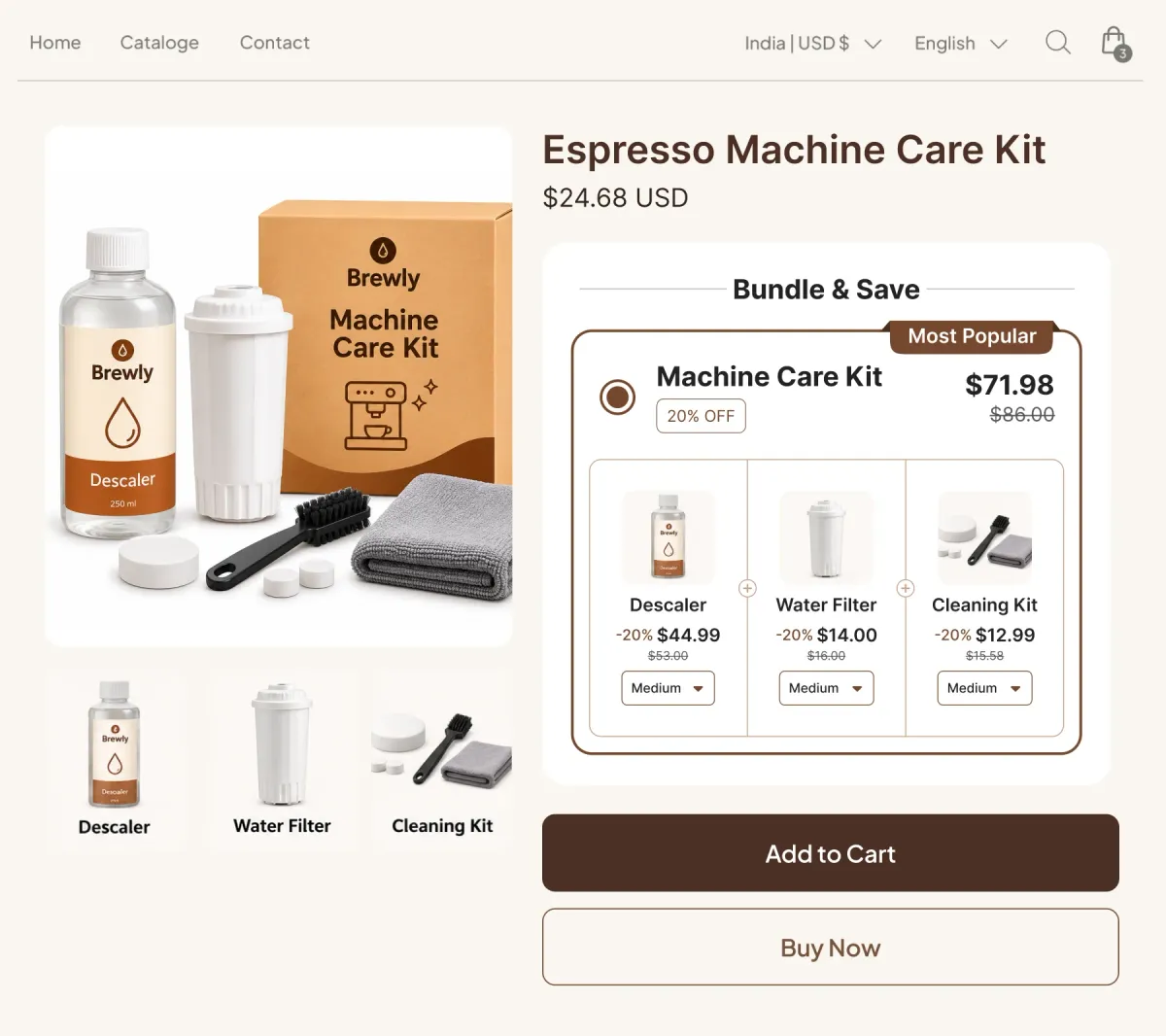
Hard water and coffee oils both shorten a machine's life
Mineral scale builds up inside machines, and how fast depends on the hardness of the local water. Coffee oils also build up in grinders and brew groups, and a machine that is not cleaned tastes worse and wears out sooner.
Bundle each machine with the descaler, water filter and cleaning supplies the maker recommends, and ask the shopper about their water so the guidance fits. The kit protects the equipment, and the equipment protects the coffee.
Capsule-system-matched bundles
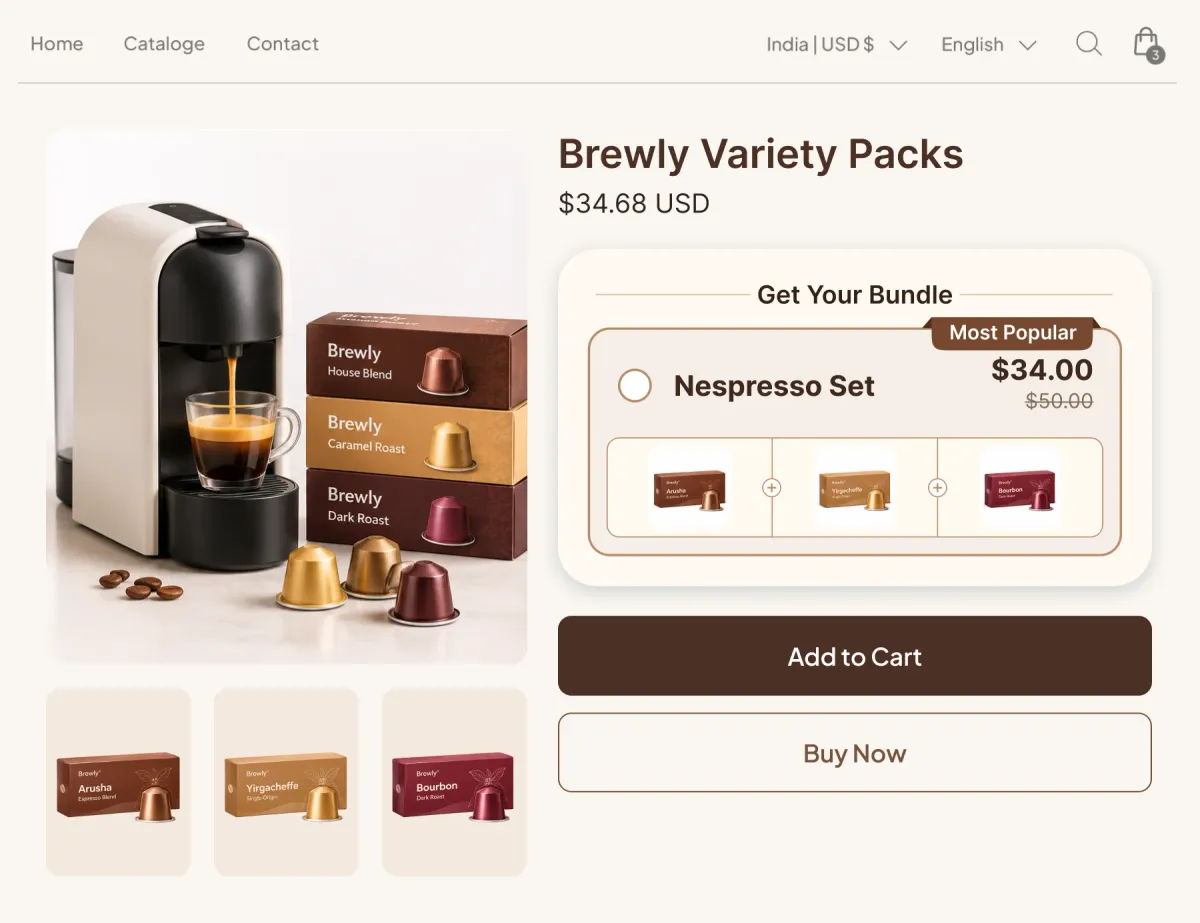
A capsule fits one system, and no other
Single-serve capsule systems use their own formats, and a capsule made for one system will not work in another. A variety pack bundled for the wrong machine is unusable.
Ask which system the shopper owns, then show only capsules built for it. Build variety packs by roast level or flavor, and a starter bundle that pairs the machine with a first set of capsules.
Cold-brew season-switch kits
When the weather warms, the whole routine changes
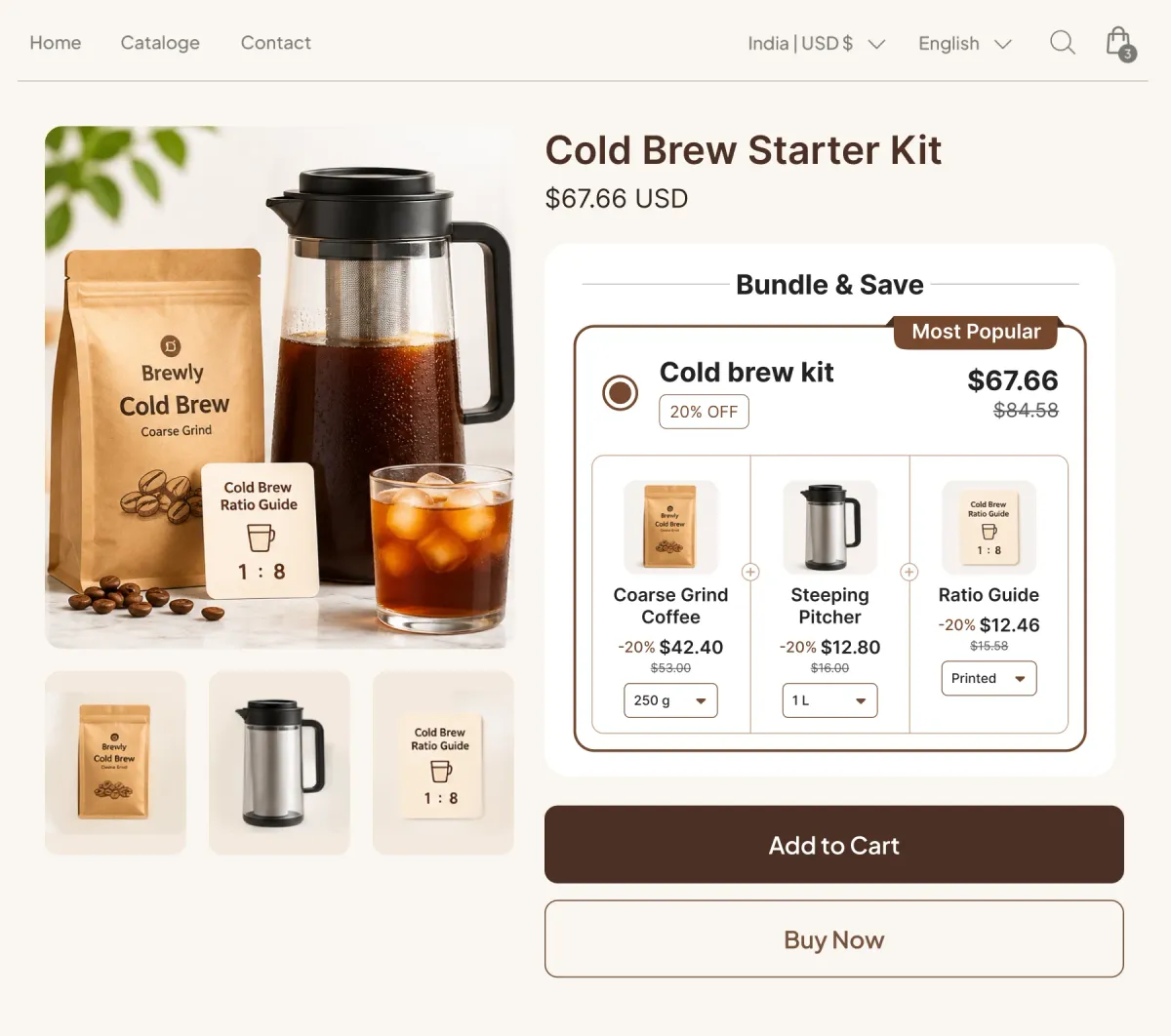
Cold brew uses a coarse grind and steeps for many hours, so it needs a pitcher or bag, a filter and a ratio the shopper can follow. A hot-coffee customer who wants to try cold brew needs all of this at once.
Build a kit around coarse-ground beans, a steeping vessel and a ratio card. Time it to the first warm weeks of the year, and again for the longest days of summer.
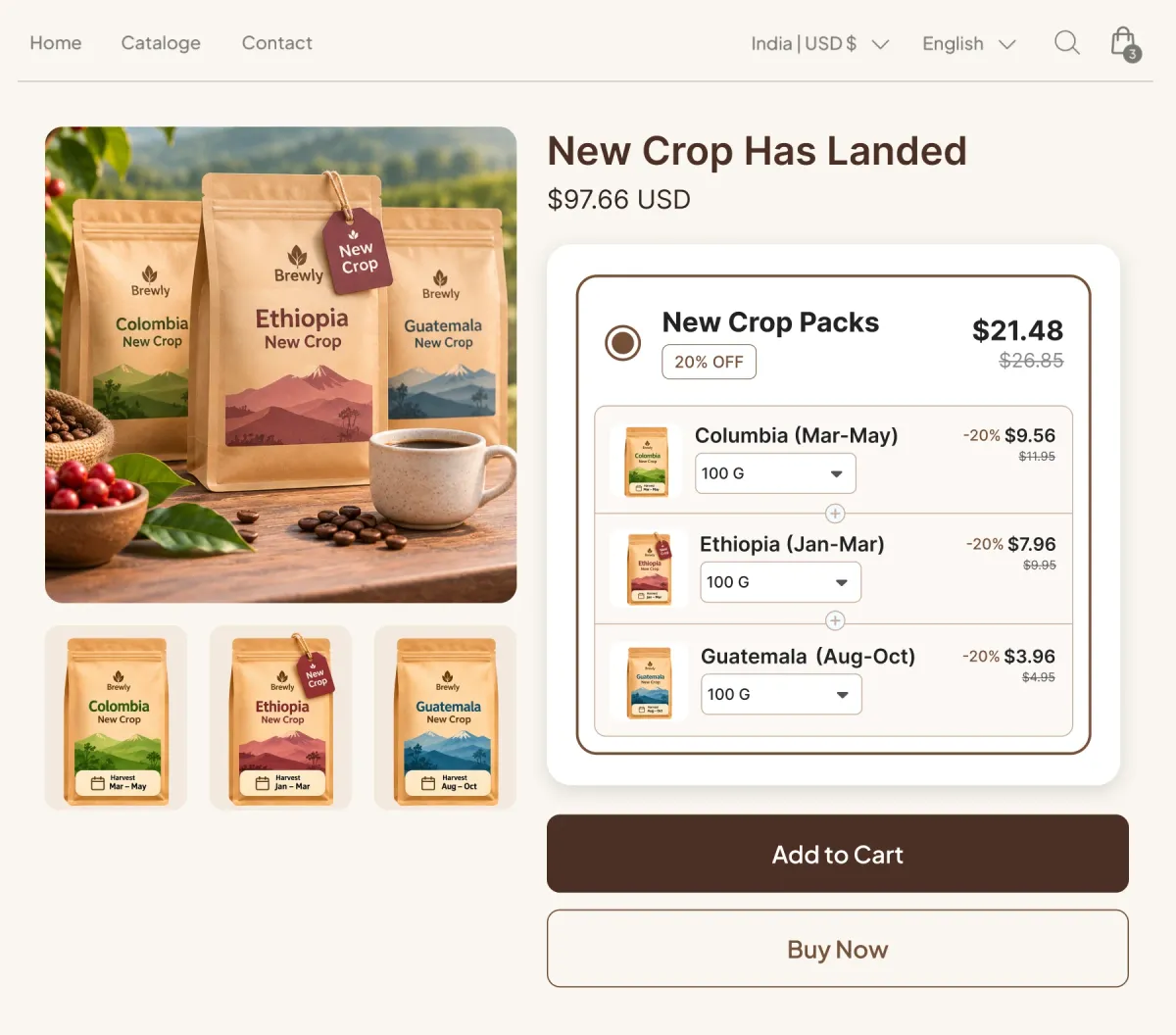
Harvest-calendar new-crop bundles
Coffee has seasons, and enthusiasts follow them
Coffee is harvested at different times in different countries, and a new crop reaches roasters at set points in the year. Enthusiasts watch for these arrivals, and they treat a fresh crop as news.
Bundle each new arrival with a companion from the same region, and announce it with the harvest date. The bundle gives loyal customers a reason to try a second coffee they might otherwise skip.
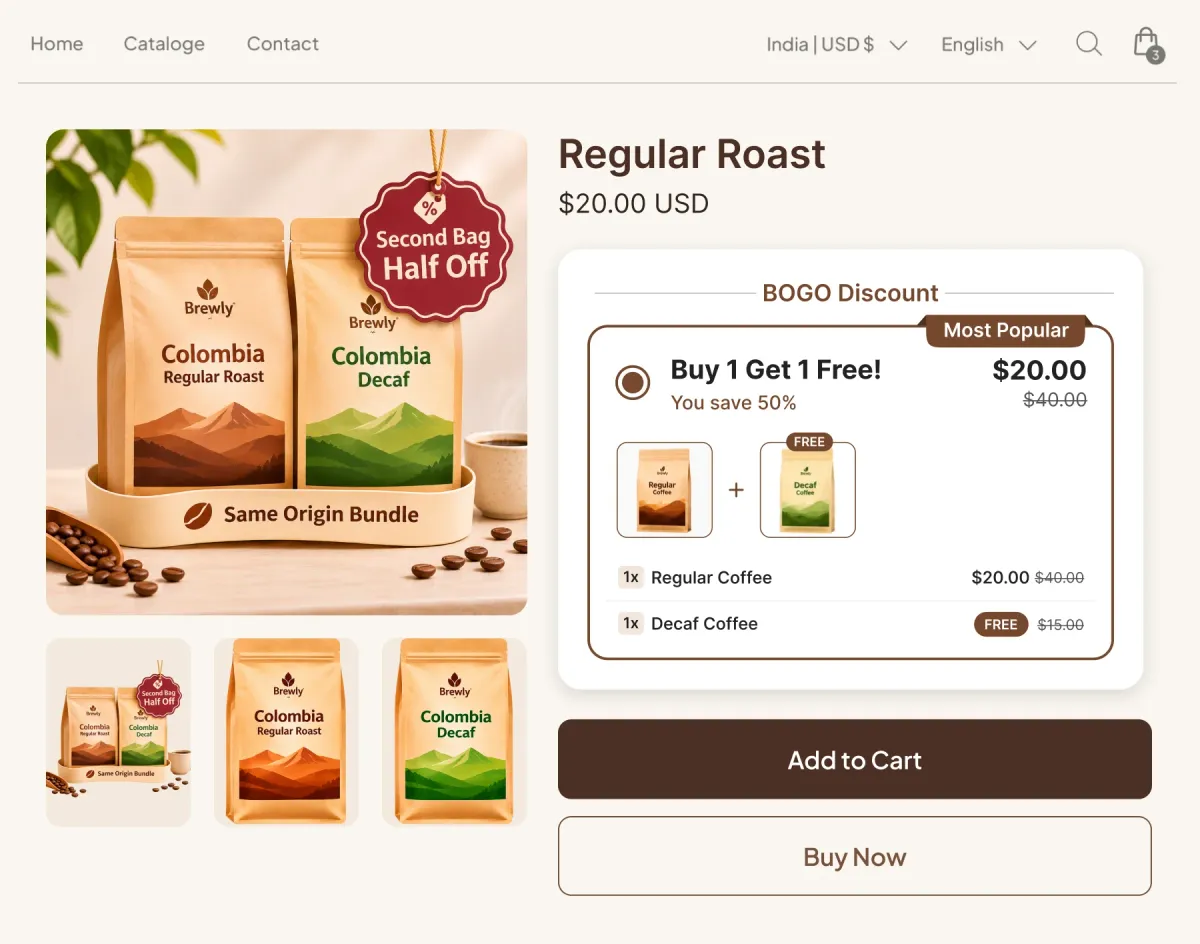
Regular and decaf household BOGO
Many households split on caffeine
In many homes one person drinks regular coffee all morning and the other switches to decaf after noon, or the same person does both. Offering a decaf version of a favorite coffee beside the regular one removes a reason to shop elsewhere for the second bag.
A buy-one-get-one offer on the pairing makes the second bag an easy yes. Choose a decaf made by a method you can describe, since decaf drinkers pay close attention to how it was done.
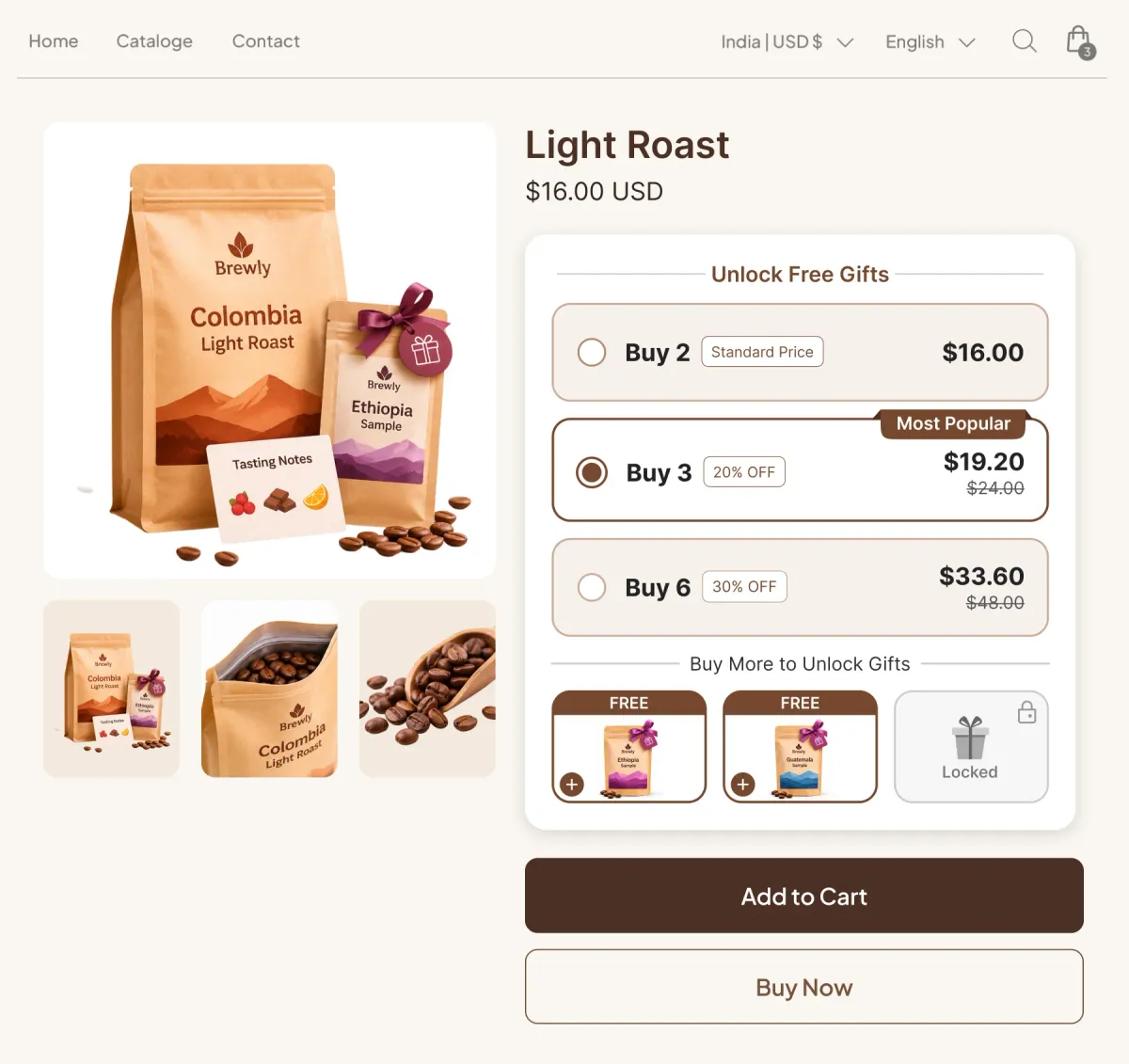
Taste-profile-matched sample gifts
A sample works best when it suits what the customer likes
A small bag of a new coffee is the cheapest way to introduce a drinker to a second origin. A sample unrelated to their taste goes unused, so match it to the cart: a fruity filter roast beside a light-roast order, a chocolate-forward blend beside a dark roast.
Print the tasting notes on the card, so the sample reads as a recommendation and not as filler.
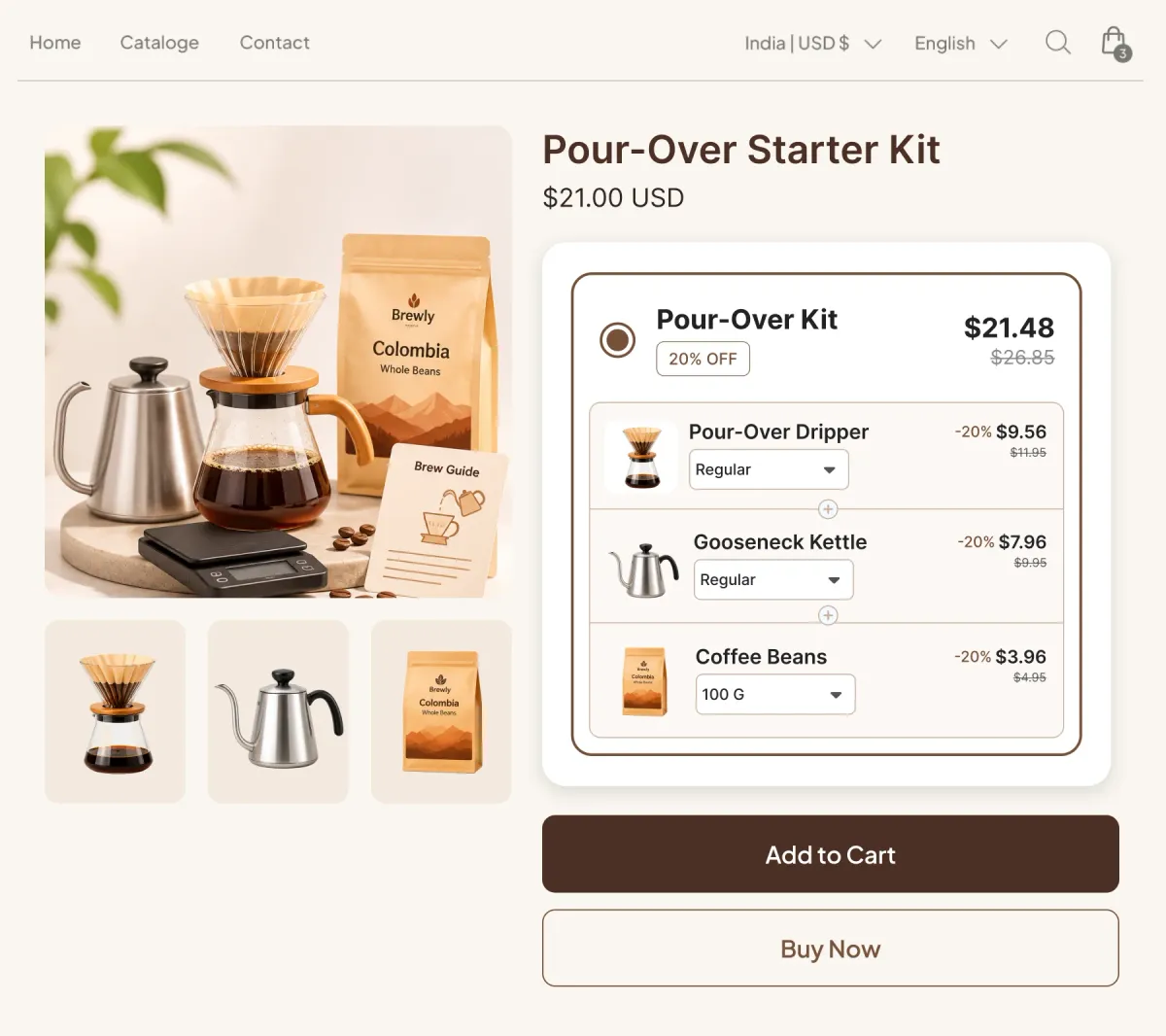
Home café starter kits by brew method
A first brewer needs a few small tools to go with it
A new home brewer often buys a brewer and then finds out that a scale and a controlled pour make a difference. A starter kit for each brew method holds the brewer, filters, a scale, a kettle suited to the method and a bag of beans with a printed recipe.
Build one kit per brew method, and keep each one to the tools that method needs. A pour-over kit has a gooseneck kettle, while a French press kit needs only a simple kettle and a timer.
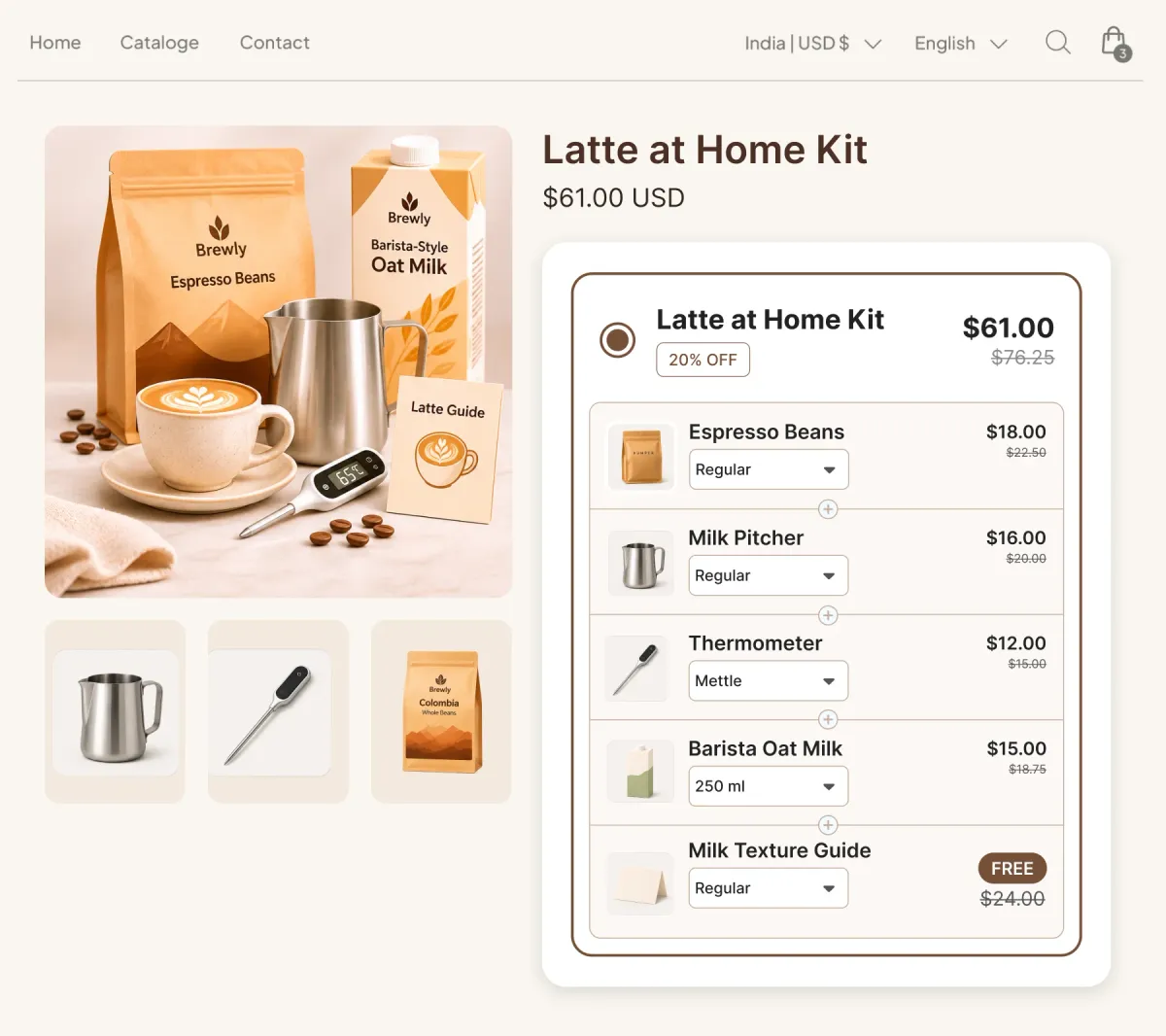
Milk-drink kits at home
A latte is a milk decision as much as a coffee decision
Milk drinks depend on how the milk steams and foams. Barista-style plant milks are formulated to behave better under a steam wand than their regular versions, and a pitcher sized for the portion makes control easier.
Build a kit around a roast that holds up in milk, a pitcher, a thermometer and a shelf-stable milk suited to steaming. Include a simple guide to texture, since new owners often fail at this step.
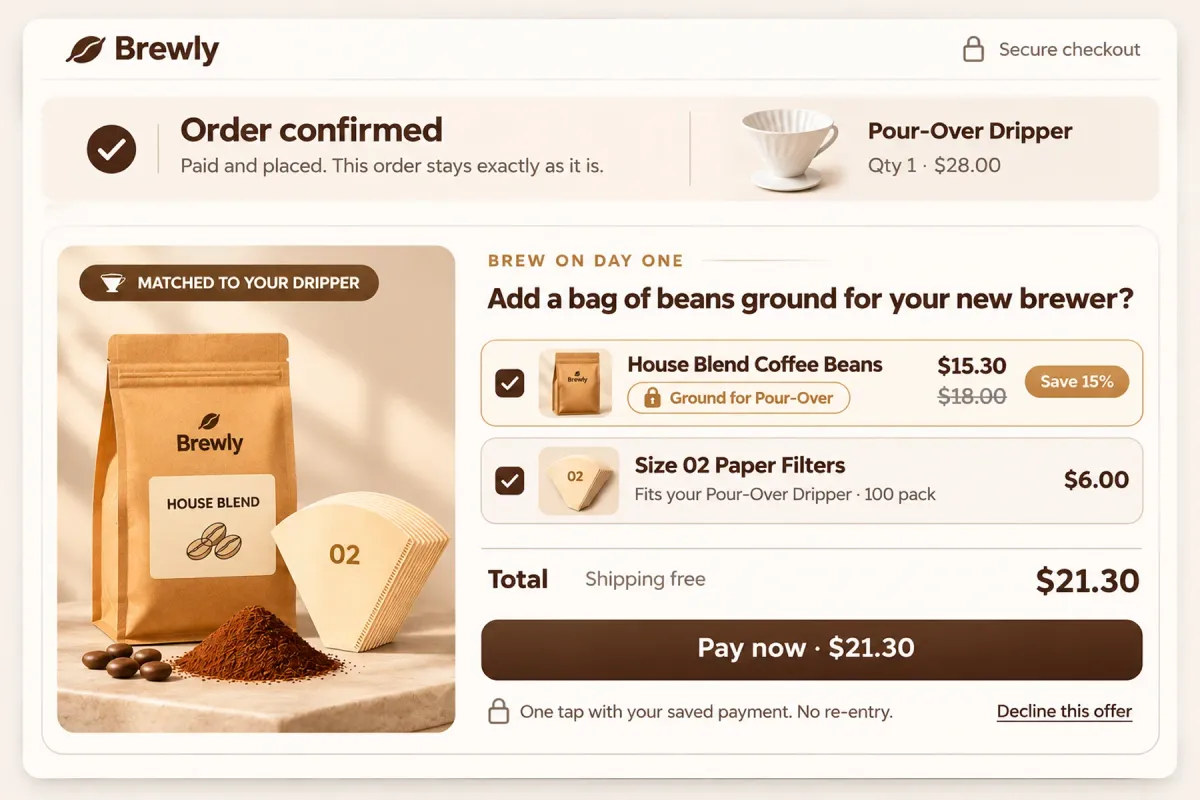
Brewer bundles: beans and filters for the new brewer
A new brewer is a promise of coffee, so close the loop
A shopper who buys a brewer or grinder has no beans in the order and no filters yet. On the brewer's product page, offer a bag of beans ground for the new brewer, and a pack of filters in the right size. The customer can brew on the day the box arrives.
Coffee promotion calendar
Coffee demand shifts with the weather, the harvest and the habits of the new year. This month-by-month map shows which strategy fits each period, using Northern Hemisphere timing.
Self-audit: how bundle-ready is your store?
Score your current setup against these six dimensions before you implement the strategies above. Coffee brands most often miss roast-date guidance and brewer-specific data, even when the rest of their bundling is solid.
The bars are an illustrative self-check, not measured data. Use them to spot where your own setup is thin.
From solo stores to 8-figure brands, teams trust Profit Pumper to grow their revenue.
Consistently rated 4.9 stars on the Shopify App Store for ease of use and reliability.
Install, pick a template, configure your offer, and go live. No coding or developers needed.
Frequently asked questions
How is coffee bundling different from bundling in other categories?+
Can a bundle cause returns in this category?+
Do I need a developer to set these up on Shopify?+
Which strategy should a small coffee brand start with?+
Can I serve both home customers and cafés from one store?+
Your offers. Configured, not discounted.
Set up brew-method bundles, cups-per-day quantity tiers and subscriptions by consumption on your Shopify store in minutes, with no developer or theme edits needed.
Try Pumper Bundles Free