



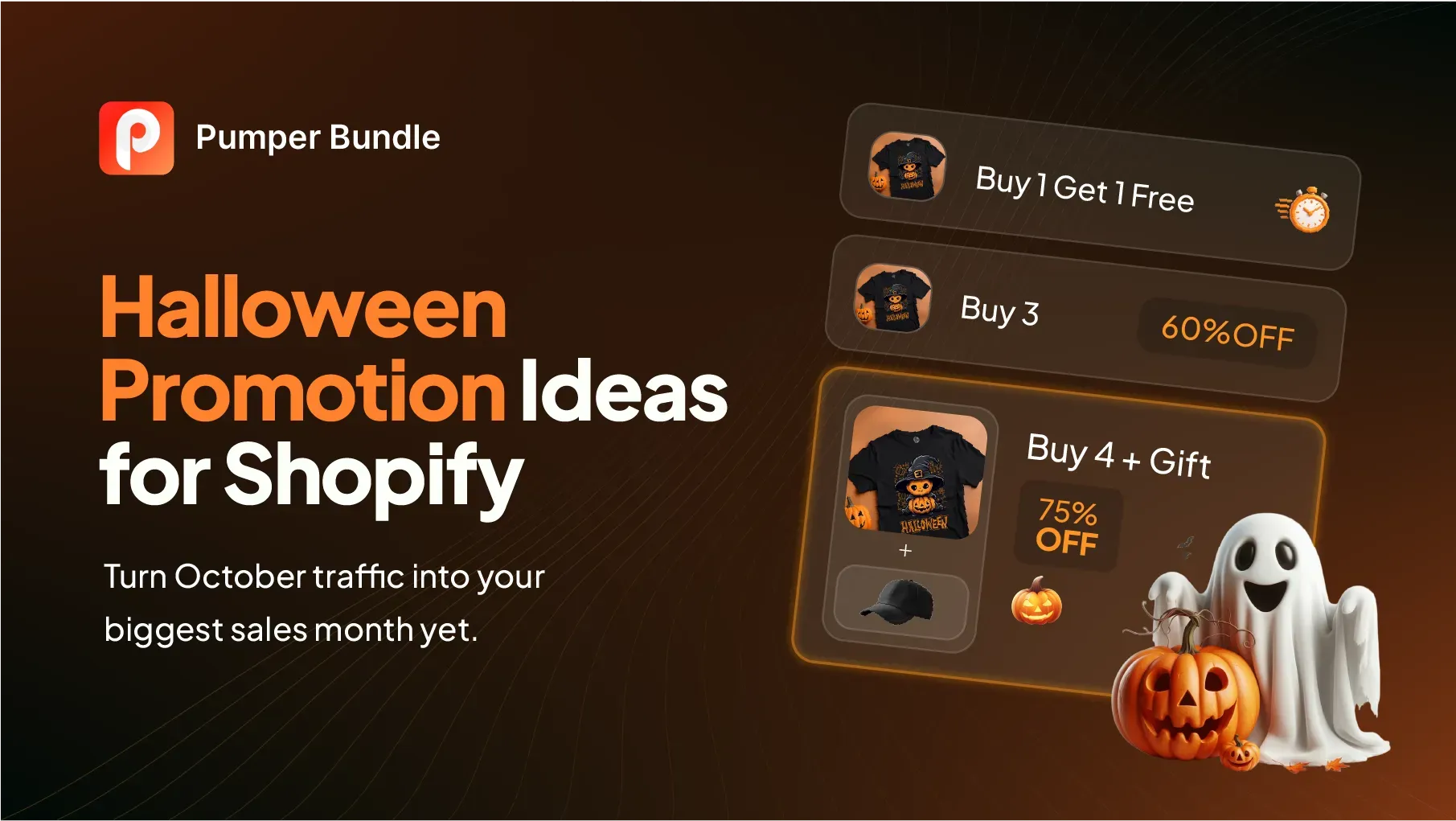
Halloween spending hit a record $13.1 billion in the US in 2025, and per-person spending climbed to $114.45, up nearly $11 from the year before. That's not a niche seasonal blip. It's a genuinely large, growing spending event, and October 31, 2026 falls on a Saturday, the first time since 2020. Weekend timing has historically lifted spending on decorations, costume accessories, and party supplies specifically, since shoppers have the full day free to celebrate instead of squeezing everything around a workday evening.
Most Halloween marketing advice doesn't do much with any of that. Scroll through a dozen "Halloween marketing ideas" roundups, and you'll find the same short list repeated with different graphics: post on social media, send an email, run a sale. None of that is wrong, exactly, but none of it explains why one Halloween sale converts, and another one just sits there, or which specific mechanic is doing the work when a promotion does land.
This post skips the generic advice layer and goes straight to 12 specific, configurable tactics, grouped by the mechanic that makes each one work: pricing and urgency, interactivity, basket-building offer types, channel timing, and post-Halloween retention.
Let’s dive right in!
Key Takeaways
- Halloween spending reached a record $13.1 billion in 2025, with per-person spending up nearly $11 year over year to $114.45 (NRF, 2025).
- Time-bound urgency (countdown timers, 24-48 hour flash sales) and interactive discount reveals (spin-to-win, mystery discounts) consistently outperform a static "X% off" banner because they give the shopper a reason to act today, not eventually.
- Bundles, BOGO, quantity breaks, free-gift thresholds, and subscribe-and-save all do that job as standalone offer types.
- October 31, 2026 lands on a Saturday. Plan inventory and promotion timing around the weekend lift this creates for decorations, costume accessories, and party supplies.
- The promotion window doesn't have to end on November 1. A short post-Halloween clearance and win-back sequence captures value before the bigger Q4 holidays arrive.
Pricing and Urgency Tactics
Time-bound and depth-tiered pricing is what turns a static Halloween sale into an active reason to buy this week, not eventually. A shopper who sees a discount with no deadline has no reason to act today instead of scrolling past and coming back later, if they come back at all. Urgency and scarcity work because a closing window raises the perceived cost of waiting, not because the discount itself got any bigger.
1. Run a 24-48 hour flash sale with a visible countdown
A short, clearly bounded flash sale creates a real deadline instead of a vague "this week" promise. The window matters more than the discount depth: 24 to 48 hours is long enough for a shopper to see the promotion more than once (in an email, then again on the site) but short enough that "I'll come back later" isn't a realistic option.
Put the countdown clock in more than one place. A timer on the sale landing page alone is easy to miss if a shopper arrives through a product page or a direct link instead. Add it to the product page banner, the cart drawer, and the header of every email and SMS tied to the sale, so the same number follows the shopper across the whole path to checkout.
Keep the copy specific rather than vague: "Ends Saturday at midnight ET" does more work than "Limited time only," because it removes any ambiguity about how much time is actually left.
One detail that undermines this tactic more than any creative choice: a countdown that quietly resets or extends once it hits zero. Shoppers notice, and the next countdown you run gets ignored because the first one taught them the deadline wasn't real. Pick a window you can actually hold to, even if that means a smaller sale than you originally planned.
2. Layer a quantity-break tier on Halloween-relevant products
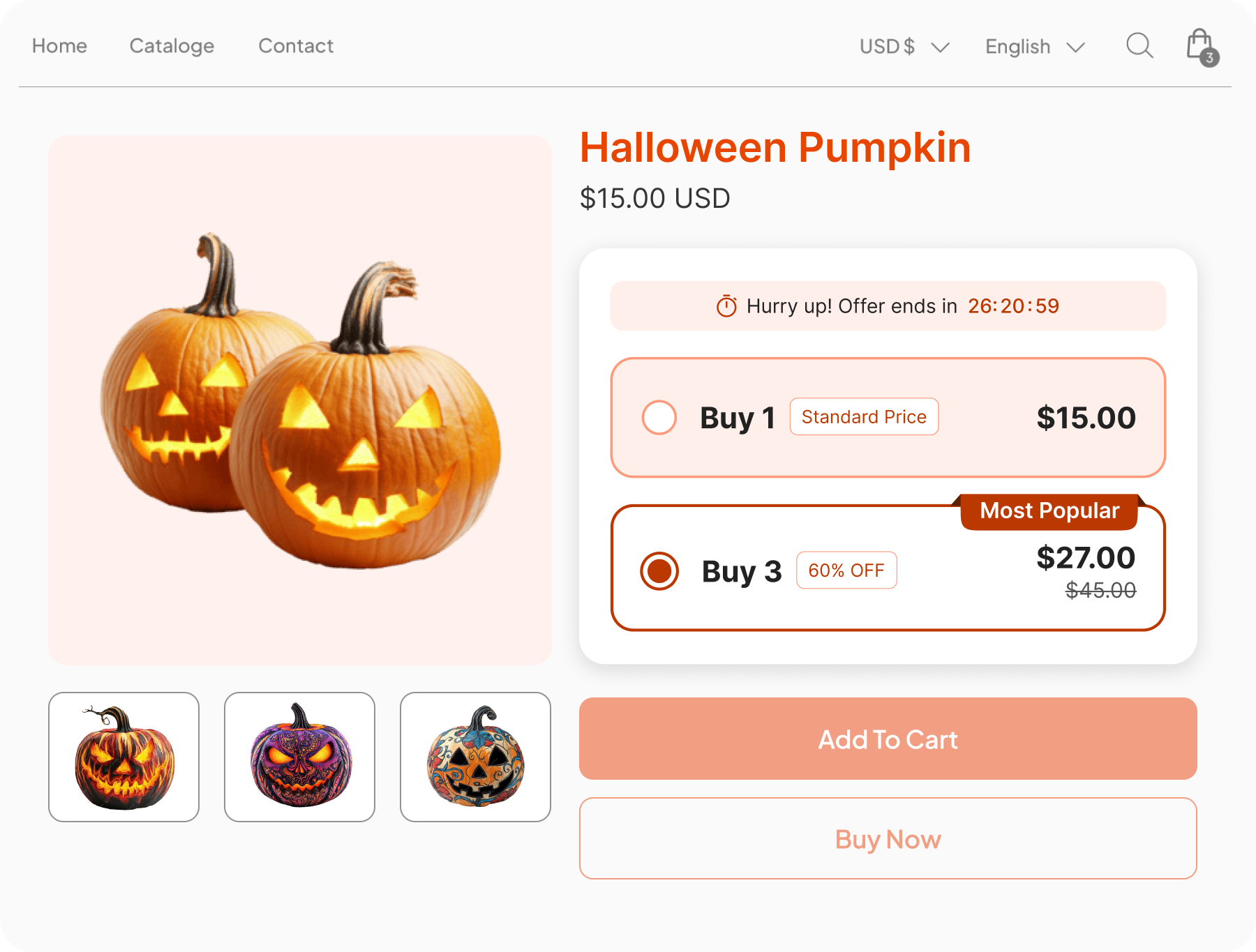
"Buy 2 costumes, save 15%" configured as an automatic discount that applies itself at checkout with no code for the shopper to remember or mistype. This works especially well on genuinely multi-unit Halloween categories: costumes bought for siblings or a group, candy bought in bulk for handing out, seasonal beauty minis bought as small gifts for a few people at once.
The tier doesn't need to be deep to change behavior. A shallow, clearly framed second-unit discount, in the 8-12% range for most physical product categories, is often enough, since the tier's visibility and framing do more of the persuading than the size of the percentage. What matters more is that the tier is priced against your actual marginal cost, not a round number picked because it felt seasonal.
If you haven't set up an automatic discount before, or you've run into one not showing up the way you expected once a second promotion went live, that's usually a combination setting, not a bug. Setting up an automatic Shopify discount that runs itself covers the exact configuration steps and the specific combination rules that trip merchants up most often.
|
Turn Halloween’s multi-item shopping into a bigger cart with quantity breaks built for the occasion. Try Pumper Free See Volume Discounts → 2 min setup · No code required · Free plan |
3. Set a spend-threshold free gift
"Spend $50, get a free Halloween-themed add-on" protects your headline pricing (nothing on the page looks discounted) while still giving shoppers a concrete reason to add one more item before checking out. This tends to outperform a percentage-off tier for brands that don't want a promotional look sitewide, since none of your product prices actually change, only the cart's total does once the threshold is crossed.
Setting the threshold correctly is the part most merchants skip. NRF's 2025 survey put per-person Halloween spending at a record $114.45, nearly $11 above the year before. If your store's average Halloween order sits meaningfully under that figure, set the threshold a modest amount above your current average, not so far above it that almost nobody qualifies, and not so close to it that most shoppers get the gift for free without changing their behavior at all. A threshold set at roughly 15-25% above your current average order value is a reasonable starting point to test.
|
Give shoppers a reason to cross the threshold. Pumper Free Gifts turns a higher cart value into a Halloween reward. Try Pumper Free See Free Gifts → 2 min setup · No code required · Free plan |
Interactive and Gamified Discounts
A gamified discount reveal outperforms a static 10% off banner on both engagement and email capture, and Halloween's built-in visual language, wheels, potions, mystery reveals, gives you an actual theme to build the interaction around instead of a generic popup that looks the same in July as it does in October.
4. Spin-to-win discount wheel with a Halloween skin
A prize wheel styled with bats, pumpkins, or candy corn, offering a discount range rather than one fixed number, frames the interaction as a seasonal treat instead of a standard email-capture popup a shopper has learned to close on reflex.
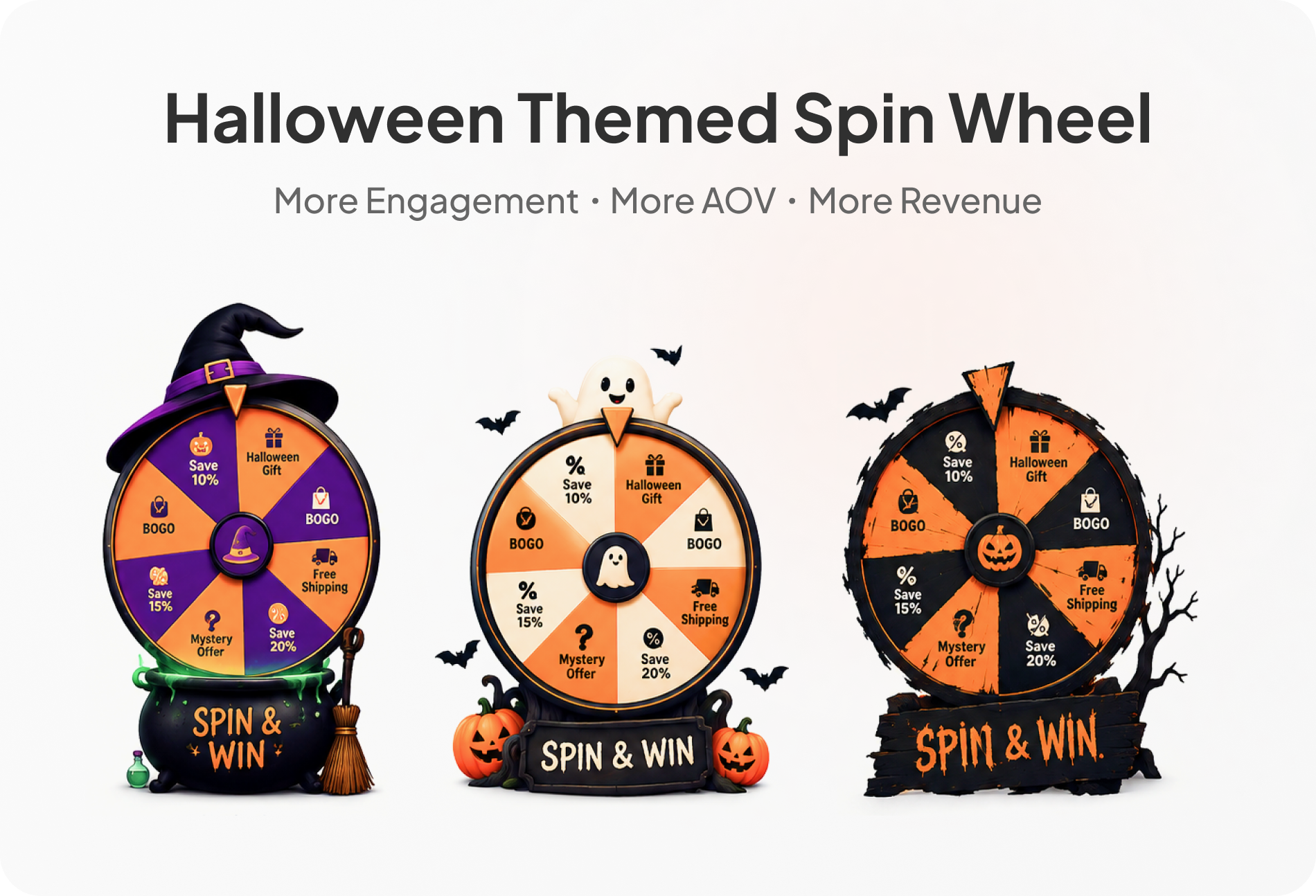
A few configuration details determine whether a wheel feels fun or feels rigged. Weight the segments so the most common outcome is a real but modest discount (5-10%), with a rarer, larger prize (20-30% or a free item) appearing less often, and make sure every segment has a genuinely non-zero chance of landing.
A wheel with a "better luck next time" segment that shows up too often reads as a bait-and-switch fast, and shoppers who feel tricked once are unlikely to engage with the next gamified offer you run.
5. Scratch-to-reveal or tap-to-reveal mystery discount
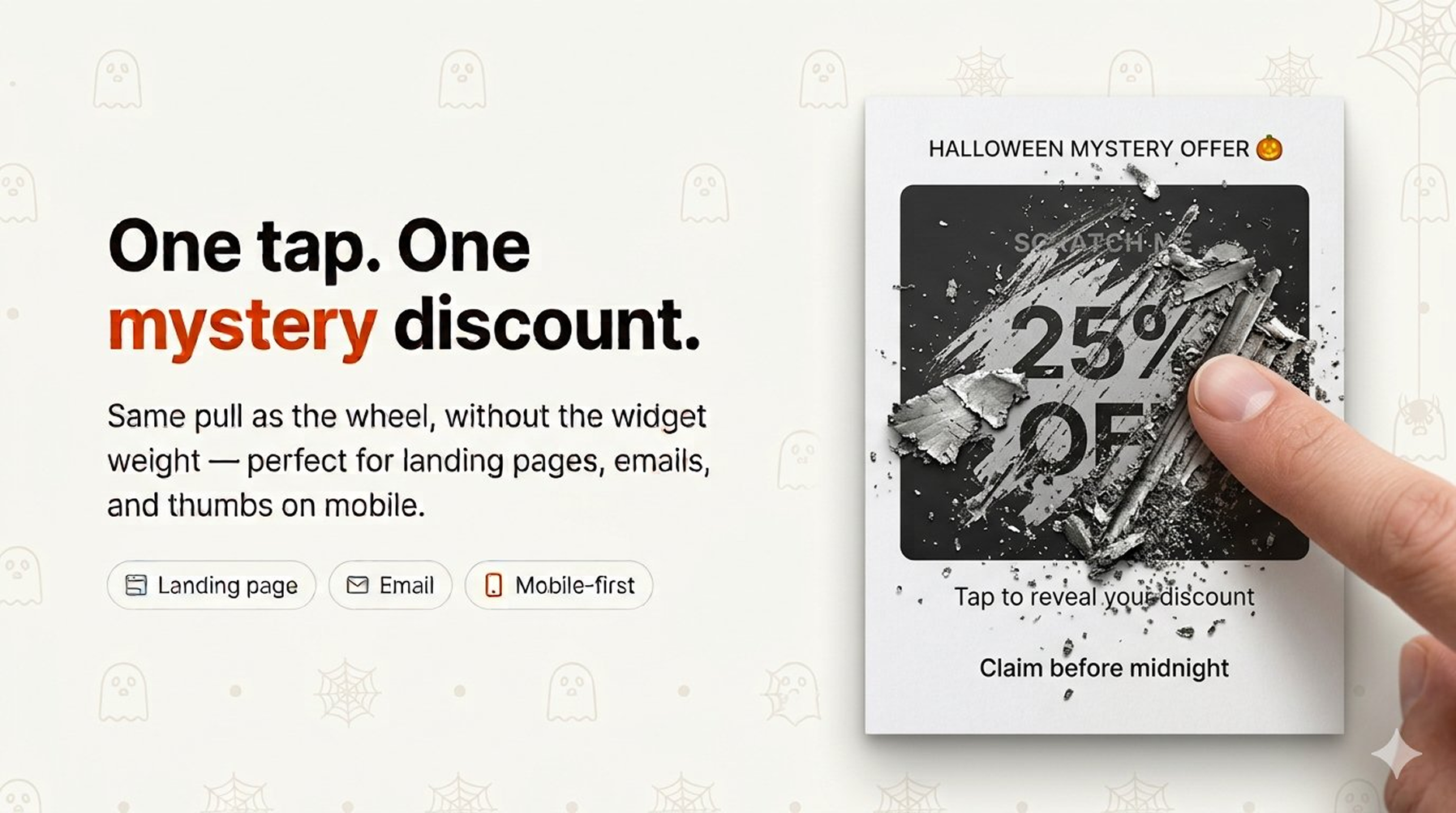
Same underlying mechanic as the wheel, delivered as a single interaction instead of a spin. This format works well embedded directly in a Halloween landing page or email, where a full wheel widget would be heavier than the moment calls for, and it's a natural fit for mobile, where a tap is a lower-friction interaction than dragging a wheel to spin.
6. "Trick or treat" surprise code revealed at checkout
A randomized discount, say 5% to 30%, revealed only after a small interaction adds a moment of delight instead of a flat, fully-known number. The uncertainty is the point: a shopper who might get 30% off is more motivated to complete the interaction than one who already knows in advance they're getting exactly 10%, even though the average payout across all shoppers may end up similar either way.
Halloween's three largest 2025 spending categories were costumes at $4.3 billion, decorations at $4.2 billion, and candy at $3.9 billion, per NRF's same 2025 survey, together accounting for the large majority of total Halloween spend. If you're deciding which products to feature in a gamified offer, weighting the wheel or the reveal toward whichever of these three categories matches your catalog gives the mechanic a real shot at mattering, instead of surfacing a random SKU nobody was already shopping for during this specific season.
Basket-Building Offer Types
Bundles are the classic way to increase average order value, but they are not the only option. Standalone offer types like BOGO, quantity breaks, and subscribe and save also grow basket size when configured individually, which matters if your catalog doesn't naturally support a curated gift set, or if you'd rather test individual offer types before committing to the extra curation work a bundle requires.
If you do want Halloween bundle-specific ideas, from costume-and-accessory sets to treat boxes and seasonal beauty kits, that's covered in a separate guide to Halloween bundle ideas for Shopify brands, since bundling deserves a fuller treatment than a single bullet point here.
7. BOGO on costume accessories or seasonal add-ons
A cross-product BOGO, buy a costume, get an accessory at a discount or free, works because the accessory genuinely completes the purchase the shopper is already making. This tends to outperform an unrelated BOGO pairing, since the shopper doesn't need to be convinced they need the second item at all, only that now is a good time to add it while they're already checking out the first one.
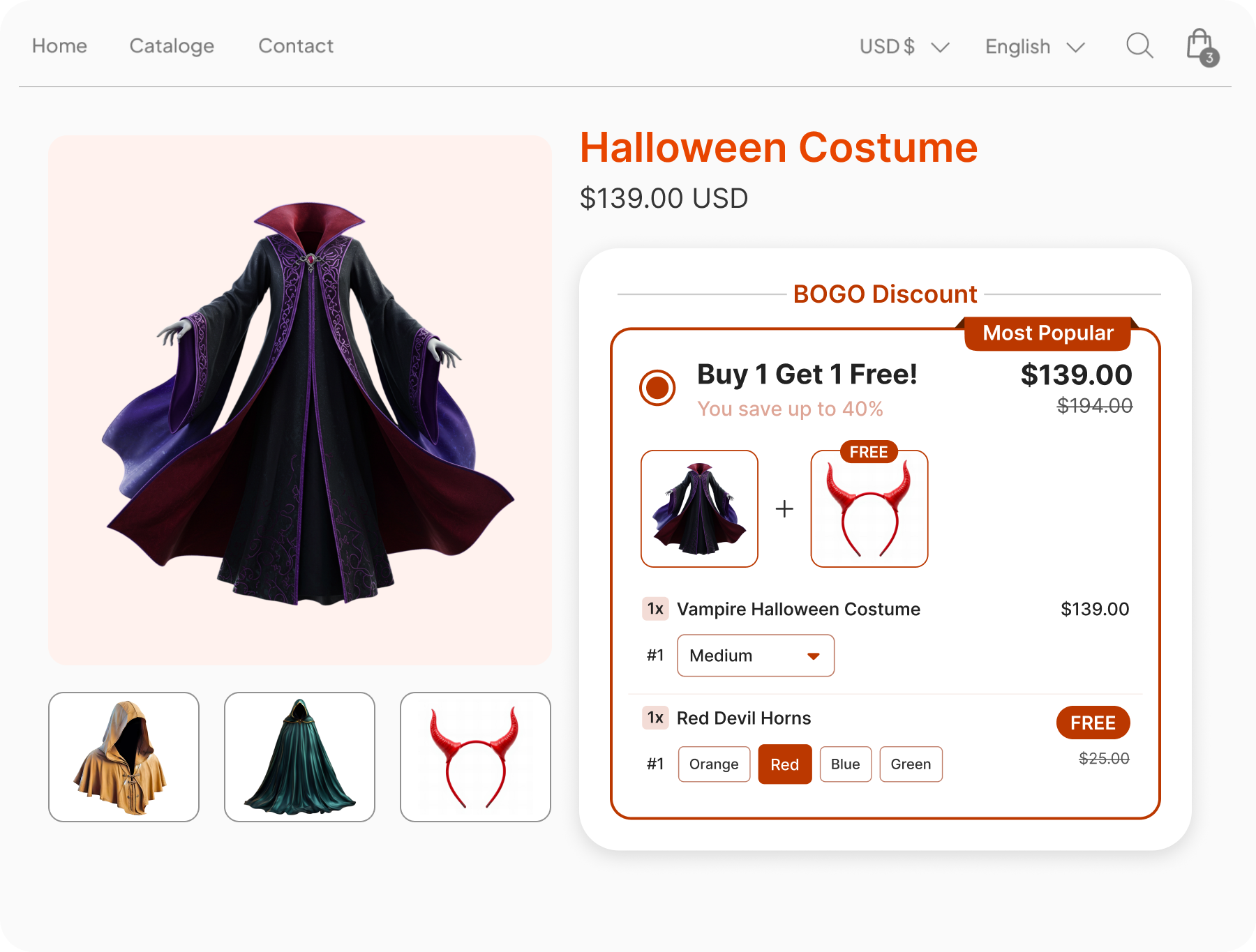
Structure this a few different ways depending on your catalog: BOGO free on a low-cost accessory paired with a higher-margin costume, BOGO at a percentage discount when both items carry similar margin, or a "buy 2, get 2" structure for accessory-heavy categories like small props or makeup where shoppers are already inclined to buy multiples.
|
Make the second item an obvious yes. Pumper BOGO lets you pair costumes with the accessories shoppers actually need. Try Pumper Free See BOGO Offers → 2 min setup · No code required · Free plan |
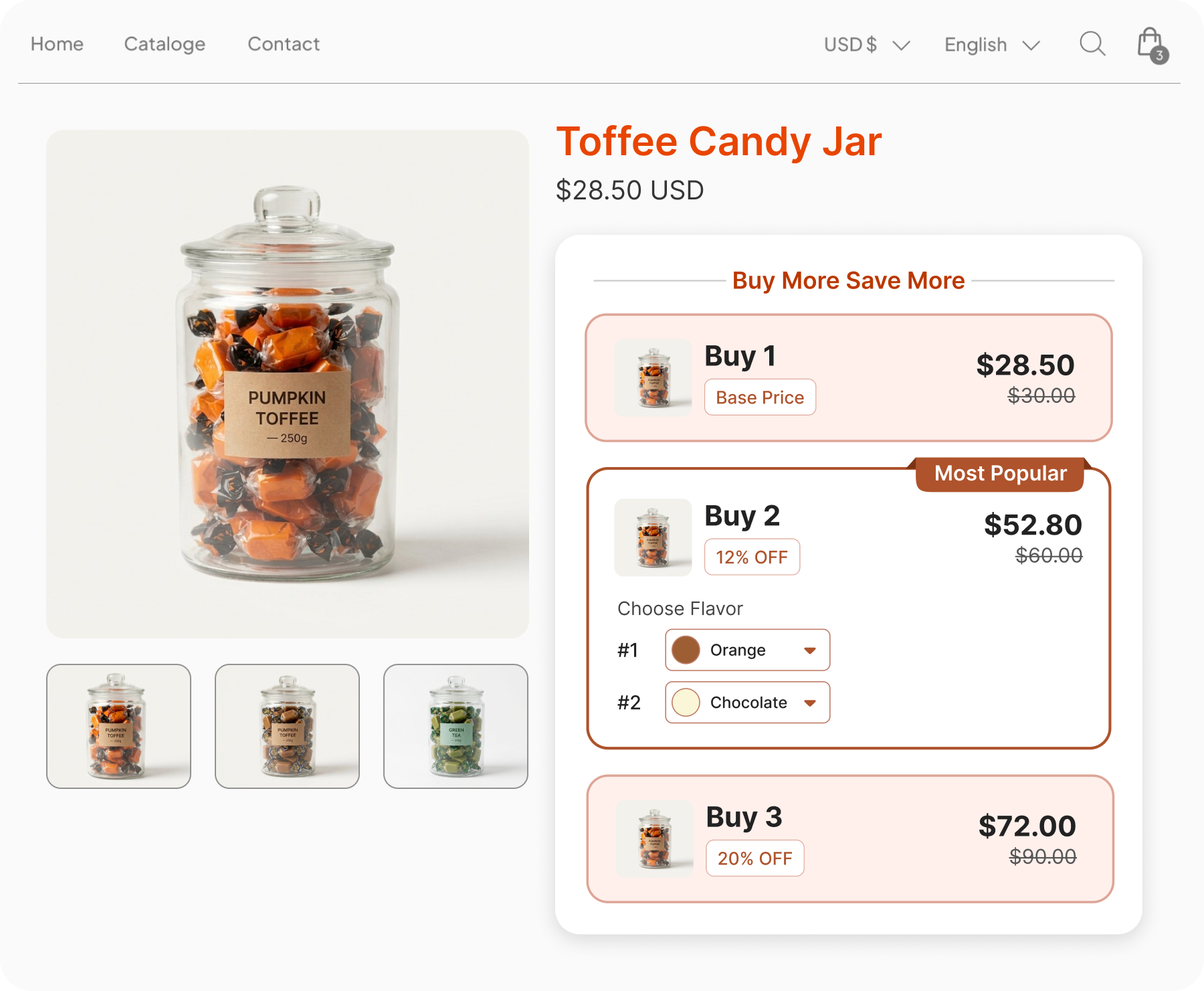
8. Buy More Save More on consumable Halloween SKUs
Candy, seasonal skincare or beauty minis, anything genuinely bought in multiples, is the natural fit for a quantity-break tier. The tier doesn't need to be steep to work; a shallow, clearly-framed discount at the second unit is often enough to shift the decision, particularly when the product is already something the shopper buys more than one of by habit rather than something you're trying to talk them into for the first time.
The mechanics here mirror Idea 2 above, but the product selection matters. Look for SKUs where a customer buying "just one" is genuinely leaving a second or third unit on the table, not products where a single purchase is the norm and a multi-unit tier would just be discounting a sale that was already going to happen anyway.
9. Subscribe & Save framed as a "treat yourself monthly" hook
For consumable categories, October is a reasonable moment to run a subscription push specifically, since the seasonal purchase already has the shopper's attention and a natural reason to think about "the next few months," not just this one order. Framing the subscription option as an ongoing monthly treat rather than a generic "save on repeat orders" message ties it to the Halloween mood instead of feeling like an unrelated upsell dropped into a seasonal page.
This works best when the subscription discount is visible at the same moment as the one-time purchase option, not buried in account settings after checkout. A shopper deciding between "one-time" and "subscribe and save 10%" at the point of purchase is far more likely to choose the subscription than one who only discovers it exists after they've already completed a single order.
|
Turn a seasonal purchase into a repeat order. Pumper Subscribe & Save gives shoppers a reason to come back. Try Pumper Free See Subscribe & Save → 2 min setup · No code required · Free plan |
Channel-Specific Campaigns
Email and SMS carry most of the time-sensitive Halloween push. Timing and cadence matter more than creative alone, since even a well-designed email arriving too late in the window won't have time to convert, and a strong subject line can't fix a send that lands after the sale has already ended.
10. Early-October anticipation email sequence
Campaigns kicked off at the start of October build anticipation ahead of the actual sale window, rather than relying on a single last-minute blast that competes with every other retailer's Halloween email landing in the same inbox on October 30th.
A short sequence works better than one email trying to do everything: an early-October teaser that names the theme without revealing the offer, a mid-October reveal with the actual discount or mechanic, and a final countdown reminder in the days before the deadline set in Idea 1.
Subject lines that name the specific mechanic tend to outperform generic ones. "Your Halloween treat is waiting" or "Spin for your discount" tells the reader what's inside before they open it, which matters more for open rate than a vaguer "Halloween Sale Starts Now" that could be any retailer's email.
11. SMS flash-sale alert timed to the countdown
SMS's near-immediate open behavior makes it particularly suited to short-window flash sales, not general brand updates that can wait a day or two to be read. Time the SMS to land right as the countdown from Idea 1 starts, or as a reminder in its final hours, so the channel and the mechanic reinforce each other instead of running on separate schedules that dilute the sense of urgency either one could create alone.
Keep SMS copy short and specific: the discount, the deadline, and a direct link, without the longer narrative an email can carry. And confirm your SMS list is properly opted in for promotional messages before running a Halloween campaign through it; a compliance misstep during your highest-volume send of the season is a costly way to learn the rule.
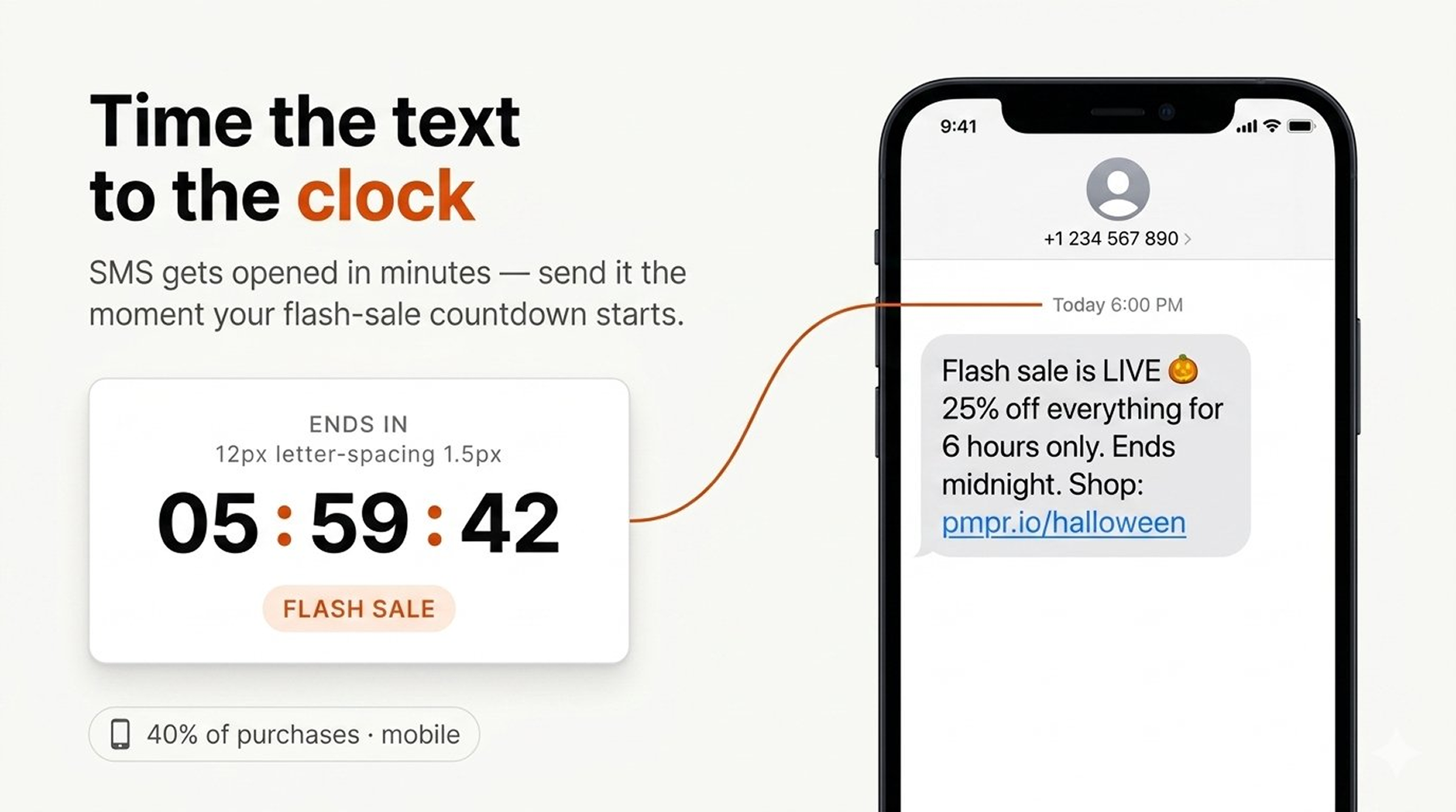
Adobe Analytics reported that online sales of Halloween products grew 16% year over year, with mobile devices accounting for 40% of purchases. If that mobile share holds anywhere close to true for your store, SMS and mobile-optimized email deserve at least as much of your Halloween campaign attention as desktop-oriented channels typically get.
For a deeper look at why certain offer types land better with certain customer segments in the first place, rather than running the same tactic at everyone, matching offer type to customer psychology walks through the reciprocity, loss-aversion, and scarcity drivers behind most of the tactics in this post.
Track email and SMS separately rather than lumping them into one campaign revenue number. Open rate tells you whether the subject line and send time worked; click-through tells you whether the offer itself was compelling once seen; and conversion rate on the landing page it points to tells you whether the offer matched what the click promised. A campaign with a strong open rate but a weak conversion rate usually means the email oversold the offer relative to what the shopper found when they arrived, not that the channel itself underperformed.
Post-Halloween Retention
The promotion doesn't have to end on November 1. A short post-holiday window converts Halloween buyers into repeat customers before the bigger Q4 holidays arrive, and that window is easy to skip entirely if your campaign calendar stops the moment the holiday itself does.
12. "Day-after" clearance plus a loyalty nudge
A short clearance window on remaining seasonal stock, paired with a small loyalty-points bonus or a Post-Purchase Upsell offer pointed toward Thanksgiving or Black Friday-adjacent products, keeps a Halloween buyer inside your funnel instead of letting them disappear until, or unless, a Black Friday email finds them again in six weeks.
Keep the clearance window itself short, three to five days is usually enough, so it reads as genuinely closing out the season rather than becoming a slow, ongoing markdown that trains shoppers to wait you out every year.
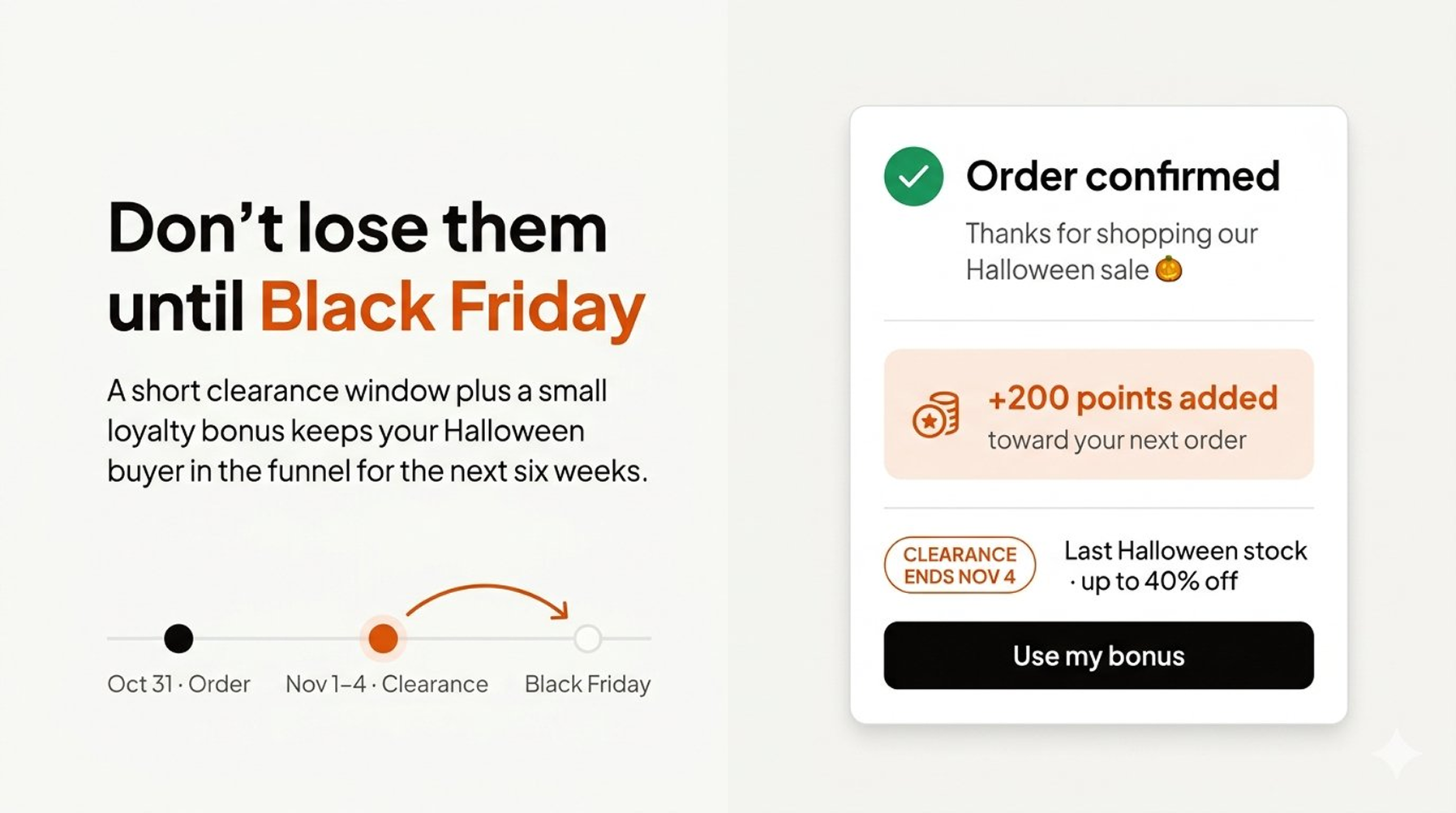
The post-purchase moment right after a Halloween order, when the customer is already checked out and their payment method is on file, is a lower-friction moment to introduce that next offer than a cold email sent weeks later. A small loyalty-points bonus attached to that same moment ("thanks for shopping our Halloween sale, here's a bonus toward your next order") costs little and gives the customer a concrete reason to come back specifically to your store instead of whichever retailer's Black Friday email happens to land first in their inbox.
How to Choose Which Tactics to Run
Running all 12 of these at once isn't the goal, and trying to would likely create more noise than lift. A more useful approach is picking two or three tactics that match your catalog and your team's actual capacity to execute well, rather than spreading thin across every mechanic in this list.
If your catalog leans toward multi-unit consumables (candy, seasonal minis, anything bought in quantity), Ideas 2 and 8 are the natural starting point, paired with the countdown urgency from Idea 1 to give the tier a real deadline. If your catalog is accessory-heavy (costumes and the items that complete them), Idea 7's cross-product BOGO does more work than a generic sitewide discount, since it's selling the completion of a look rather than a discount on an unrelated item. If your store already runs an email list with decent engagement but hasn't tried an interactive mechanic before, Ideas 4 or 5 are a lower-risk way to test gamification without committing to a full campaign redesign.
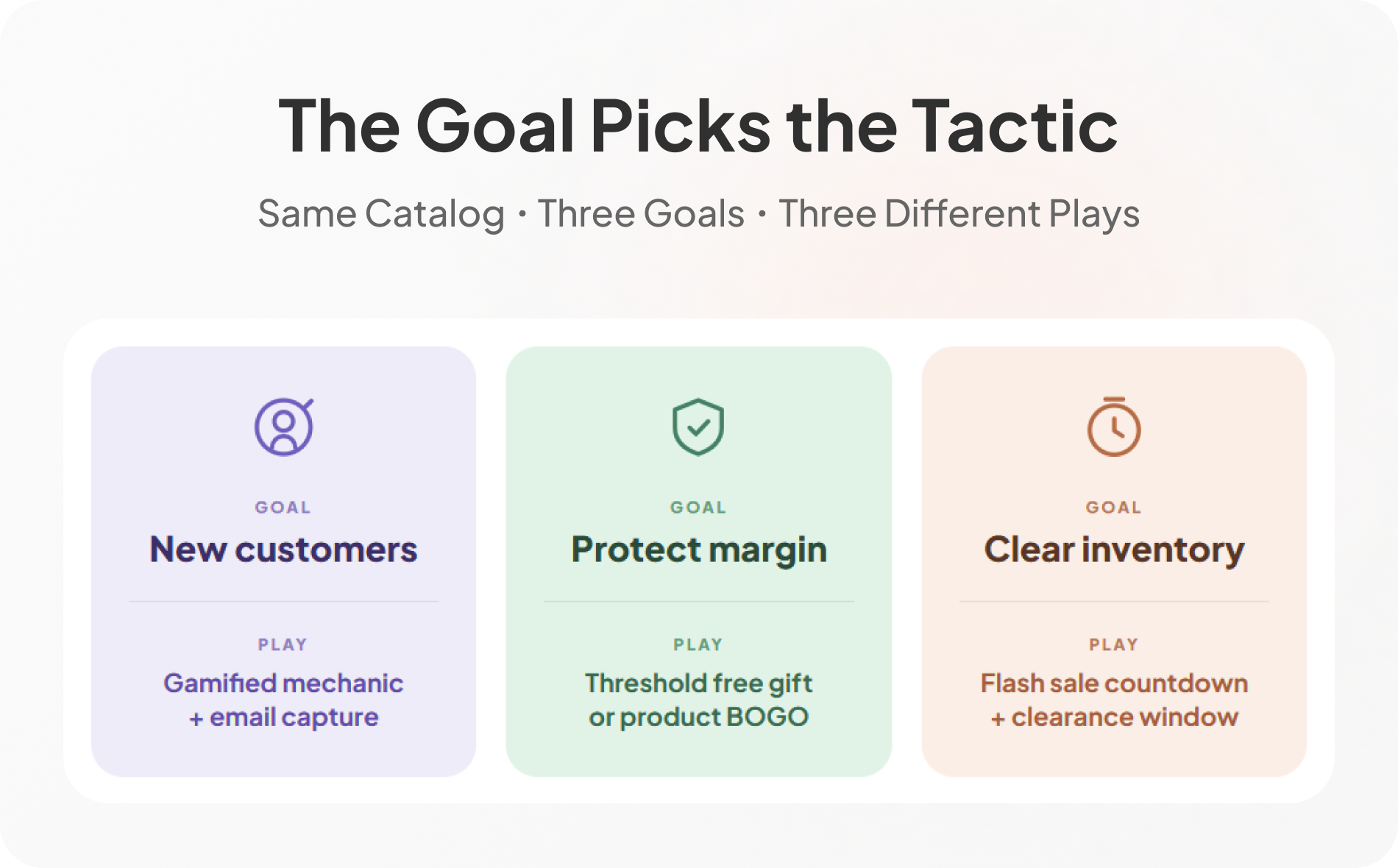
Catalog fit is one filter. What you're actually trying to accomplish this Halloween is the other, and it's worth being explicit about before you pick a tactic, since the same catalog can support very different choices depending on the goal.
If the goal is new-customer acquisition, gamified mechanics (Ideas 4-6) tend to outperform a straightforward discount, since the interaction itself is shareable and gives a first-time visitor a reason to engage beyond "10% off," which every competitor's popup already offers. Pair the mechanic with an email-capture step so a visitor who doesn't convert on this visit stays reachable for the countdown reminder later in the month.
If the goal is protecting margin while still running a visible promotion, the threshold-based free gift (Idea 3) and product-specific BOGO (Idea 7) do more of that work than a sitewide percentage-off code, since both only discount the specific behavior you want (a bigger cart, a completed look) rather than every transaction equally, including the ones that would have happened at full price regardless.
If the goal is clearing seasonal inventory before it becomes dead stock in November, the flash sale with a hard countdown (Idea 1) paired with the day-after clearance window (Idea 12) is the more direct path, since both create a genuine deadline rather than a soft, ongoing markdown that trains shoppers to simply wait for the price to drop further on its own.
Whatever combination you choose, measure the same two things regardless of which tactic you run: whether the offer actually changed basket size or order frequency compared to a normal week, and whether the discount depth still left you with a healthy margin once you account for what the tier, gift, or BOGO item actually cost you to deliver. A promotion that lifts revenue while quietly erasing profit isn't a win, even if the top-line numbers look good in a dashboard the following morning.
Frequently Asked Questions
When should I start Halloween marketing for my Shopify store?
Early October is a reasonable default for building anticipation. Campaigns kicked off at the start of the month give shoppers multiple touchpoints- a teaser, a reveal, a countdown- before the sale window closes, rather than competing with every other retailer's last-minute push crowding inboxes in the final days of October.
What discount percentage works best for a Halloween sale?
There's no single universal number, and copying a competitor's headline percentage without checking your own numbers is how a promotion quietly turns into a loss leader. Anchor your tier depth to your actual margin instead: a shallow, well-framed discount on a product with tight margin can outperform a deep one that erodes profit, especially once you factor in what a free gift or a BOGO item actually costs you to fulfill.
Should I run a sitewide discount or product-specific offers for Halloween?
Product-specific or threshold-based offers tend to protect margin better than a blanket sitewide code, since they only apply to the behavior you actually want: a bigger cart, a specific product mix, rather than discounting every purchase equally, including ones that would have happened at full price anyway.
Does Halloween spending vary by day of the week Halloween falls on?
Yes. With October 31, 2026 landing on a Saturday, decoration, costume-accessory, and party-supply categories have historically seen a lift from the weekend timing, since shoppers and party hosts have the full day available rather than a workday evening squeezed around other commitments.
The Short Version
Urgency, interactivity, and basket-building offer types outperform a flat sitewide discount, and none of the 12 tactics above need a themed bundle to work. Timing matters as much as the offer itself: start in early October, and plan around the Saturday, October 31 weekend lift specifically for decorations, costume accessories, and party supplies. Pick two or three tactics that fit your catalog rather than running all 12 at once, and check every one of them against your actual margin before it goes live.
|
Ready for October? Pick your offer. Set the rules. Let Pumper handle the rest. Build quantity breaks, BOGO offers, free gifts, and other Halloween promotions without stacking a dozen separate apps onto your store. Try Pumper Free Explore Pumper → 2 min setup · No code required · Free plan |